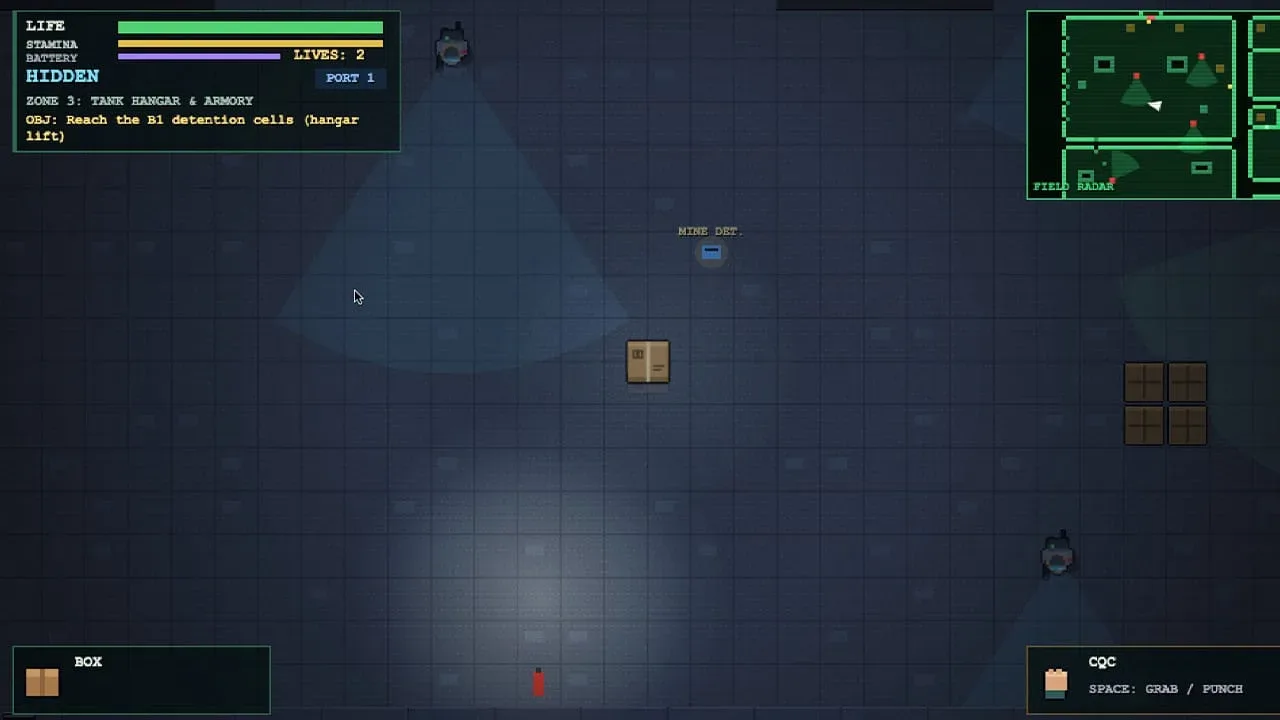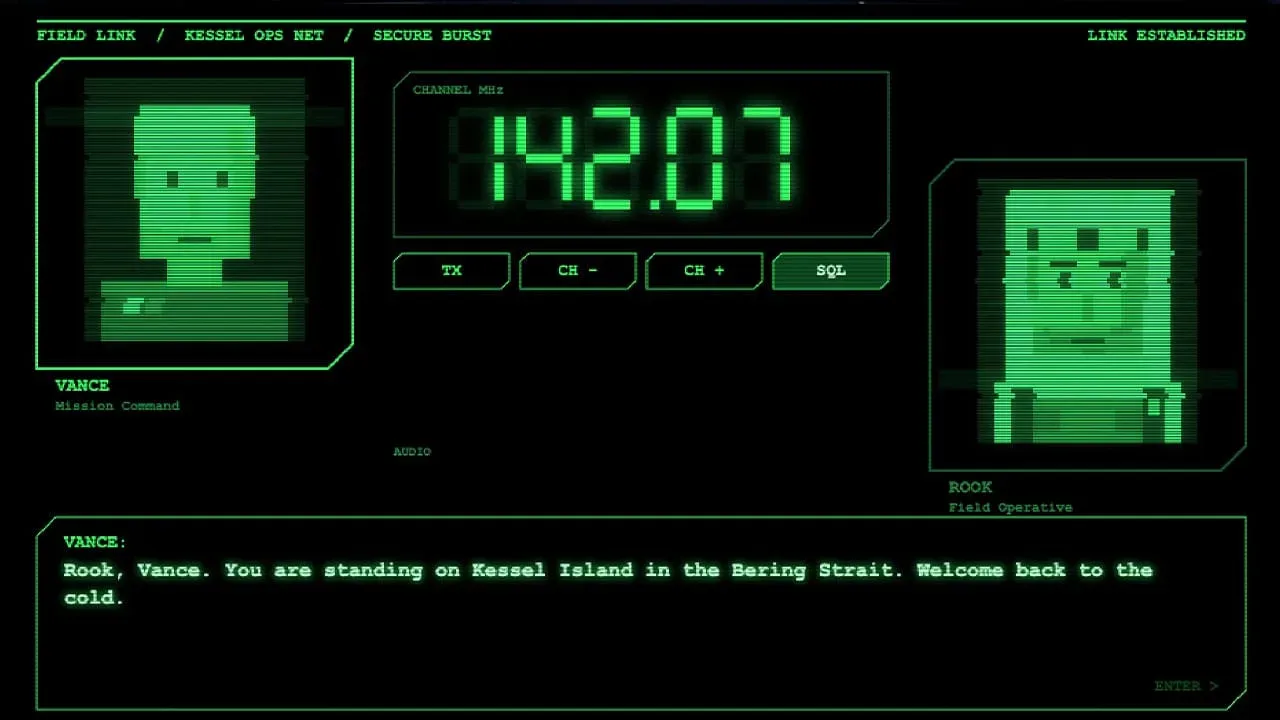
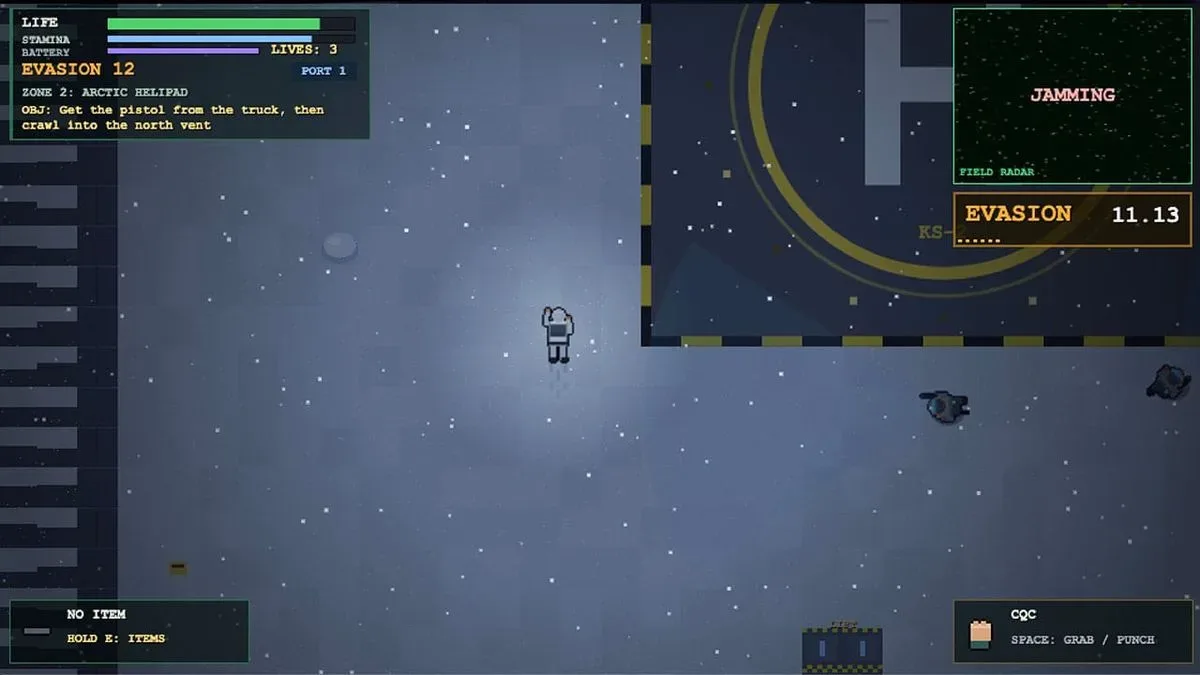
A nuclear facility in the Arctic. Guards working patrol routes. A green-screen CRT used for mission calls. Infrared lasers, thermal goggles, mine detection, cigarettes and the sacred science of becoming a cardboard box. My Gear Is Solid is not being subtle about the stealth lineage it is saluting, and that is very much part of its pitch.
Created by umaki001, the free browser game is a 2D stealth tribute that puts players on an infiltration mission through a heavily defended, freezing facility. The stated objective is to work through the operation, confront an elite squad and prevent a nuclear tank from becoming a very large problem. It is a knowingly familiar setup, built around recognizable spy-game rituals rather than an attempt to disguise its inspirations.
The project is playable through a browser, making it a low-friction curiosity for players who want to try a compact stealth experience without the usual installation step. That browser-first approach is also a useful reminder that a machine used for bigger PC games can serve smaller experimental projects just as well; for broader portable-PC travel considerations, see our guide on keeping a Steam Deck and other battery-powered gear in your carry-on.
A deliberately recognizable stealth toolkit
My Gear Is Solid has 13 facility zones and 10 multi-phase boss encounters. Those numbers suggest that the game is structured as a full progression through distinct areas rather than a single short stealth sandbox. “Multi-phase” means a boss fight changes partway through, potentially requiring the player to react to a new pattern or condition instead of simply repeating the opening approach until the encounter ends.
The basic rhythm is built around avoiding patrols, receiving mission information through the retro CRT-style Codec interface, and selecting tools for specific obstacles. A mine detector is exactly what it sounds like: equipment intended to help locate dangerous mines before the player blunders into them. Thermal goggles are typically used to read heat signatures or otherwise make targets and environmental details easier to identify. Here, they are part of the game’s declared survival kit alongside the box.
The cigarette item is assigned a particularly old-school espionage-game job: revealing infrared lasers. Infrared light is outside normal human vision, so this kind of mechanic turns an invisible security measure into something the player can plan around. The important design idea is not realism for its own sake. It is information. A stealth game becomes fairer and more interesting when it gives players ways to discover a hazard, understand its boundaries and choose a response.
The cardboard-box moment belongs in the same category. It is a visual gag with a gameplay purpose: temporary concealment that trades ordinary movement for an attempt to avoid notice. Even without adding details that have not been specified, it is clear why the box is an apt inclusion in a 2D homage. It instantly communicates the project’s tone and its affection for the genre’s stranger, more playful conventions.
Why the two-dimensional format matters
Calling a game a 2D demake or tribute does not automatically mean it is merely a reduced version of a 3D game. In a 2D stealth setup, sightlines, patrol timing and cover read differently because the player is working in a flatter visual space. The designer has less room to hide information behind a camera angle, which puts greater emphasis on clear layouts, readable enemy behavior and tools that make danger legible.
Related coverage includes My Gear Is Solid Brings a 2D Stealth Tribute to Your Browser.
That does not tell us exactly how every system in My Gear Is Solid works, but its feature list points toward a familiar stealth language: observe, move cautiously, use an item to solve a security problem, and face set-piece encounters between areas. The 13 zones provide an organizational backbone for that loop. The 10 boss encounters provide moments where the game can shift from evasion toward direct, more tightly designed challenges.
The Arctic setting also does useful thematic work with very few stated details. A guarded nuclear site in extreme cold is immediately isolated, hostile and high-stakes. It gives the mission a clean sense of place, while the green-screen CRT presentation reinforces the project’s retro-tech mood. This is not a game advertising a neutral modern interface; it is leaning into the chunky communication hardware and theatrical espionage iconography associated with its inspirations.
Homage, parody and a name that tells you the joke
The title My Gear Is Solid establishes the tone before a player enters the first zone. It is a conspicuous riff rather than a vague allusion, and the cover imagery reportedly includes Solid Snake. In practical terms, prospective players should approach it as a fan-made tribute that wants them to recognize the reference points: infiltration, tactical gadgets, codec calls, elaborate boss opposition and the box.
That directness can be an advantage for a small browser project. Instead of spending its opening minutes explaining what kind of experience it is, the game’s name and tools make the intent immediately clear. Players who enjoy these conventions know what they are being invited to explore; players who do not will know quickly that the project may not be aimed at them.
There is a distinction worth preserving, though. A tribute uses recognizable ideas and a playful frame; it is not automatically an official entry, remake or authorized adaptation. Nothing here indicates that My Gear Is Solid is any of those things. The clearer description is the simplest one: an independently made 2D browser stealth game whose references are overt.
AI assistance is disclosed, but its scope remains unclear
One part of the project deserves especially careful wording. umaki001 has disclosed that AI assistance was used for coding and graphics. The available information does not establish how much of either area involved AI, which assets or portions of code were affected, or whether any other parts of the game used it. Those are meaningful unknowns, and they should remain unknown rather than being filled in with assumption.
“AI-assisted” is a broad description, not a technical breakdown. It can refer to a range of processes, and the label alone does not tell a player how much human work went into design, implementation, editing or final selection. Nor does the available information confirm the origin of the game’s narrative. Readers evaluating the project on that issue have one solid point to work from—the creator has acknowledged AI use in coding and graphics—and a number of questions that have not been answered publicly in the supplied details.
That transparency is more useful than pretending the subject does not exist. It lets players make an informed choice about whether and how they want to engage with the game. At the same time, disclosure should not become an excuse to assert more than is known. The responsible takeaway is narrow: AI assistance is part of the project’s creation in at least the two named areas, and its exact extent is unspecified.
What players can reasonably expect
- A free, browser-playable 2D stealth game created by umaki001.
- An Arctic nuclear-facility infiltration framed around patrol avoidance and mission objectives.
- 13 zones and 10 boss encounters with multiple phases.
- Tools including a cardboard box, mine detector, thermal goggles and cigarettes used to reveal infrared lasers.
- Mission communication presented through a green-screen CRT Codec.
- A disclosed use of AI assistance for coding and graphics, with no stated detail on its extent.
The most appealing thing about My Gear Is Solid may be how plainly it states its case. It wants to deliver a compact 2D stealth adventure packed with the visual language and playful equipment choices that fans associate with a certain kind of tactical espionage tale. There is no need to overcomplicate that invitation: if sneaking through an icy base with a box, goggles and a CRT briefing screen sounds like your kind of short-form espionage nonsense, the game is available to try in a browser.