Wilderdark, the new first-person survival horror adventure from Junkfish, is now available on PC through Steam. The game launched on November 10, 2026, with listed prices of £13.75, €15,49 and $17.99. A 20% launch discount runs through November 17.
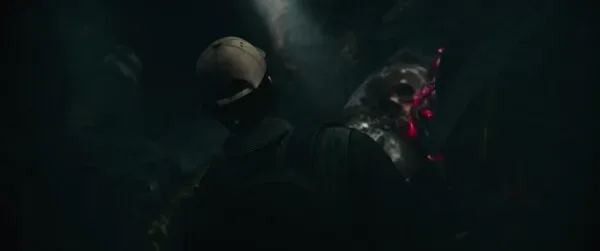
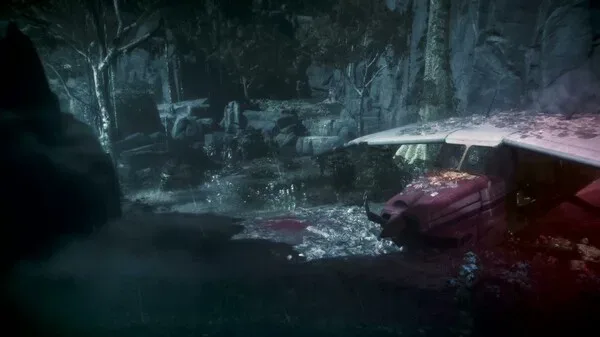
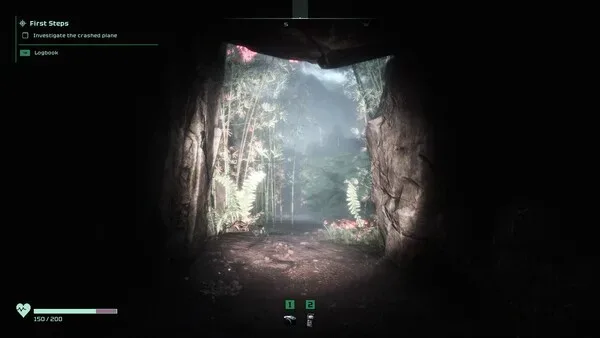
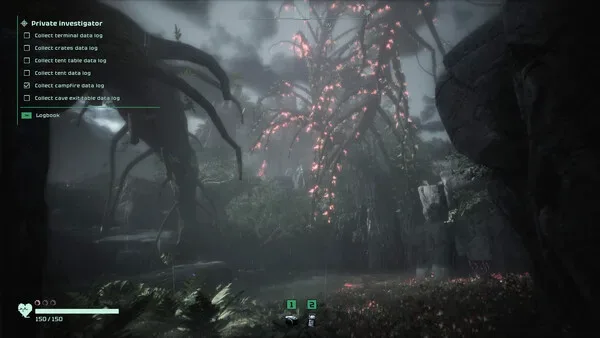
The premise places a field operative on an unnatural island where dinosaurs roam among vegetation altered by an ectoparasitic organism. The player’s assignment is not simply to escape: it involves investigating a supposed source of immortality, documenting the prehistoric ecosystem, gathering samples and tracing what happened to expeditions that arrived earlier. One of those expeditions was led by the protagonist’s parents, tying the wider investigation to a personal mystery.
For players keeping track of the day’s PC arrivals, Wilderdark joins the wider slate covered in our November 10, 2026 games release roundup. Its particular angle is a survival-horror structure built around observation and avoidance rather than a promise of power over the island’s largest threats.
Stealth is the survival tool, not a side activity
Junkfish describes stealth as Wilderdark’s central survival mechanic. The island’s apex predators hunt by sight and sound, so remaining unseen and managing noise are positioned as the main ways to stay alive while moving through jungle, derelict research camps and ruins infected by the parasite.
That wording matters because “stealth” can mean very different things across games. Here, it is framed less as an optional method for gaining an advantage and more as the baseline response to danger. A player navigating an area must consider where they can be seen, what sounds their movement or actions may create, and when the safest decision is to pause rather than press forward.
In practical terms, the game’s threat design is meant to make the environment readable in more than one way. Dense plants may obscure a route, but can also limit visibility. An abandoned camp may provide clues, materials or a place to inspect, but it also remains part of a landscape patrolled by predators. The tension comes from having objectives that require attention to the world while the same world can punish careless attention.
Junkfish founder and director Adam Dart said the studio wanted players to feel vulnerable, with sounds capable of signalling danger and each discovery raising additional questions. That is a clear statement of intent: the island’s creatures, the altered flora and the investigation are designed to work together, rather than treating the narrative material as a separate layer between encounters.
Photography and samples make investigation part of play
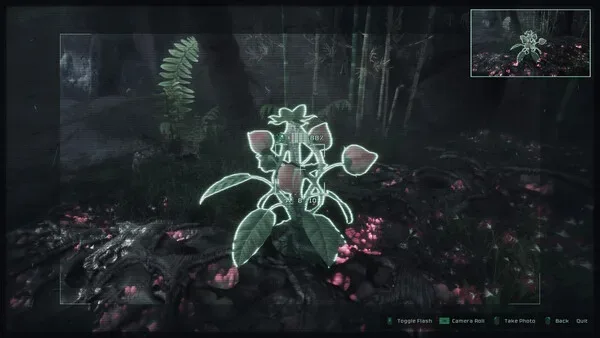
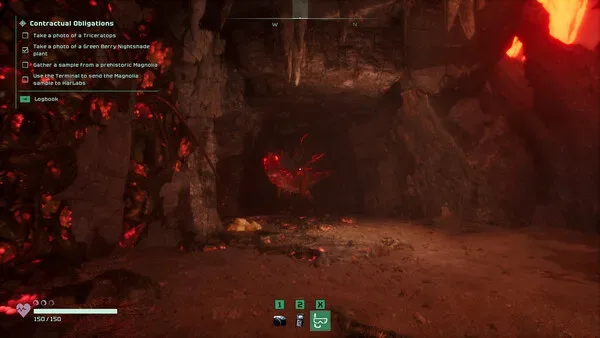
Wilderdark gives its operative work beyond movement and survival. Players are tasked with documenting findings through photography and collecting samples, alongside carefully observing the environment. These activities fit the role of a field operative and establish the prehistoric ecosystem as something to study, not merely a backdrop for chases.
Related coverage includes Wilderdark Brings Dinosaur Stealth Horror to Steam.
Photography, in this context, is an in-game method of recording a discovery. It signals that noticing a subject is meaningful enough to preserve as evidence. Sample collection similarly turns the island’s biological mystery into an objective: the player is not just told that something is wrong with the environment, but is asked to engage with that question through materials found in the field.
The source of the island’s corruption is described as an ectoparasitic organism. An ectoparasite is a parasite that lives on the outside of its host, as opposed to within it. The supplied details do not establish the organism’s full nature, origin or exact relationship to the dinosaurs and plants, so those questions remain part of Wilderdark’s mystery. What is established is that the organism has corrupted plant life and that parasite-infested ruins form one of the game’s locations.
The promise of immortality adds another layer to the investigation. It provides a reason for expeditions to reach the island while inviting an obvious question: whether the object of the mission and the island’s biological corruption are connected. Wilderdark’s setup does not answer that upfront. Instead, it asks players to uncover the fate of those previous teams, including the expedition involving the operative’s parents.
Crafting supports the expedition
Crafting is also part of the survival loop. Players can make essential tools from materials they find, which places resource gathering alongside scouting, photography and sample collection. The available information does not specify individual recipes, weapons or tool types, so expectations should stay focused on the stated function: found materials can be turned into equipment needed for progress and survival.
That limited but important description suggests a deliberate division of attention. Players will need to watch for predators while also looking for resources, and may need to decide when it is safe to investigate an area closely enough to obtain materials. In a game where sound and visibility matter, every detour has potential risk. The value of a crafted tool therefore is not just what it does after it has been made, but the danger involved in acquiring the ingredients.
The combination of environmental observation, documentation, collection and crafting also gives Wilderdark an investigative rhythm distinct from a straightforward escape scenario. A player’s route through the island is not described as a linear sprint from threat to threat. It is an expedition through a hostile ecosystem, with evidence to record and tools to prepare while the conditions for staying alive remain restrictive.
A return to Junkfish’s stealth-horror focus
Junkfish presents Wilderdark as a return to stealth survival horror following Monstrum. The new game’s structure carries that emphasis into a different setting: prehistoric predators, a strange island ecology and a mission involving immortality replace any need for the player to dominate confrontations.
The launch version also incorporates feedback collected from Wilderdark’s demo. The listed changes include a full tutorial, improved dinosaur designs and animations, quality-of-life updates and bug fixes. A full tutorial is especially relevant for a game built around interlocking systems such as hiding, sound awareness, photography, collection and crafting. It can establish the intended rules of survival before players have to apply them in the most dangerous locations.
“Quality-of-life” is a broad term for changes intended to make a game clearer, smoother or less cumbersome to use. No specific quality-of-life adjustments are detailed here, and the same is true of the bug fixes. The important point is that the launch build is not identical to the demo: it includes revisions prompted by community response, along with the stated upgrades to dinosaur visuals and movement.
What Wilderdark’s setup means for prospective players
Wilderdark is likely to be most relevant to players looking for horror where information is valuable but costly to obtain. Its named pillars are not just dinosaur encounters: they are stealth, environmental awareness, documentation, sample gathering and tool crafting. The field-operational framing gives all of those activities a shared purpose, while the missing expeditions and the protagonist’s family connection give the investigation an emotional stake.
Players should not assume the island is a conventional dinosaur adventure where every creature is primarily an enemy to defeat. The supplied description instead highlights apex predators that must be avoided through concealment and care. Likewise, the organism and immortality premise are story hooks to investigate, not fully explained lore points at the outset.
With Wilderdark now on Steam, the immediate decision is straightforward for PC players interested in that particular mix of survival pressure and scientific investigation. The launch discount lasts until November 17, while the core proposition remains an island expedition in which a photograph, a sample or a carefully crafted tool can be as important as finding a path out of a predator’s sightline.