
Rob Run, a free-to-play Steam game built around a large-scale cops-and-robbers setup, is drawing attention at a moment when crime-game comparisons are especially easy to make. Its pitch is direct: a “brutal crime sandbox” designed for thousands of players, with participants taking the side of police or criminals. That structure gives it an immediate foundation for unpredictable multiplayer encounters, social chaos and the sort of short, funny clips that can travel quickly between groups of friends.
But attention is not the same thing as a clean recommendation. Rob Run currently carries a Mixed Steam review status, with approximately 50% positive feedback referenced in the available information. The reviews paint a split picture. Some players like the central concept and call the gameplay fun. Others point to serious friction around playing alone, connecting to servers and performance. Steam’s listing also discloses that AI was used to create certain graphic elements, a detail some prospective players will want to weigh before downloading.
A simple multiplayer premise with a lot of moving parts
At its core, Rob Run appears to lean into an asymmetrical social fantasy: police pursue criminal players, while criminals attempt to operate under that pressure. “Asymmetrical” does not necessarily mean each side has completely different rules; more broadly, it describes a multiplayer arrangement where teams or roles have different goals, abilities or circumstances. Cops-and-robbers games can create that asymmetry naturally. One group has to locate, stop or contain the other, while the other has to evade, outnumber or outmaneuver its pursuers.
The promise of thousands of players raises the stakes of that formula. Large populations can make a game world feel active and supply a steady stream of unexpected player interactions. They can also make moment-to-moment experiences much harder to control. A player may stumble into a satisfying chase one minute and a lopsided encounter the next. For a sandbox game, that unpredictability can be the point. A sandbox is generally a game structure that gives players room to set their own objectives and create situations rather than moving them through one narrowly directed path.
That freedom helps explain the interest around Rob Run. A crime sandbox does not need a tightly authored mission for every memorable moment; a pursuit, ambush, escape or unlikely team-up can become the story. The same quality can also make first impressions volatile, especially when players arrive solo rather than with a coordinated group.
Why the review split matters more than the label alone
A Mixed rating is useful as a signal, but it does not identify one universal problem or tell every player what their experience will be. In Rob Run’s case, the specific criticisms are more useful than the aggregate label. Reports from negative reviews include difficulty for solo players, cases where groups of police or criminals overwhelm an individual, trouble logging into online servers, and performance complaints.
Those are separate issues with separate practical effects:
- Solo-play balance concerns the fairness and enjoyability of entering a multiplayer match without a premade group. If organized teams can consistently dominate unaffiliated players, the game may be far less approachable for anyone dropping in alone.
- Server access concerns whether players can connect to the online service at all. For a game whose premise relies on a vast active population, an inability to log in is not a minor inconvenience; it prevents the core experience.
- Performance refers to how reliably the game runs, including whether it maintains playable responsiveness and stability. The supplied feedback does not establish a technical cause, but complaints in this area are especially relevant in a fast-moving multiplayer game where reactions and movement matter.
These complaints should not be inflated into a verdict that every player will face them. They are player-reported concerns, not a comprehensive technical assessment. Yet they are directly relevant for anyone deciding whether the game’s appealing premise outweighs the chance of a rough start.
Related coverage includes Rob Run Surges on Steam Despite Mixed Reviews, AI Disclosure and Server Complaints.
The positive comments are important, too. Players praising the game’s concept and calling it fun suggest that the central police-versus-criminal setup is landing for at least part of its audience. That distinction matters. A game can have a compelling idea while still struggling with reliability, balance or onboarding. Conversely, a technically smoother game can fail to create memorable situations. Rob Run’s early reception indicates that its hook has appeal, while the surrounding experience remains a point of contention.
The practical difference between playing solo and arriving with a group
The solo complaints are perhaps the clearest warning for newcomers. In a role-based multiplayer crime game, groups can share information, cover multiple directions and concentrate force. A solo player has fewer options when a coordinated team appears, whether that team is enforcing the law or committing crimes. The reported problem is not simply that multiplayer is competitive; it is that an individual can feel trapped between groups on either side.
For players curious about Rob Run, the practical implication is straightforward: expectations should depend on how they intend to play. People looking for spontaneous mayhem with friends may find more of the game’s intended social appeal than someone seeking a consistently manageable solo experience. That does not make solo players a lesser audience. It does mean early feedback suggests they should be particularly cautious about assuming the game will provide even encounters.
It is also worth separating a game’s emergent chaos from a game’s balance. Emergent gameplay is the unplanned action created by players interacting with a system: a chase going wrong, rivals accidentally helping one another, or an improvised escape. It is a major attraction of crime sandboxes. Balance, meanwhile, is about whether the systems give participants a reasonable chance to participate meaningfully. A wild encounter may be entertaining once; repeated helplessness is much less likely to be.
AI disclosure is part of the decision, not the whole story
Rob Run’s Steam page states that AI was used in the creation of certain graphic elements. That is a bounded disclosure: it identifies the use of AI for some visual material, but the available information does not support broader claims about the game’s art pipeline, gameplay systems or development process.
For players, the relevant point is transparency. Some will see any generative-AI involvement in a game’s assets as a reason not to support it. Others may focus more heavily on the game’s quality, its online stability or how much of the material is affected. Neither response changes the disclosed fact, and neither should lead to assumptions beyond it. The clearest approach is to treat the disclosure as one purchasing—or, here, downloading—consideration alongside the early review record.
Because Rob Run is free-to-play, the immediate financial barrier is lower than it would be for a paid release. That does not erase the value of a player’s time, account access, storage space or tolerance for technical issues. Free entry can make experimentation easier, but it should not be confused with a guarantee that the experience will suit everyone.
Crime-game comparisons have limits
Rob Run is arriving amid heightened interest in crime games, with Grand Theft Auto VI on the horizon this month. The comparison is understandable at a surface level: both occupy a broadly criminal-game conversation. It is not, however, a useful basis for assuming that the two experiences are interchangeable. Rob Run’s available description emphasizes a multiplayer police-and-criminal sandbox for thousands of players, while the information here does not establish comparable scope, structure or features.
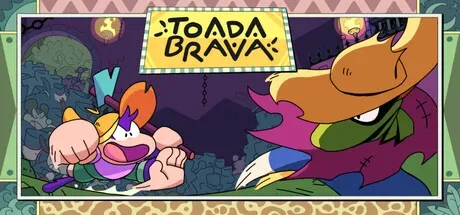
Calling it an alternative to a major series may make for an easy headline, but prospective players are better served by judging what is actually known: an online, free-to-play game centered on player roles and large-scale interaction, with an appealing premise but distinctly uneven early feedback. For a different look at an upcoming PC project, see Toada Brava’s Kickstarter progress.
What to keep in mind before jumping in
Rob Run’s current position is easy to summarize without overselling it. There is visible interest in its crime-sandbox idea, and some players are enjoying the social, free-form gameplay. At the same time, reports of connection trouble, performance problems and difficult solo conditions are substantial enough that a new player should enter with realistic expectations.
- Expect a game built around online interaction rather than a self-contained solo experience.
- Take the Mixed review status seriously, then read for recurring details rather than relying only on the percentage.
- Consider the stated AI use in certain graphic elements if that affects where and how you choose to spend time.
- Remember that free-to-play lowers the upfront cost, not necessarily the risk of technical frustration.
- Do not treat broad crime-game comparisons as proof of similar content, scale or polish.
That leaves Rob Run as an intriguing but unsettled proposition. Its strongest selling point is the possibility of shared, unscripted multiplayer stories. Its largest question marks are whether its servers, performance and solo-player experience allow enough people to enjoy those stories consistently.