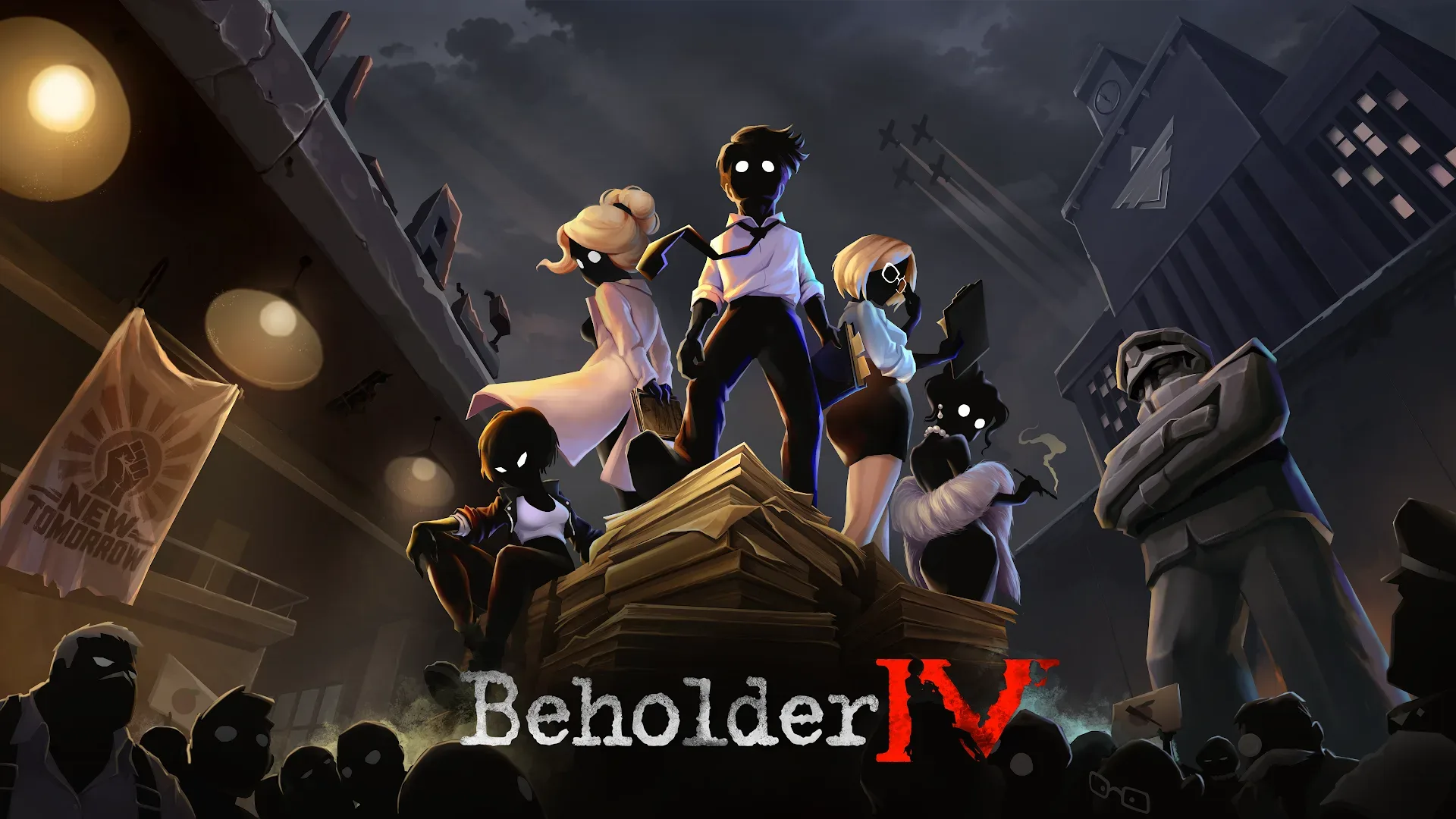
Alawar has announced Beholder 4, a new entry in the dystopian narrative series, during the franchise’s 10th-anniversary celebration. The game is in development for PC, where it can be wishlisted on Steam; no release date has been provided.
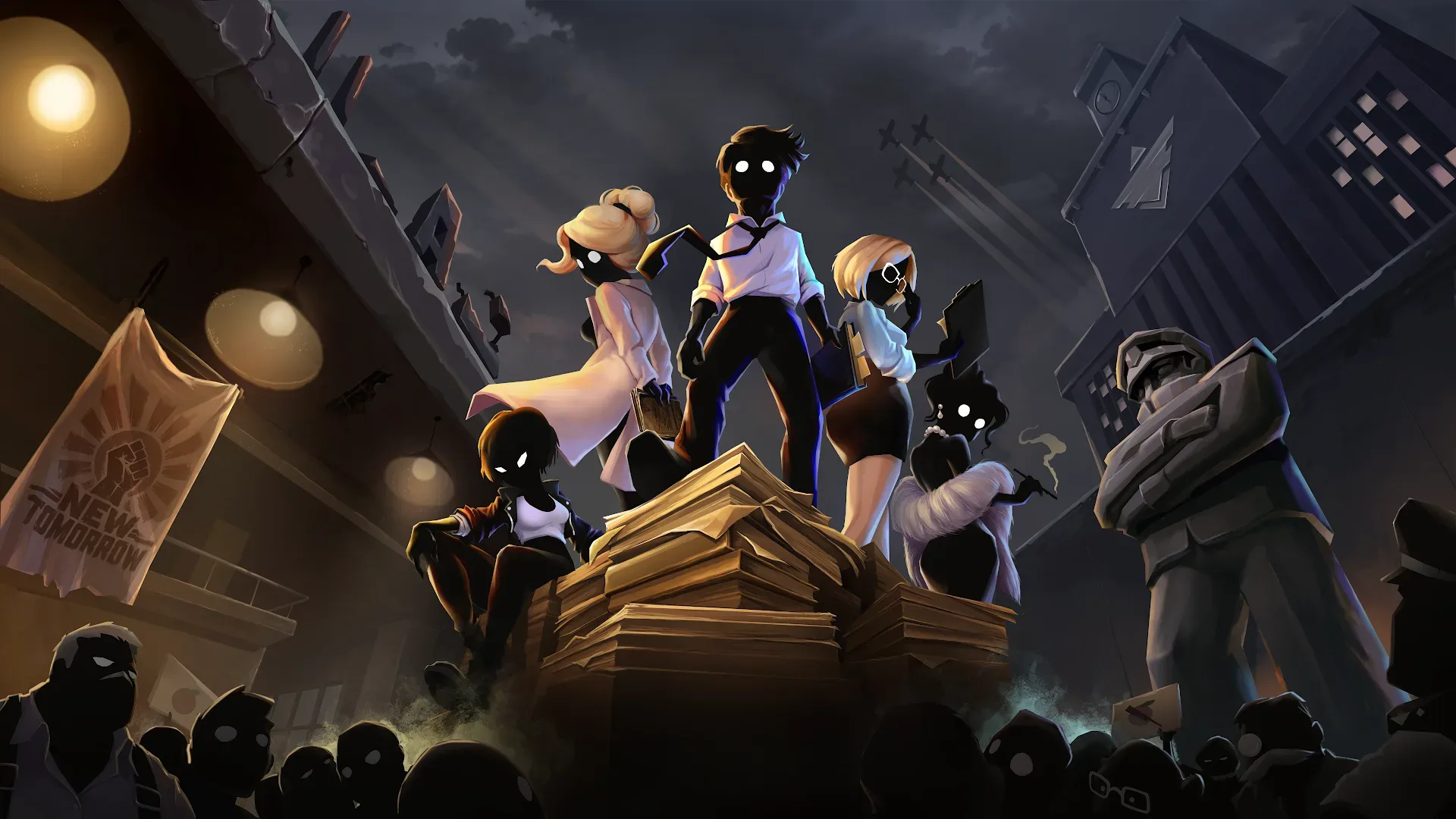
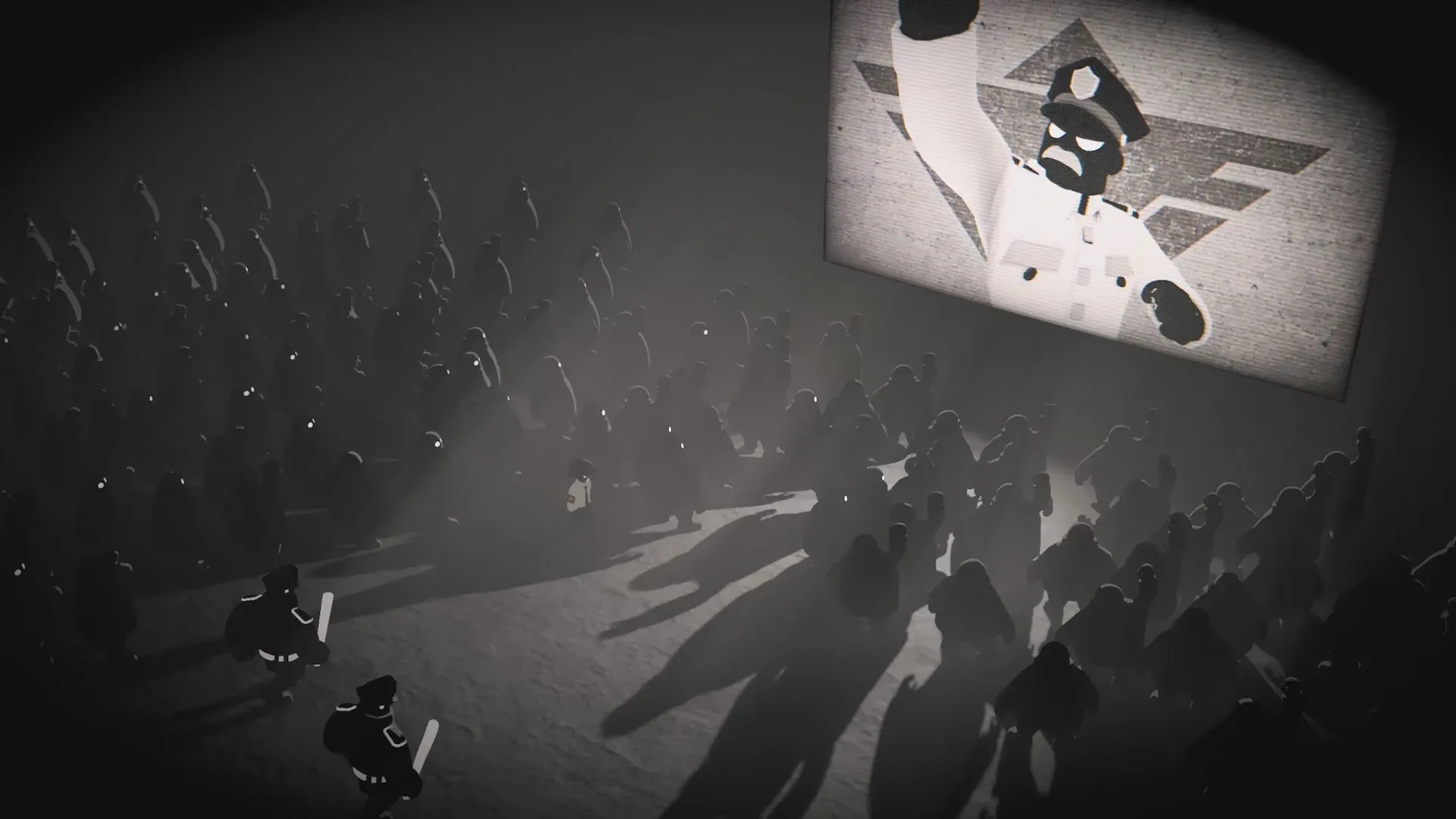
The new game changes the player’s position within its authoritarian setting in a particularly dangerous way. Rather than simply operating at the margins of the State, players take the role of a young Ministry official with a promising career. Publicly, that character must appear ambitious, diligent and loyal to their superiors. Privately, they are working for an underground resistance.
That double life is the core of Beholder 4’s announced premise. The player is not merely avoiding an oppressive system: they are expected to function within it well enough to gain trust, access and influence, while covertly stealing documents, undermining operations and collecting intelligence for people opposed to the regime.
A resistance operative wearing a Ministry badge
The setup gives the game’s espionage a built-in tension. Advancement in the Ministry should, in theory, place the protagonist closer to useful information and more powerful people. But professional success also means greater scrutiny, larger responsibilities and more chances for a mistake to become visible. A character who looks insufficiently loyal risks suspicion; one who looks too loyal may find the work of resistance harder to justify.
Alawar has identified several activities planned for Beholder 4: planting wiretaps, cracking safes, building relationships with people on opposing sides and destroying evidence ahead of police raids. Those actions point to a game built around information management as much as direct sabotage.
A wiretap, in this context, is covert surveillance used to gather conversations or evidence. A safecracking task implies gaining access to protected documents or valuables. Neither term confirms exactly how these systems will play, whether through puzzles, menus, branching scenes or another format, but together they establish the type of clandestine work the protagonist is meant to undertake.
The relationship element may be the most volatile part of the concept. Maintaining ties across opposing factions is not simply a matter of meeting allies. The Ministry, the resistance and people caught between them can have competing expectations, and the game explicitly frames decisions as consequential. In practical terms, players should expect choices to carry risk rather than serve as harmless dialogue decoration, though the announcement does not yet detail the game’s branching structure, endings or failure states.
What the announced activities suggest
Beholder 4’s early description places pressure on timing and discretion. Destroying incriminating evidence before a police raid is a clear example: the problem is not only whether the player obtained dangerous material, but whether they can prevent that material from being found at the worst possible moment. That turns information into a liability as well as a resource.
Likewise, stealing documents and collecting intelligence are distinct jobs. A document may be physical proof, an order or a record that can damage someone if exposed. Intelligence is broader: knowledge that can inform the resistance’s next move, reveal an operation or alter whom the player chooses to trust. The distinction matters because a Ministry insider can be useful without openly attacking the institution at every opportunity. Sometimes the most effective act in a surveillance state is learning what it intends to do.
There is also a clear conflict between short-term cover and long-term resistance work. Sabotaging an operation may help the underground immediately, but it can draw attention. Cultivating a reputation as a reliable official could preserve access, yet possibly force the protagonist to participate in morally grim work along the way. Those are thematic implications of the premise, not confirmed mechanics, but they explain why the Ministry role is more than a new job title.
For players interested in PC games that make identity and player-driven roles central to their appeal, the wider space remains active. Open//77 Alpha’s Night City roleplay focus offers a different example of how a game world can encourage players to inhabit a chosen persona. Beholder 4’s announced angle is narrower and more narratively fraught: its protagonist must deliberately perform loyalty while working against the power structure that employs them.
Consequences are the key promise, but details are still limited
“Every decision carries consequences” is a major part of the announcement, and it is the appropriate lens through which to read the rest of the feature list. The claimed gameplay actions are not isolated errands. Wiretapping someone, opening a safe, befriending a faction member or concealing evidence all have obvious potential to change who is safe, who is suspicious and what paths remain available.
Still, it is important not to read more into that promise than has been confirmed. There is no stated release window, no confirmed console version, no outlined progression system and no specific explanation of how consequences will be tracked. The only announced platform is PC. Players looking to follow development can wishlist Beholder 4 on Steam, but should treat the current reveal as a premise and a set of intended activities rather than a full feature breakdown.
The lack of a date also means there is no basis to infer how far along development is. “In development” establishes that the project is being made; it does not establish a launch year, a public test or the timing of further information.
The anniversary extends beyond the new game
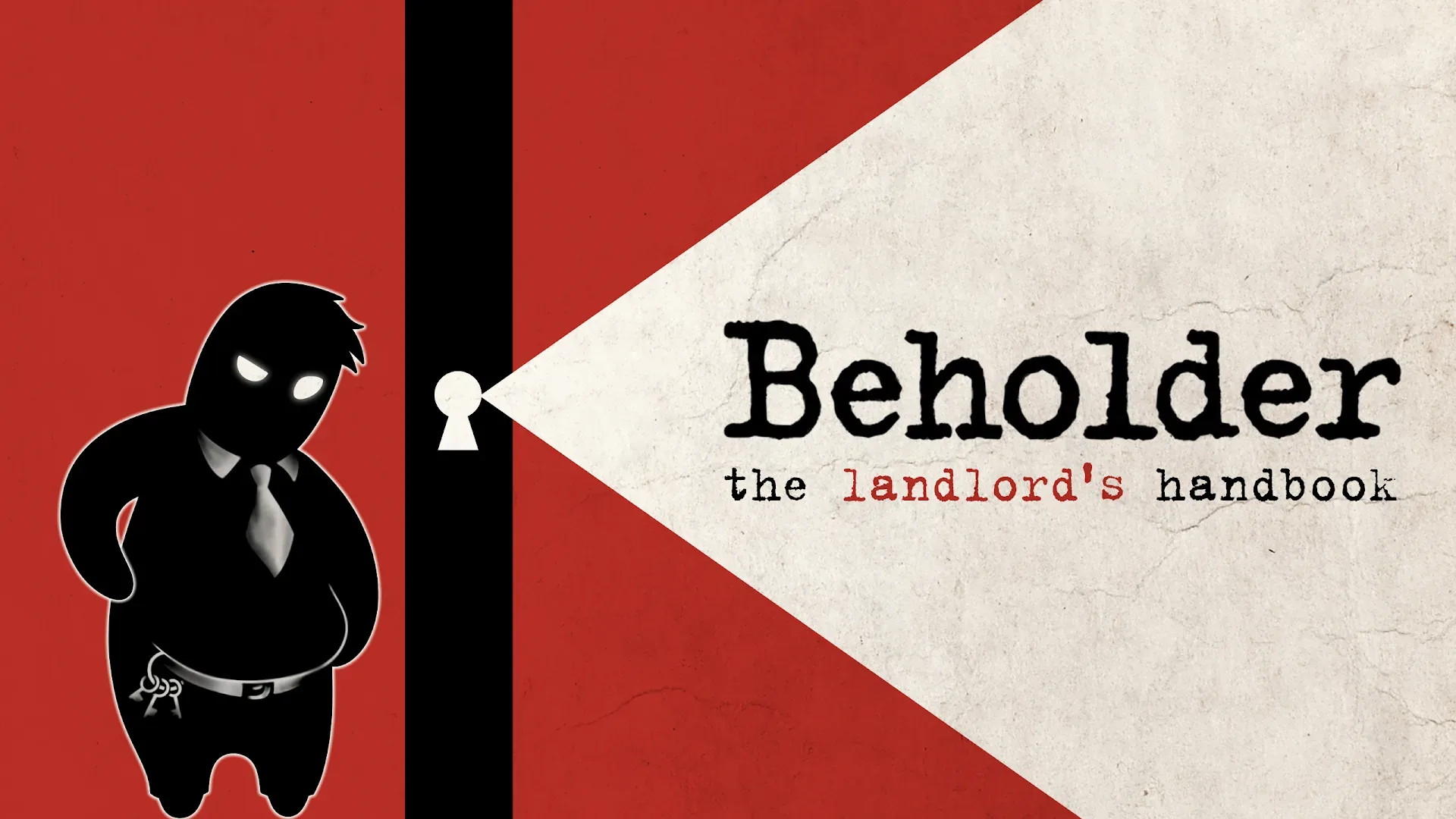
The 10th-anniversary plans also include Beholder: The Landlord’s Handbook, a digital comic available now on Steam. It is presented as an illustrated government field manual for apartment managers, extending the series’ bureaucratic and authoritarian framing into a different format.
The comic has a 10% launch discount during its first two weeks. Separately, the original Beholder is discounted by 90% on Steam through November 24. The two offers are distinct: the former applies to the new digital comic’s initial launch period, while the latter applies to the original game through the specified date.
That pairing makes the anniversary useful both for people following the forthcoming sequel and for newcomers who want a lower-cost route into the series’ original game. The comic, meanwhile, appears designed less as a replacement for a game and more as a companion piece that leans into the setting’s official-manual aesthetic.
What to watch for next
The most meaningful future updates will be those that clarify the shape of the Ministry career and the resistance campaign. It will matter whether professional advancement is a structured progression path, how player relationships are tracked, and how openly the game communicates the cost of individual choices. More detail on wiretapping, safes and raids would also show whether these are recurring systems or story-specific scenarios.
For now, Beholder 4 has a strong central contradiction to build upon: the protagonist’s safety depends on being convincing inside the Ministry, while their purpose depends on helping bring that system down. With its PC development confirmed and a Steam wishlist now available, the game is positioned as the next chapter in the series’ examination of surveillance, pressure and compromised choices.