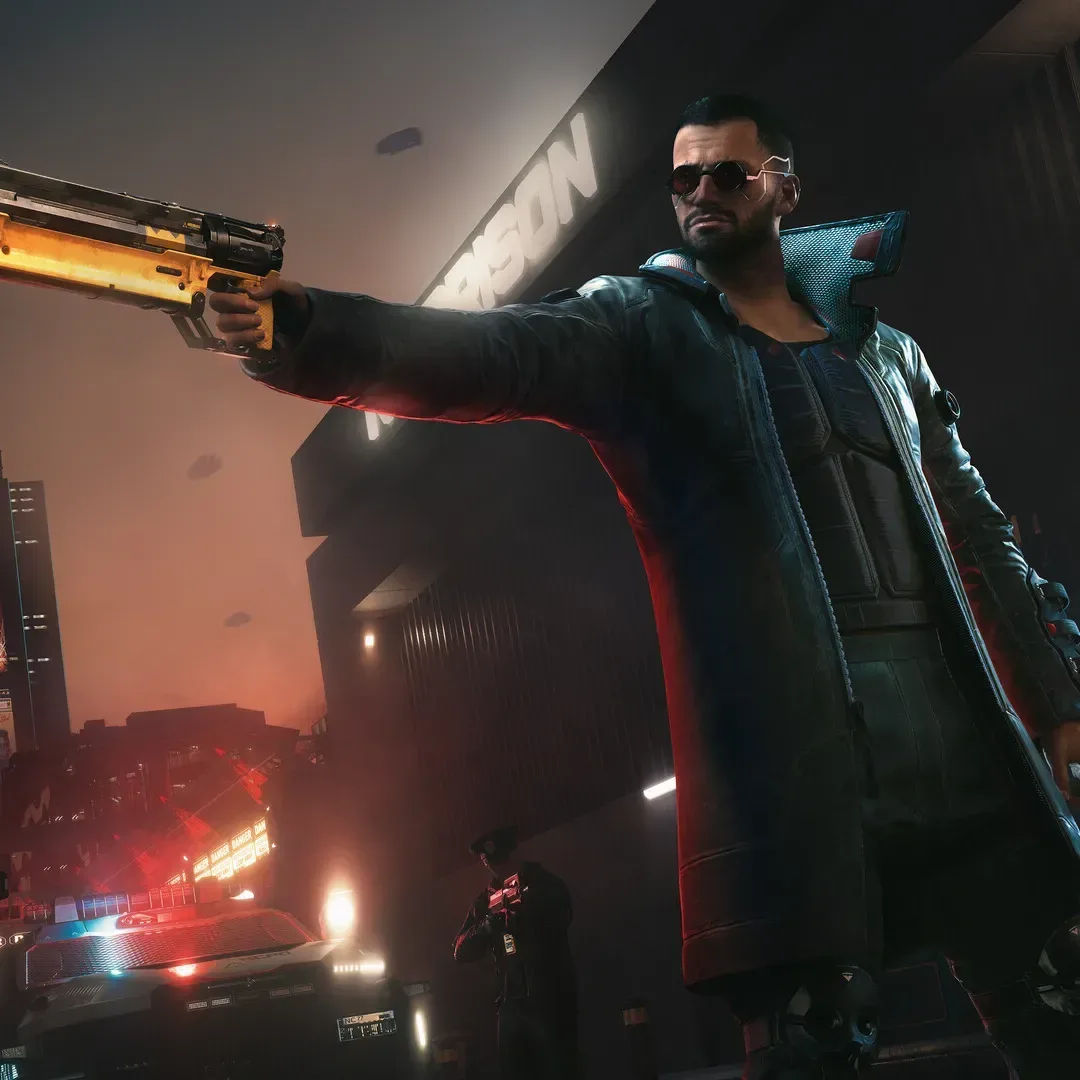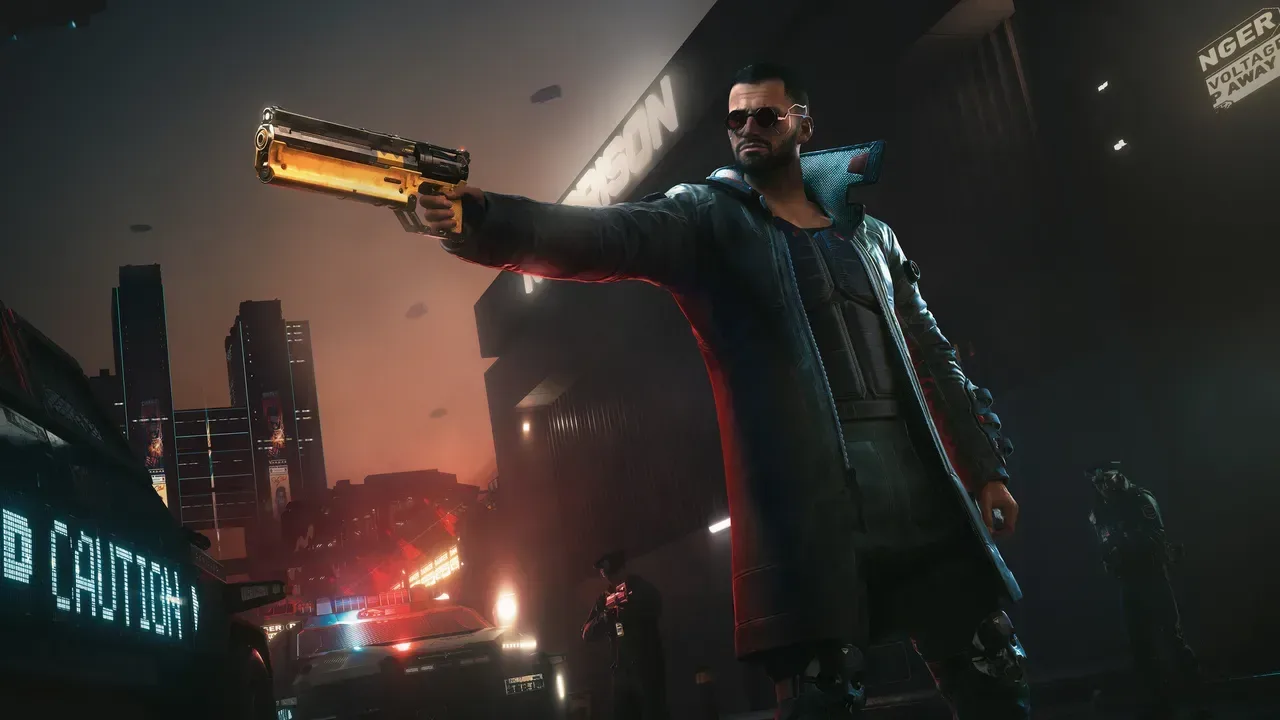
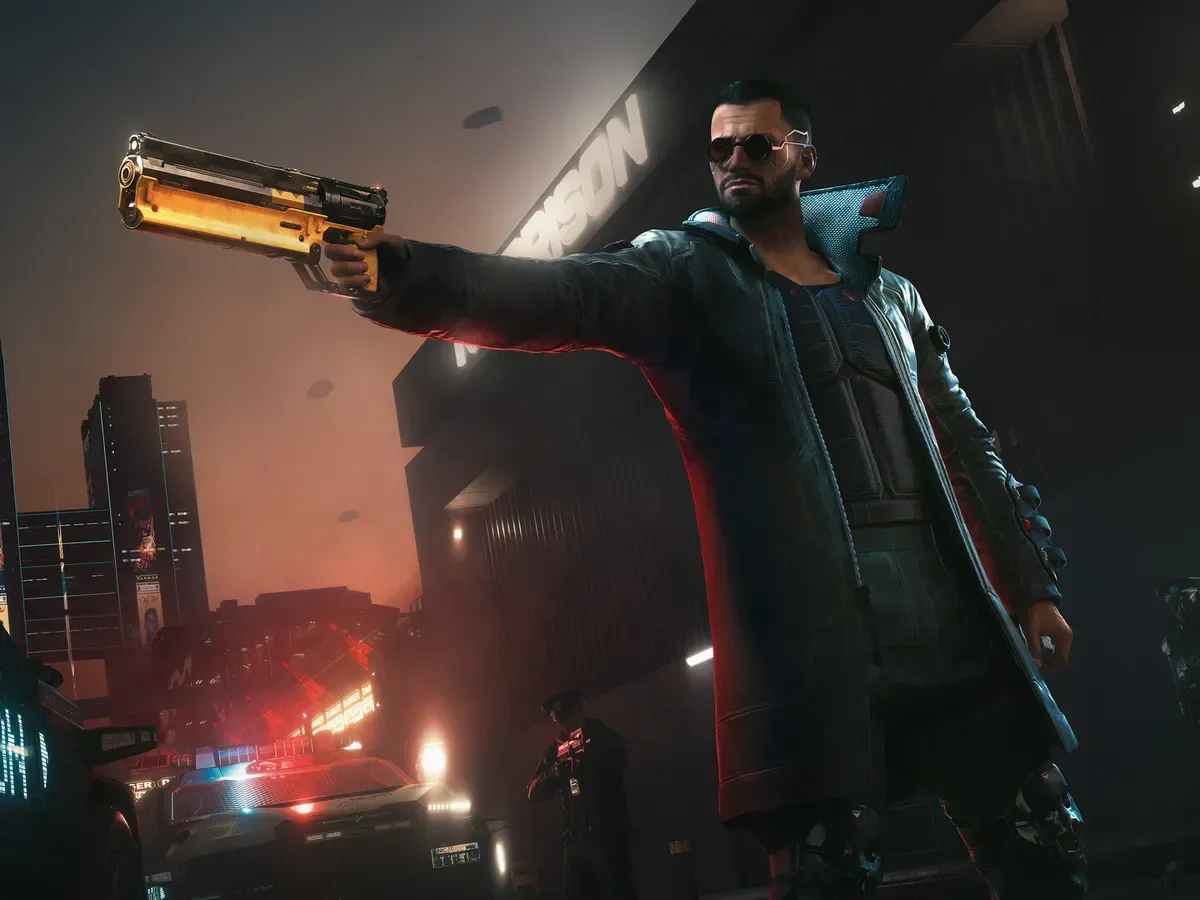
Cyberpunk 2077’s Night City is getting a distinctly different kind of multiplayer life through Open//77, a newly released alpha mod built around large, themed player-run servers. Rather than primarily recreating the single-player campaign with friends, the project positions the city as a shared sandbox: a place for roleplay, open-world meetups, combat-oriented servers, altered character activities and vehicle customisation.
That makes Open//77 meaningfully different from NightCoop, another recent multiplayer project for Cyberpunk 2077. NightCoop supports groups of up to eight players progressing through the main story together, closer to a cooperative reinterpretation of the original game. Open//77, meanwhile, is aimed at far bigger gatherings. Servers can host more than 100 players, while the NCRP roleplay server is listed as supporting as many as 1,000.
The mod is available in alpha, so it is publicly downloadable but remains an in-development build rather than a finished, fully stable release. Anyone considering it should treat that label seriously: alpha software can change quickly, and compatibility—particularly with an existing mod setup—may require extra care.
What Open//77 changes about Night City
Open//77’s central proposition is not simply “more players in the campaign.” It gives servers room to establish their own identities and activities outside Cyberpunk 2077’s base-game mission flow. Players can take on different roles and tasks, and the project includes a third-person perspective option visible in its footage.
Third-person play is a practical change as much as a visual one. Cyberpunk 2077 is fundamentally designed around a first-person view in normal gameplay, so a camera pulled back behind the character makes avatar presentation more prominent. That matters in a roleplay setting, where other players’ clothing, movement, vehicles and social scenes can be part of the activity rather than background detail between quests.
The showcased social side is especially revealing. One example has players gathering in a rented room to play a board game. It is a small-scale scenario, but it illustrates the project’s wider goal: creating reasons for players to occupy the city together that do not depend on a traditional combat encounter or story objective. An expanded vehicle-customisation menu similarly shifts attention toward expression and social presence.
In broad terms, the mod reframes Night City from a largely solo RPG environment into a hostable venue. The appeal is not only the possibility of a crowded street or a larger firefight. It is that individual servers can decide what a gathering is for, whether that is in-character roleplay, player-versus-player action or lower-pressure social play.
Server themes will shape the experience
Open//77 does not offer one universal style of multiplayer. Every server has its own theme, and that distinction should be more important to prospective players than the headline player count.
Related coverage includes Open//77 Brings Massive Roleplay Servers to Cyberpunk 2077 in Alpha.
- Roleplay servers are built around players adopting characters, jobs or shared scenarios. NCRP is the largest example named so far, with capacity for up to 1,000 players.
- PvP-focused servers put greater emphasis on player-versus-player combat. “PvP” means players are directly competing or fighting one another, rather than working exclusively against game-controlled enemies.
- Social sandbox play encompasses activities such as meeting in rented spaces, experimenting with visual options and simply spending time in the open world with others.
Those formats can lead to radically different expectations despite using the same underlying game. A roleplay server may prioritize a shared setting and community-defined behavior, while a PvP server may be for players seeking conflict and competition. The sensible approach is to read a server’s theme and rules before joining rather than assuming that every Open//77 session offers the same kind of Night City.
Requirements: Cyberpunk 2077 and Phantom Liberty
Open//77 requires ownership of both Cyberpunk 2077 and its Phantom Liberty expansion. That is the baseline requirement before a player can use the project.
It also supports mods, including a system that can temporarily download a host’s mods when a player joins that host’s server. On paper, that could lower the friction of joining a customised multiplayer space: a visitor does not necessarily need to build the exact same setup manually before connecting.
However, mod support should not be mistaken for a guarantee that every personal installation will work smoothly. A heavily modified copy of Cyberpunk 2077 has already been reported as not playing nicely with Open//77. That is a useful warning for players whose game is full of existing changes, especially after official patches have prompted them to repair or update those changes.
Mod compatibility is the ability of separate modifications—and the game version they target—to operate together without breaking features or creating instability. The supplied information does not identify specific conflicting mods, so there is no reliable list of what will or will not work. The clear practical implication is simply that players should expect potential troubleshooting if they bring a complex personal setup into an alpha multiplayer project.
A cautious approach for modded installations
For players interested in Open//77 who have customised their game extensively, a measured approach makes sense:
- Confirm that both the base game and Phantom Liberty are owned, as required.
- Check the theme of the intended server so that its roleplay, social or PvP focus matches what you want from the session.
- Remember that Open//77 is alpha software, so changes and rough edges are part of the current state of the project.
- Be alert to compatibility concerns if your Cyberpunk 2077 install already uses many mods.
- Understand what server-provided temporary mods entail before connecting to a host that uses them.
This is not a claim that Open//77 is unsafe or incompatible with a particular mod. It is a sensible reading of an early-stage project that supports additional modifications in a game where users may already have changed their installations substantially.
AI use is disclosed—and remains a community fault line
Open//77 openly acknowledges the use of AI during development. That disclosure is likely to be an important consideration for some players, not merely a technical footnote.
Here, “AI-assisted code” refers to code produced or aided through artificial-intelligence tools during a mod’s creation. It does not, by itself, tell users exactly how much of a project involved AI, which parts were affected or what that means for performance. It does, however, give players a basis for deciding whether they want to use the project under their own preferences.
The subject has divided the modding community. Fan-made multiplayer work existed well before generative AI entered the conversation, while newer projects have brought fresh attention to how AI tools are used and disclosed. The resulting disagreement is as much about transparency and creative practice as it is about a single project’s feature list.
Earlier this month, Nexus Mods responded by requiring disclosure for mods that use AI-assisted code and allowing users to filter AI-assisted mods from search results or preferences. That does not settle the broader debate, but it gives users an explicit choice in environments that adopt those labels and filters. The industry’s wider investment in developer training and infrastructure remains a separate discussion, as seen in recent plans for developer academies and a developer center, but Open//77 highlights a more immediate player-facing question: what information should creators provide about the tools behind a mod?
For Open//77 users, the key point is straightforward. The project discloses AI use, and prospective players can incorporate that fact into their decision to download it, just as they may consider its alpha status, server style and mod requirements.
A community answer to a multiplayer gap
The interest in projects such as Open//77 is understandable because Cyberpunk 2077 was once intended to receive an official multiplayer mode. That plan was scrapped following the base game’s troubled launch. The result is a conspicuous gap between Night City’s dense urban setting—which naturally invites shared online activity—and the game’s officially available structure.
Open//77 and NightCoop approach that gap from opposite directions. NightCoop speaks to players who want a familiar campaign framework with friends, limited to a group of up to eight. Open//77 instead chases the emergent side of online play: large groups, themed communities, custom roles and player-defined situations. Neither model automatically replaces the other, because they answer different needs.
There is also a Cyberpunk sequel in development, though there is no stated confirmation here that it will include multiplayer. For now, Open//77 is a fan-made alpha project rather than an official resolution to Cyberpunk 2077’s abandoned multiplayer plans.
Its significance is therefore less about declaring Night City “solved” as an online game and more about showing what parts of the setting players want to inhabit together. For someone seeking a cooperative run through the main narrative, NightCoop’s smaller-scale structure may be the better fit. For someone who wants a server-specific social playground where the activity can be roleplay, competitive combat or simply a shared hangout, Open//77 is the emerging alternative—with all the caution that should accompany an alpha mod and a potentially complicated modded installation.