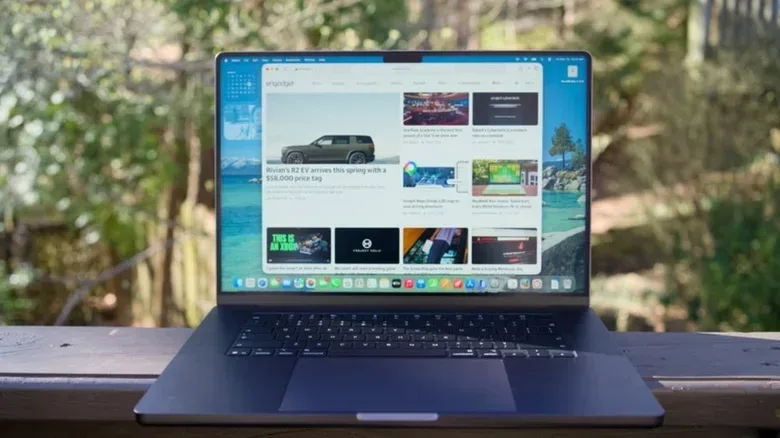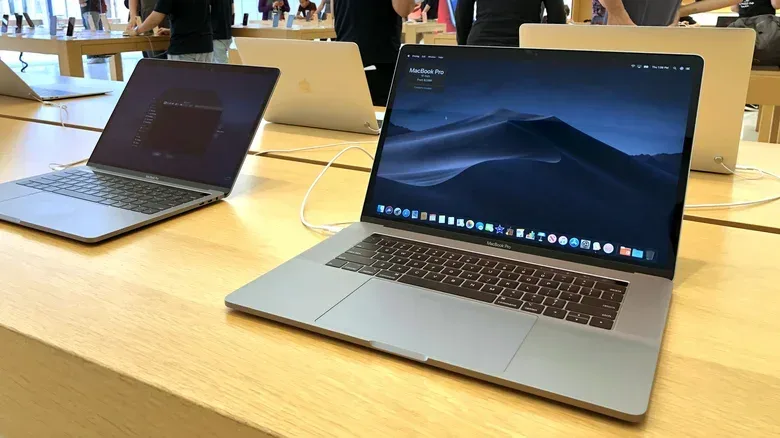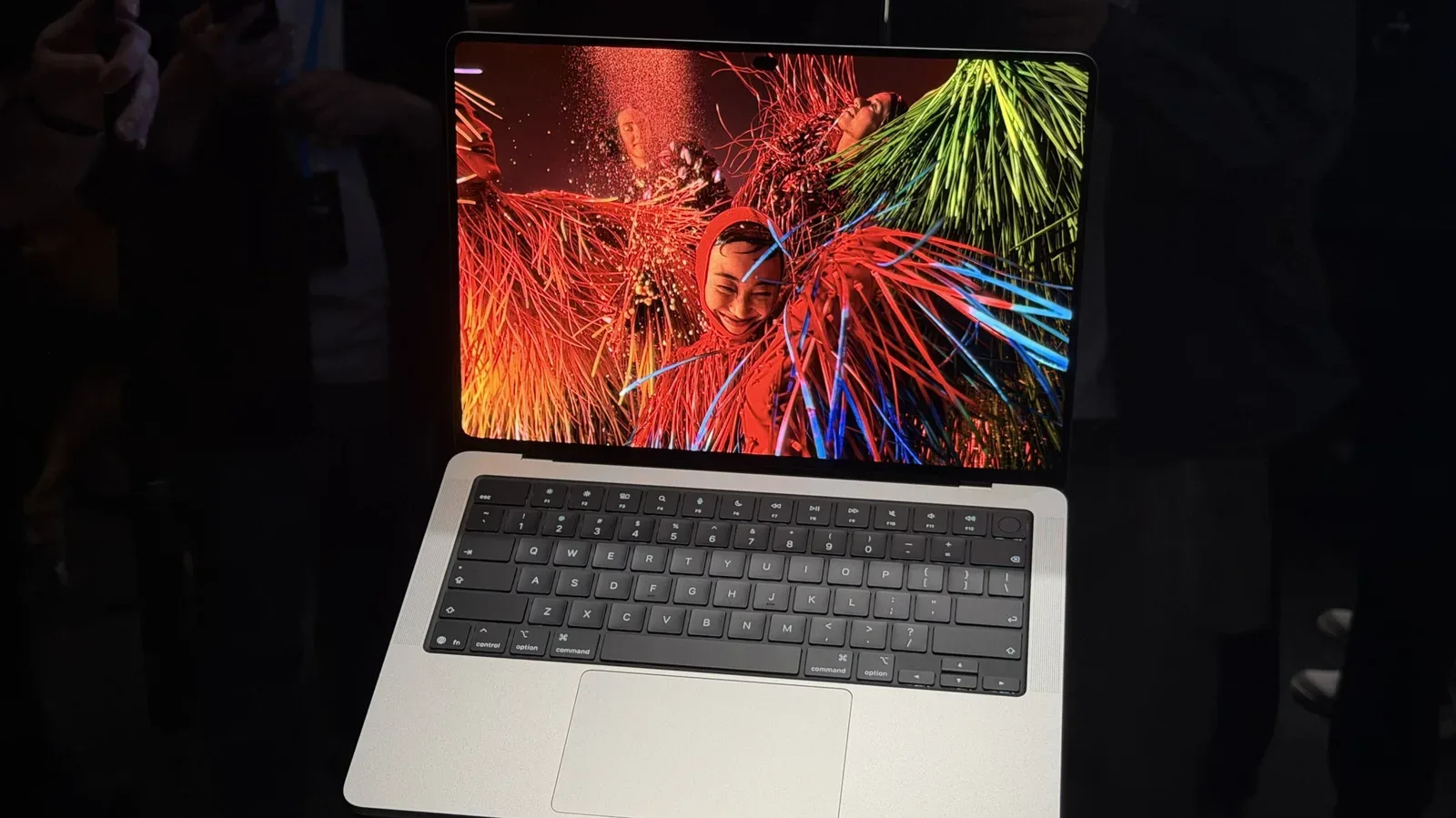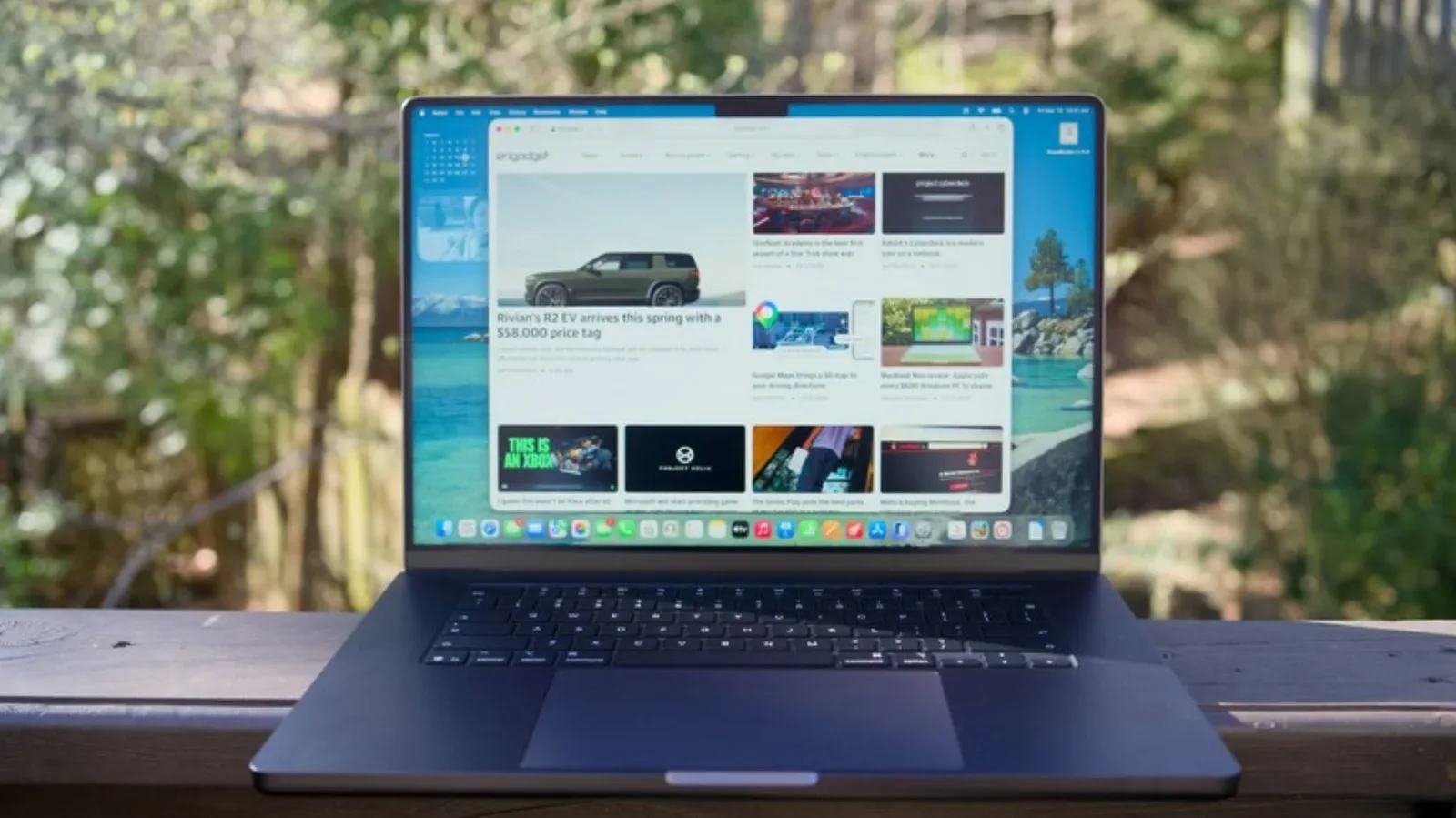
Fifteen years of MacBook Pro progress can be summarized with a surprisingly stark contrast: a 15-inch model from 2011 managed seven hours in a video rundown test, while a current 16-inch MacBook Pro configured with M5 Max reached 30 hours and 46 minutes. That is more than four times the runtime, despite the battery capacity increasing by only about 30%.
The comparison is especially useful because these are broadly similar large-laptop classes. The older machine had a 15.4-inch display and a 77.5 watt-hour battery; the newer one has a 16.2-inch display and a 99.6 watt-hour battery. The screen is a little larger, not smaller, yet the claimed web-browsing endurance is dramatically higher. The big story, then, is not simply that a newer laptop contains a bigger battery. It is that the computer can do its work using far less energy over time.
Battery capacity did not multiply—runtime did
A watt-hour, abbreviated Wh, measures stored energy. In simple terms, it indicates how much energy a battery can deliver before it is empty. The 77.5Wh battery in the 2011 MacBook Pro and the 99.6Wh battery in the newer 16-inch model are separated by roughly 22Wh. That is meaningful growth, but nowhere close to the more-than-fourfold increase represented by the reported runtimes.
Battery life is shaped by both capacity and consumption. A larger energy reserve can extend a laptop’s time away from an outlet, but lower power draw can stretch every watt-hour much further. The figures here point overwhelmingly to the latter. The newer MacBook Pro is using its stored energy more economically.
Using the manufacturers’ stated web-browsing runtimes and battery capacities produces an estimated average draw of around 11 watts for the 2011 machine and about 6.2 watts for the M5 Max system. Put another way, the newer laptop is estimated to consume substantially less power during its rated workload, even before taking its slightly larger battery into account.
Separate rundown figures point to an even wider change: approximately 10.4W in 2011 compared with roughly 3.2W now. Those particular results should not be treated as a laboratory-perfect one-to-one comparison, because testing practices have changed over the years. Still, they reinforce the central finding rather than challenge it: lower energy use, not huge growth in battery size, is doing most of the work.
Why the test details matter
Both official estimates used a similar broad activity: browsing 25 popular websites over Wi-Fi. That is a sensible common reference point, since wireless web use mixes display power, network activity, processor work and general system management. It is not the same as every real-world workload, however. Intensive creative tasks, games, local media work and other demanding use patterns are not represented by a web-browsing figure.
There is also a brightness difference to remember. The 2011 test used 50% display brightness, while the newer test was set eight clicks up from the bottom. Since screen settings influence power use, that means the numbers are informative rather than absolute proof of precisely comparable conditions. The newer model’s huge runtime lead is difficult to ignore, but responsible reading still requires acknowledging that the two procedures were not identical in every variable.
For a buyer, the practical message is simple: advertised battery life is best treated as a workload-specific measurement, not a promise that every activity will last the same number of hours. In this case, it nevertheless provides a clear long-term trend. The MacBook Pro’s ability to browse over Wi-Fi without plugging in has changed radically since 2011.
There is little room left for simply enlarging the pack
The current 16-inch MacBook Pro battery is rated at 99.6Wh, often rounded to 100Wh. That exact figure has an important travel implication. It sits 0.4Wh below the FAA’s 100Wh threshold, above which passengers need airline approval for a lithium-ion battery.
The 2011 battery, at 77.5Wh, had roughly 22Wh of headroom before that threshold. The newer machine has essentially used that space. If the applicable rule does not change, future gains in this class cannot depend much on adding capacity without crossing a meaningful aviation boundary. Efficiency becomes the clearer route to longer runtime.
That constraint makes the physical redesign more notable. The older 15-inch MacBook Pro weighed 5.6 pounds and measured 0.95 inches thick. The 16-inch M5 Max model is listed at 4.7 pounds and 0.66 inches. It therefore combines a slightly larger display and a larger battery with a body that is about 16% lighter and 31% thinner.
Those dimensions do not mean laptop battery design has become easy. Rather, they show why the low-power side of the equation matters so much. Even if there were more room for cells, a major capacity increase would affect size, mass and travel considerations. Reducing the average watts needed for ordinary tasks lets a portable computer become slimmer and lighter while still improving its time away from the charger.
This aviation context is also worth keeping in mind for people who travel with laptops. The 99.6Wh rating puts the newer machine narrowly below the stated 100Wh point at which airline approval becomes necessary. Anyone planning to fly should still check the policies applicable to their trip, but the number explains why a battery just below 100Wh is strategically useful in a high-end portable computer.
For broader travel planning, connectivity can matter nearly as much as endurance: check whether a flight has Starlink Wi-Fi before booking if staying online is part of the plan.
Charging changed nearly as much as unplugged use
The improvement is not limited to how long the new MacBook Pro can run. Its included USB-C power adapter is rated at 140W, compared with the 85W MagSafe adapter supplied with the 2011 model. That is a 65% increase in adapter power.
Watts measure the rate at which power is delivered or used. A watt-hour describes an amount of energy stored; a watt describes how quickly energy is flowing at a moment in time. Those units are related but not interchangeable. The higher adapter rating does not mean the battery is 140Wh. Instead, it means the charging system can support a much higher power input under suitable conditions.
The newer 16-inch model is stated to reach 50% charge in roughly 30 minutes. A USB-C charger rated at 140W or more can provide the same fast-charging result with the appropriate cable. The 2011 specifications do not describe fast charging.
That makes short charging breaks much more consequential. Based on the web-browsing estimate, a half-hour charge to 50% on the M5 Max MacBook Pro represents about eight hours of browsing—more than the full seven-hour result of the 2011 laptop. It is a striking reminder that a battery-life experience involves two questions: how long a system lasts, and how much useful runtime can be recovered when it finally needs power.
There is an important practical distinction here. The 140W figure describes the power capability of the supplied adapter and compatible charging setup, not an automatic guarantee that every USB-C charger and cable will deliver identical results. The stated fast-charging outcome requires a charger rated at 140W or higher and the right cable.
Cycle-life claims stayed the same
Not every battery specification changed across the 15-year gap. Both MacBook Pro batteries are designed to retain 80% of their original capacity after 1,000 charge cycles. A charge cycle is a cumulative measure of using one full battery’s worth of energy; it does not necessarily mean a single trip from 100% to zero.
The matching 1,000-cycle and 80% figures suggest that the defining evolution here is not a newly stated endurance target for the battery’s long-term health. The dramatic difference is in what the computer can accomplish from its available capacity in the first place, plus the speed at which it can replenish that capacity.
Long-term usability also has another limit: software support. The 2011 MacBook Pro cannot run an operating system newer than macOS High Sierra, released in 2017. macOS Mojave requires a MacBook Pro from mid-2012 or later. So while the old model’s cycle target may look familiar on paper, it does not place the two machines on equal footing as modern daily-use systems.
What this comparison actually shows
The tempting headline is that MacBook Pro battery life went from seven hours to nearly 31 hours. The more useful explanation is that the battery went from 77.5Wh to 99.6Wh while the system’s estimated web-use power requirements fell sharply. The physical chassis became lighter and thinner, too, rather than expanding around a giant battery pack.
That is why the change matters beyond a single benchmark. Near the 100Wh travel-relevant boundary, raw battery growth has limited room to carry the next generation forward. Improvements in hardware efficiency are what make longer runtime compatible with a portable form factor. Faster 140W USB-C charging adds a second advantage: when an outlet is available, meaningful battery life can be recovered quickly.
There are sensible caveats around test evolution and brightness settings, and web browsing cannot stand in for every task. But the broad direction is unusually clear. Over 15 years, the large MacBook Pro moved from a seven-hour browsing result to over 30 hours without a remotely comparable expansion in battery capacity. The extra endurance is chiefly an efficiency story.