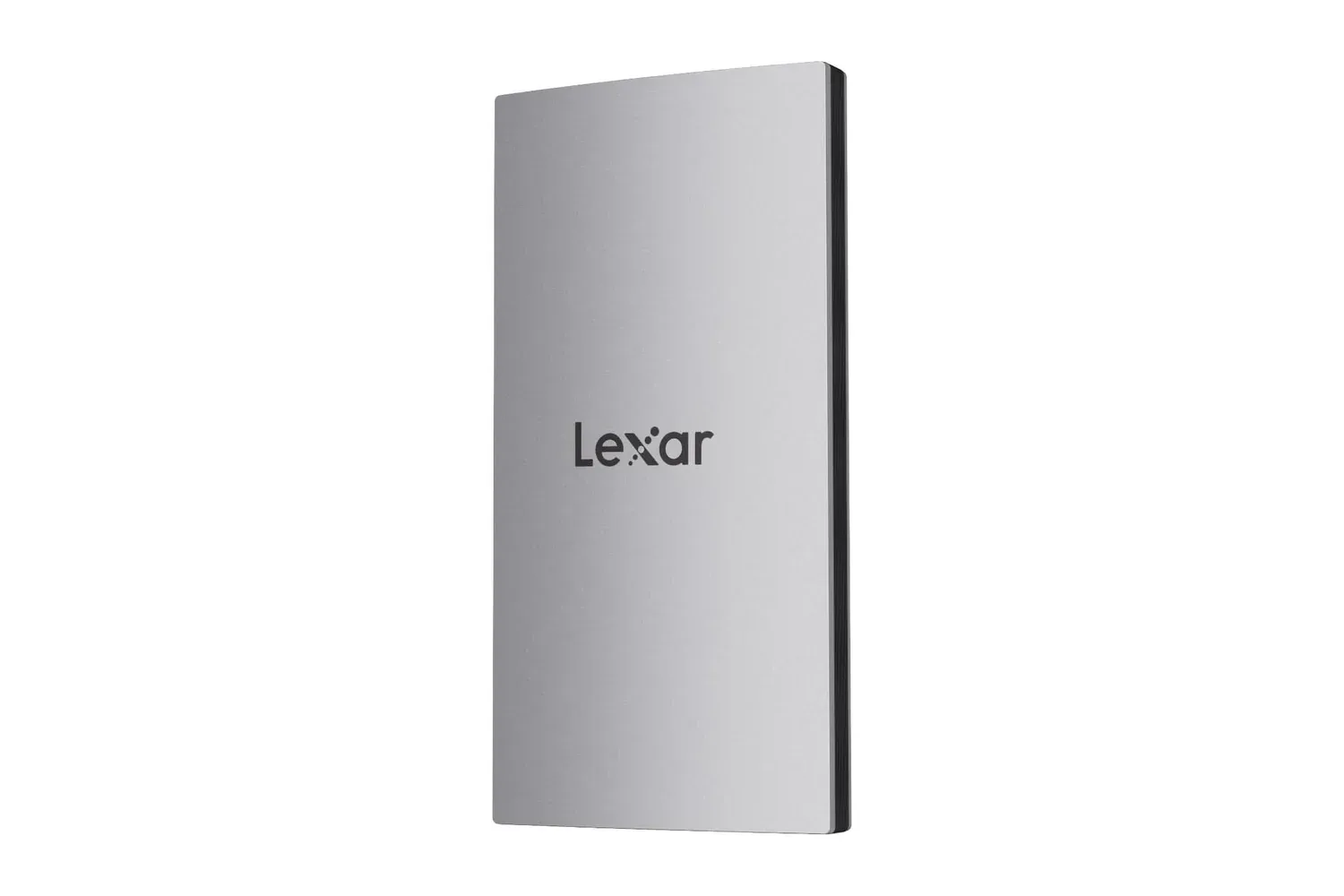
Lexar’s ES3 512GB portable SSD is listed at $130, a $20 reduction from its usual $150 price. That represents a 13% saving on a compact external drive intended for moving and backing up files across computers, mobile devices, cameras and gaming hardware.
The central appeal is portability without relying on an older mechanical hard-drive design. The ES3 measures 4 by 2 by 0.4 inches and weighs about 45 grams, putting it firmly in the pocketable-storage category. Its quoted capacity is 512GB, while its advertised peak transfer figures are up to 1,050MB/s read and 1,000MB/s write through its USB 3.2 Gen 2 connection.
What the $130 Lexar ES3 offers
The ES3 is supplied as a silver-colored external SSD with a 2-in-1 cable that has USB-C and USB-A connectors. That bundled cable matters more than it may initially sound: USB-C is common on newer laptops, phones and many other current devices, while USB-A remains widespread on existing desktops and accessories. Having both connectors in the same included cable can remove the need to carry a separate adapter when transferring files between older and newer hardware.
Lexar lists support for Windows PCs, Apple Macs, Android phones, tablets, cameras, PlayStation 5, Xbox Series X|S and iPhone 15 or later. That broad compatibility makes the drive a potentially useful transfer point for someone whose game captures, photos, work files and computer backups do not all live on one device.
Its listed feature set also includes Lexar DataShield software, 256-bit AES encryption, enhanced heat-dissipation technology, protection for drops of up to 2 meters and a three-year limited warranty. Those are practical features for a drive expected to spend time in a backpack, camera bag or pocket rather than sitting permanently on a desk.
Understanding the speed numbers
Read and write speeds describe two different jobs. Read speed is the rate at which data can be retrieved from the drive, such as opening stored photos, copying a game file off the SSD or accessing video footage. Write speed describes saving data onto it, such as making a backup, exporting a project or moving a folder of captures to the drive.
Lexar’s “up to” figures are maximum advertised rates, not a guarantee that every file transfer will always reach 1,050MB/s reads or 1,000MB/s writes. Actual results can depend on the connected device, its USB port, cable path and the nature of the files being moved. One large video file and a large collection of smaller files can behave differently in a transfer. Still, the quoted numbers establish the ES3 as a fast external-storage option on compatible hardware rather than a basic archival drive.
USB 3.2 Gen 2 is the connection standard named for the ES3. In practical terms, it is the interface intended to enable the drive’s high-speed transfers when the host device supports the relevant connection. The included dual-ended cable offers physical compatibility with USB-C and USB-A ports, but the port and device on the other end remain important to the overall experience.
Related coverage includes Lexar ES3 512GB Portable SSD Drops to $130 for Gamers Who Need Fast Extra Storage.
Why portable storage can be useful for players
For gaming setups, external storage can serve several distinct purposes. It can hold media such as screenshots and recorded clips, keep a copy of files that need to move between devices, or add space for games and other content. The ES3 is listed as compatible with PlayStation 5 and Xbox Series X|S, making it relevant to console owners looking for extra capacity alongside their system’s internal storage.
Compatibility alone should not be treated as a blanket promise about every console-storage workflow. The supplied information identifies the supported systems and says the drive can make it easier to store games and media, but it does not specify platform-by-platform rules for running, transferring or managing particular game types. Buyers planning around a specific console use case should check the storage requirements of that hardware and the game or content they intend to manage before purchasing.
On a PC, a portable SSD is particularly straightforward as a place for project files, game libraries, captures or routine backups. Its 512GB capacity is finite, however, so it is best viewed as a targeted expansion or mobile workspace rather than unlimited storage. Deciding what belongs on it ahead of time—recent clips, active photo work, the files needed for travel, or a rotating backup—helps make that capacity more useful.
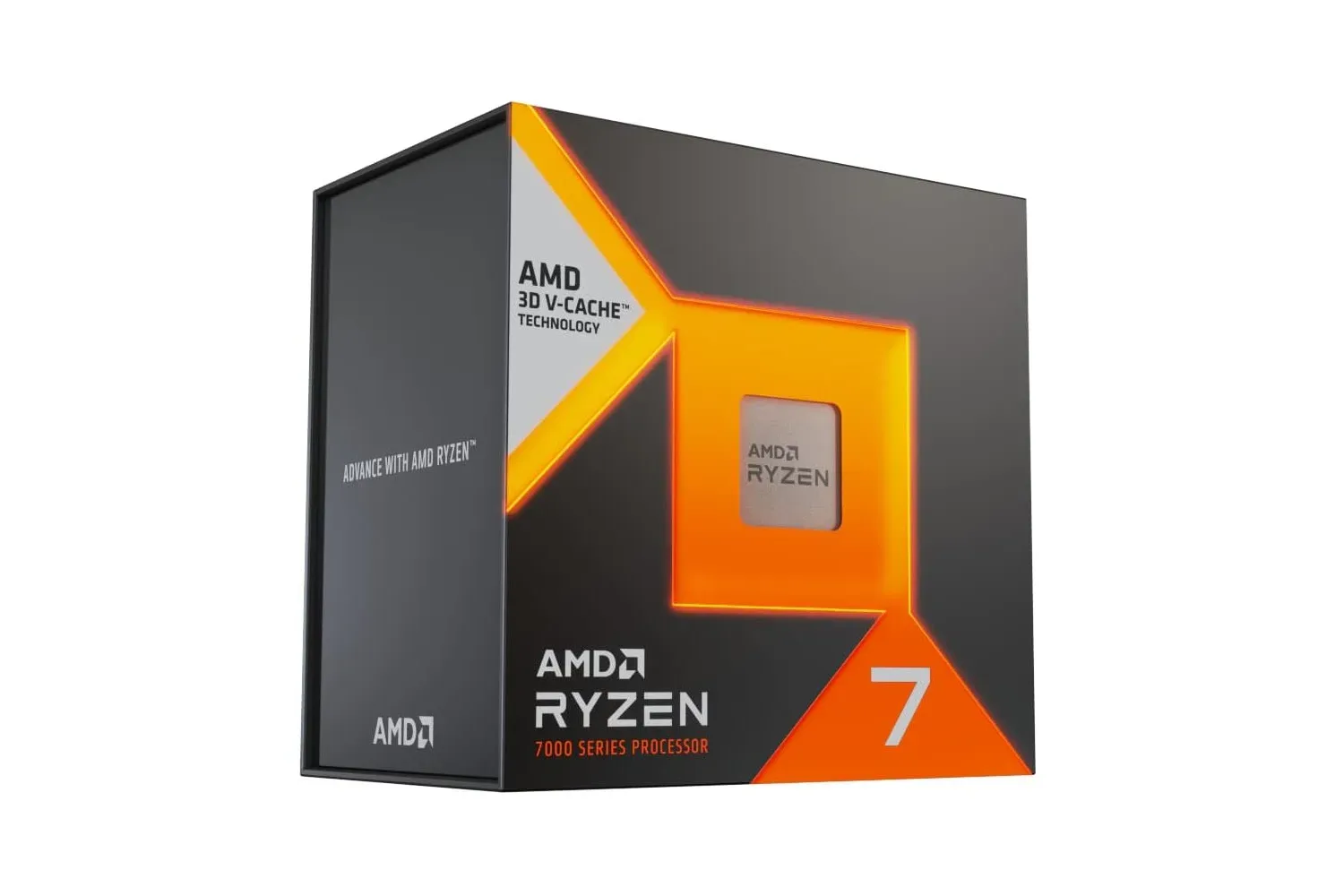
For readers weighing this against other PC upgrades, storage is only one part of a system’s gaming experience. A faster processor addresses a completely different bottleneck; see our coverage of the Ryzen 7 7800X3D’s listed price for an example of a component upgrade aimed at performance rather than file capacity. The ES3’s job is portability and data movement, not raising frame rates.
A compact option for phones, cameras and computers
The drive’s iPhone 15-and-later compatibility is notable for people who use a phone as a primary camera. Moving photos and videos to external storage can free internal phone memory and create another place to keep files. Android phones, tablets and cameras are also included in the supported-device list, expanding the number of potential workflows beyond a conventional desktop backup.
Photographers and content creators may value the ability to move files without packing a larger desktop drive. Students and commuters could use the same physical advantages for documents and coursework. For each group, the small dimensions and 45-gram weight are as significant as the stated transfer rate: a drive left at home cannot help with a file that must move today.
The ES3’s rugged claims are designed around that mobile role. Lexar says it can withstand drops of up to 2 meters. That is useful protection against the accidental jolts that accompany travel, but it should not be confused with an instruction to treat the drive carelessly. Important files still benefit from more than one copy, since drop resistance protects the hardware from a specified kind of accident rather than replacing a backup plan.
Security and heat features, explained
Lexar DataShield provides 256-bit AES encryption for files on the drive. AES, short for Advanced Encryption Standard, is an encryption method that scrambles protected data so it is not readily readable by an unauthorized person. For people transporting work, school materials, photos or other sensitive documents between locations, encryption is a meaningful extra layer beyond simply owning a small drive.
Encryption is most relevant when the SSD is mobile, because portable storage can be misplaced more easily than a drive that never leaves a home office. It does not eliminate the importance of sensible file management, but it is an additional safeguard built into the ES3’s software offering.
Lexar also cites enhanced heat dissipation. SSDs can become warm during sustained transfers, and heat management is intended to help maintain consistent operation during extended use. The supplied information does not establish a particular temperature or performance result, so the appropriate takeaway is limited: the ES3 includes a feature aimed at keeping the drive cool while data is copied, rather than a promise of identical performance in all conditions.
Who should consider this listing
At its listed $130 price, the Lexar ES3 is most clearly suited to someone who needs a small, light SSD that can move among USB-C and USB-A devices without an adapter. It pairs its 512GB capacity with quick advertised transfer rates, a cable designed for mixed-generation hardware, supported use across computers and mobile devices, and security and durability features for transport.
- PC and Mac users may use it for backups, transfers, media files or a portable workspace.
- Console owners can consider it as extra compatible storage for games and media, after checking the requirements of their particular platform use.
- Phone users and camera owners may find it useful for offloading photos and videos, including on iPhone 15 and later.
- Travelers and students get a 45-gram drive with USB-C and USB-A connectivity, encryption software and stated 2-meter drop protection.
The discount lowers the ES3 from $150 to $130, but the more durable purchasing question is whether 512GB matches the intended job. For frequently moved files and everyday backups, its size, included cable and feature set make a coherent package. For a buyer who expects to keep very large libraries permanently attached, capacity planning remains just as important as the sale price.
Shop the products
Check current price, model and availability at the retailer.