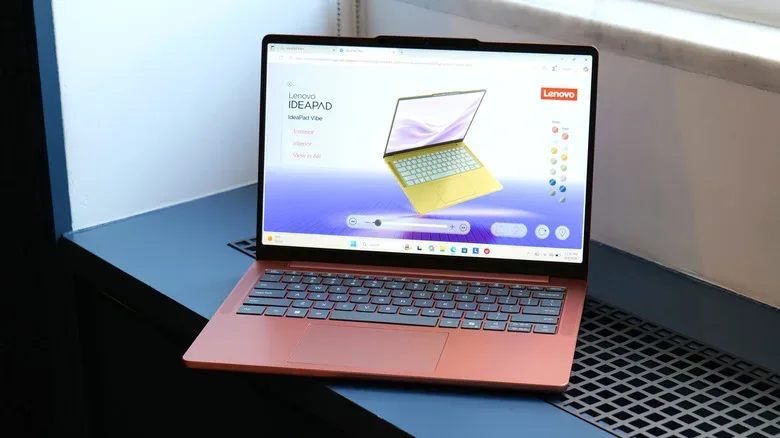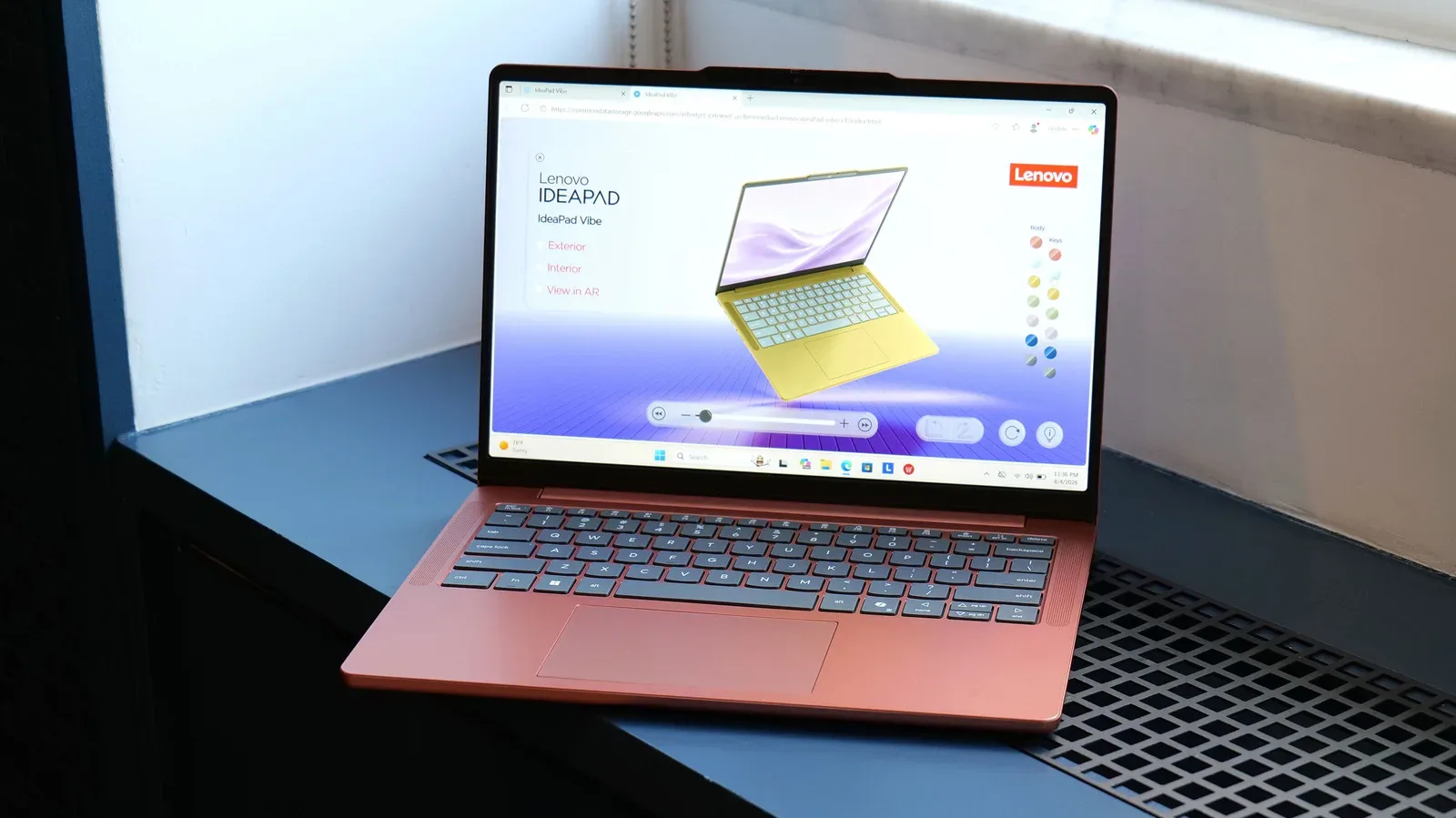
Lenovo is preparing a new entry in its IdeaPad family that puts a welcome set of priorities back on the table: a lower starting price, actual ports, several configuration choices and colors that refuse to dress like office furniture. The IdeaPad Vibe is due to start at $700, positioning it as a productivity-focused Windows laptop intended to compete in the same broad value-minded space as the MacBook Neo and Dell XPS 13.
Its pitch is not simply that it costs less. Lenovo is pairing that entry price with choices that are increasingly worth paying attention to in a laptop market where component costs, including memory, have been rising. Buyers will be able to choose between Qualcomm’s Snapdragon X platform and AMD Ryzen AI 400-series processors, while an Intel version is also planned for a later, unspecified date. The AMD models are expected first in October, Snapdragon versions are scheduled to follow in November, and Lenovo has not provided a timetable for the Intel machines.
That staggered launch matters because the name on a processor is only one part of choosing a computer. Software needs, battery priorities, memory capacity, screen size and the sort of gear someone connects every day can all change which version makes the most sense. The Vibe’s approach is notable precisely because it gives shoppers more than one route through those trade-offs.
A $700 laptop that does not begin with one-size-fits-all thinking
The IdeaPad Vibe will be offered in both 14-inch and 15-inch sizes. AMD configurations will also have two battery choices, rated at 50WHr or 65WHr. That is a useful split for people deciding whether a smaller, lighter machine or additional battery capacity better fits their routine, though real-world battery longevity will naturally depend on the final configuration and workload.
Memory and storage options are another central part of the story. Lenovo plans configurations with up to 24GB or 32GB of RAM, depending on the model selected, along with up to 1TB of storage. The base configuration has 8GB of RAM. Eight gigabytes can keep the opening price attractive, but it is a specification prospective buyers should examine closely rather than gloss over in the excitement of finding a $700 metal laptop.
For a current Windows system intended to remain useful for years, 16GB or more is a more comfortable target for many shoppers. Web browsers have a talent for turning a handful of tabs into a resource-hungry side quest, and everyday work can involve video calls, documents, cloud-syncing apps, image management and more all at once. More memory does not magically make every task fast, but it can offer more breathing room as software and multitasking demands grow.
That does not mean the entry model has no audience. The right choice depends on budget and the jobs a buyer expects the laptop to do. It does mean Lenovo’s higher-memory options could be especially important to the Vibe’s longer-term appeal. A cheap laptop that feels constrained too soon is rarely the bargain it first appears to be.
The port selection is refreshingly un-dongled
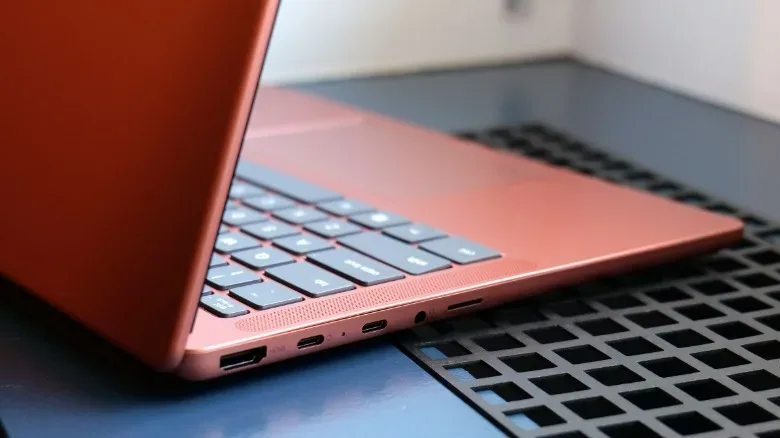
Thin laptops often invite users into a strange ritual: buy a portable computer, then immediately buy a bag of adapters to make it connect to ordinary things. The IdeaPad Vibe appears to push back against that trend. Lenovo lists four USB ports—two Type-A and two Type-C—alongside a 3.5mm audio jack, microSD card reader and full-size HDMI connection.
On paper, that is one of the Vibe’s strongest practical advantages. The mix accommodates older USB accessories and newer USB-C devices without forcing every purchase through a single connector type. HDMI can simplify connecting to a compatible display or television, while the audio jack avoids treating wired headphones as a historical artifact. The microSD slot is particularly useful for people moving photos or video from compatible cameras and other devices.
None of that is glamorous in the way a processor badge or ultra-thin silhouette can be. It is, however, the sort of specification that can determine whether a laptop is pleasant to live with. Ports are not exciting until a presentation is about to begin, a camera card needs transferring, or a favorite accessory needs an adapter that was left on a desk several miles away. At that point, the port list becomes the main character.
The Vibe’s hardware details also include dual 2-watt speakers, a 5-megapixel webcam, Windows Hello support and a physical webcam shutter. The latter is a small but meaningful convenience for users who prefer a direct hardware control over camera privacy. A 5-megapixel camera stands out in a category where laptop webcams have often been treated as an afterthought, although image quality, microphone performance and Windows Hello behavior will need to be judged only once final retail systems are available.
OLED and 120Hz support give the lineup a more ambitious ceiling
Lenovo says the IdeaPad Vibe can be configured with an OLED display running at up to 120Hz. As with memory, the word “up to” deserves attention. It indicates that screen specifications may vary by configuration, so buyers should verify the exact panel in the model they are considering rather than assume every Vibe gets the top display option.
Still, offering an OLED option and a possible 120Hz refresh rate gives the line a potentially more premium visual profile than its starting price might suggest. For productivity use, a higher refresh rate can make ordinary scrolling and cursor movement appear smoother, while OLED is generally sought after for its display characteristics. Whether those extras justify any step-up in price will come down to Lenovo’s final regional configurations and the compromises attached to each one.
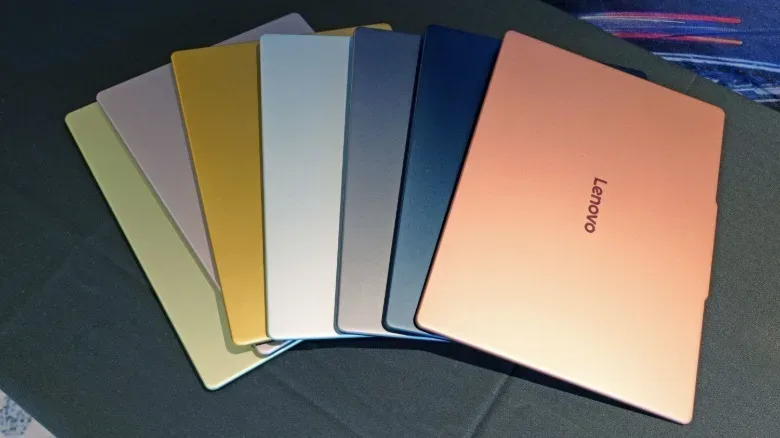
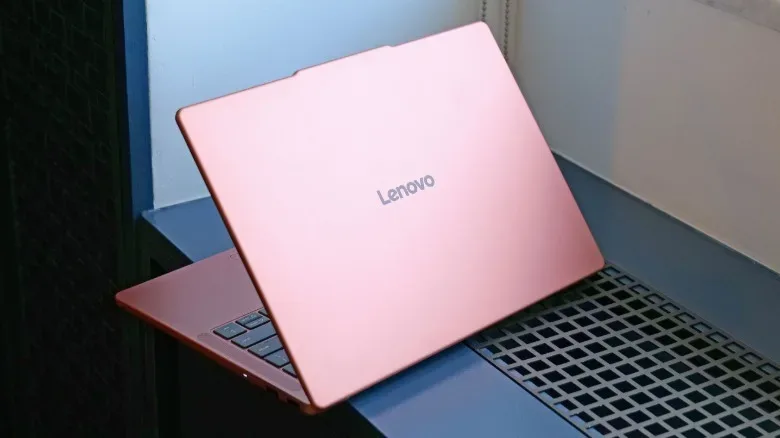
The chassis is slated to arrive in an unusually broad color selection: dreamy violet, spicy gold, zen green, chill blue, radiant coral, moody blue and lowkey gray. The names are clearly having some fun, and so is the palette. Laptop makers have spent years treating silver, black and gray as the natural endpoint of industrial design; Lenovo is at least making room for people who want their computer to look less like it was assigned by a facilities department.
The Vibe is not limited to colorful plastic, either. Lenovo describes these as metal chassis. The 14-inch version measures 0.59 inches thick and weighs 2.8 pounds, while the 15-inch model is listed at 3.3 pounds. Those figures suggest a lineup built for portability without abandoning the larger-screen option or the physical connections that frequently disappear on slimmer designs.
AMD, Snapdragon and eventually Intel: configuration is the real hook
Lenovo’s processor roadmap creates a meaningful divide rather than a simple shopping filter. Snapdragon X configurations may be compelling for people who prioritize power efficiency. AMD Ryzen AI 400-series versions, meanwhile, may appeal to shoppers looking for a more broadly balanced Windows experience and wider software compatibility. Neither approach can be declared universally better from a spec sheet; the appropriate pick will depend on the applications and peripherals a person already relies on.
That is worth considering for anyone whose computer life extends beyond browser tabs and streaming. If a workflow depends on a particular program, accessory, driver or older utility, it is sensible to confirm that it works with the chosen platform before treating a low price as the decisive factor. The processor choice should follow the workload, not the color name—although radiant coral is certainly allowed to make a spirited closing argument.
For readers who move between traditional PC tasks and game-focused browsing, our latest PC game roundup is a reminder that the PC ecosystem contains a wonderfully varied mix of software. The IdeaPad Vibe is presented as a productivity laptop, not as a gaming-performance claim, so prospective buyers should avoid assuming gaming results from the display refresh rate or the laptop’s general positioning alone.
What to watch when the first models arrive
At $700, the IdeaPad Vibe’s promise is straightforward: offer choice and everyday practicality at a time when affordable machines can feel aggressively pared down. The combination of 14- and 15-inch formats, OLED display support, a physical shutter, memory options reaching beyond the base tier, and a notably flexible port selection gives Lenovo a strong paper specification.
But the starting price should be read as a starting point, not a complete verdict. Buyers will want to compare the exact processor, RAM, storage, display, battery and color availability of each retail configuration. They should also watch how far pricing rises for the 16GB-or-higher memory configurations that may make the most sense for a longer ownership window.
With AMD versions coming in October and Snapdragon versions in November, the IdeaPad Vibe is shaping up as a timely alternative for shoppers who want a Windows laptop with fewer forced compromises. Its brightest colors may draw the first glance, but the more lasting appeal could be the mundane stuff done well: enough ports, meaningful component choices, two useful sizes and an entry price that acknowledges budgets are not getting any less real.