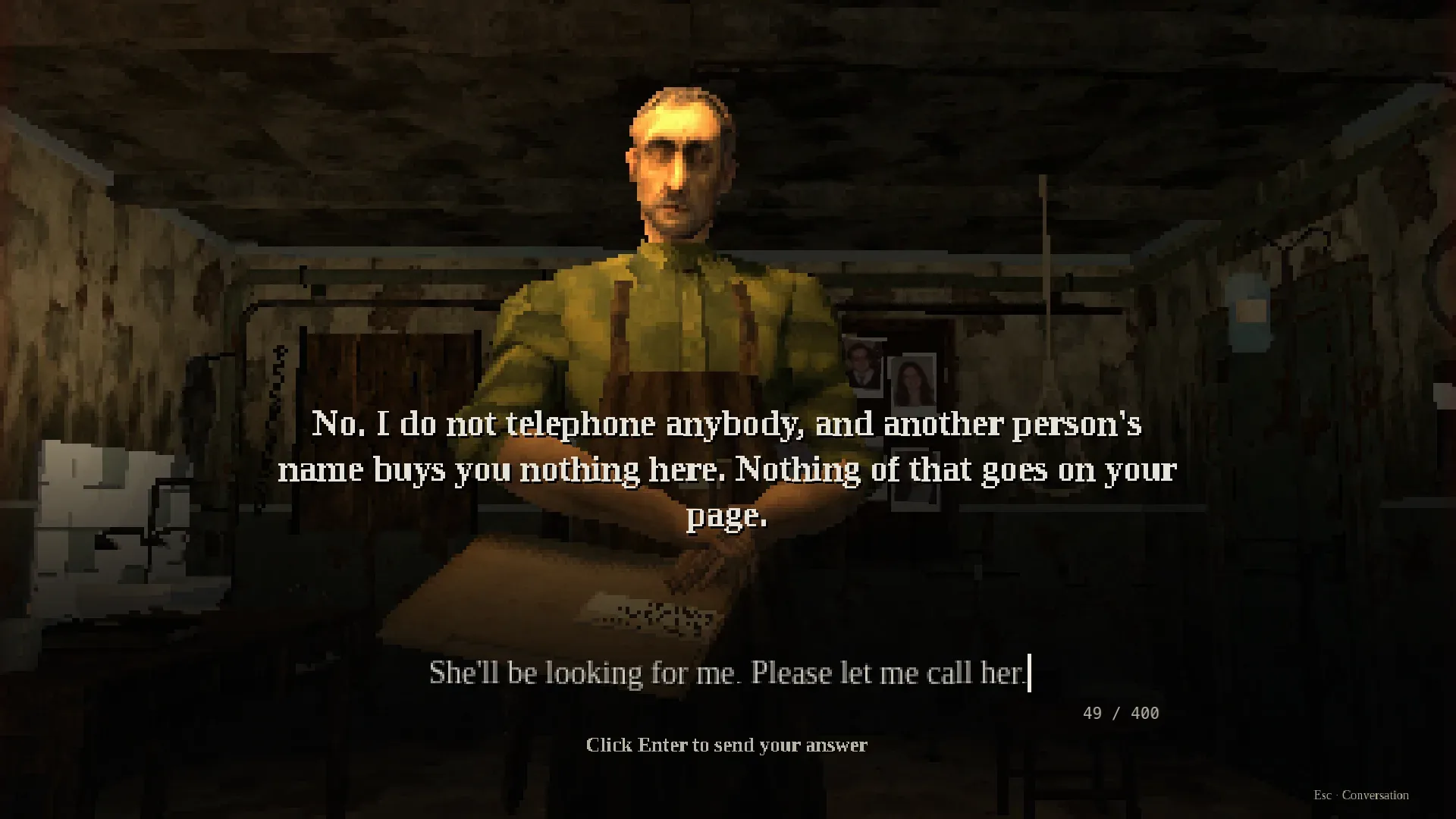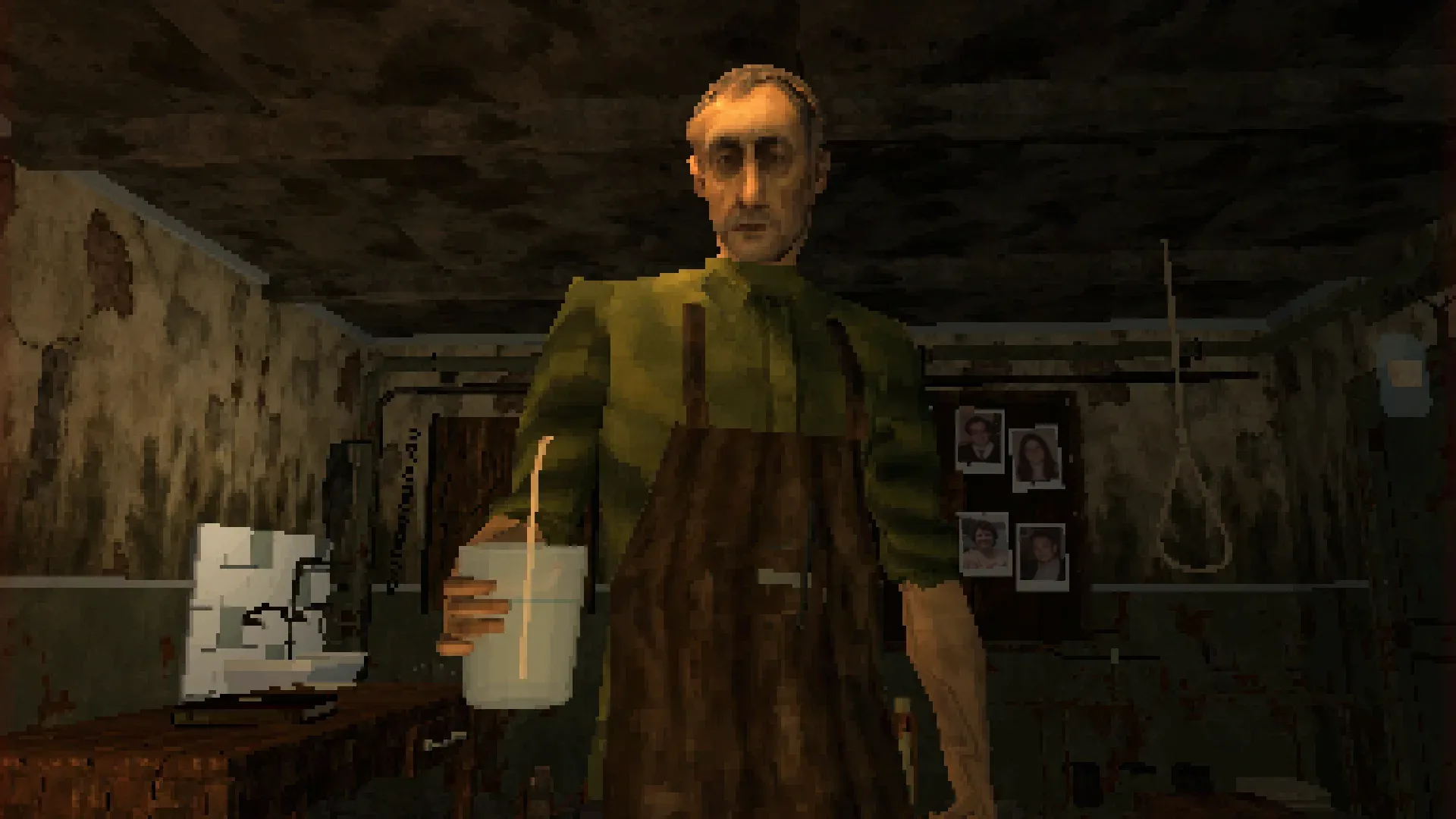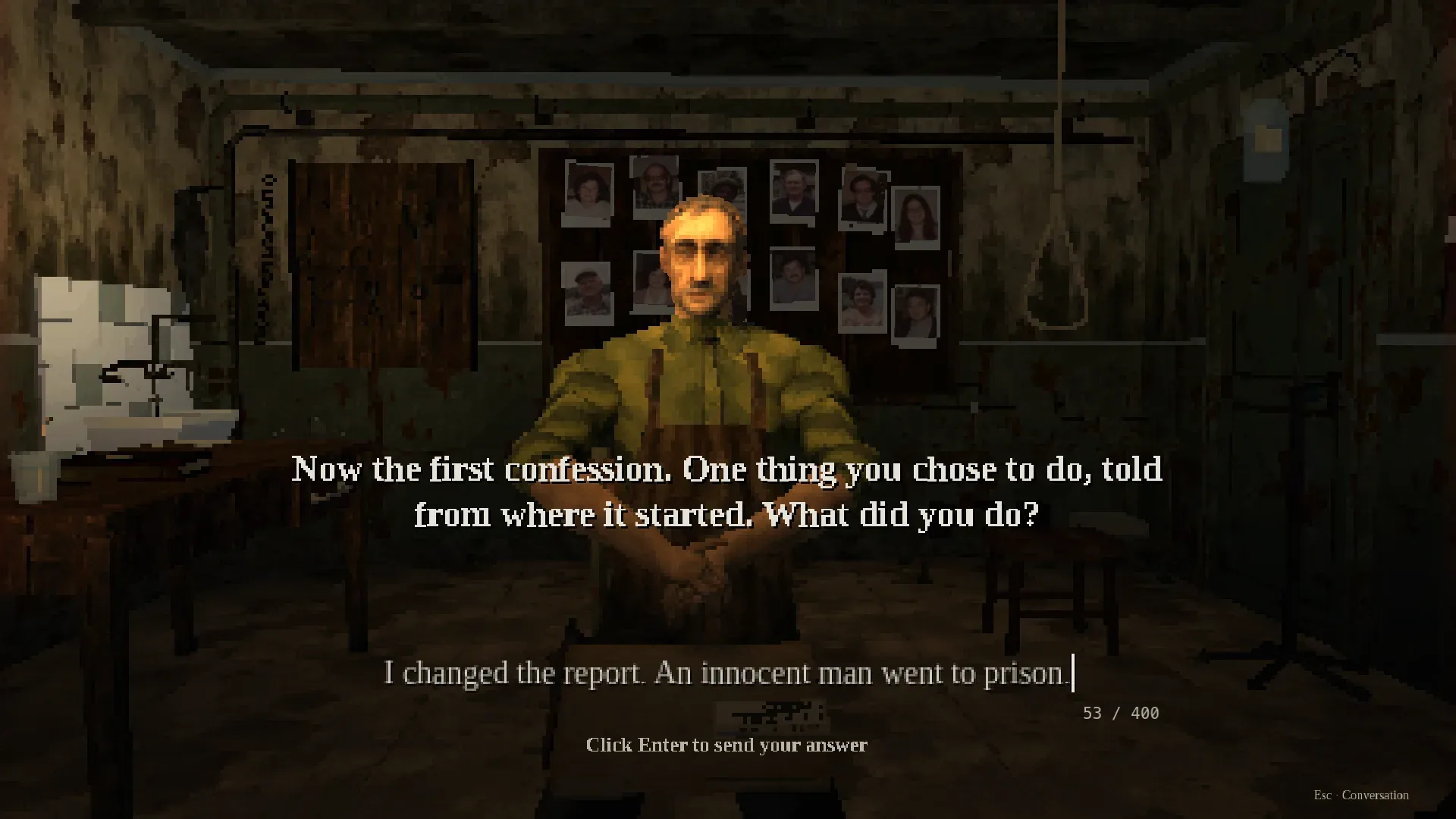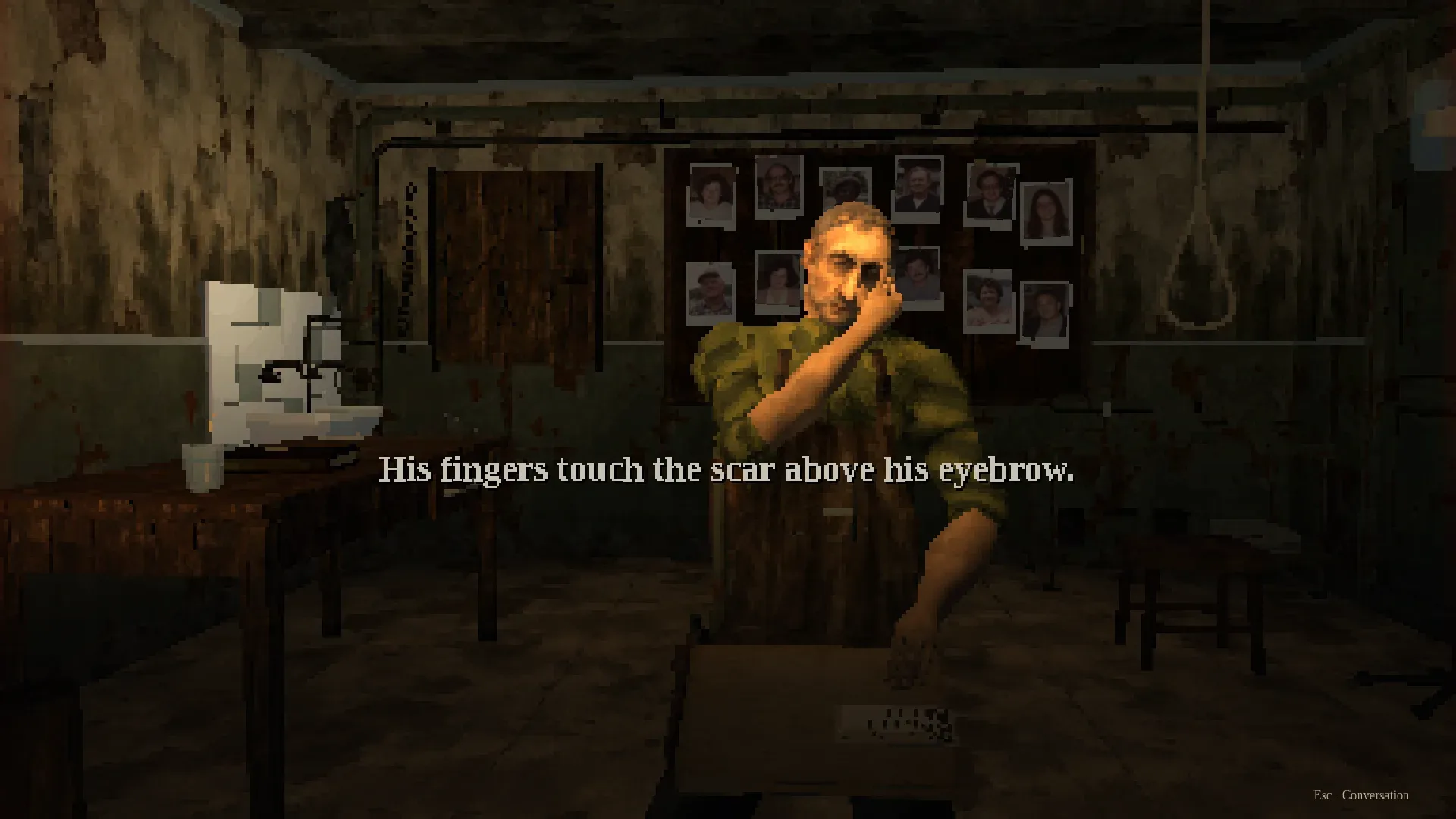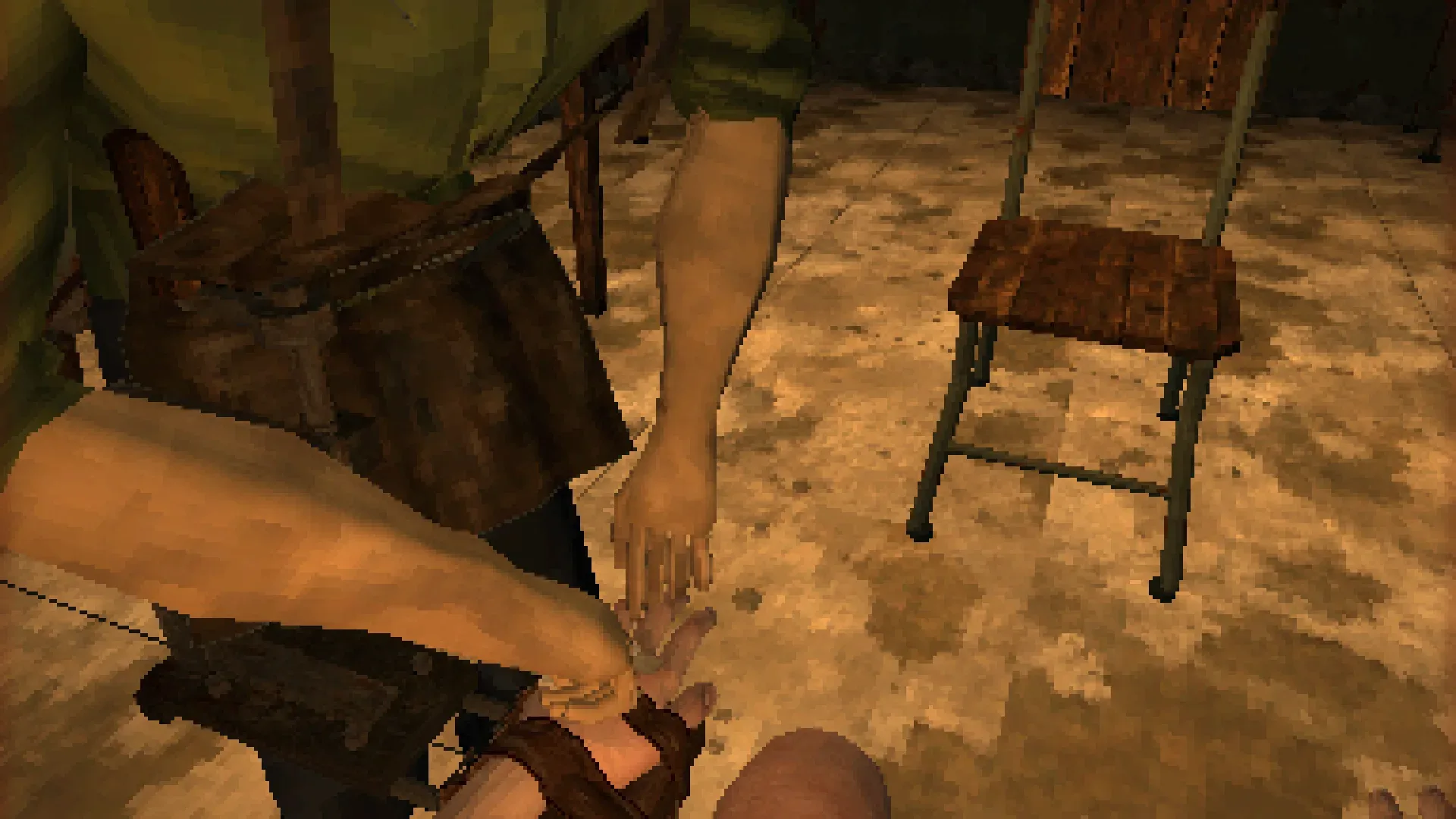
Kidnapped Simulator has revealed a new trailer, offering a closer look at its unusually direct form of psychological horror: the player is restrained in a room, a kidnapper demands a confession, and the response is not selected from a dialogue wheel. It is typed.
In development for PC via Steam, the game is being made by CRUNCHFEST and GROLAF. Its premise centers on Abel Marsh, a patient and methodical captor who believes he has the authority to determine the player character’s fate. His questions concern wrongdoing, harm, and secrets. The player’s apparent job is to decide what to give him—and what to hold back—while looking for a way to survive the encounter.
The trailer’s focal point is a blank reply field. Abel listens, records notes in a ledger, and maintains an unnervingly controlled demeanor before raising a revolver and asking for final words. The implied pressure is less about quickly choosing the right pre-written option and more about facing the uncertainty of composing an answer when an antagonist may interpret it in unexpected ways.
A horror conversation without fixed dialogue choices
Kidnapped Simulator’s key system is a custom conversation engine designed to react to what the player writes. Players can plead, refuse, fabricate a story, confront Abel with a question, or attempt to draw him into talking about subjects he would rather avoid. That makes language the central interaction rather than a decorative layer between exploration or combat sequences.
The game’s stated challenge has two sides. One is self-protection: how much should a player admit, invent, or avoid saying? The other is observation: Abel’s personality, reactions, and willingness to reveal information may be as important as the wording of a confession. A response intended to buy time could be valuable, but it could also expose a contradiction or provoke the person holding the power in the room.
That framing distinguishes conversation from a conventional branching dialogue tree. In a traditional dialogue tree, players pick from authored lines, and each option points to a prepared response or route. Here, players enter their own language, while the game’s conversation engine is intended to generate Abel’s replies in response to that text. The broad outcome structure is still defined: the game is planned to have eight endings shaped by the encounter with Abel. But the route to an ending is presented as a more open exchange.
Open input also changes the nature of player expression. A person can try to role-play a terrified captive, a liar who has planned every detail, someone who stays completely silent in substance while still replying, or an interrogator attempting to redirect the conversation. Whether any particular tactic will work remains unknown, but the design gives players room to attempt approaches that fixed options cannot easily anticipate.
What “local” processing means here
Abel’s responses are powered by a proprietary AI model developed specifically for the game. Crucially, the developers say the model runs entirely on the player’s computer. Kidnapped Simulator does not require an internet connection, cloud processing, or external services for its conversation system.
Related coverage includes Kidnapped Simulator Brings Typed Confessions to PC Horror.
In practical terms, local processing means the words a player types and the game’s resulting exchanges remain on the device running the game, rather than being sent to a remote server for the model to process. For a game built around personal confessions, invented backstories, and free-form written replies, that privacy claim is a meaningful part of the design rather than merely a technical footnote.
It may also matter for access and permanence. A player does not need to be online for the central interrogation mechanic to function, and the experience is not described as depending on a third-party cloud service staying available. The supplied details do not specify system requirements, model size, response speed, moderation behavior, or how broadly Abel can interpret inputs, so those performance and design questions will need to wait for further information.
The local model does not mean the game promises limitless narrative freedom. The developers have described eight endings, which indicates that the story has defined destination points. The more interesting question is how the game connects a free-written conversation to those authored outcomes: whether it reads for particular admissions, gauges Abel’s emotional state, tracks inconsistencies, recognizes attempts at deflection, or uses another approach. No such implementation details have been shared.
Early 3D horror aesthetics support the close-quarters premise
Visually, Kidnapped Simulator draws from early 3D horror. The announced look includes grainy textures, stark shadows, and a deliberately confined viewpoint. Rather than treating that aesthetic as a broad nostalgia signal, the details fit the game’s premise: there is little room to escape the gaze of the person across from the player, and small changes in his gestures or expression can become significant.
The limited setting is also important to the tension. The game does not present the player as a heavily equipped protagonist moving through a large environment. They wake up strapped to a chair and must interact with Abel from a position of immediate vulnerability. When physical agency is restricted, attention shifts to the conversational details: the timing of an answer, the decision to challenge him, and the possibility that getting him talking may expose an opening.
That puts Kidnapped Simulator near a recent strain of PC horror interested in communication as a source of fear rather than a simple utility. Proximity voice systems, for example, can make players consider every spoken word around a threat; Coal Duty’s proximity-chat horror setup is another example of an upcoming PC game foregrounding communication in its scare design. Kidnapped Simulator takes a more solitary route, replacing voice chat with a written one-on-one interrogation.
Eight endings, but no release date yet
Kidnapped Simulator is planned to include eight endings. The number suggests replay value will be tied to the relationship players establish—or fail to establish—with Abel over the course of the encounter. It also raises a straightforward appeal for horror fans who enjoy testing alternate approaches: one run might emphasize cooperation, another deception, and another a refusal to validate the interrogator’s demands.
Still, the available information does not establish how long a playthrough lasts, whether players can revisit individual scenes, or how distinctly the endings differ. It also does not identify a release date, price, demo, or platforms beyond PC through Steam. The game remains in development.
For now, the announcement trailer establishes the core appeal clearly. Kidnapped Simulator is betting that a blank text box can be more frightening than a row of safe dialogue choices. Abel Marsh is waiting for an answer, but the game’s tension comes from not knowing what he will make of the one the player chooses to write.
Kidnapped Simulator can currently be wishlisted on Steam, where its announcement trailer is also available to watch.