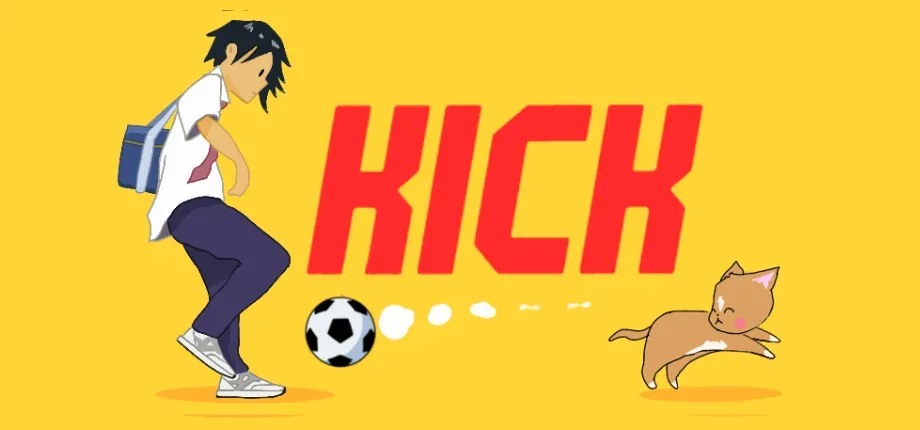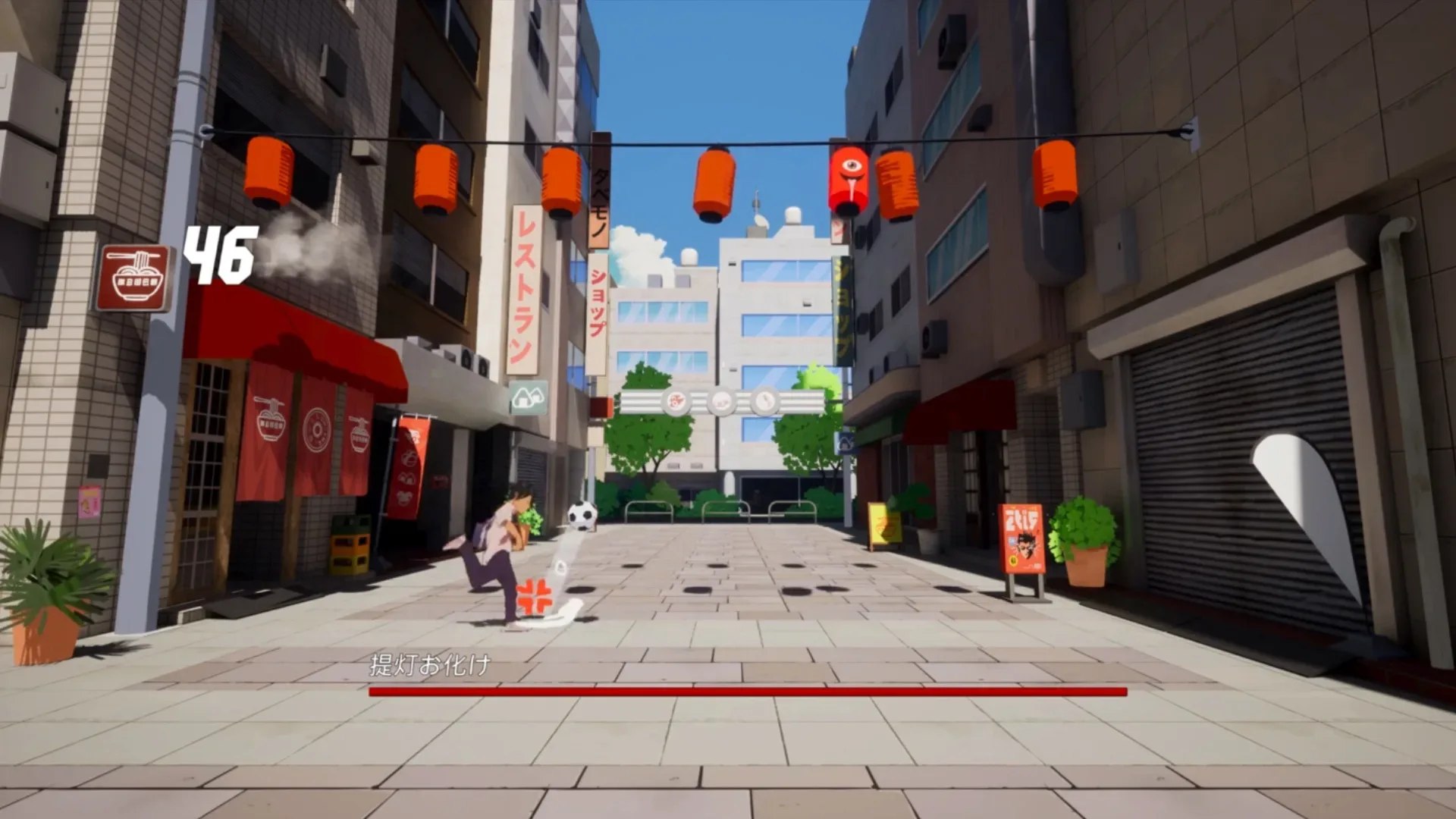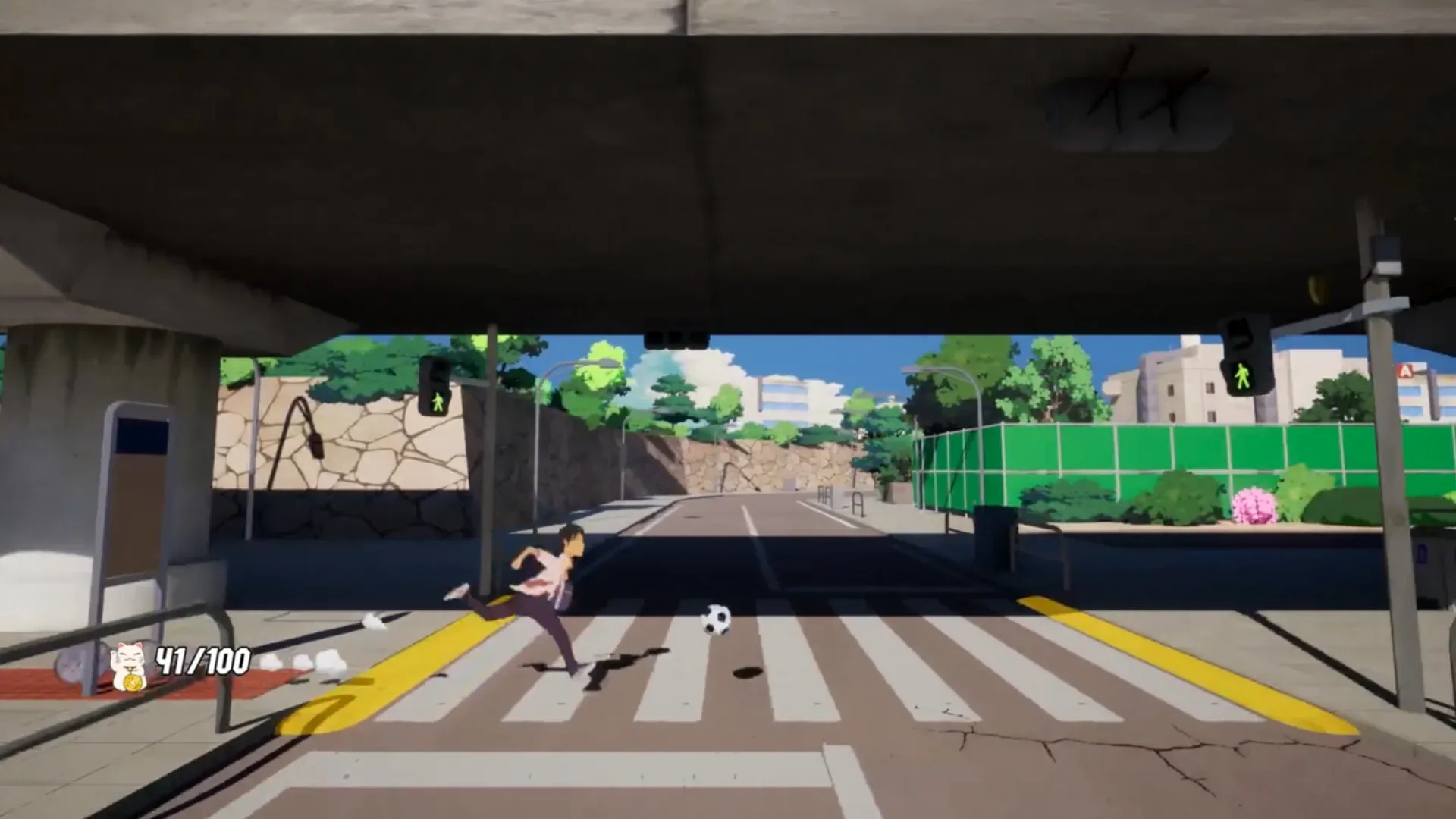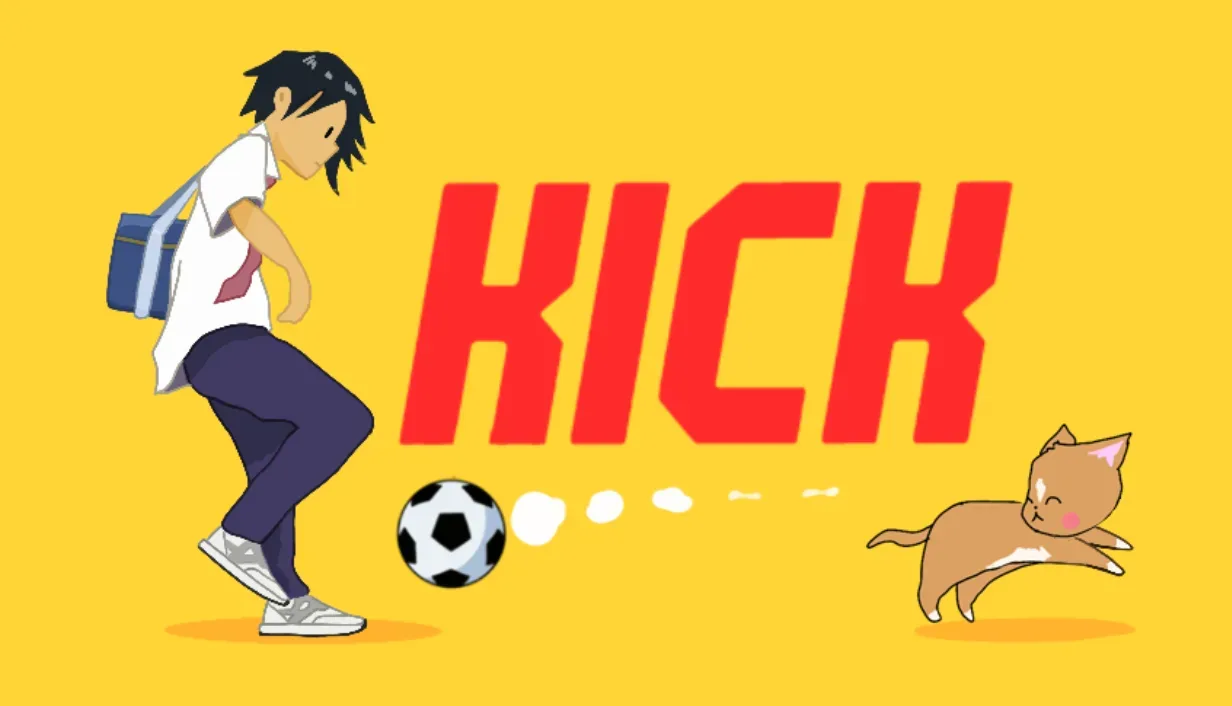
Kick is now available on Steam, bringing nospacelost’s cozy side-scrolling adventure to PC on November 3, 2026. Published with Shoreline Games, the game frames its football challenges around a much smaller, more everyday objective than a cup final: get through the journey to school and beat the bell.
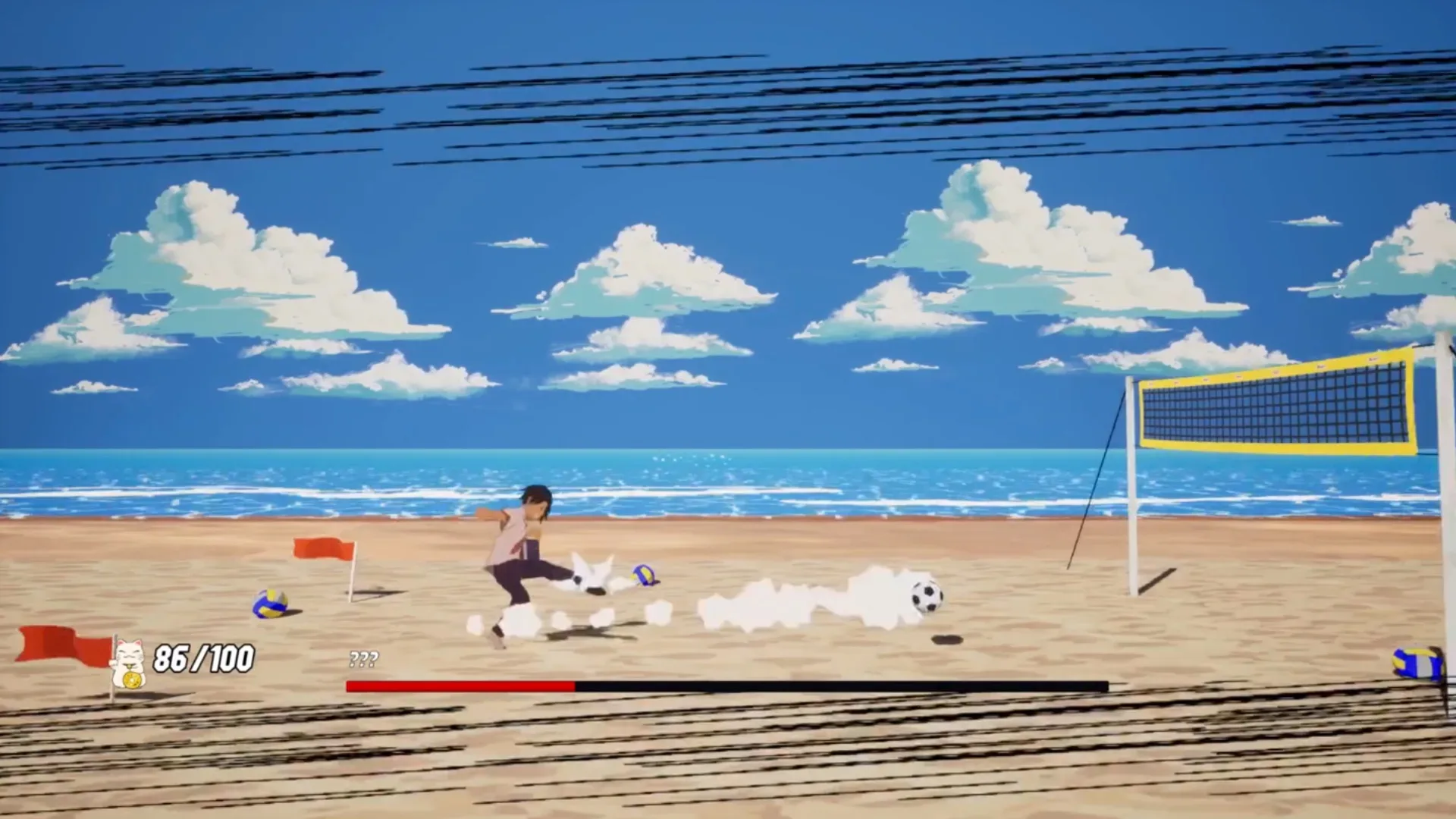
That premise gives Kick a distinct slice-of-life angle. Its Japanese-inspired setting is built around the kinds of places that turn a routine school run into a miniature adventure: busy streets, beaches, underpasses and parks. The Kid’s route is not presented simply as a straight line from home to class. It is a space for practising ball skills, catching trains, spotting alternate paths and dealing with whatever hazards each stage puts in the way.
There are 23 levels in total. Each is said to have its own opportunities as well as hazards, suggesting that progress is not solely about moving quickly from left to right. Players will be looking for a sensible route through the environment while putting ball-control skills to use. Coins collected along the way unlock ball skins and flags that can be displayed in-game, while the same skills also help with challenges embedded in the levels.
A school commute rather than a season campaign
Football games often define success through matches, leagues, teams or tournament brackets. Kick’s setup is considerably more intimate. Football is a playful part of the character’s daily movement through the world: something to practise while travelling, use to tackle small challenges and carry through a succession of familiar public spaces.
That does not mean the game abandons structure. Its 23-level format gives the journey clear stages, and its hazards establish potential failure points or obstacles. But the framing matters. A school bell is a direct, easy-to-understand destination, while trains and shortcuts introduce route-planning pressure without requiring a sports-season structure.
The result, on the details available, is a game concerned with the texture of getting somewhere. Beaches, underpasses and parks are not merely scenic stops in a broad setting; they are named as parts of the player’s path. The idea of discovering shortcuts also makes observation important. A shortcut is only useful if the player notices it, reaches it and judges whether it is the right route for the moment.
What the timed-level option means
Some of Kick’s levels are timed, putting an explicit clock on the race to school. Timed design generally turns efficiency into part of the challenge: a player may need to execute ball skills cleanly, avoid detours, learn a route or decide whether a discovered path saves enough time to matter. In a side-scrolling game, that can make movement choices feel sharper because every pause and misstep has a visible cost.
Crucially, the timers can be disabled. That is a meaningful accessibility and pacing choice for a game described as cozy. Players who enjoy the urgency of a school-day dash can keep it, while those more interested in exploring streets, parks, beaches and underpasses can remove that particular pressure.
Related coverage includes Kick Brings a Cozy School-Day Football Adventure to Steam.
Disabling a timer does not automatically mean that every other challenge disappears. Kick still has level-specific hazards, ball-skill challenges and collectibles. What changes is the deadline. For a player who finds a countdown distracting or stressful, that distinction can determine whether the focus stays on the route and the game’s atmosphere rather than on a constant race against the clock.
Timed play and laid-back play can serve different goals
- With timers enabled: the journey becomes more immediately about speed, route efficiency and maintaining momentum.
- With timers disabled: players can take more time to investigate shortcuts, work on ball skills and look for coins.
- Across both approaches: hazards and in-game challenges remain part of the level design, so the game’s interaction is not reduced to simply walking through its setting.
That flexibility is especially well matched to a game about childhood moments. There can be a natural tension between hurrying because the school bell is approaching and lingering because the route itself is interesting. Kick gives players the option to prioritize either feeling in selected timed stages.
Coins, ball skins and flags
Kick includes coins to collect, with ball skins and flags available as unlocks. These are in-game rewards, not physical collectibles. Ball skins change the appearance of the ball, while flags can be displayed in-game. The system supplies a reason to search beyond the most obvious path and gives accumulated coins a visible use.
The distinction between a collectible and an unlock is useful here. Coins are the things players find during levels; skins and flags are the items those coins open up. That makes exploration part of the game’s reward loop. A player may choose to head directly for the bell, or take time to locate coins and build up access to customization items. On timed stages, the optional timer setting could also affect how comfortable that choice feels.
No price, system requirements, controller details or additional platform releases have been specified here. Steam is the confirmed destination, and the release date is November 3, 2026. Anyone weighing a purchase should avoid assuming features beyond the announced level count, optional timers, ball-skill challenges and coin-based cosmetic unlocks.
Ball skills are central to the route
Kick does not treat the ball as background decoration. Players practise ball skills and use those skills to complete in-game challenges. That places the football element directly inside traversal and stage interaction rather than limiting it to a separate minigame or a purely visual theme.
The exact inputs and skill list have not been detailed, so it would be premature to assume the complexity of the control system. Still, the announced structure makes the intended relationship clear: improving or applying ball handling is connected to overcoming challenges during the trip to school. The ball is both part of the premise and part of the way players engage with levels.
For players drawn to compact platforming-style adventures, that is the practical pitch. Kick offers a defined set of 23 stages, environmental routes with shortcuts to discover, hazards to navigate, an optional time-pressure setting in select levels, and cosmetic rewards earned through coin collection. For players more interested in football, its appeal is likely to rest less on formal competition and more on playful control and everyday movement.
Launch context for nospacelost and Shoreline Games
Kick comes from solo developer nospacelost in partnership with indie publisher Shoreline Games. Shoreline Games CEO Keith Kawamura said the game had attracted growing interest through showcase appearances and a demo, and described the world created by nospacelost as special. Nospacelost said that sharing the finished game after spending extensive time bringing Kick and The Kid’s journey to life was an incredible feeling.
“After spending so much time bringing Kick and The Kid's journey to life, it's an incredible feeling to finally share the finished game with everyone,” nospacelost said.
The launch arrives amid a busy period of activity across smaller games and events; a digital gaming expo is also preparing private press tours ahead of its opening. For Kick itself, the focus is narrower and refreshingly concrete: a child, a ball, a route to school and the possibility that a well-spotted shortcut might make all the difference.
An “Out Today” trailer was released alongside the game. It provides the launch-day look at Kick’s side-scrolling school-run adventure, while the Steam release makes the 23-level journey available to players now.