Most online games solve the question of who gets to play by putting everybody in the same match. Jono does the reverse: it gives the controls to exactly one person, for exactly one minute, then passes the run—position, progress and all—to the next person in line.
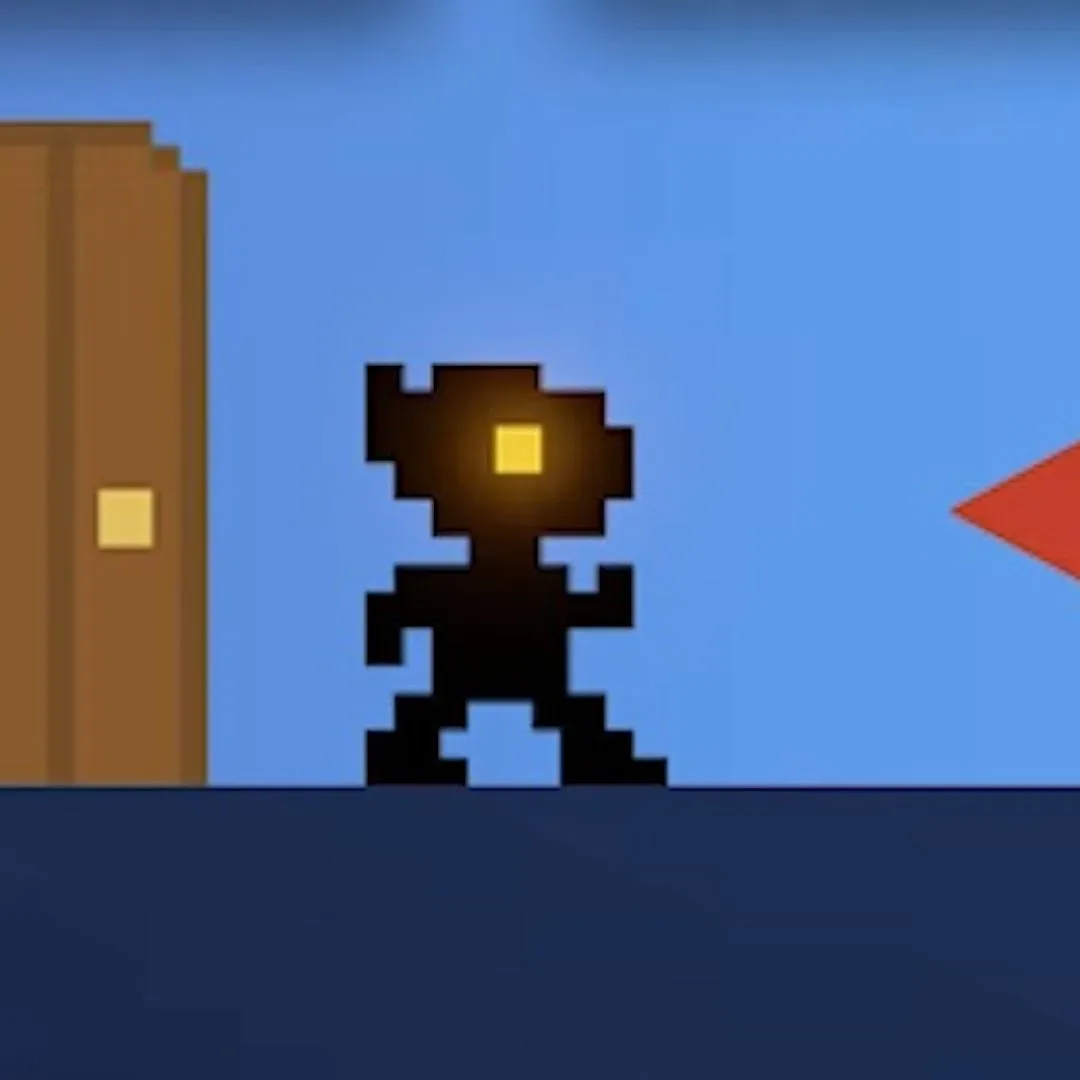
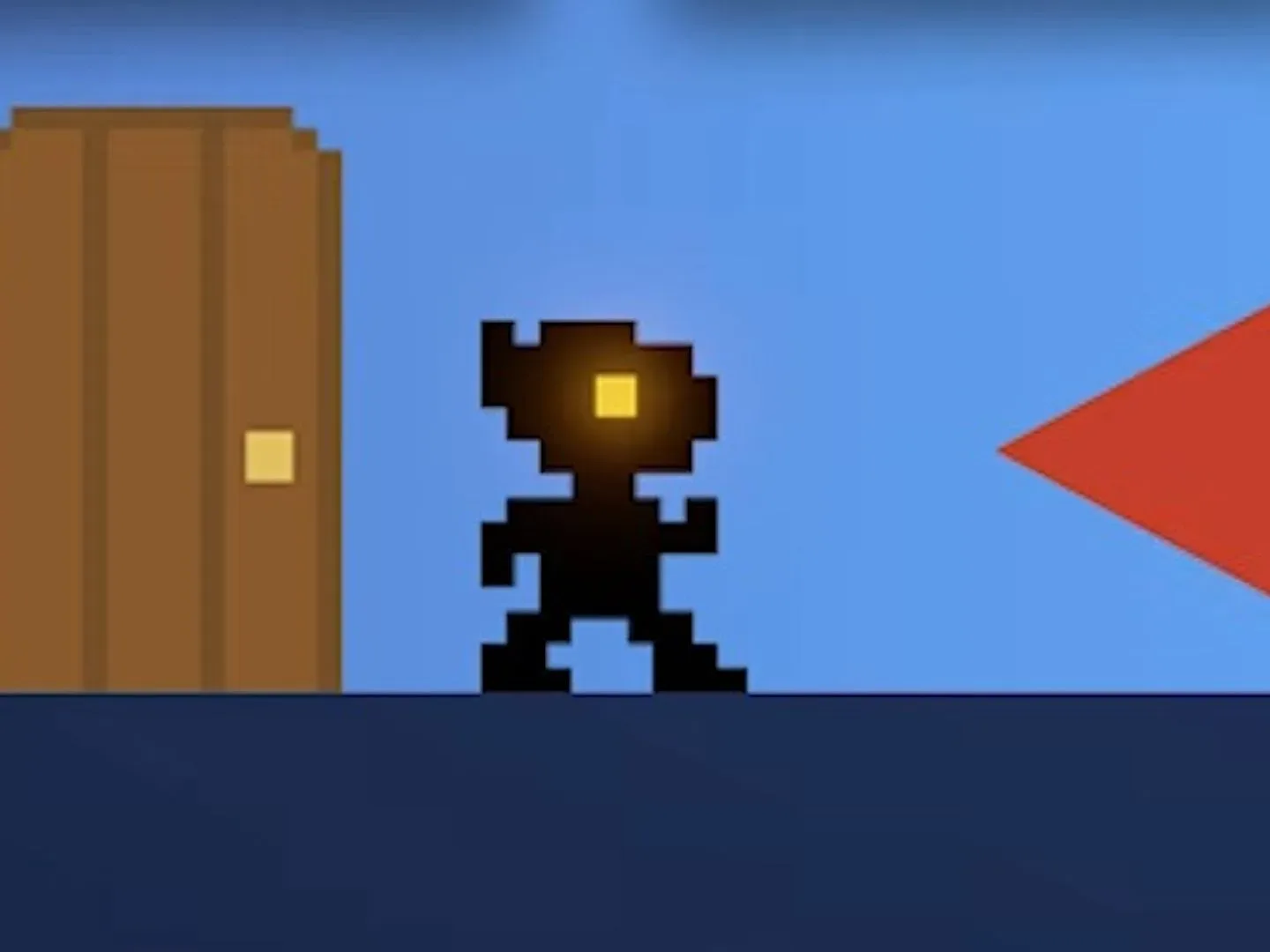
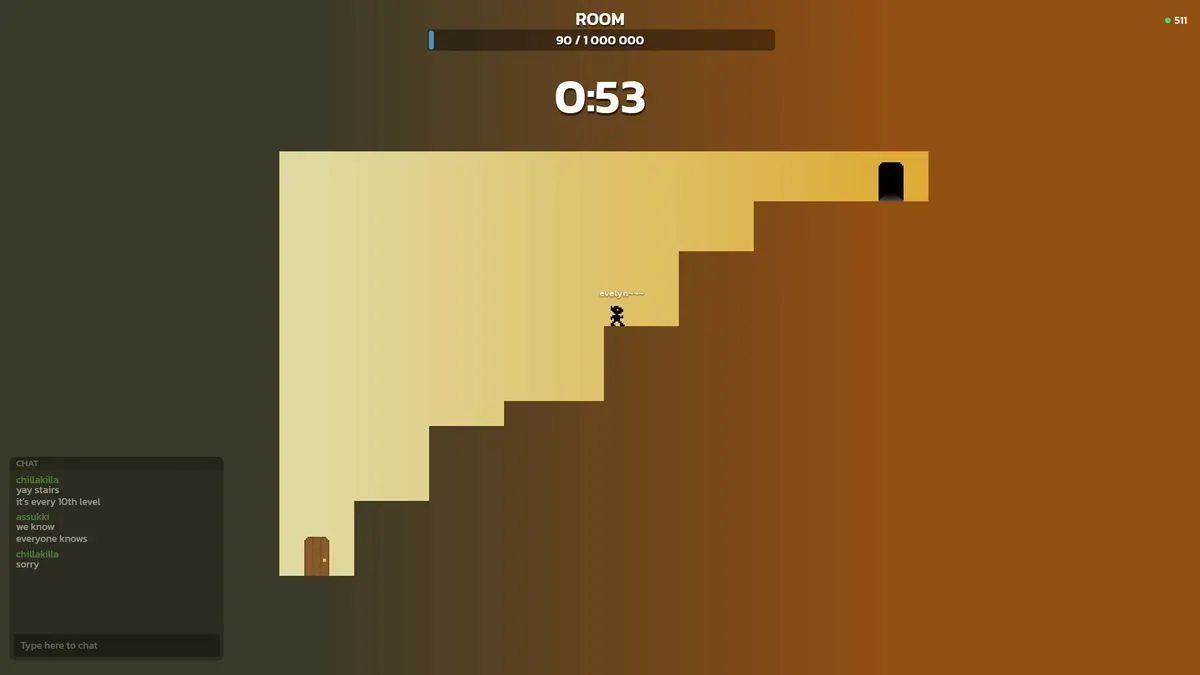
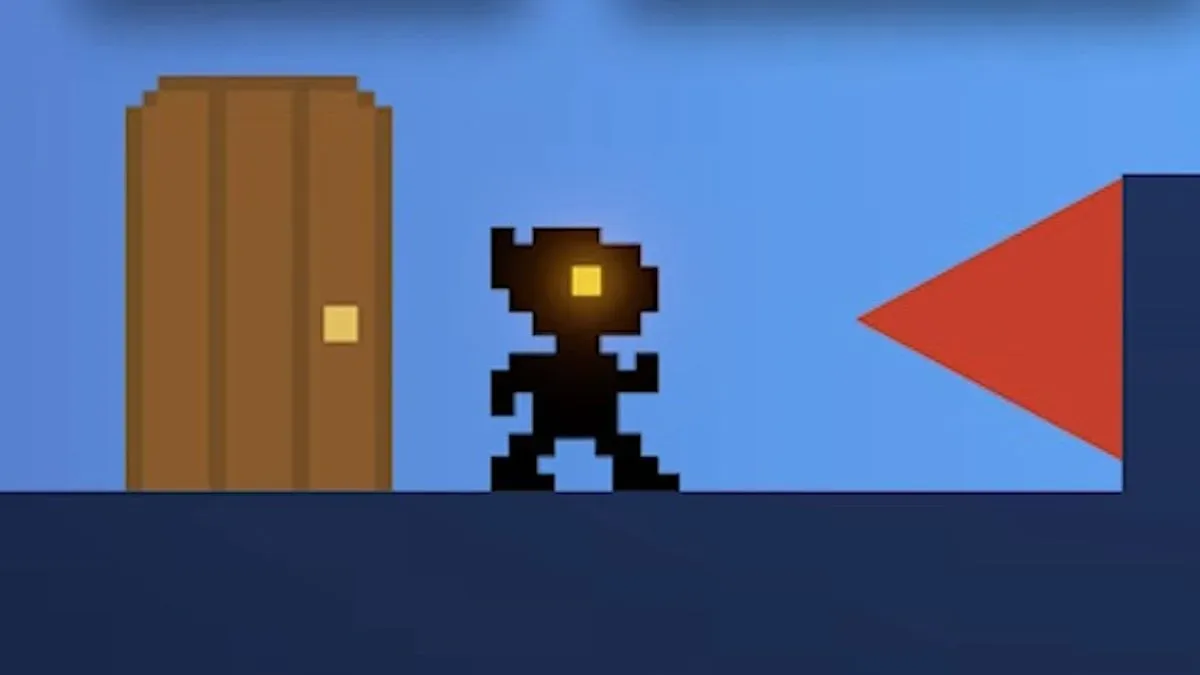
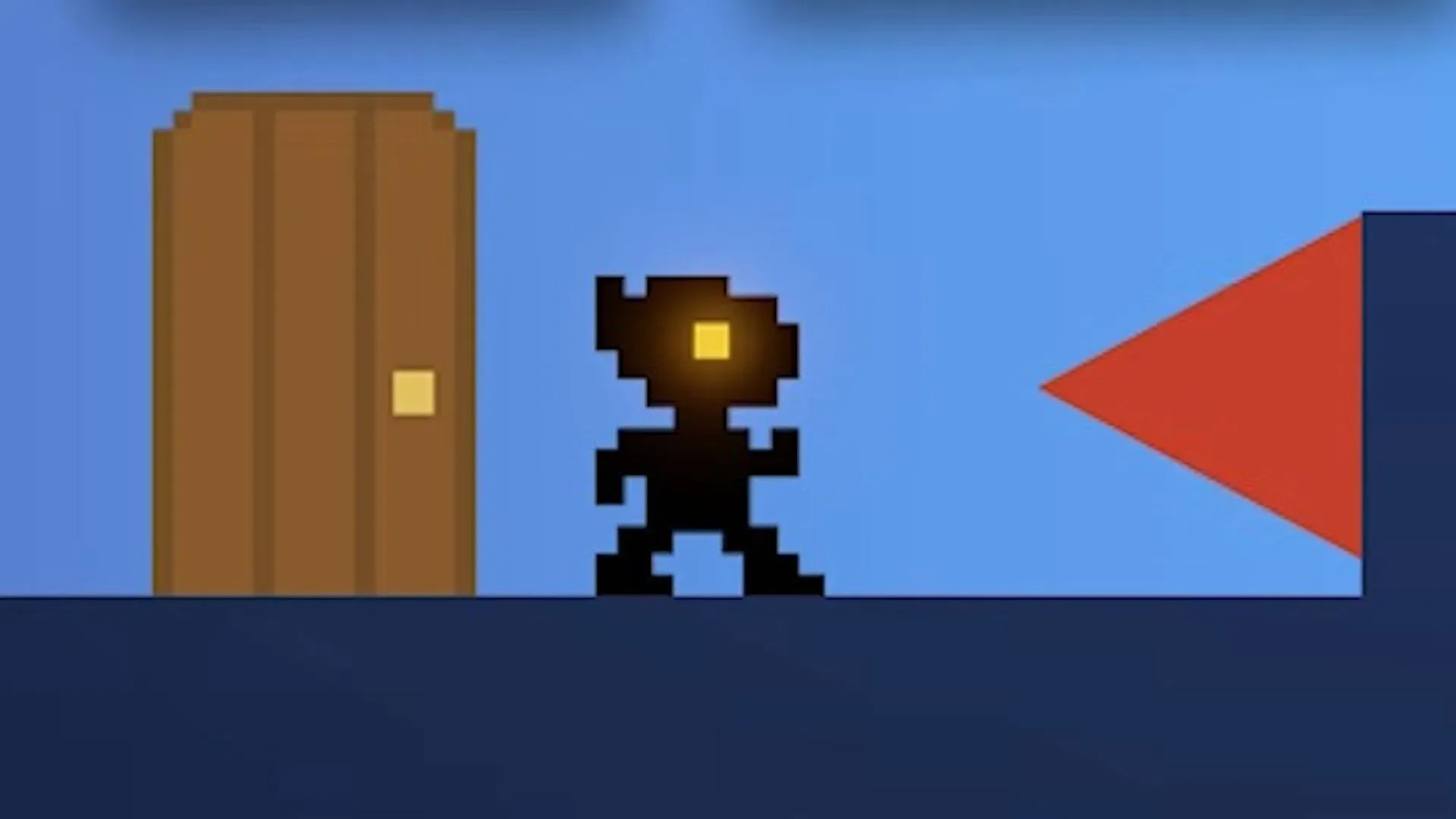
That arrangement makes Jono a curious kind of social platformer. It has the familiar essentials: pixel-art presentation, spikes, portals, jumping and rooms that must be cleared. But its defining mechanic is not a new movement ability or combat system. It is the queue. While one player handles the shared character, everyone else can watch through an in-game livestream-style overlay, wait for a turn, chat, use emotes, join a conga line, or make levels for the larger pool.
Developer and publisher Part Time Monkey is the solo studio of Tuomas Erikoinen, an original Angry Birds artist. Erikoinen describes Jono as “massively singleplayer,” an apt label for a game in which the action is strictly solo at any instant but the overall effort belongs to a crowd.
A platformer built around the handoff
The central rule is simple, but it fundamentally changes the meaning of a platforming run. In an ordinary single-player game, failure is mostly private and persistence belongs to the same player: miss a jump, restart, try again. In Jono, every minute is a short shift in an ongoing public relay. The player at the controls is responsible for immediate decisions, but the next person inherits the outcome.
That creates an unusual combination of pressure and cooperation. A difficult jump is not merely an obstacle between one player and a checkpoint. It can become an event watched by people who know that a success will move the communal run forward and a death will add another failure to the tally. Chat can be helpful, chaotic, celebratory or distractingly funny; it is part of the game’s social layer rather than a separate companion app.
Erikoinen’s view is that the platforming brings people in, while the chat encourages them to remain. That distinction matters. The moment-to-moment game can be understood quickly, but the queue gives people a reason to observe even when they are not holding the controller. Jono’s audience is therefore not simply waiting for content. It is watching a succession of players contribute to the same chain of progress.
Its physics are described as deterministic. In practical terms, deterministic physics means the same inputs and conditions should produce the same result, rather than outcomes varying unpredictably. That is especially meaningful for a shared platformer. If a route works for one queued player, viewers can potentially understand what happened and advise the next player with some confidence. It also supports replay-based checking for submitted levels.
One million rooms is the shared assignment
Jono’s long-term target is collective: players are meant to finish 1 million entirely unique levels. At the reported point in its run, the community had cleared more than 87,600 rooms and recorded 114,200 deaths. The leading individual player had completed more than 7,500 rooms.
Related coverage includes Jono Turns Steam Platforming Into a One-Player-at-a-Time Community Challenge.
The figures underline a key part of the design: completion is not expected to be clean. Deaths are visible evidence of the community working through the game’s obstacles, while room clears steadily move the larger target. A player may only receive a minute of direct agency, but that minute has a place in a much longer sequence.
Leaderboards show which players have cleared the most rooms, while shared-avatar customization is available from the default interface. Together, those features give people ways to express both individual participation and a collective identity. The character may be shared, but recognition and contribution are still attached to the people moving it through the queue.
Jono is free to download on Steam and has a 96% positive user-review rating at the time reflected by the available information. Its launch version reportedly took about a month to make, though it has expanded substantially since October 5. The relatively compact foundation is worth noting because the larger system is not based solely on a vast bespoke campaign; it also depends on how levels are generated, submitted and sorted.
Procedural rooms, plus a deliberately brutal side lane
Most Jono rooms come from procedural generation. That means the game uses a system to assemble levels from obstacle types and modifiers rather than requiring every room to be laid out manually from scratch. Here, the stated aim is not repetition: the 1 million-room objective rests on the promise that the resulting rooms are all unique.
Player-made stages enter the main rotation more selectively. A creator first makes and verifies a room, then submits it with a replay. Erikoinen checks that replay in the editor and decides whether the stage is suitable for the regular game mode. Approved creations are placed into the main room queue, spaced roughly 100 to 200 rooms after the previously accepted player-made level. That spacing prevents the regular rotation from becoming a continuous block of community creations while ensuring handmade work can emerge amid procedurally generated rooms.
The review process is also a difficulty filter. If a submitted level is not considered casual enough for the standard mode, its maker can put it in Meat Grinder instead. This optional mode is reserved for the unusually punishing player-made challenges that do not fit the main queue.
The name is intentionally not subtle. One creator reportedly died more than 1,200 times in the editor simply to establish that a level could be completed. Another stage, named DONT ASK HOW THE MEAT IS MADE, took 2,627 deaths and nearly five hours before anyone cleared it.
The comparison point behind this category is Kaizo, a term commonly used for exceptionally difficult, precision-heavy platforming challenges. In Jono’s case, Meat Grinder functions as a quarantine rather than a replacement for the main experience. That is an important design choice: creators can pursue extreme difficulty without turning the communal default path into a wall for players who only have a one-minute turn.
Why the queue is more than a novelty
Jono’s unusual control system is also a structural answer to a problem facing small games: recognizability. Erikoinen has pointed to concerns that concise, easily understood game concepts can be copied quickly, particularly in an environment shaped by AI tools and rapid storefront cloning. The game’s art may be simple, but its idea is not merely “a pixel platformer.” It is a platformer connected to a live, ordered chain of players, spectators, moderation and level distribution.
That does not make imitation impossible, and Erikoinen frames the point as an idea rather than a certainty. But it explains why the queue is meaningful beyond its initial surprise. Recreating the surface mechanics of jumping through hazards would not automatically recreate the social rhythm of spectatorship, short turns, chat participation, shared statistics and a continuously advancing room sequence.
The wider concern about AI and smaller developers is already part of the games-industry conversation. AI-focused game creation initiatives are also putting that technology directly into developers’ hands, making questions of speed, differentiation and authorship more immediate. Jono’s premise suggests that one response is to make the social infrastructure inseparable from the game itself.
There is a practical trade-off, of course. A queued experience asks players to accept that they cannot always play immediately or for as long as they want. Jono turns that limitation into its hook by offering activity around the wait: watching the current run, talking with others, following leaderboard progress and building rooms. Whether that balance holds over the route to one million completions will depend on the community’s willingness to treat observing and participating as connected forms of play.
A tiny turn with public consequences
Jono’s most interesting trick is that it makes one minute feel consequential without requiring a massive individual time commitment. A newcomer can make a brief contribution, an expert can build a major clear count over time, and spectators can share the tension of a hard room even when their place in the line has not arrived.
That design also gives failure a different texture. A death still interrupts progress, but it becomes part of a public record and a shared story. Conversely, clearing a hard room can prompt a response from people who watched the attempt unfold. The game turns platforming’s usual loop of trial, error and eventual execution into a small communal performance.
For players, the appeal is likely to depend on temperament. Those who want uninterrupted solo mastery may find the one-minute limit restrictive. Those who enjoy livestream chats, asynchronous cooperation, community challenges and seeing their actions feed a running total may find the restriction is exactly what gives Jono its character. Either way, its basic proposition is unusually clear: the controller is yours only briefly, but the run belongs to everyone.