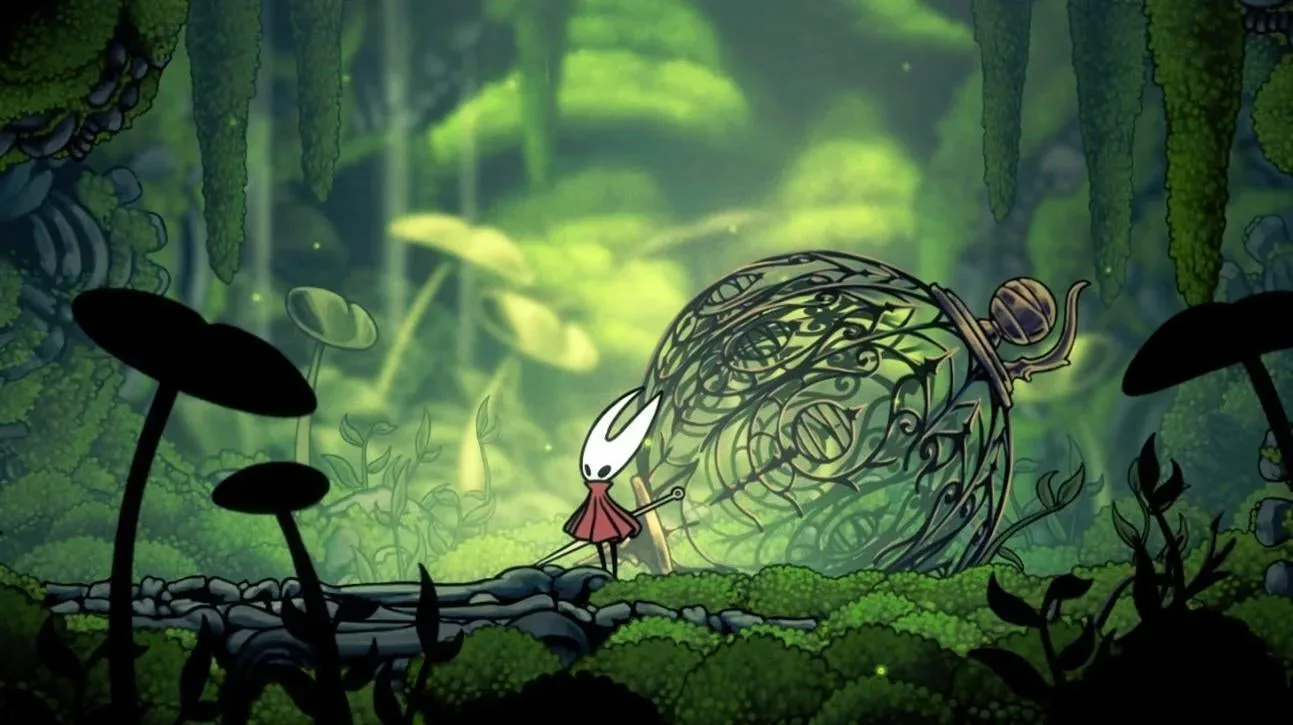
Hollow Knight: Silksong is becoming a case study in an uncomfortable truth for independent developers: a price that looks wonderfully generous to players can reshape expectations for an entire genre.
Team Cherry priced its long-awaited follow-up at $20, only $5 above the original Hollow Knight launch price in 2017. That decision arrived despite substantially higher production values, a development cycle described as seven years, and a roughly 30-hour single-player campaign. The game was among Steam’s most popular releases in 2025 and has been viewed as a Game of the Year contender even alongside much larger-budget releases.
For buyers, the proposition is simple: more game for less money is hard to argue with. For developers building their own metroidvanias, the implications are thornier. When a hugely visible, highly anticipated game establishes $20 as the apparent going rate for a polished and lengthy experience, other teams may have trouble explaining why their own project costs more—even when their financial circumstances are entirely different.
A low price can become a market benchmark
Pricing specialist Cassia Curran has argued that Silksong could have supported a $24.99 price, and that the extra $5 would have mattered across similar studios and projects. The argument is not that Team Cherry was wrong to choose $20. Rather, it is that an exceptional hit has unusual freedom to set a consumer-facing value expectation that less established developers cannot easily match.
That is the central distinction worth making. A game’s launch price is not merely a statement about its own contents. On a crowded digital storefront, it is also a comparison point. Players browse genre labels, screenshots, trailers, review summaries, and price tags side by side. A new metroidvania asking for more than a famous and lavishly received peer has to make a persuasive case for that gap before a player has even pressed the purchase button.
In this sense, a price ceiling is not a formal restriction imposed by Steam. It is an informal customer expectation: the point beyond which a comparable game begins to look expensive beside a prominent rival. A developer can certainly price above that line, but the burden of demonstrating why rises sharply.
Curran’s work involves helping game makers analyze successful pricing models on Valve’s PC storefront, including close competitors in a genre. That comparison-led approach reflects the practical reality of storefront shopping. A studio may calculate that its project needs a higher launch price to recoup its costs, but audiences may instead compare it to the best-known roguelike, metroidvania, or retro-style adventure already available.
Value is not the same thing as sustainability
One reason this debate can become muddled is that “good value” and “sustainable pricing” are related, but they are not identical ideas.
Related coverage includes Silksong’s $20 Price Is Reshaping Steam’s Indie Value Debate.
Good value is the player’s judgment that a game’s cost feels fair for what it offers. Length, craft, replayability, novelty, and enthusiasm for a series can all influence that judgment. Silksong at $20 plainly makes a strong value proposition, particularly given its reported scale and profile.
Sustainable pricing, by contrast, asks whether sales at that price can support the people and work required to make a game. Different teams have different scopes, production timelines, staffing needs, financial backers, marketing expenses, and sales expectations. None of those differences are visible simply from a genre label or a comparison of campaign length.
That gap helps explain why one studio’s customer-friendly price can add pressure elsewhere. If shoppers treat a standout release as the default value standard, a smaller team may be forced into an unpleasant choice: charge what it believes the game needs and risk resistance, or reduce the price to remain competitive and hope greater volume compensates. Neither option guarantees success.
The situation is especially demanding in categories where the audience has many superficially similar alternatives. “Metroidvania” and “roguelike” are useful descriptions for players, but they can also compress distinct games into a single pricing comparison. A project may differ in art, systems, ambition, or development costs, yet still be judged first against the genre’s most prominent bargain.
Recent Steam launches show price resistance can be swift
The pressure is not limited to theoretical spreadsheets. Earlier in the year, Tribute Games released Scott Pilgrim EX, a retro pixel-art beat-’em-up, for $30. Steam users pushed back on that price and sales struggled on the platform, even though the game was broadly regarded as a strong modern tribute to River City Ransom.
Months later, Yacht Club Games launched retro adventure game Mina the Hollower at $20 and appeared to find greater success. These examples do not establish a universal rule that $20 always wins or that $30 necessarily fails. Games release into different competitive conditions and arrive with different audiences. But together they illustrate why developers cannot decide on a price in isolation.
They also underline a difficult reality: an asking price can become the conversation. When players feel a game is above the expected range, they may debate cost before they debate mechanics, visual design, or the team’s work. That is a particularly high hurdle for games drawing from older formats or familiar genre traditions, where some consumers may view the presentation itself as a reason to expect a lower price.
Discovery pressure makes the calculation harder
Steam already receives thousands of new games each year. In a marketplace with that volume, getting noticed is an obstacle independent of price. A higher price might provide a project with more revenue per sale, but it may also make it harder to convert uncertain visitors. A lower price can lower that barrier, but it does not solve visibility—and it can make every missed sale more consequential.
Curran identifies additional downward pressure from “friendslop,” a term used here for inexpensive, social-friendly games designed around playing with friends. The broader issue is that buyers do not keep separate mental budgets for every genre. A catalogue full of cheap entertainment can make a premium ask feel more difficult, even if the games themselves do very different things.
Generative AI is adding another layer of concern. Developers now face the prospect of rapidly produced, hard-to-distinguish rivals that could imitate a game’s broad appeal or presentation soon after it becomes visible. The challenge is not only direct competition for purchases; it is also the risk of confusion in search results and storefront browsing, where clear differentiation is already precious.
That anxiety has reportedly contributed to some studios abandoning open playtests and free Steam demos. Demos have traditionally given teams a way to let an audience understand their game before buying. They can be particularly important when a studio needs to justify a price above the genre’s most familiar benchmarks. But a public build can also reveal ideas early, creating concern that imitators could use it as a shortcut.
The tension is significant because demos remain a meaningful way to cut through uncertainty. Recent Steam demo activity around Amiko Legends shows how a playable preview can generate an observable player response before launch. For teams wary of copycats, though, the promotional upside must now be weighed against the perceived risk of exposing a concept too soon.
What Silksong’s price does—and does not—mean
It would be a mistake to turn this into an argument that games should cost more by default. Players have legitimate reasons to welcome lower prices, and a studio retains the right to choose the model that suits its goals. Silksong being affordable is not itself a problem. Its success may also broaden its audience and reinforce goodwill around a major release.
The more useful takeaway is that prices communicate beyond a single transaction. An unusually low price from an unusually successful game can reset the reference point for customers considering less famous projects. That reference point can be tough to challenge even when another developer’s project is excellent, carefully made, and more expensive for legitimate reasons.
For players, the practical implication is modest but important: genre comparisons are useful, yet they are not a complete accounting of value. A $20 landmark should not automatically become a demand that every adjacent game provide the same scope at the same price. For developers, the lesson is more severe. Competitor analysis, launch positioning, and the ability to clearly articulate a game’s distinctive value may matter as much as ever, while the price range that audiences accept grows less forgiving.
Silksong has not created Steam’s pricing pressures, nor can one game explain every successful or struggling release. It has, however, made the contradiction much easier to see: the player-friendly bargain that earns applause today can become tomorrow’s impossible comparison for the teams trying to build the next great game.