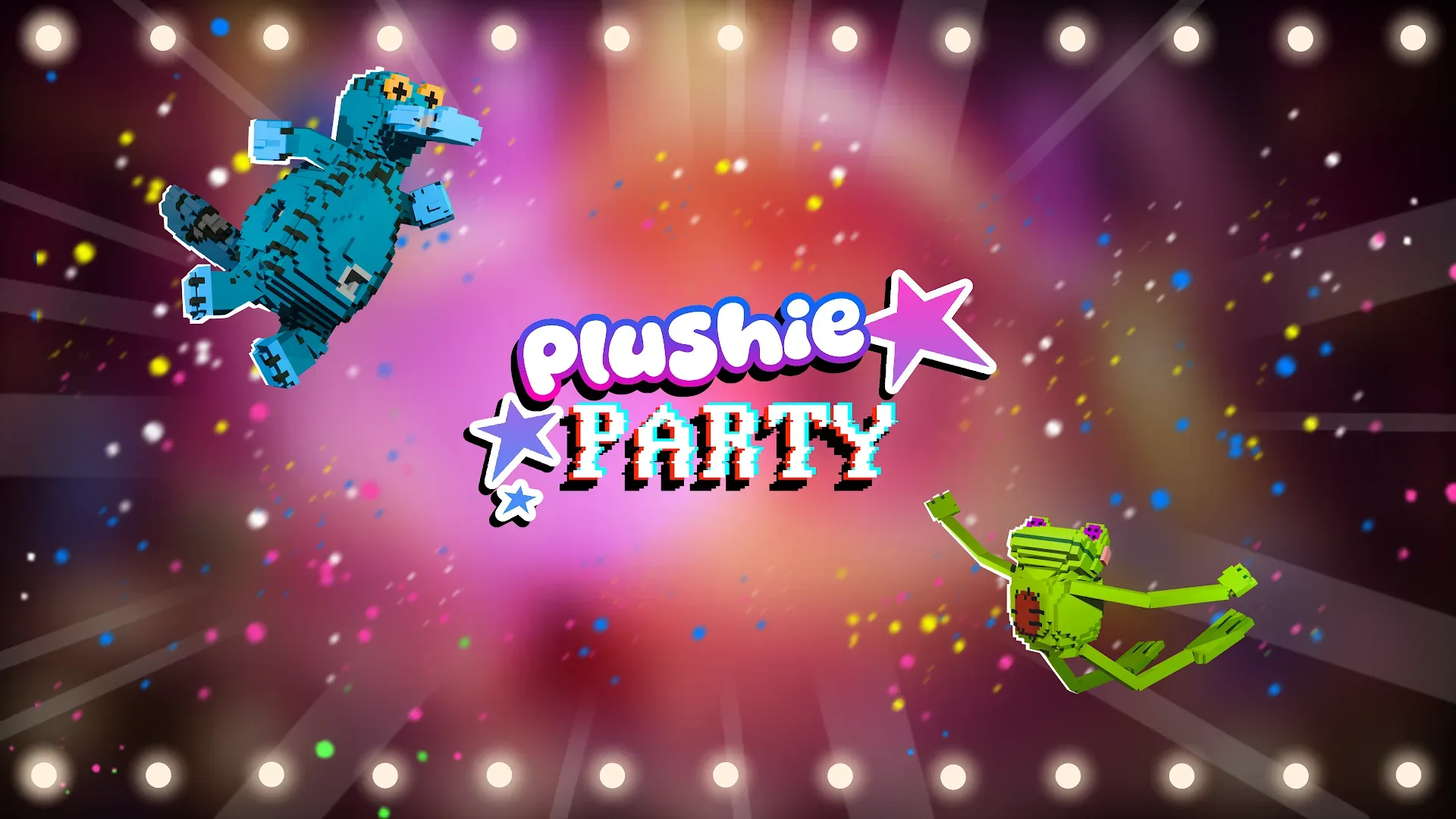
Mending a plush toy is normally a gentle business. Plushie Party has chosen a different route: throw the toys into lethal arcade cabinets, let floors fall away beneath them, and allow a deeply unsettling bird to decide whose stuffing stays inside.
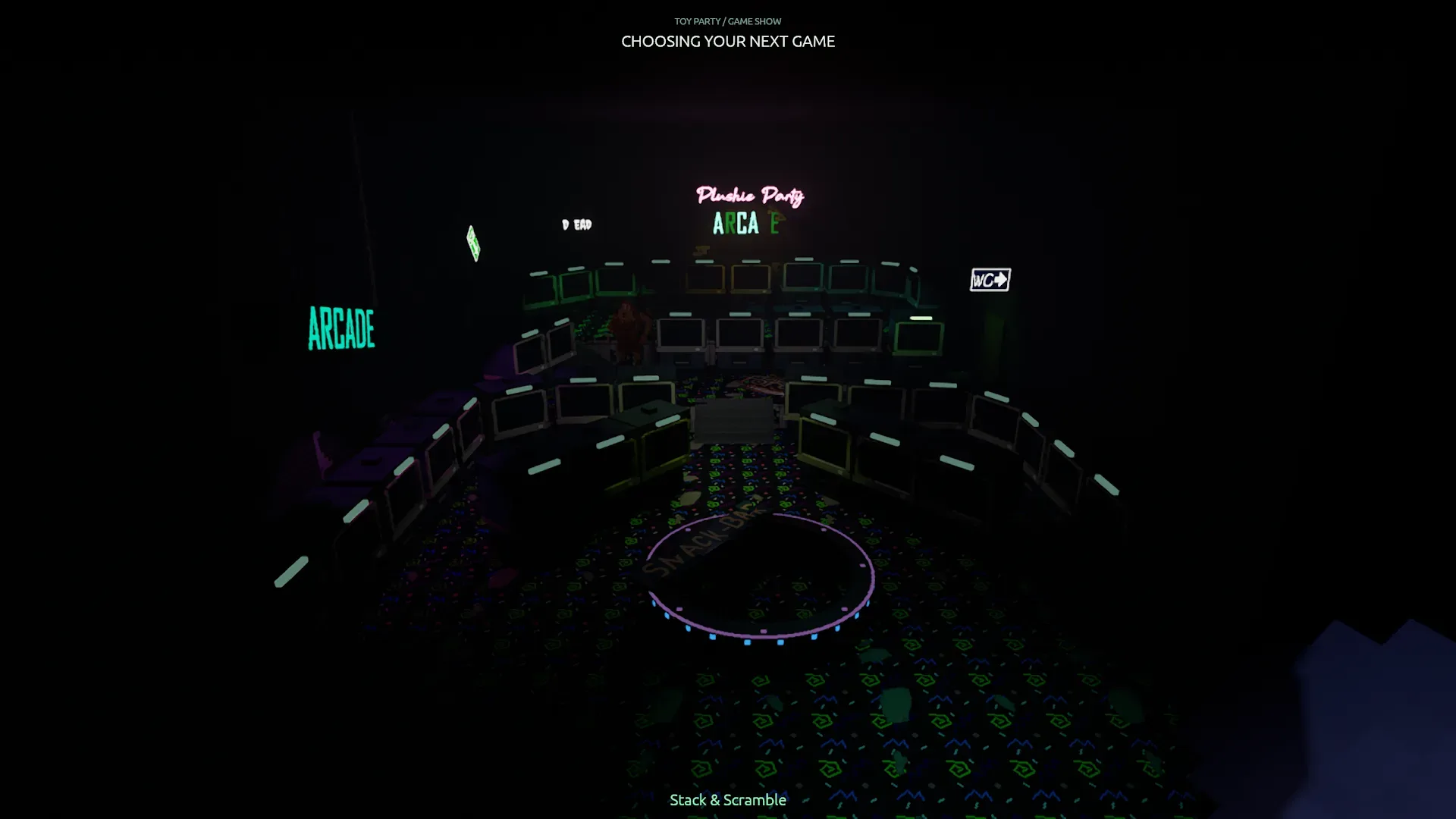
Swedish independent developer Mana Brigade has announced the multiplayer party game for Steam, with a planned launch window of Q1 2027. Its premise is knowingly bleak beneath its colorful toy-box surface. Players control battered plush toys competing in an elimination-style game show held in an abandoned arcade hall. The prize for surviving is refurbishment and adoption. The penalty for losing is being fed into a shredder and converted into stuffing.
That is the world overseen by Party Party Parrot, the game’s host. Mana Brigade describes the character as unhinged, which feels like an appropriate staffing choice for a show in which a cuddly contestant’s future depends on surviving sudden-death trapdoors.
An arcade party game built around rapid elimination
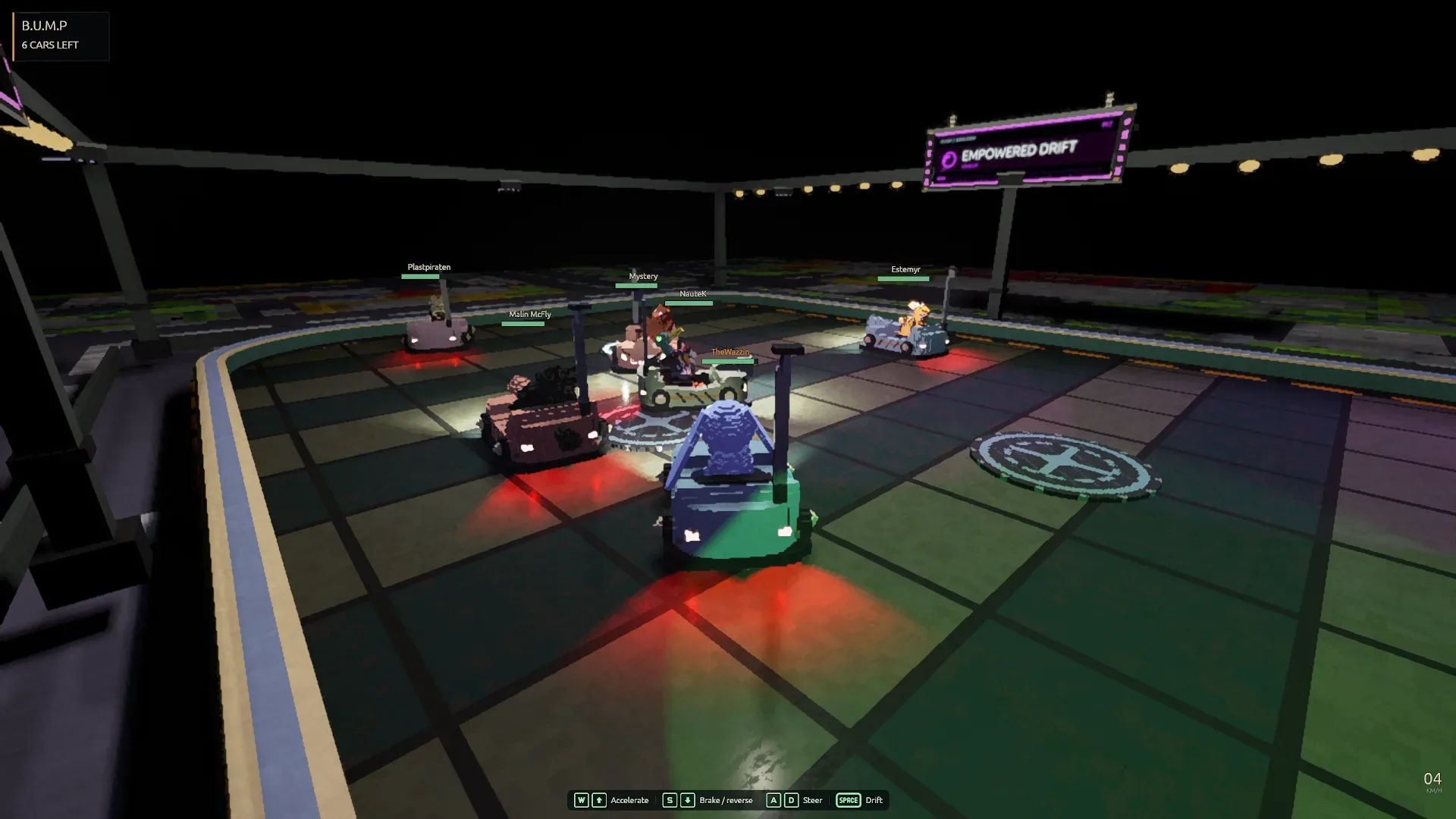
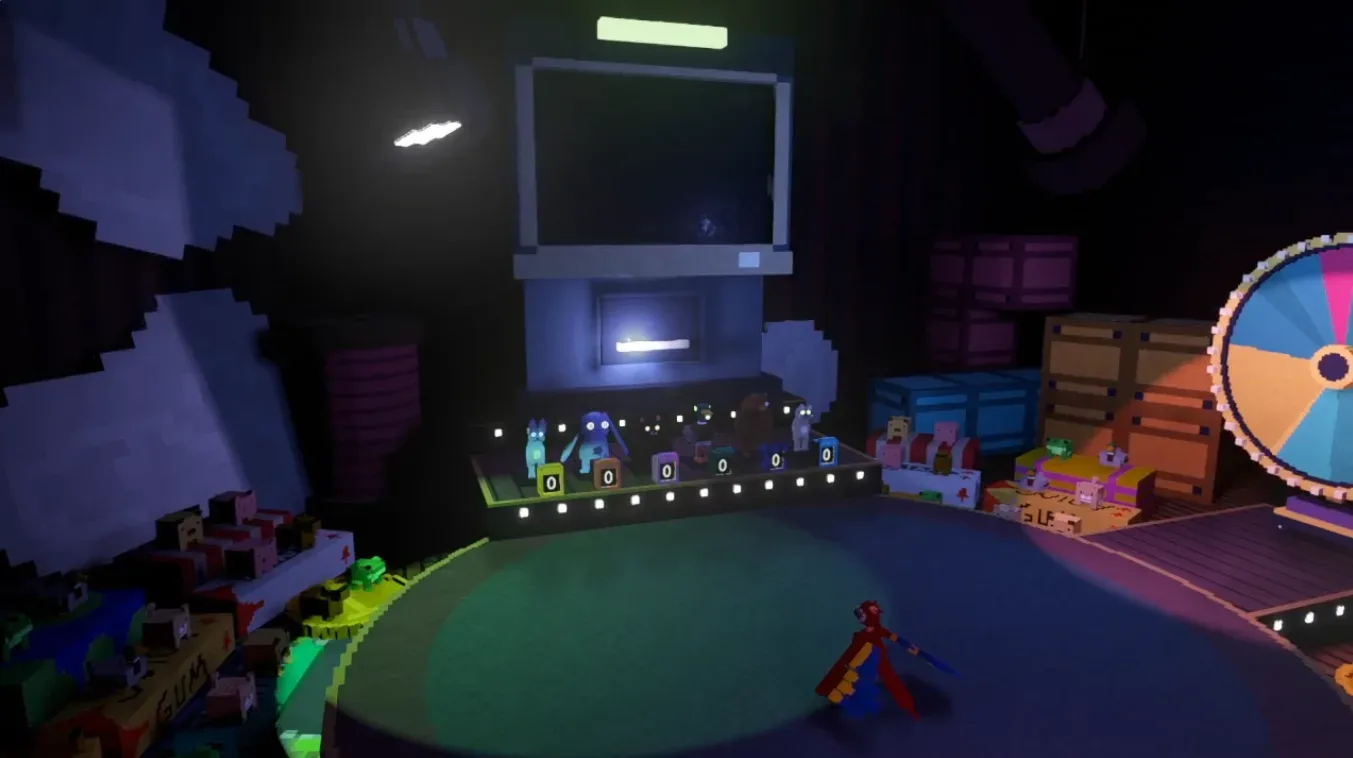
Plushie Party is designed for two to six players online. Rather than positioning itself as one long competitive match, the announced format centers on fast survival mini-games, swift eliminations and immediate rematches. The stages are framed as retro arcade cabinets, turning the surrounding abandoned arcade setting into more than a visual backdrop: each cabinet is a contained arena where the next toy-sized catastrophe happens.
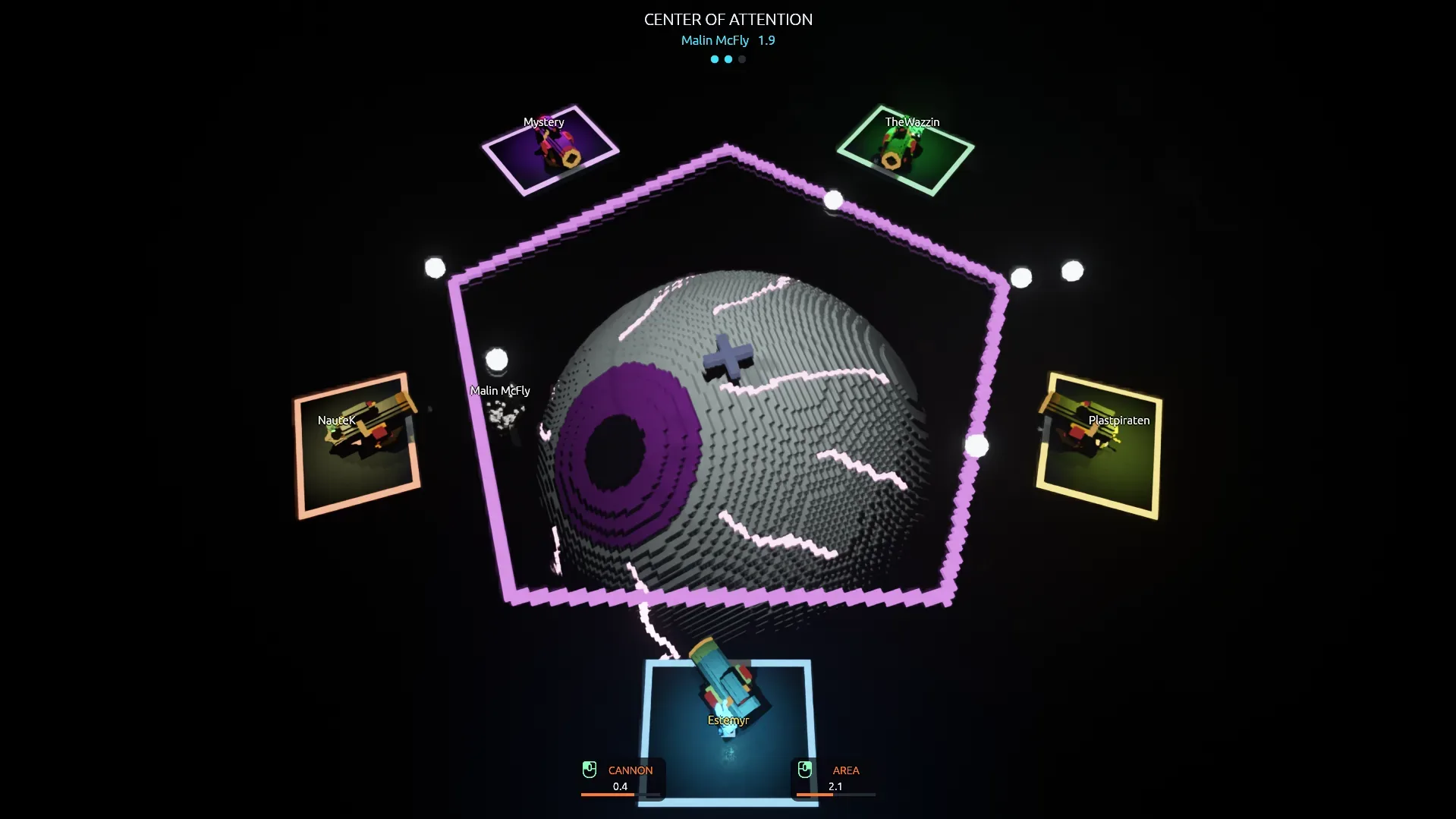
Mana Brigade has announced more than 15 lethal mini-games. Specific examples currently include collapsing floors and sudden-death traps, while the broader promise is of stages that can disintegrate during play. That emphasis matters because a familiar party-game challenge changes substantially when the arena itself is not dependable. Avoiding another player is one thing; recognizing that the safe ground may stop existing is another.
The available information does not yet identify every mini-game, explain how a full session is structured, or state whether the game will include additional modes beyond its elimination matches. Those details remain open. What is clear is the intended rhythm: short, high-pressure rounds where recovery time is limited and a loss moves the group quickly toward the next attempt.
What “survival mini-game” means here
A survival mini-game is a compact multiplayer challenge in which staying alive, rather than accumulating a large score over a long period, is the immediate objective. In Plushie Party’s case, the announced hazards include vanishing terrain and instant-failure traps. This kind of structure can be especially suited to groups because it keeps the rules legible: players can understand the threat quickly, then deal with the consequences of a bad jump, poor timing or a collapsing platform.
For a game with elimination, the rematch speed is important. Long gaps between rounds can leave eliminated players with little to do. Mana Brigade’s stated goal of instant rematches suggests it is trying to preserve momentum after the tiny stuffed competitors meet their spectacularly unpleasant ends.
Related coverage includes Plushie Party Brings Destructible Plush Combat to Steam in Q1 2027.
Destruction is the central technical hook
Plushie Party is also the first announced showcase for Gemu Engine, Mana Brigade’s voxel-based game engine. The engine is being presented as the foundation for real-time destruction and tactile destructible physics, both of which are core to the game’s concept rather than background technical bullet points.
A voxel is essentially a three-dimensional unit of space, often compared with a pixel extended into volume. In a game built around destructibility, a voxel-based approach can be useful because objects and environments can be represented as pieces of volume that may be removed, altered or broken apart. Mana Brigade has not detailed the engine’s underlying implementation, so it would be premature to infer precisely how every object will behave. But the announced result is straightforward: stages are meant to fall apart in real time.
The other major component is soft-body damage. Plushie Party calls this “Burst-at-the-Seams Slapstick,” describing physics-driven damage that lets plush characters tear and lose stuffing. Soft-body physics refers to simulation intended for objects that bend, deform or compress rather than act like rigid blocks. A plush toy is a natural candidate for that treatment: it implies squashing, deformation and visible wear instead of a simple static character model disappearing after defeat.
In practical terms, the two systems point in the same direction. The environment may be unstable, the characters may visibly suffer during the contest, and the comedy is meant to come from the physical mess created along the way. The game’s violence is filtered through fabric, stuffing and cartoonishly cruel game-show stakes, but the announcement does not downplay the fact that the mini-games are lethal.
Plushie Party’s key idea is not merely that contestants can lose. It is that both the contestant and the arena are built to come apart.
Why the cabinet setting fits the premise
The abandoned arcade hall gives the game a cohesive frame for what could otherwise be a loose collection of challenges. Retro cabinets are naturally associated with quick rules, repeat attempts and a constant cycle of failure followed by another coin-free go. Plushie Party translates that energy into a multiplayer elimination show, with cabinets functioning as individual arenas and Party Party Parrot presiding over the proceedings.
The premise also makes its tonal contrast do a lot of work. Plush toys generally signal comfort, childhood and repair; this game turns them into competitors fighting to earn those things. The adoption reward adds a strange emotional edge to the joke, while the shredder consequence makes the host’s show feel deliberately cruel. It is a darkly comic setup, but one that clearly establishes why every round matters to the game’s fictional contestants.
There is a useful distinction between the setting and any claim about gameplay content. The announced arcade theme, destructible cabinets and listed traps are confirmed. The exact roster of games, their controls, the degree of player-on-player interference, and the full range of destruction effects have not been outlined. Players interested in the technical side should therefore view the announcement as a statement of direction rather than a complete feature specification.
Wishlist goals could shape the mini-game lineup
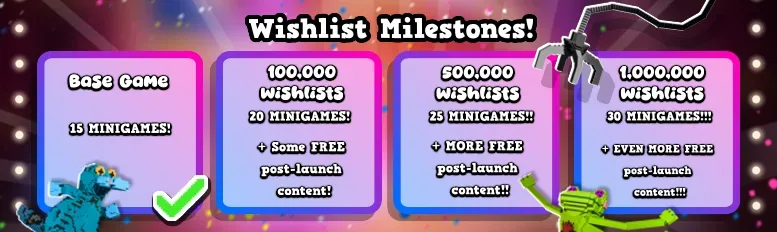
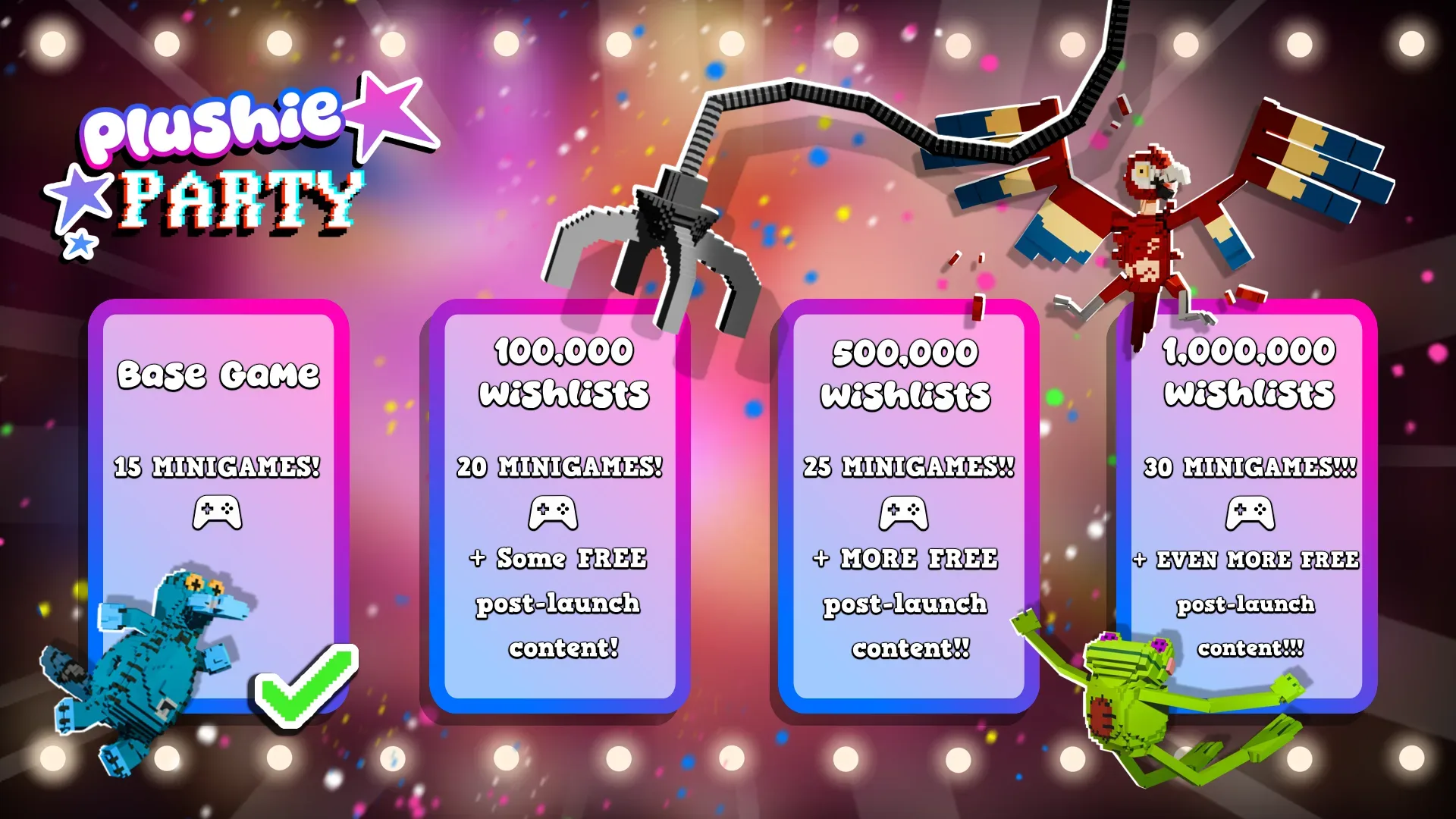
Mana Brigade has also started a set of Steam wishlist milestones tied to additional mini-games before release. The developer is inviting players into its official Discord to help choose future mini-games alongside the team. That makes the community program more consequential than a standard request to follow the game: the proposed reward is extra playable content, and the stated participation route includes input on what that content might be.
There are still sensible limits to what can be assumed. No particular milestone total, specific community-selected game, or guarantee about which ideas will be chosen has been provided. The important confirmed point is that the developer plans to connect wishlist goals with more mini-games ahead of launch and intends to involve its Discord community in those choices.
For a party game, that approach is particularly relevant because variety affects how often the same group can return without seeing the same sequence too frequently. More mini-games could mean more ways to use the game’s collapsing environments and destructible plush characters, though the final selection will depend on Mana Brigade’s development plans and the community process.
What is confirmed before launch
- Platform: Steam.
- Release window: Q1 2027.
- Developer: Mana Brigade.
- Players: Two to six players online.
- Format: Fast, elimination-focused survival mini-games with instant rematches as a design goal.
- Content announced: More than 15 lethal arcade mini-games, including collapsing floors and sudden-death traps.
- Technology: Gemu Engine, a voxel-based engine intended to support real-time destruction and tactile destructible physics.
- Character damage: Physics-driven soft-body tearing and stuffing loss.
- Community plans: Wishlist milestones intended to unlock further mini-games, with Discord participation in selecting future additions.
Plushie Party joins a broad field of upcoming independent games seeking distinctive multiplayer hooks. Its differentiator is unusually tangible: a competition where the furniture, the floor and the contestants can all become part of the wreckage. For another recent example of an indie game built around co-op systems and a sharply defined genre blend, see Air Hares’ co-op farming bullet hell announcement.
For now, Plushie Party’s promise rests on the collision of three ideas: compact arcade-style trials, destructive voxel environments and soft-bodied toys that wear their damage in public. If Mana Brigade can make that physical chaos readable in a rapid online party setting, Party Party Parrot may have found the meanest possible use for an abandoned arcade.