Fiber-optic cable has a reputation for making distance feel almost irrelevant. That reputation is earned, but it is not magic. Fiber can move data across cities, beneath oceans and into homes because it transmits information as light through very fine strands of glass, rather than as electrical current through copper. Yet every optical link still has a limit: light gradually weakens, pulses can become harder to distinguish, and the receiving equipment eventually cannot reliably separate intended data from noise.
The useful answer, then, is not one maximum cable length. It depends on the type of fiber, the hardware at each end, the route the cable takes and whether the system includes equipment to restore the signal. For an individual uninterrupted fiber run, several kilometers is typical before loss becomes a limiting concern. In a home, even multimode fiber can cover hundreds of meters, which means distance is unlikely to be the immediate problem. Across continents, the link is not one endlessly self-sufficient strand: optical amplifiers compensate for loss along the way.
Why fiber reaches so much farther than copper
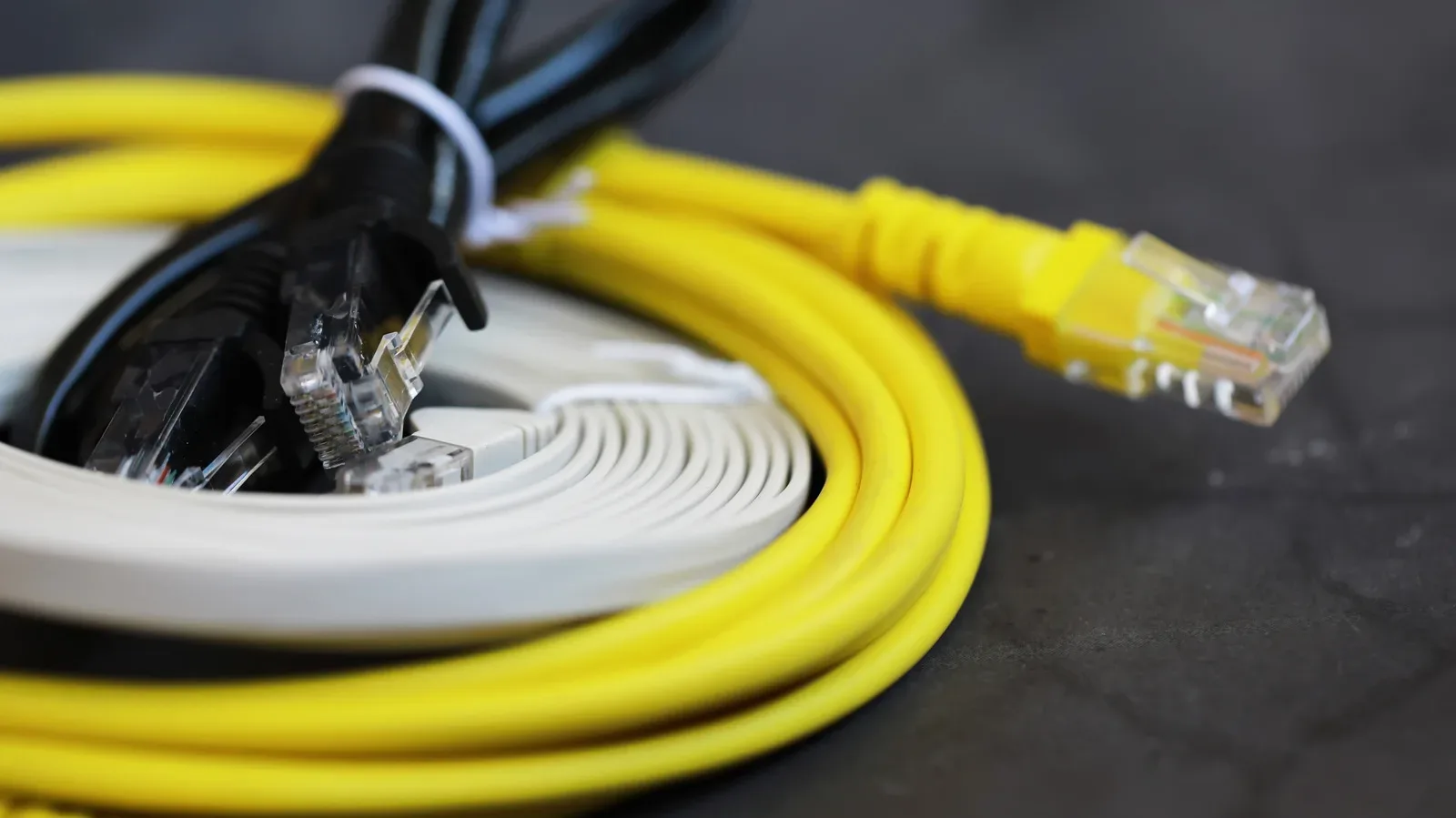
Conventional Ethernet cable uses twisted copper pairs that carry electrical signals. Copper has electrical resistance, so energy is lost as a signal travels down the wire. The maximum recommended length for Cat5e Ethernet is 100 meters, or a little more than 300 feet. Copper links can also be affected by electromagnetic interference, an issue that can undermine reliability on long routes.
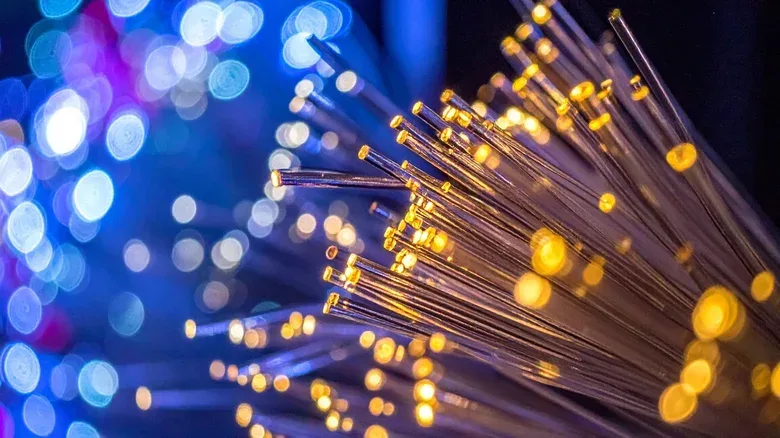
Fiber works differently. Its core is glass, though plastic can also be used in some fiber designs, and the signal is light. The operating principle is total internal reflection. Light hitting the boundary inside the strand at a shallow enough angle reflects back into the core instead of escaping through it. That repeated internal reflection guides light over very long distances with far less loss than a copper electrical signal would face.
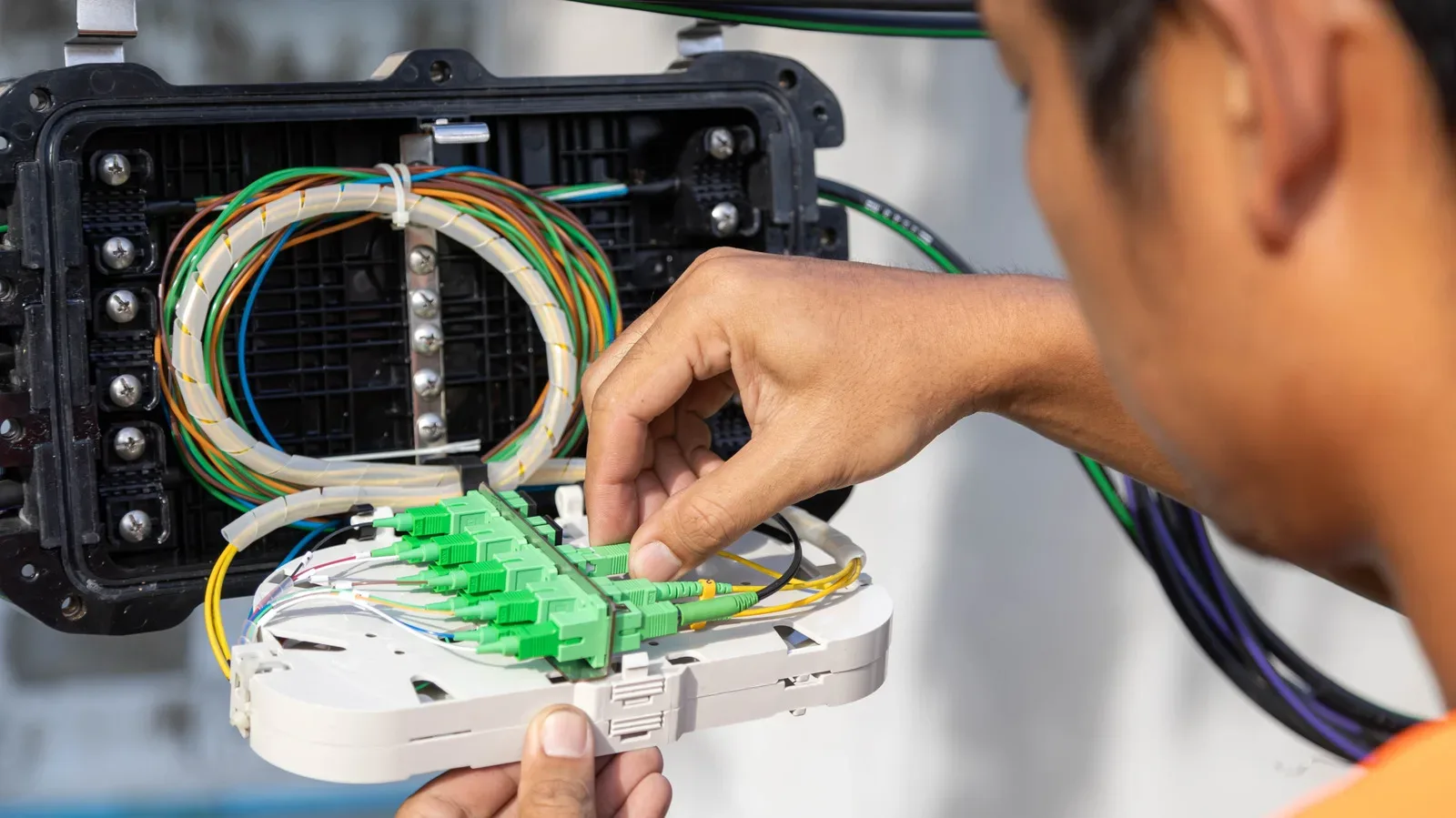
That is a major reason fiber is used throughout Internet infrastructure and increasingly promoted by internet service providers for local deployments. A cable can contain multiple individual fibers, and each fiber can carry its own signals. The result is a network medium suited to much longer connections than ordinary copper Ethernet, while also avoiding copper’s vulnerability to electromagnetic interference.
For gamers and PC users, that distinction matters most in the infrastructure around the room, not necessarily in a short cable connecting a console or desktop to a nearby router. Fiber’s distance advantage helps providers build connections over neighborhood- and city-scale routes. At home, it may be part of the service entering the building, while a local router and Ethernet cabling handle the final few meters. Remote-access projects can also depend on a reliable connection beyond the house; our look at Raspberry Pi Connect explains one way remote access can avoid the port-forwarding puzzle.
The limit is attenuation, not an abrupt cutoff
Even a well-made fiber does not preserve every bit of optical power forever. A small amount of light is lost through absorption and scattering in the glass. This gradual decline is called attenuation.
It is important to distinguish attenuation from a cable suddenly failing at a specific distance. A fiber run does not reach one universal number and instantly become unusable. Instead, the light arriving at the receiver becomes weaker with distance. Eventually, the receiver cannot reliably distinguish the useful signal from noise. At that point, data becomes unrecoverable or unreliable.
Related coverage includes How Far Fiber Optic Cables Can Run Before Signal Loss Becomes a Problem.
This is why claims about a single “maximum fiber length” need context. The physical cable length is only one part of the link. The sending and receiving equipment must also be compatible with the fiber in use and capable of handling the signal after it has travelled across that particular route. A practical distance decision is therefore about the entire optical system, rather than glass alone.
What attenuation means in plain language
- At the transmitter: data is encoded into light.
- Along the fiber: the light is guided by internal reflection, but a small amount is lost through absorption and scattering.
- At the receiver: equipment must still be able to recognize the light pulses as data.
- At excessive distance: the remaining signal is too weak relative to noise for dependable interpretation.
That gradual character is also why very long networks are engineered rather than simply stretched. The cable route, installed equipment and chosen fiber type all influence whether the receiver has enough usable signal.
Single-mode and multimode fiber solve different distance problems
Fiber is commonly divided into single-mode and multimode types. Their names describe how light travels through the fiber, and the difference has real consequences for long links.
Single-mode fiber allows one beam of light to travel through it at a time. This makes it better suited to long-distance signal transmission. It does, however, require specific equipment, and that equipment can cost significantly more.
Multimode fiber allows multiple light pulses, called modes, to propagate through the strand at once. Those modes can take slightly different routes through the fiber, so they do not necessarily arrive at the receiver at exactly the same time. That effect is called modal dispersion.
Modal dispersion becomes more troublesome as distance increases. A receiver is trying to interpret distinct light pulses as data. If the pulses spread out in time enough, the intended signal becomes harder to read correctly. This is separate from attenuation: one is a weakening of signal power, while the other is a timing and clarity problem created by multiple paths through the fiber.
Multimode fiber has a wider core, making optical alignment with transceiver equipment easier. That can make it a sensible preference for shorter runs. But for longer routes, single-mode fiber’s stability can justify the cost of the more specialized equipment.
Home installations: treat bends as seriously as distance
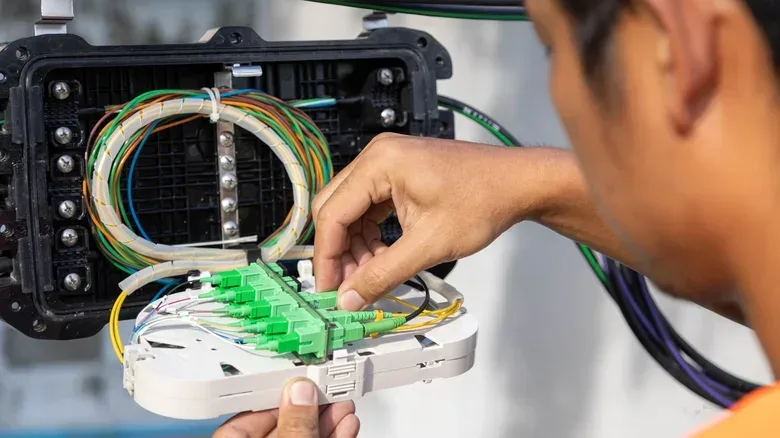
For a typical household installation, a huge cross-country distance calculation is usually unnecessary. Even multimode fiber can reach hundreds of meters. If a domestic run is misbehaving, the more immediate physical concern may be a bend that is too tight.
Sharp bends can allow light to leak out of the core. In other words, a fiber cable can have ample theoretical distance capability and still perform poorly if it is routed carelessly behind furniture, squeezed through an unsuitable gap or forced around a hard corner. That is a practical lesson worth carrying into any home networking project: fiber’s long-reach strengths do not make it immune to bad cable management.
It also means “fiber is fragile” and “fiber goes anywhere” are both oversimplifications. The supplied evidence supports a more useful middle ground. Fiber handles great distances extremely well compared with Cat5e copper, but it needs a route that avoids overly tight bends and uses equipment appropriate to the chosen fiber type.
Why undersea links are not one uninterrupted cable run
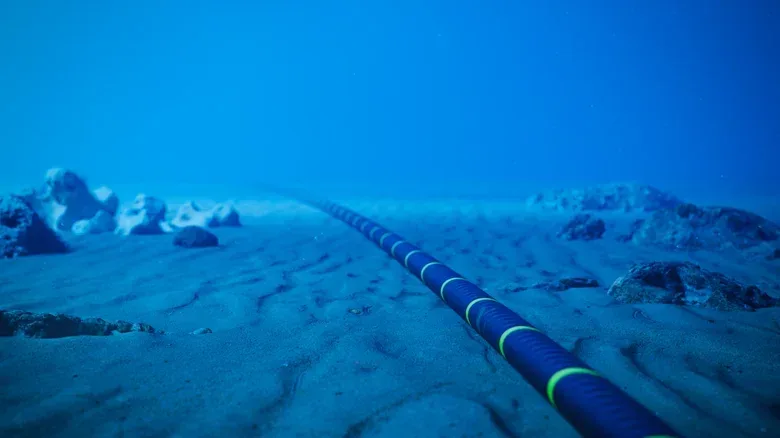
The Internet’s largest optical systems make the scale of the technology easier to appreciate. The 2Africa cable system is identified as the longest fiber-optic cable run, with landing points across many African countries as well as Europe and Asia. An earlier record holder, SEA-ME-WE 3, connected parts of Europe, Northern Africa, the Middle East, Asia and Australia before being decommissioned in 2024.
Those systems should not be read as evidence that a light pulse simply crosses an entire ocean without help. Long-distance fiber systems use optical amplifiers installed along the seabed to compensate for signal loss by boosting the optical signal. The route may be physically continuous in the everyday sense of a cable system, but it is not an uninterrupted, unassisted signal journey from one continent to another.
They also use multiplexing, a technique that lets multiple data streams travel simultaneously over a single fiber strand. Put simply, multiplexing is how one physical optical pathway can carry more than one stream of information at the same time. Alongside the ability to bundle many fibers inside a cable, it helps explain why fiber is foundational to high-capacity communications infrastructure.
What “how long can fiber run?” should mean when planning a link
The most accurate question is: how far can this particular fiber-and-equipment combination run before attenuation or dispersion makes the connection unreliable? The available facts establish the broad hierarchy:
- Cat5e copper Ethernet is typically recommended only up to 100 meters and is susceptible to electromagnetic interference.
- Fiber can carry data for several kilometers before signal loss becomes limiting.
- Multimode fiber is often favored for shorter runs because its wider core simplifies optical alignment, but modal dispersion constrains it over longer routes.
- Single-mode fiber is better for longer distances, although the required equipment can cost more.
- At oceanic scales, amplifiers restore weakened optical signals and multiplexing increases the number of simultaneous data streams.
For a short domestic connection, that means the cable’s physical treatment may deserve more attention than raw distance. For a building, campus or broader infrastructure route, choosing between multimode and single-mode becomes more consequential. And for continent-spanning connectivity, amplification is part of the design rather than an optional extra.
Fiber’s real achievement is not that it has no distance limit. It is that total internal reflection, appropriate fiber selection, optical amplification and multiplexing turn light travelling through glass into a system that can operate from a room-scale installation to a network connecting regions of the world.