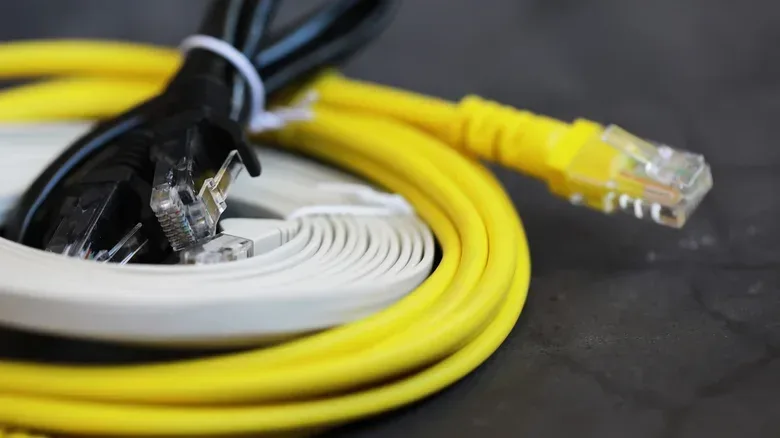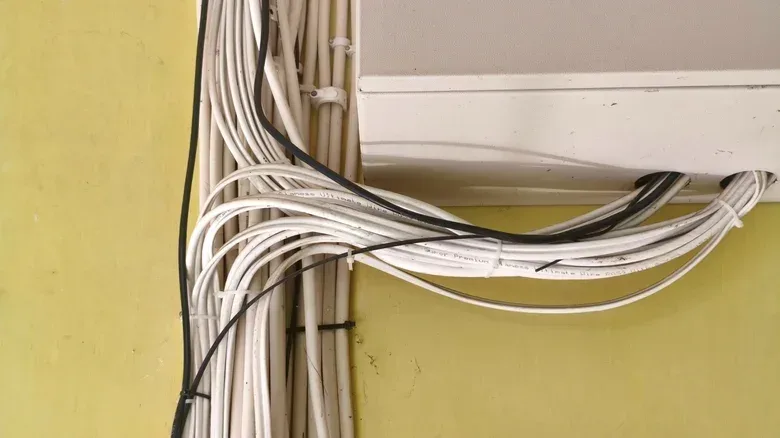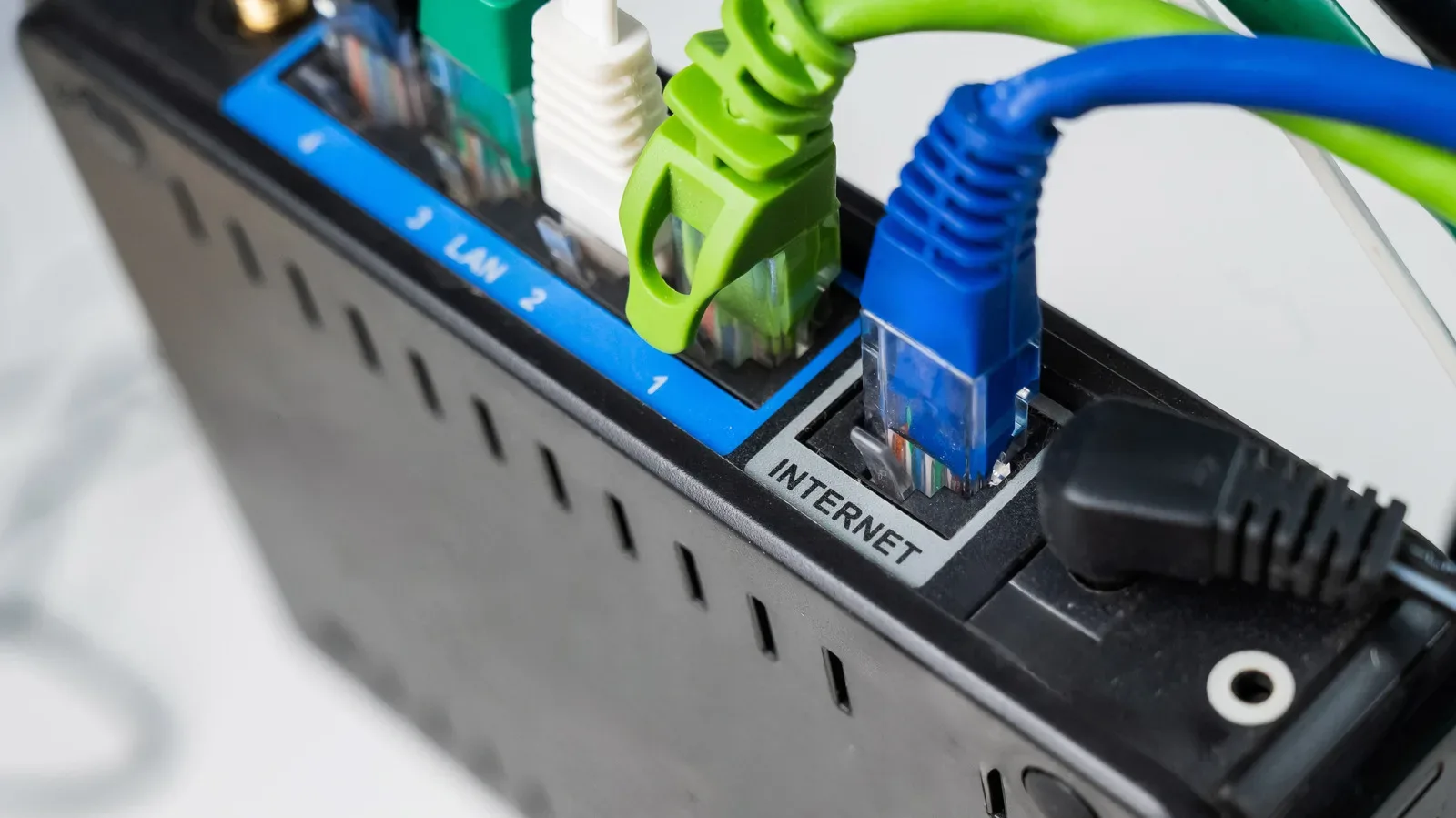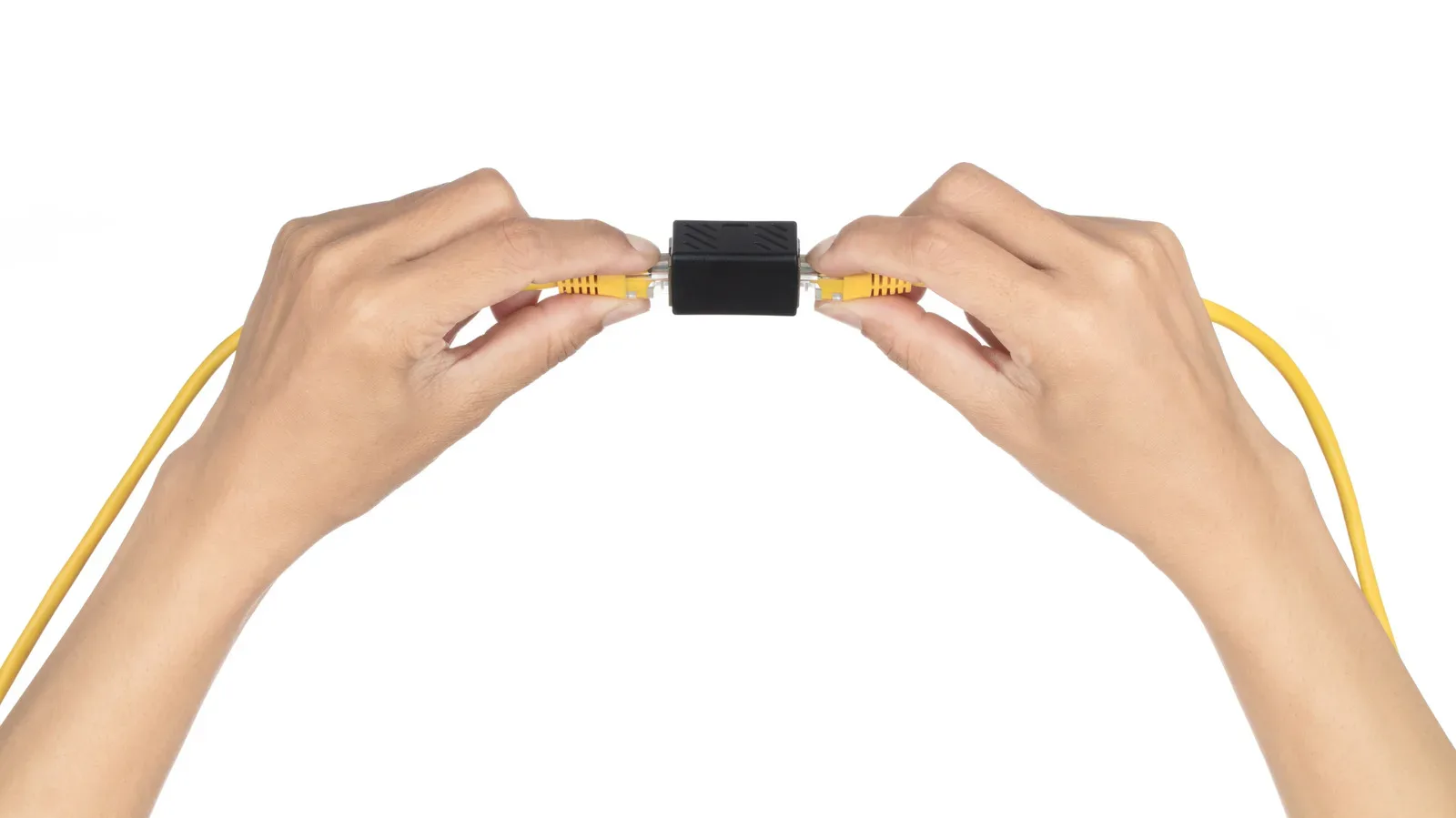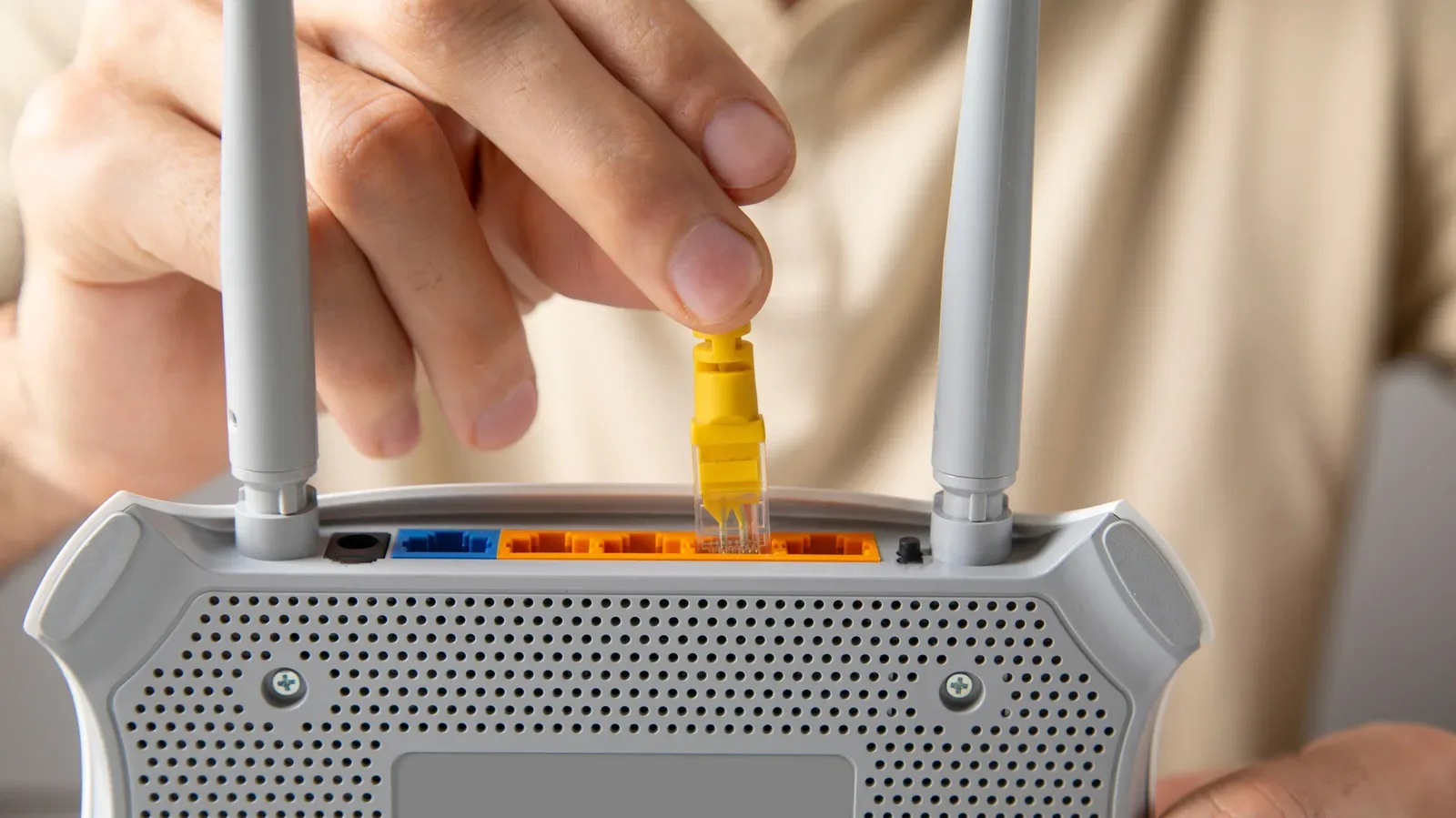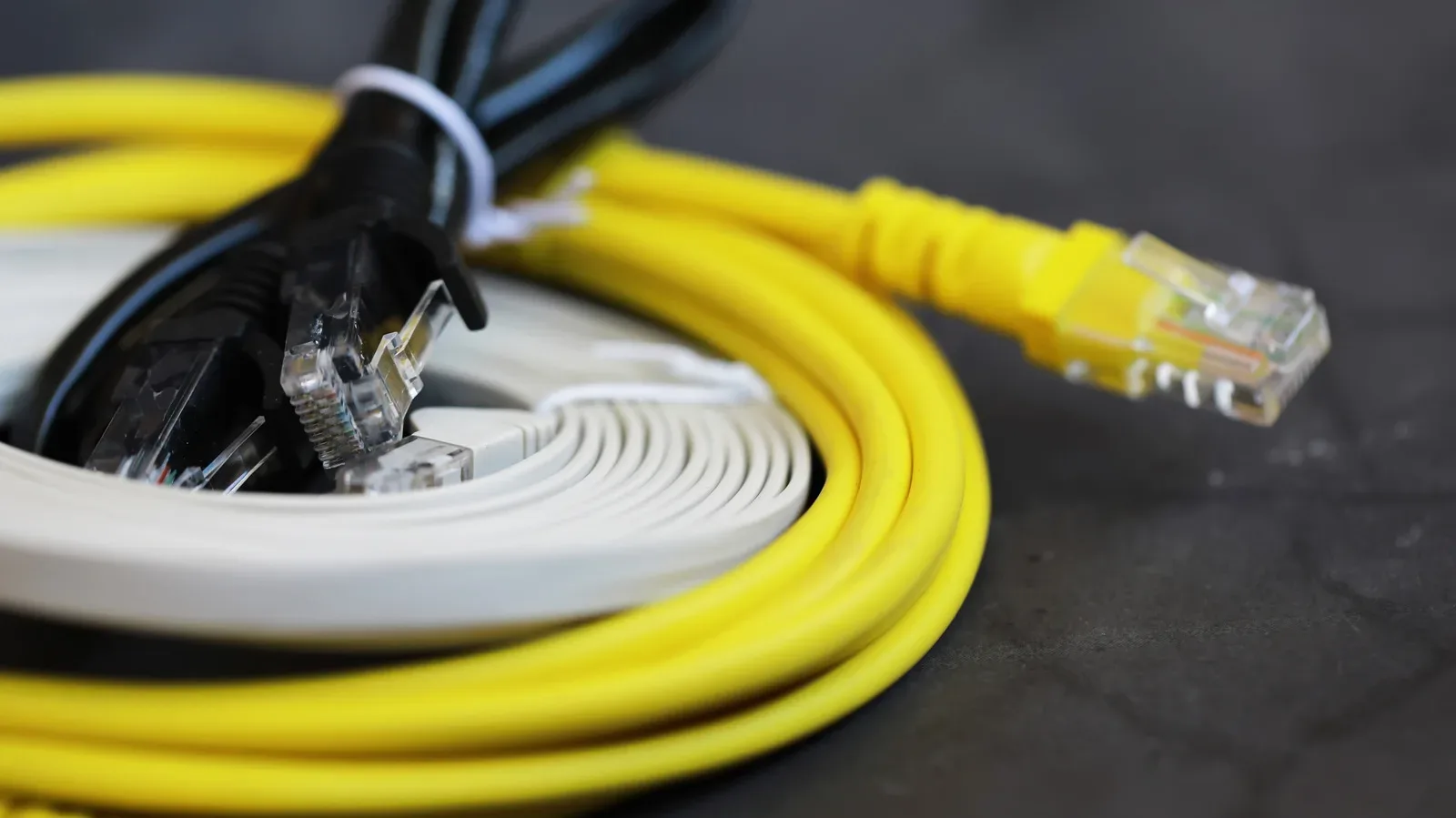
Running a network connection to a porch camera, a garden access point or an outbuilding can sound simple: take an Ethernet cable outside, plug it in, and enjoy a dependable wired link. The plug may fit and the connection may work at first, but that does not make a regular indoor Ethernet cable suitable for a permanent exterior run.
The important distinction is not whether a cable says Cat5e or Cat6. Those category labels describe network-cabling performance, not whether the cable’s outer jacket can survive sunlight, water, seasonal temperature changes and physical contact outdoors. For exterior work, the cable’s environmental rating and installation method matter just as much as the familiar category printed on the sheath.
Indoor Ethernet cable ordinarily uses a flexible PVC jacket. PVC can be appropriate indoors, but prolonged ultraviolet exposure can fade and crack it. Once that jacket deteriorates, the cable’s internal conductors and components are less protected, and connection quality can eventually suffer. Rain and temperature swings add further stress.
There is also a more serious practical issue: copper Ethernet cable taken outdoors can provide a path for surge-related damage. A permanent outdoor link should therefore be treated as infrastructure, not as a spare patch cable draped through a window.
For more context, explore Reservoir Seeks More Than $285M From Suno and Anthropic Over AI Music, Lyrics and Producer Tags.
Cat rating is not an outdoor rating
It is easy to mistake a category number for a durability grade. It is not. Cat5e and Cat6 identify types of twisted-pair Ethernet cabling, while an outdoor rating identifies whether the cable construction is intended to handle outdoor exposure.
For a short run along an exterior wall, an outdoor-rated Cat6 cable can be an appropriate choice. These cables commonly substitute a more weather-resistant polyethylene jacket for standard PVC. Markings may name the material as PE, HDPE or LLDPE. The point of that outer jacket is to better resist sunlight, moisture and significant temperature variation.
That does not mean every outdoor job has the same answer. A cable crossing a yard underground faces a separate set of problems: long-term moisture exposure and the pressure of surrounding soil. That is where direct-burial cable comes in.
Outdoor-rated and direct-burial cable solve different problems
An outdoor-rated cable is designed to tolerate exterior conditions, particularly weather and UV exposure. A direct-burial cable is built for an in-ground route. The two descriptions may overlap on some products, but they should not be treated as interchangeable labels.
Direct-burial Ethernet cable is intended to deal with wet surroundings and physical pressure over time. Depending on its construction, it can include water-blocking tape, powder or gel. These measures are designed to limit moisture reaching the wire even if the outer jacket is damaged.
In practical terms, the route should drive the purchase:
- Exterior wall or short above-ground run: choose cable explicitly marked for outdoor use and install it so it will not rub against rough surfaces.
- Underground run across a yard: choose cable specifically approved for direct burial or wet locations, then verify local rules before digging.
- Need to avoid an outdoor copper path: consider outdoor-rated fiber optic cable, while remembering that devices at either end remain exposed to outdoor conditions.
Fiber changes the connection medium from copper to light transmission. That can avoid the particular risk associated with running copper outdoors, but it is not a magic weather shield for access points, cameras or other hardware. Equipment exposed to the elements still needs appropriate protection.
Read the cable jacket, not the color
The most useful information may already be printed on the cable. The lettering can be small or worn, especially on a cable that has been in service for years, but it is far more meaningful than color or the Cat label when deciding whether a cable belongs outside.
Look for markings such as CMX, OSP, UV-resistant, sunlight-resistant, outdoor or outdoor use. A cable may also state its jacket material, including PE, HDPE or LLDPE. Documentation should also make clear whether it is approved for direct burial or wet locations where those uses apply.
CMX and OSP are examples of markings that point toward outdoor-oriented cable applications, but the safest approach is to read the full marking and accompanying product documentation rather than relying on one acronym alone. The National Electrical Code requires communications cabling installed in buildings to be listed and marked. Cable evaluated for outdoor use is marked accordingly, so the rating should be verifiable rather than guessed from its appearance.
For a useful second overview of why ordinary indoor cable is a poor long-term outdoor solution, see this guide to the limits of regular Ethernet cable outdoors.
Plan the route before fastening anything
Cable longevity depends on routing as well as the jacket. Exterior cable should be secured with cable clips so that wind, movement and contact do not cause abrasion. Avoid sharp bends. If a clean-looking path requires forcing the cable around a tight corner, a slightly longer route is preferable to damaging the run.
The same principle matters underground. Do not begin with the assumption that a trench can go wherever it is most convenient. Local ordinances can govern the required depth, whether conduit is required, and the types of cable permitted. Those rules matter both for compliance and for making sure a buried network run is installed in a manner suited to the location.
A simple pre-installation check can prevent the most common mismatch between cable and environment:
- Identify whether the route is exposed outdoors, buried, or both.
- Check the entire cable jacket and its documentation for an explicit outdoor, sunlight-resistant, wet-location or direct-burial designation that fits the route.
- Review local requirements for a permanent buried installation, including conduit and depth rules.
- Plan attachment points that prevent rubbing and keep bends gradual.
- Include surge protection at both ends of an outdoor copper Ethernet run.
Surge protection is part of the job
Even a correctly rated outdoor Ethernet cable does not remove every risk. The copper in an Ethernet cable outside does not have inherent protection from lightning-related electrical events or other surges. Installing surge protection on both ends of the cable is described as best practice for an exterior copper run.
This is an important distinction. Weather resistance concerns the cable jacket’s ability to withstand environmental exposure. Surge protection addresses a different threat: damaging electrical energy reaching connected networking equipment. One does not replace the other.
That separation also explains why a cable can look physically intact yet still be part of a risky installation. A durable PE jacket is valuable against UV, water and temperature swings. It is not a substitute for protective hardware on an outdoor copper link.
Outdoor cable is not automatically right indoors
There is a final trap in the “tougher is always better” mindset. Outdoor-rated cable is not necessarily suitable for an indoor route. Some exterior cabling does not meet indoor fire-safety requirements. That can matter even when the outdoor cable enters a building only briefly.
An unlisted outdoor cable generally cannot extend more than 50 feet indoors before it terminates and transitions to indoor-rated cable, and a shorter distance is preferable. This is why a permanent installation deserves more scrutiny than a cable bought solely because it says “outdoor” on the packaging.
The practical takeaway is straightforward: use a cable that is marked for the environment it will occupy, not merely one that appears rugged. Confirm the jacket rating, match direct-burial cable to underground routes, protect outdoor copper links against surges, secure the cable without sharp bends, and check local requirements before committing to a permanent path.
An indoor cable might establish a connection outside today. But a reliable exterior network is built around what the cable must endure over time—not just what it can do on the day it is plugged in.