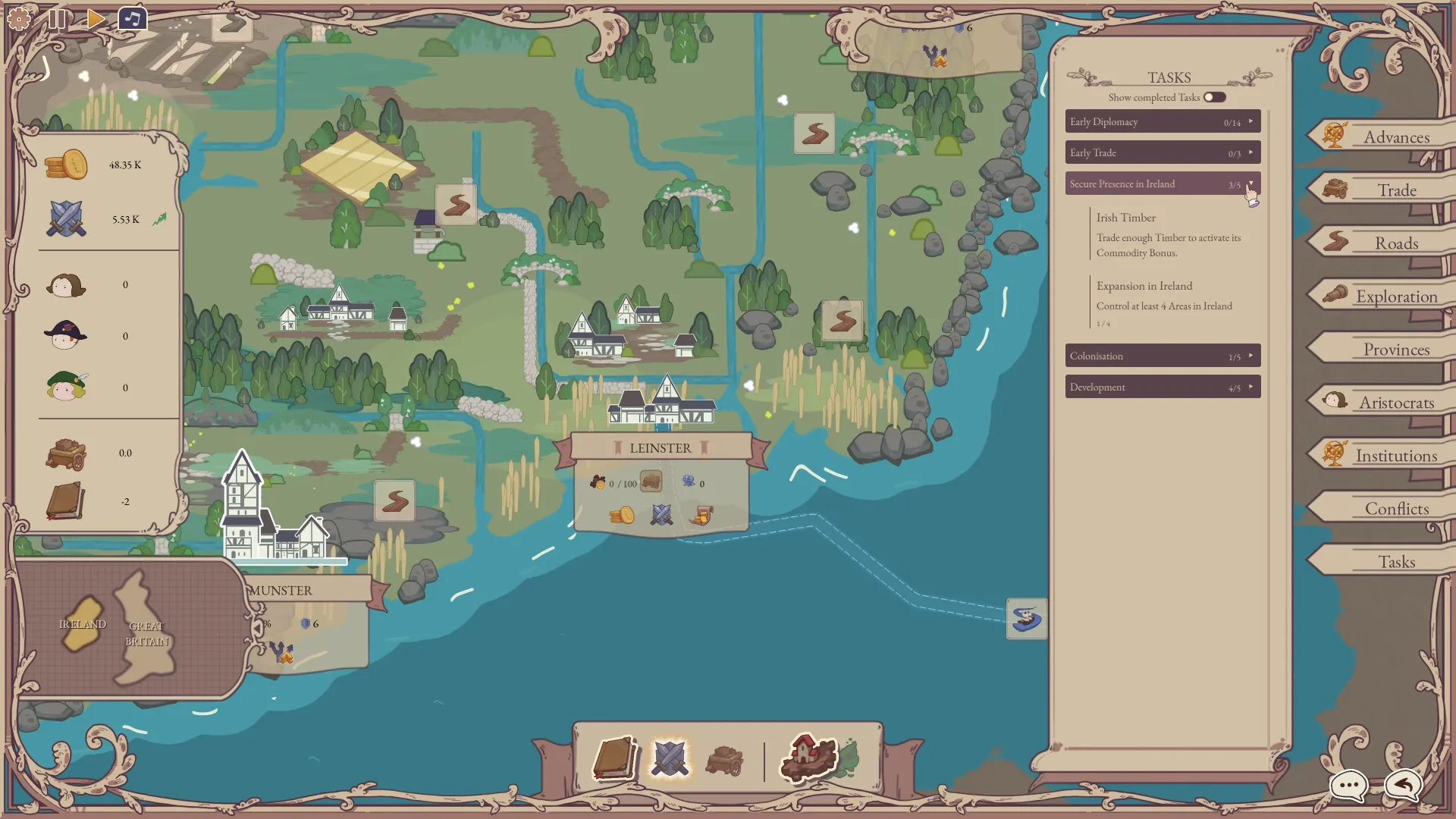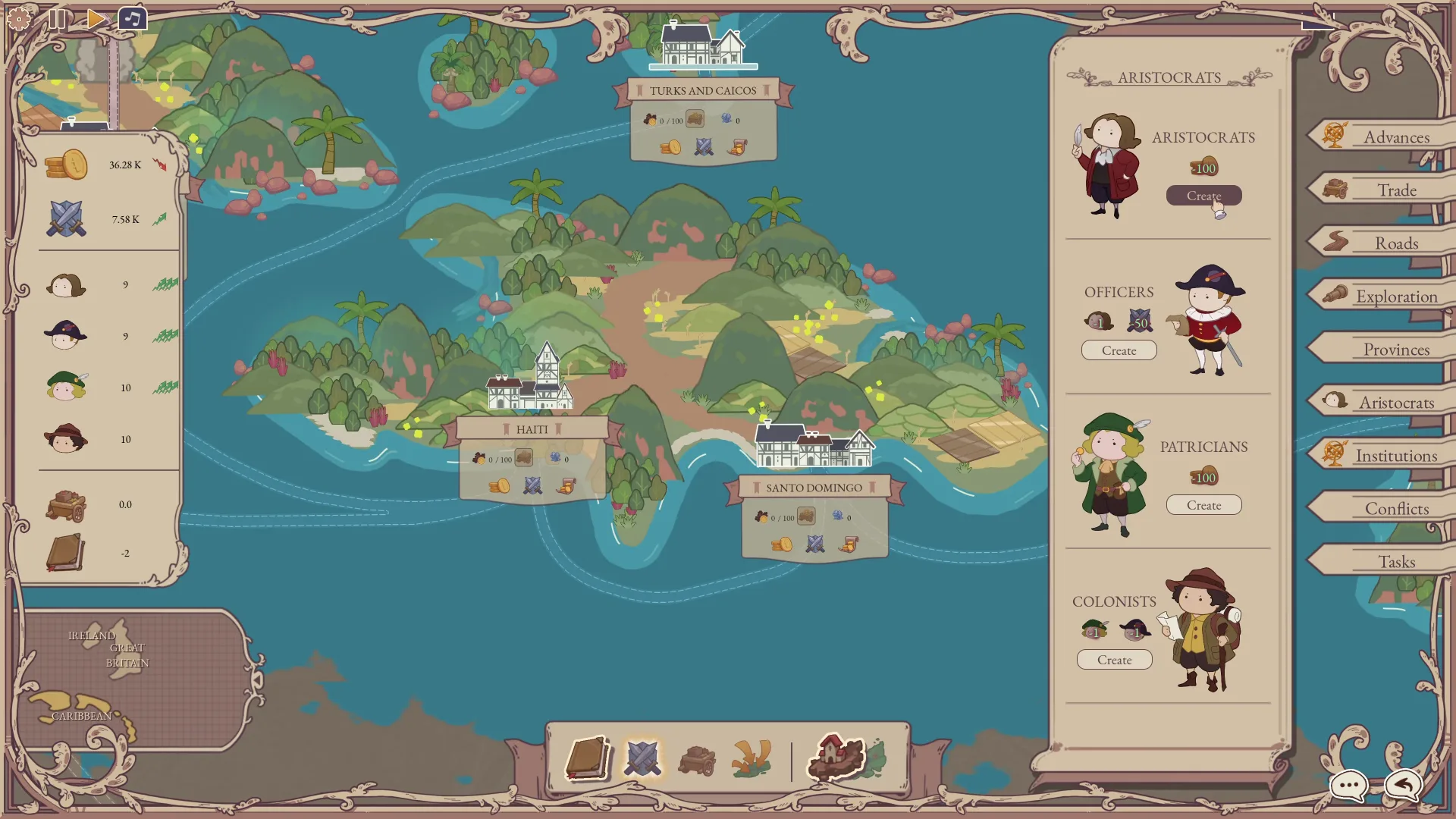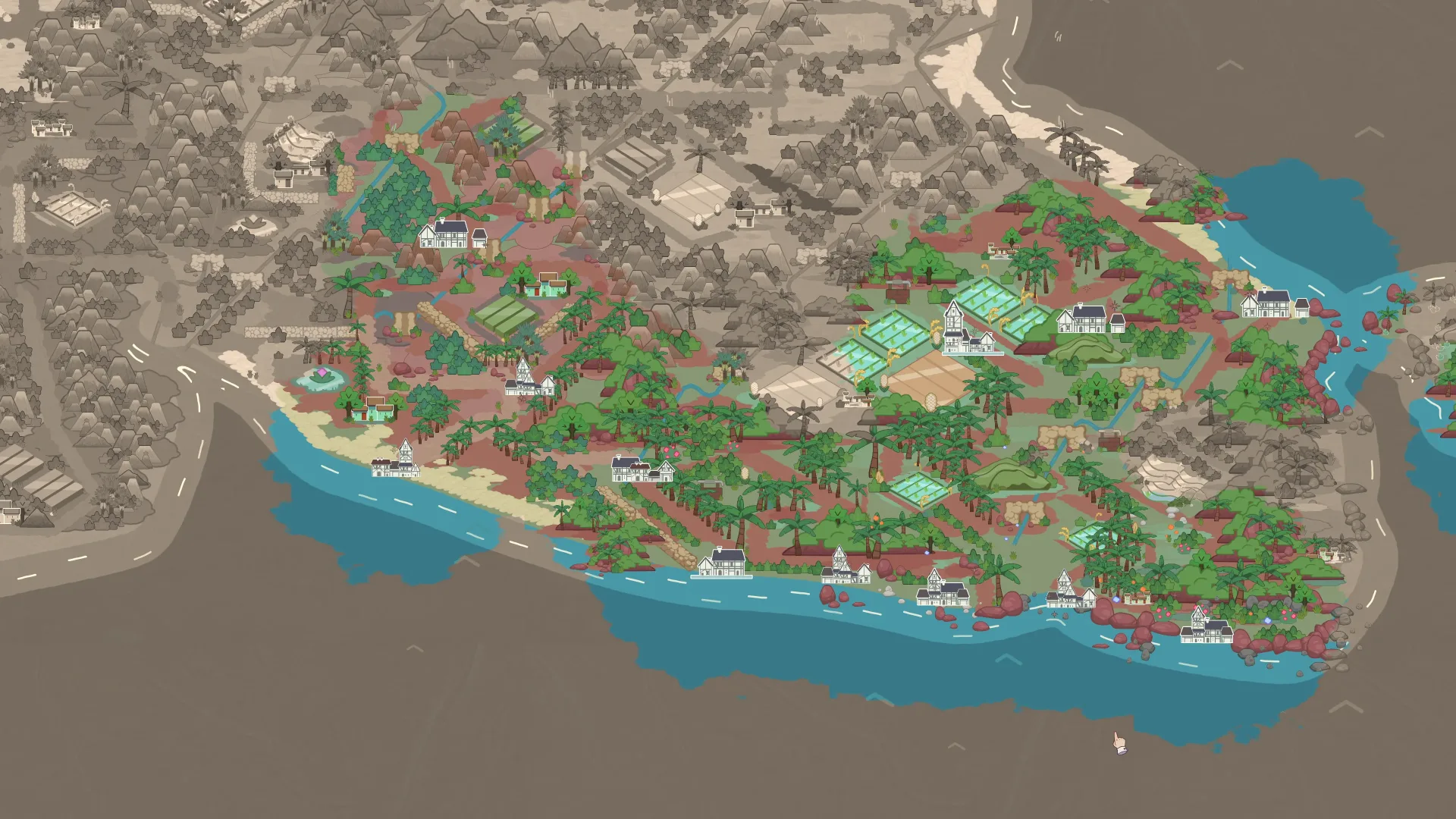
How Empires Work, the debut game from Crow Cottage, is now available on Steam. It approaches the building of an empire through an unusual pairing: the deliberately small-scale beginnings and repeated actions associated with incremental games, alongside the broader concerns of grand strategy.
The premise is not simply to acquire more territory. Players begin with a basic button press and gradually unlock automation, turning recurring actions into self-running institutions. From there, the game’s stated scope expands into taxation, trade, colonization, labour, military forces and diplomatic influence. The intended arc takes a player from local lordships to a global empire, with aristocrats and bureaucrats forming part of the system needed to keep expansion going.
How Empires Work is listed at $9.99 / £7.99 / €8.99, with a 10% launch discount available for its first two weeks. A demo is also available through Steam, giving prospective players a way to see whether its particular blend of systems suits them before buying. An official trailer is available as well.
An empire built from repeated actions
The phrase incremental game usually describes a structure in which modest, repeatable actions produce resources or progress, which in turn unlocks tools that accelerate or automate the process. In How Empires Work, that structure is explicitly tied to institutions. Rather than leaving the player to perform the same action indefinitely, the design promises systems that take over repeated work as an empire develops.
That is a meaningful fit for the game’s theme. An empire cannot remain a single person manually collecting every tax, directing every shipment or handling every local concern once its territory and ambitions grow. The game’s automation is therefore presented as more than a convenience feature: it is part of the subject matter. Institutions make it possible for a larger state to operate, but they also create a more complicated machine to manage.
In practical terms, the early game is likely to foreground direct interaction and simple gains, while later progress shifts attention towards deciding what should be automated and how the resulting systems support one another. The supplied outline does not specify every rule, resource or failure condition, so players should not assume a particular level of simulation detail. What is clear is that moving from hands-on actions to institutional management is a central progression idea.
Grand strategy concerns, without abandoning the incremental loop
Grand strategy is a useful description for games focused on overseeing the direction of a state or large political power. It generally points to decisions made across several connected areas rather than a single battlefield or city block. How Empires Work places taxation, trade, colonization, labour, armies and diplomacy in that wider frame.
The combination matters because those areas are not described as isolated menus. The game’s stated emphasis is on converting profit into power. That suggests an economic engine is intended to be the basis for political and military capacity: resources earned through the state’s activity can be reinvested into expansion, administration or influence. This is not a promise that every decision has one predetermined result, but it identifies the central pressure behind the design. Economic growth is useful because it helps the empire act.
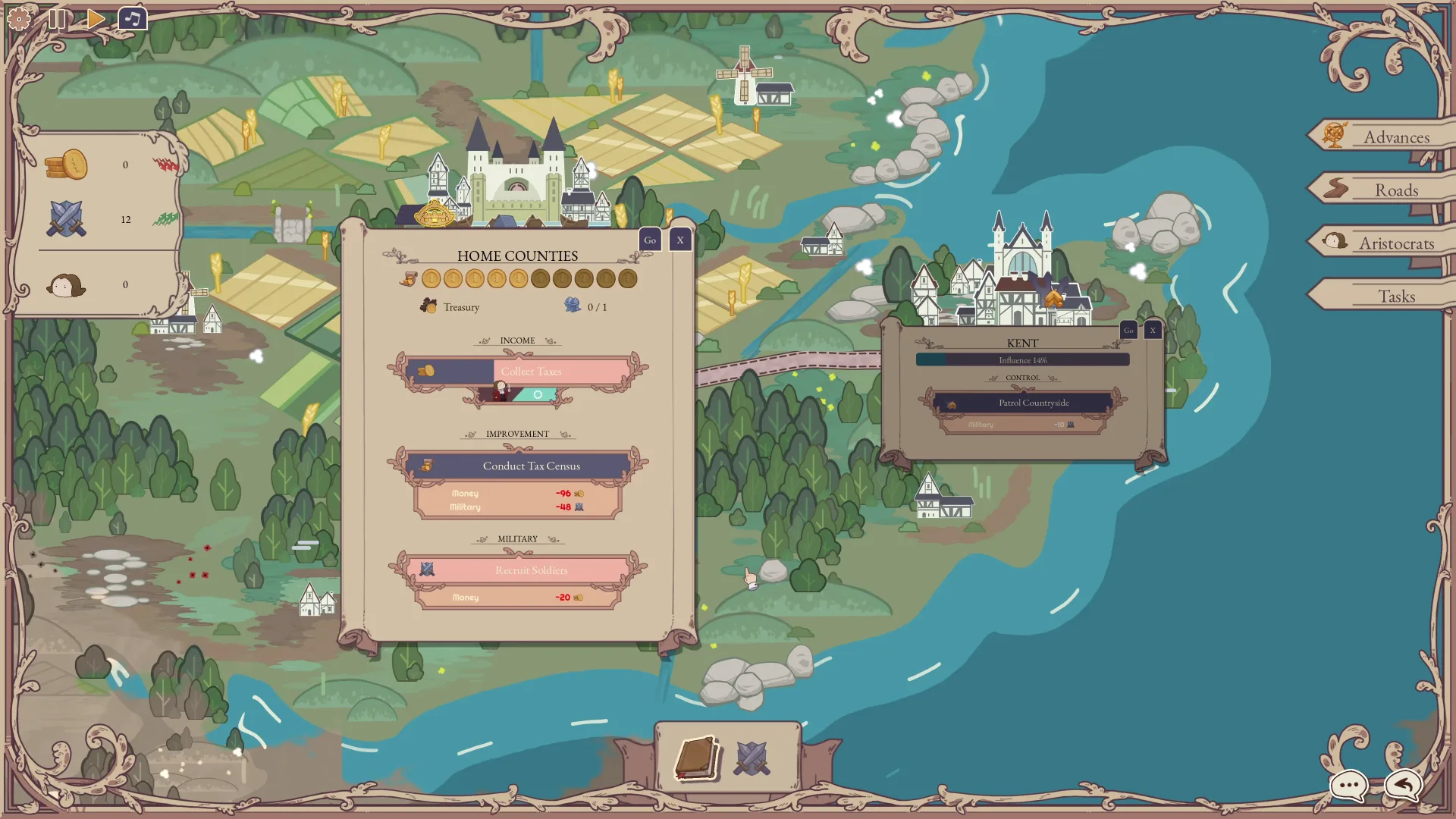
Taxation and trade speak to revenue and the movement of value. Labour points to the people and work that sustain production. Colonization and province management extend the state’s reach, while roads provide infrastructure linking parts of the realm. Armies give the player a military instrument, and diplomatic influence provides a non-military dimension to dealing with other powers. The aristocracy and bureaucracy, meanwhile, are identified as the people or structures employed to maintain expansion.
That collection of systems makes the game sound less concerned with one spectacular act of conquest than with the machinery that lets a state keep functioning afterward. A new province, for example, is not just more space on a map under this framing; it belongs to a wider network involving administration, roads, economic activity and the pressures created by growth.
Why automation could be the pivotal decision layer
Automation can sometimes mean reducing a game to waiting for numbers to rise. Here, Crow Cottage’s description points in another direction: automation is meant to transform repeated tasks into institutions. The important question is not merely whether a process runs on its own, but which processes are given that status and whether they keep serving the empire as conditions change.
The game is said to change as the empire develops, calling for new approaches to internal troubles and rival powers. That is an important qualification to the promise of automation. A system that works during a modest local phase may not necessarily be sufficient once the player is overseeing wider territories and facing stronger outside competition. A growing empire can generate fresh demands rather than simply making prior decisions permanently optimal.
For players, this means the appeal may lie in reading the relationships between systems. Roads, province management, economic engines and administrative structures are all named features. The design appears to invite a cycle of building capacity, using that capacity to expand, then reshaping the state to cope with the consequences. The specific details of how those systems interact will be discovered in the Steam demo and full game, but the broad intent is clear: progress changes the type of management required.
A hand-painted world in motion
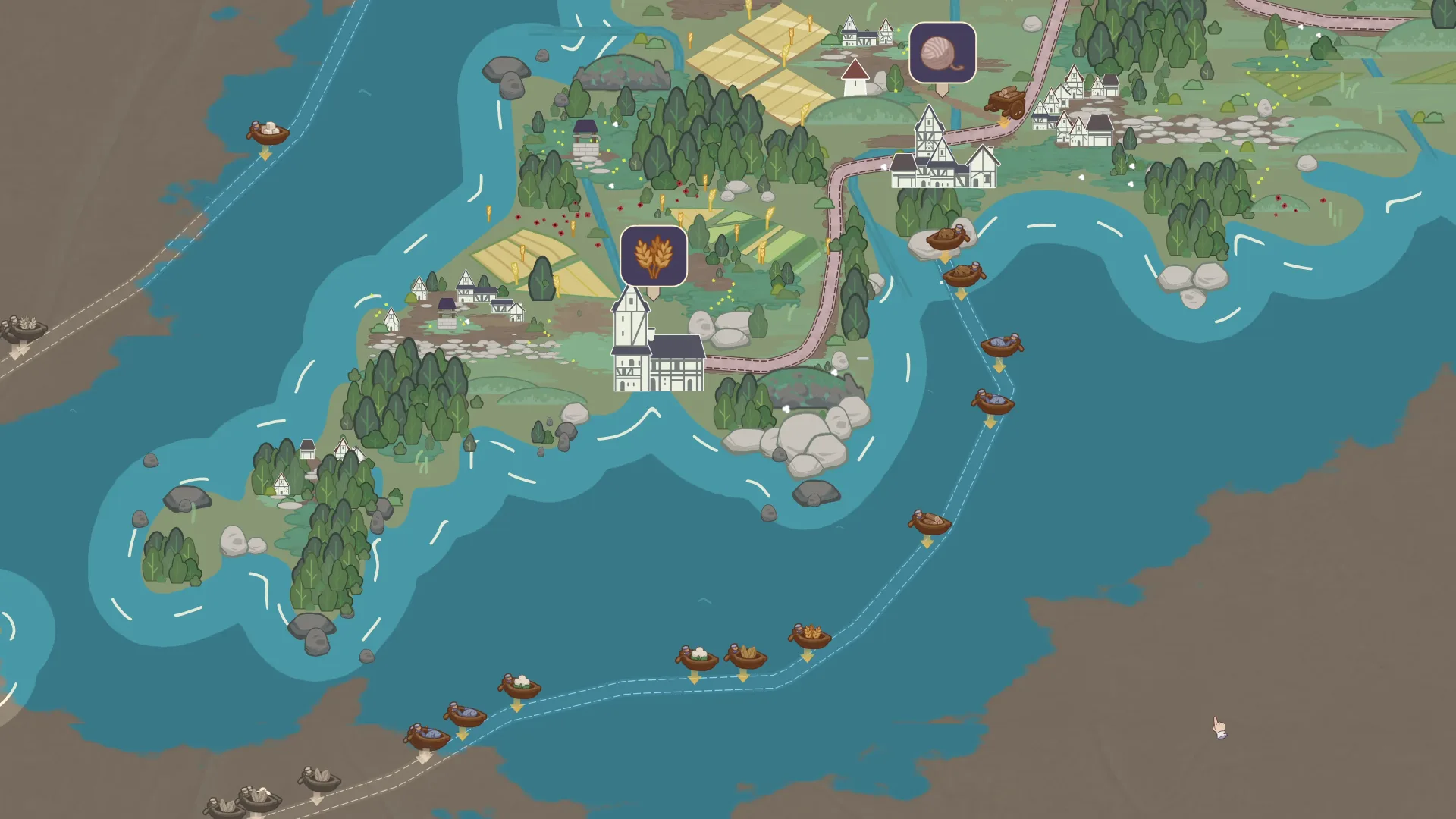
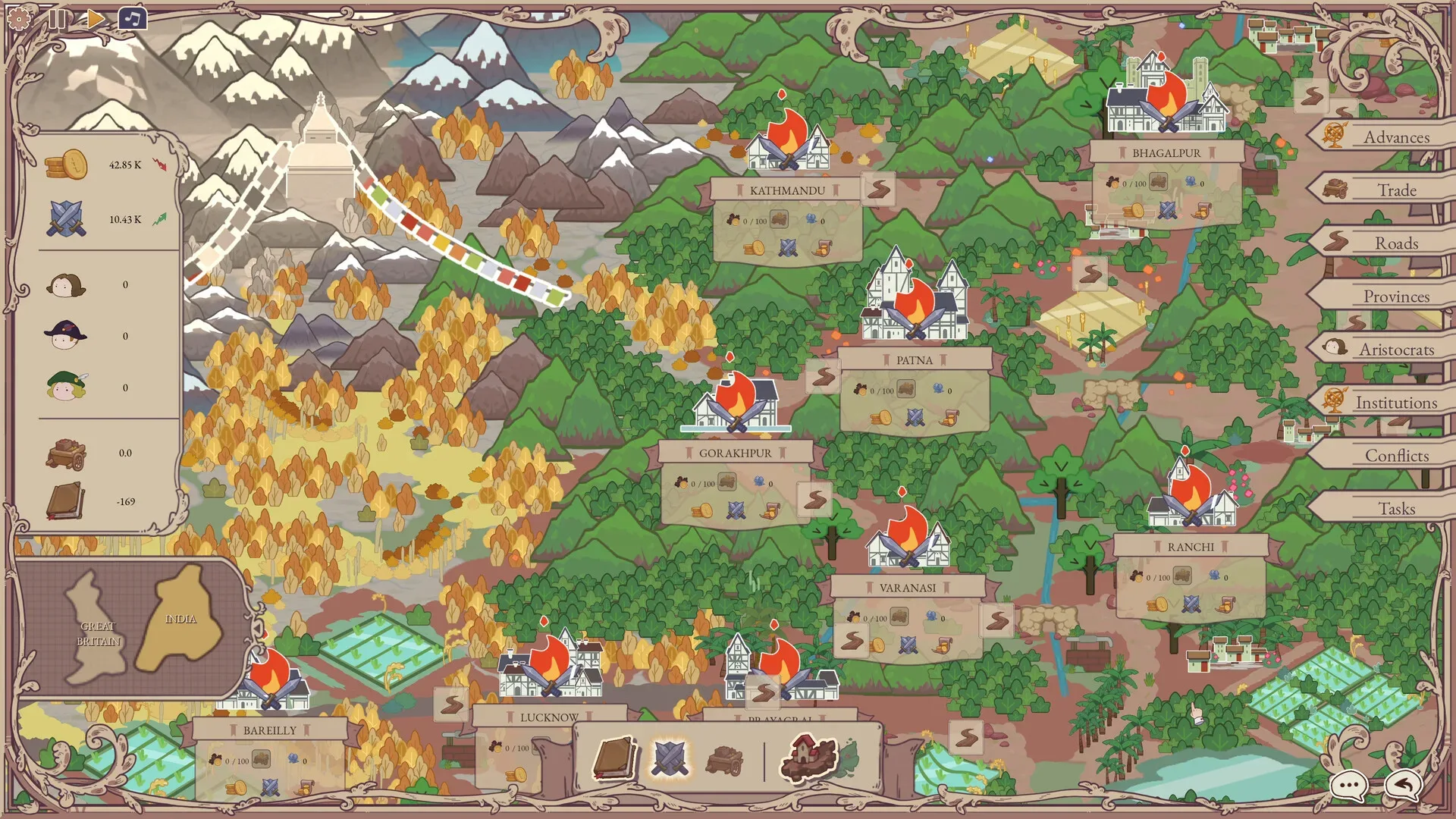
How Empires Work presents its world with hand-painted art, animated by flows of capital, commodities and armies. This visual choice directly supports the game’s focus on systems. Rather than treating the map as a purely static board, the stated aim is to show movement: value circulating, goods travelling and military forces deploying.
That can make a difference in a strategy game where the player is asked to think about economic and political processes. When trade, capital and armies are visible as movement across the world, the game’s systems have a clearer physical presence. The art direction does not itself tell us how detailed the underlying simulation is, but it does establish a visual language for the forces the player is managing.
The changing world is also positioned as part of the challenge. Internal troubles and rival powers are named as pressures that require new approaches as development proceeds. In other words, expansion is not presented as a simple finish line. It is the source of later management problems as well as a measure of success.
What Steam players can check before committing
The demo is particularly useful for a game that combines two genres with different expectations. A player attracted to grand strategy may want to see how much of the experience rests on direct incremental interaction before automation takes hold. Conversely, someone who enjoys incremental progression may want to know how deeply province management, roads, diplomacy and armies affect the broader loop.
The available description supports a few sensible expectations: the game starts small; it uses automation as a form of institutional growth; and it builds toward managing an increasingly expansive state. It does not establish a campaign length, multiplayer options, a specific historical setting, mod support or the full scale of the game’s strategic complexity. Those are details worth checking on Steam rather than assuming from the genre labels alone.
For readers keeping an eye on smaller strategy and systems-driven projects arriving on PC, Joking Joystick is also tracking other Steam releases, including Die or Die’s planned Steam and console release.
Availability and key details
- Game: How Empires Work
- Developer: Crow Cottage
- Platform: Steam
- Status: Out now
- Listed price: $9.99 / £7.99 / €8.99
- Launch offer: 10% off for the first two weeks
- Demo: Available on Steam
How Empires Work’s central proposition is compact but distinctive: begin with a click, construct institutions that take over the routine, and use the resulting economic and administrative capacity to pursue power on an imperial scale. For players who enjoy watching an interconnected system become more capable—and then having to govern the complications that capability produces—Crow Cottage’s debut is now ready to explore on Steam.