Storage used to be a very physical problem. A file either fit on the disk in your hand or it did not. A 3.5-inch floppy held 1.44MB, so moving anything larger meant dividing it across multiple disks, reaching for another format, or leaving it on the family PC. In the early 2000s, a roughly 10GB hard drive was a plausible entry-level desktop specification. That once-sizable amount now looks tiny beside hard drives that reach 24TB to 30TB for consumers, SSDs around 8TB, and 44TB drives made for commercial use.
But the more interesting change is not solely the huge jump in capacity. It is where files live and who is competing to buy the hardware beneath them. The progression from a floppy in a desk drawer to a USB key, then to a folder synchronised across machines, changed everyday habits as much as it changed the numbers on a package. And the long-running expectation that the same budget would reliably buy more storage has weakened as major institutional purchasers consume memory, flash storage and hard-drive capacity.
The 1.44MB era was a constraint, not just a nostalgia prop
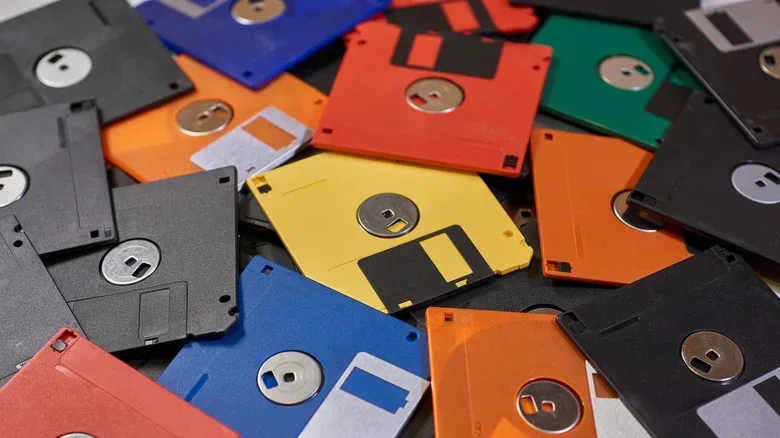
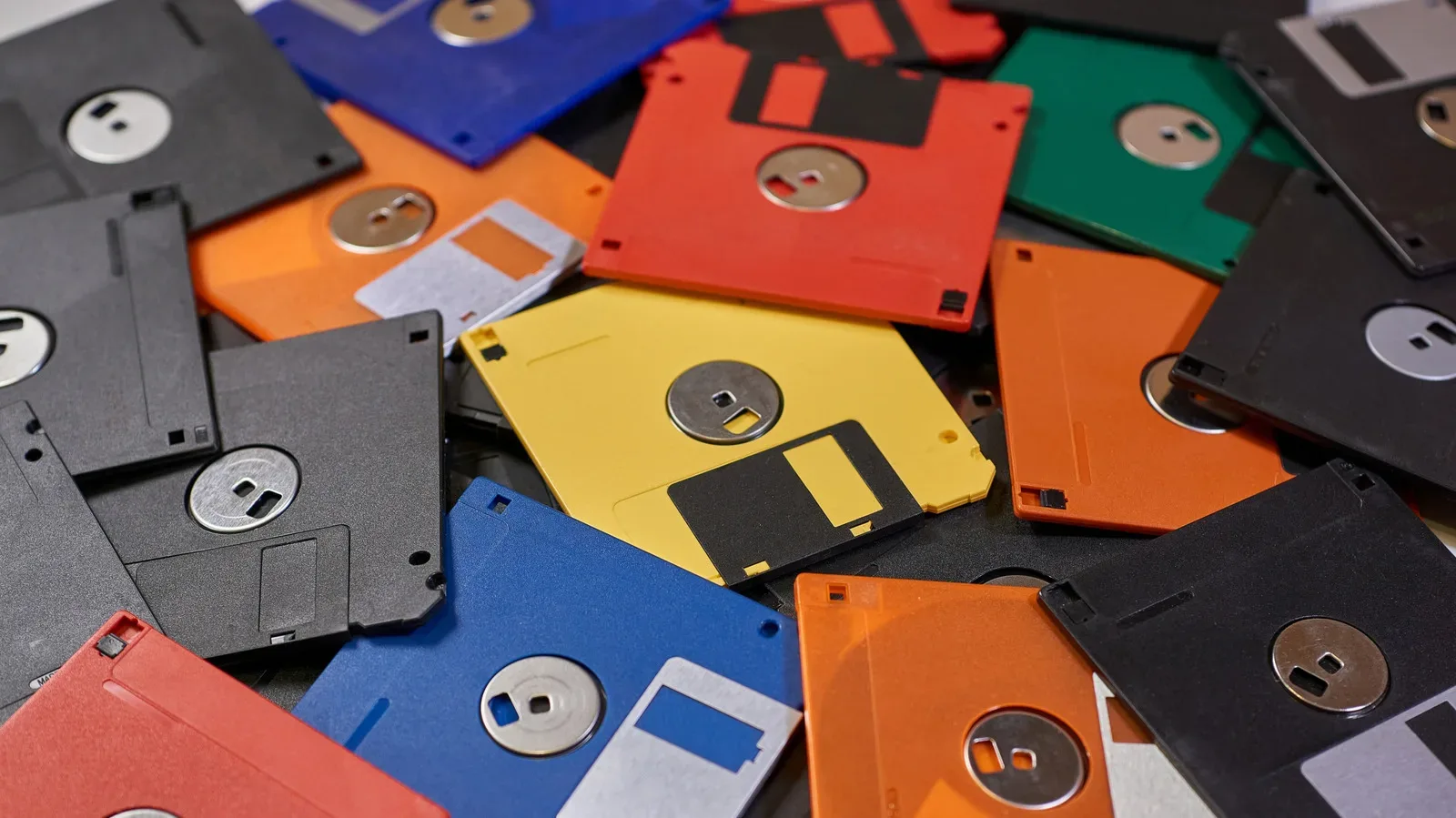
The floppy disk’s enduring presence as a save icon can obscure how restrictive it was. With a capacity of 1.44MB, it had a hard limit that arrived quickly for music, images and larger documents. It was nonetheless a normal answer to the basic job of carrying files from one machine to another. A person could label the disk, lend it out, put it in a pocket and, inevitably, misplace it.
That combination of portability and fragility defined the period. Storage media was part of the routine: users selected a format, copied files, waited, physically transported the disk, and hoped it still worked when it reached the other computer. In 2002, Sony was still selling tens of millions of floppy disks annually, despite Apple having removed the floppy drive from the iMac in 1998. Mass-market production did not end until 2011, when Sony, the last major producer, stopped making them.
The format has not entirely disappeared. It remains in use in certain industries, including air traffic control, although the Federal Aviation Administration has said it will phase out floppy disks by 2028. That is a useful reminder that a technology can cease to be mainstream long before every dependent system is replaced.
Local hard drives were expensive enough to feel like a meaningful hardware choice, too. Early-2000s manufacturers were quoting less than $60 for a 10GB drive, approximately $6 per gigabyte. That capacity did not have to travel between computers, but it set the practical ceiling for a household machine’s files. The contrast with current capacities is extraordinary: Seagate is producing 44TB drives at volume, a 4,400-fold increase over 10GB.
Zip disks and CDs reveal why capacity alone does not settle the argument
Iomega’s Zip drive was an important step between the floppy and later removable formats. Launched in 1995 for $199, it used 100MB disks that cost roughly $20 each. A Zip disk held vastly more than a floppy, making it attractive to people who had outgrown the older format.
Yet the format’s reputation was damaged by a failure mode known as the “click of death,” in which a troubled drive repeatedly clicked while attempting to read a disk. Iomega faced a class action lawsuit over the issue in 1998. The episode illustrates a permanent storage lesson: capacity is only valuable when the system can retrieve the files reliably. A large disk that cannot be read is not a bigger archive; it is a bigger disappointment.
Then CD-ROMs brought a simpler capacity argument. At about 700MB, a CD offered seven times the space of a 100MB Zip disk. As CDs became established, they displaced both floppies and Zip disks for many uses. They were a practical way to move larger collections of data, including music files, without the restrictive arithmetic of floppy swapping.
DVD burning might seem like the obvious next household step, but the economics mattered. Pioneer’s DVR-A03 DVD burner was close to $1,000 in 2001, placing it well beyond the everyday buyer’s reach. A technology may offer more room, but its influence depends on the cost of both the device and the workflow required to use it.
USB keys removed much of the ceremony
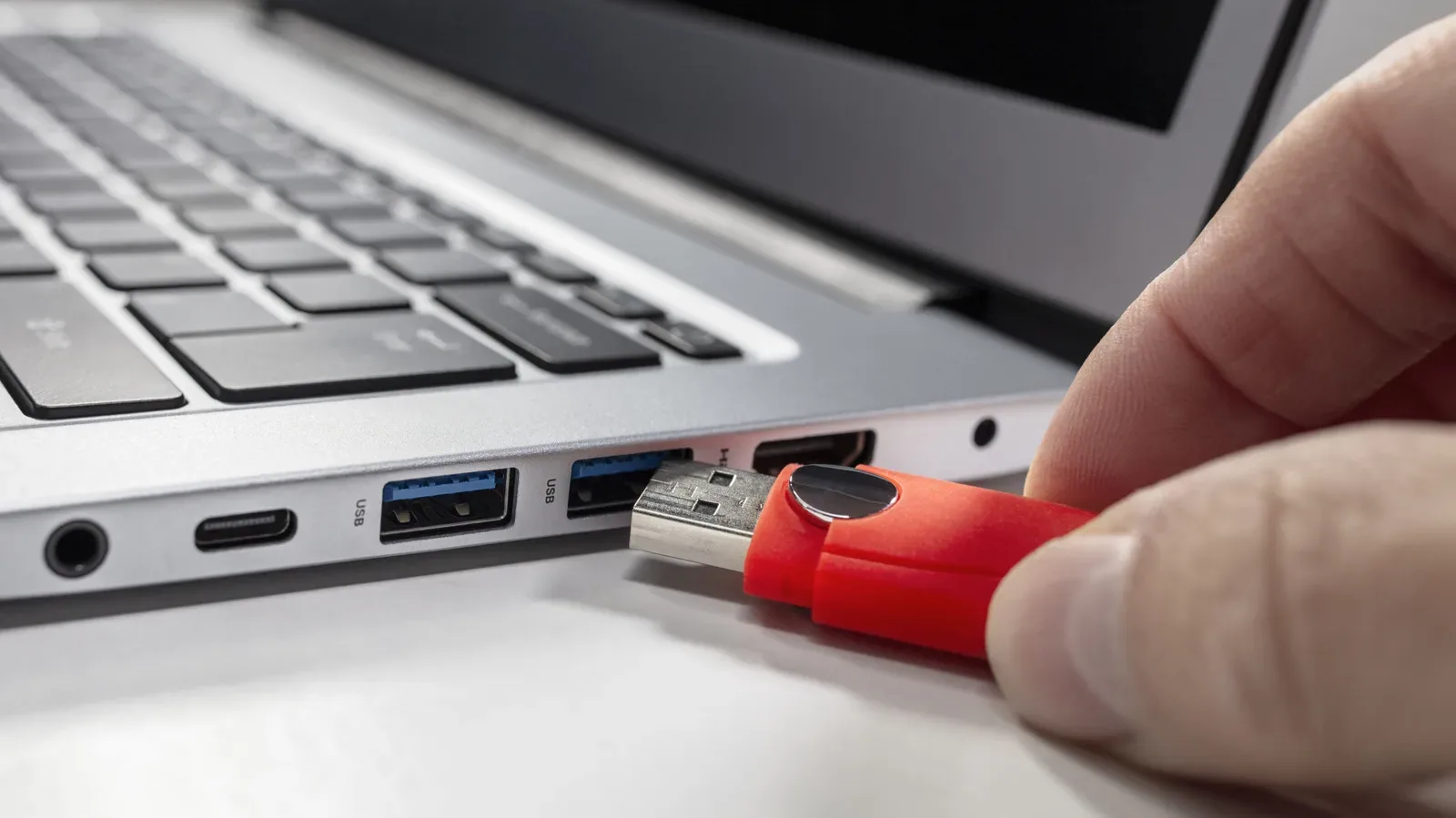
The earliest USB flash drives were modest by current standards, holding 8MB—roughly five floppies’ worth. Their appeal was not an immense capacity advantage. It was the convenience of a small device that attached to a keyring, plugged directly into a USB port and did not require driver installation or disc-burning software.
Singapore’s Trek used the name ThumbDrive, while IBM sold a device designed by Israel’s M-Systems called DiskOnKey. Both point to the same transition: removable storage no longer had to be a fragile magnetic disk or a disc that needed to be written. Flash memory, a type of electronic storage, could sit inside a tiny USB device and make the hand-off between computers feel substantially more direct.
By February 2003, Dell had begun removing the floppy drive as standard from its Dimension desktops, offering a 16MB USB key for $20 instead. That is a small amount of space by modern standards, but it shows how quickly the expected method of moving a file was shifting. The decisive benefit was often not raw size. It was the elimination of friction.
Flash drives retained one major weakness shared by every physical hand-off: they could be lost, forgotten in a machine or found by someone else. The object had become far smaller than a floppy, but it was still an object that needed to be carried.
Cloud storage changed the location of the problem
Amazon introduced S3 in 2006, renting capacity on its servers for 15 cents per gigabyte each month. It was initially a developer-focused service rather than a consumer home for photo libraries. Its significance lies in the model: the storage was no longer necessarily inside the computer or in the user’s pocket. It was on infrastructure operated elsewhere.
Dropbox used that infrastructure when it launched in 2008 with 2GB of free space. The practical proposition was powerful: a folder could copy itself across a person’s computers. Users did not have to burn a CD, label it, carry it, or remember which device held the latest version of a file.
Cloud storage does not mean files are floating in the sky. In everyday use, it means data is kept on servers in data centers and accessed through an account and network connection. That distinction matters because the physical hardware still exists—it has simply moved out of sight. Much of the world’s data now rests on the large commercial drives consumers never buy directly.
For gaming and media libraries, that shift also explains why storage management has become less visibly deliberate in some places and more important in others. Phones can automatically upload photos, while game platforms may make sharing clips feel routine. Anyone wanting tighter control of that behaviour can review options such as turning off GTA 6 auto uploads on Xbox. Automation reduces steps, but it can also create more data that needs somewhere to go.
Today’s capacities are enormous, but not evenly available
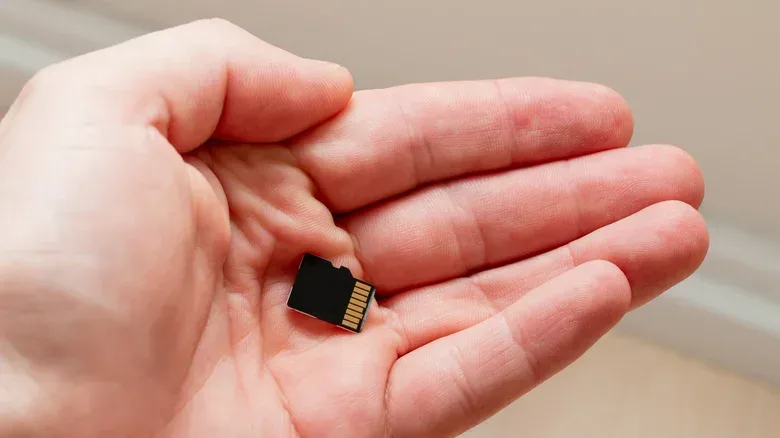
A 2TB microSD card is smaller than a fingernail yet can hold the equivalent of nearly 1.4 million floppy disks. It is an almost absurd comparison, but a useful one: removable storage has moved from a medium suited to small documents to one capable of holding enormous collections of files in a physically tiny package.
At the other end of the market, Seagate’s 44TB drives are not ordinary retail products. They are currently sold only to two hyperscale cloud providers. Hyperscale refers here to the immense data-center operators whose needs are measured in hardware fleets rather than a single drive for one desktop. That distinction is why a headline capacity figure does not automatically translate into something a person can put in a home computer.
Consumers instead encounter a mixed landscape. Consumer hard drives reach roughly 24TB to 30TB, while consumer SSDs reach around 8TB. An SSD, or solid-state drive, uses flash storage rather than the moving mechanical parts found in a hard disk drive. A hard drive remains a key part of large-scale storage, while SSDs occupy an important role in flash-based devices and consumer storage. Both are now subject to market pressure.
The cheap-capacity assumption is under pressure
The expectation that storage grows cheaper year after year has been one of modern computing’s most comfortable assumptions. The available evidence suggests that it is not dependable at the moment. Gartner expects combined DRAM and SSD prices to continue rising, reaching a 130% increase by the end of the year, because institutional buyers are taking memory and flash capacity faster than factories can supply it.
DRAM, or dynamic random-access memory, is the fast working memory used by computers and other devices while they are actively running tasks. It is distinct from long-term storage, but it belongs to the broader supply picture described here. The key practical point is that demand from large buyers is not restricted to one kind of component. Flash storage and hard drives are also being bought by cloud companies, leaving hard-drive prices exposed to similar pressure.
That does not reverse the remarkable long-term capacity gain from 1.44MB floppies to multi-terabyte cards and drives. It does complicate the idea that users can postpone a purchase and confidently expect far more space for the same money. The old storage ritual—choosing what to keep because each disk was limited—has returned in a different form. The limits are no longer usually measured in megabytes, but in account quotas, subscription space, device capacity and a market where the biggest buyers are competing for the same underlying hardware.