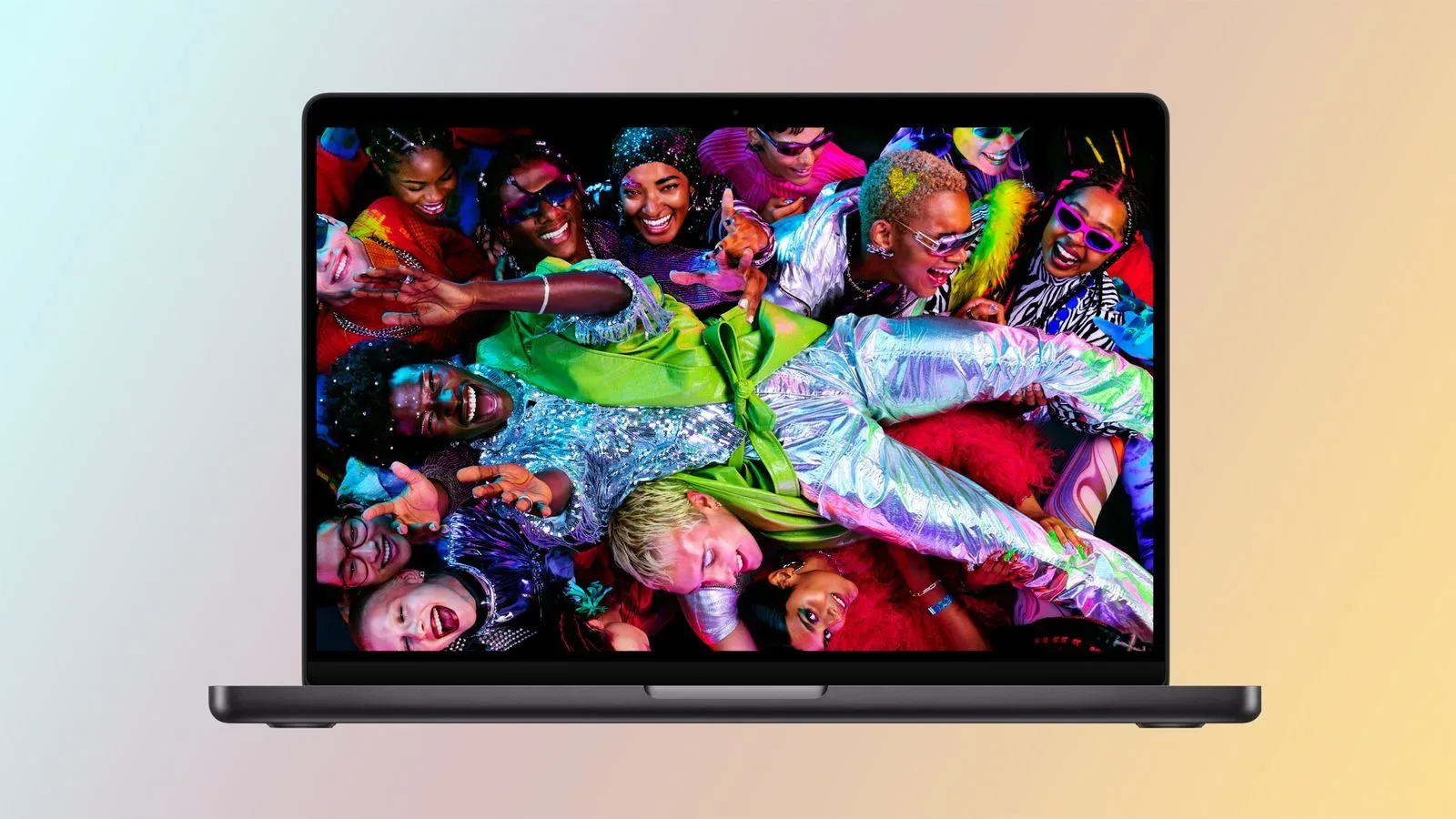

Black Friday falls on November 27, 2026, but the deals have apparently decided to spawn into the map early. Current Apple-focused listings cover headphones, trackers, watches, iPads, Macs, displays and iPhones. The important part is not that every price has a dramatic red badge beside it; it is that the offers are very different kinds of discounts, with very different catches.
For players who use Apple devices alongside a console, PC or handheld setup, the most immediately understandable offers are the outright price cuts on hardware and accessories. A MacBook, iPad or display sale means the number at checkout is lower. The large iPhone offers can look much bigger, but they depend on eligible plans, trade-ins, activation and, in several cases, 36 monthly bill credits. That distinction should shape the shopping decision more than the biggest number in the headline.
Some of the listed prices are described as record lows or near-record lows, although availability, colors and configurations can vary by retailer. Deals can also change quickly during the Black Friday window. A sensible approach is to decide on the exact model, storage capacity, connectivity and physical size required before comparing a discount. Otherwise, a sale can become a very efficient way to buy the wrong loadout.
The Apple discounts most relevant to a desk setup
The larger Mac reductions are the clearest candidates for anyone refreshing a work, editing or general-purpose desktop environment. The entry-level 14-inch M6 MacBook Pro with 16GB of RAM and 1TB of storage is listed at $1,849, down $150 from $1,999. Models with 24GB and 32GB of RAM are also listed with the same $150 reduction, at $2,049 and $2,249 respectively.
RAM, short for random-access memory, is the fast working memory used while applications are open. It is not the same thing as permanent file storage. Storage, typically represented here in gigabytes or terabytes, is where installed apps, captures, projects and other files remain when the computer is switched off. The difference matters for anyone comparing models: more RAM is aimed at handling more or larger active tasks, while more storage is about fitting more files locally.
For a larger MacBook Pro, the 16-inch PROLED XDR models are listed with reductions of up to $250. The 24GB RAM/1TB configuration starts at $3,249, a $150 reduction; higher-priced configurations reach $5,149 for 48GB RAM and 2TB of storage, down $250. Those are substantial dollar cuts, but they remain premium purchases. The key question is not whether $250 is a discount—it is whether the higher configuration solves a specific storage or memory need that the less expensive model does not.
The M5 MacBook Air listings are simpler on the discount front: nearly every model is reduced by $250. Prices begin at $1,049.99 for a 13-inch model with 512GB storage, while the 15-inch 16GB/512GB version is $1,249 and the 16GB/1TB configuration is $1,549. A MacBook Neo is listed at $649 for 256GB models in Silver, Indigo, Citrus and Blush, down from $699, with a 512GB Touch ID configuration at $749, also $50 off.
Those capacity choices deserve more scrutiny than a color choice. A 256GB machine can be perfectly workable for browser-first use and cloud-managed files, but it provides less room for local recordings, downloads and big creative projects than a 512GB or 1TB option. Anyone who expects to retain game clips or video projects should make a storage plan rather than assuming that an entry model will feel roomy forever. That is especially worth considering amid the broader conversation around larger drives and changing storage costs, explored in this look at storage’s growth and rising costs.
Desktop shoppers have several listed options as well. The new Mac mini starts at $779, with reductions ranging from $119 to $150 across M6 models and the M5 Pro model. An M5 Max Mac Studio with 36GB RAM and a 512GB SSD is listed at $2,299, down from $2,499. An SSD, or solid-state drive, is the internal storage type named in that configuration; it is still storage, distinct from RAM.
Displays: a real discount, but check the mount and glass
Displays are easy to overlook when budgeting for a gaming corner or a productivity station. Yet a display choice can determine whether a new computer actually fits an existing desk, monitor arm or room layout. Current listings reduce every model of the 2026 Studio Display by $200 and the Studio Display XDR by $300.
The standard-glass Studio Display is listed at $1,399 in either a VESA-mount version or a tilt-adjustable-stand version, down from $1,599. A tilt-and-height-adjustable model is $1,799. Nano-texture versions are higher: $1,699 with VESA mount and $2,099 with the tilt-and-height stand. The Studio Display XDR with nano-texture glass and VESA mount is listed at $2,899, down from $3,199.
VESA mount refers to a standardized mounting interface used by many monitor arms and wall mounts. It is not interchangeable with choosing a display that includes its own stand. Shoppers with an existing arm should verify that they are purchasing the mount-ready option; shoppers without one should consider the cost and convenience of buying an appropriate arm separately. Likewise, nano-texture and standard glass are different display configurations, not a free finish swap after checkout.
The discounts may be among the strongest listed on these displays in months, but a $200 or $300 reduction does not erase the importance of buying the stand and glass treatment that match the desk. The least expensive configuration is only the best deal if it does not trigger a follow-up purchase or mounting problem.
iPad and watch prices focus on straightforward savings
The M4 iPad Air range is listed at $100 off across many 11-inch and 13-inch configurations, with no coupon code or special membership stated as necessary. The 11-inch Wi-Fi lineup begins at $649 for 128GB, rising to $949 for 512GB. Cellular versions begin at $799 for 128GB and $899 for 256GB. On the 13-inch side, the listed prices start at $849 for 128GB Wi-Fi and reach $1,449 for 1TB Wi-Fi; a 256GB cellular version is listed at $1,099.99.
The term cellular means the device can connect through a mobile network in addition to Wi-Fi, subject to service arrangements. It is useful only if that mobile connectivity serves a real purpose. For an iPad that rarely leaves home, paying extra for cellular capability may not be as meaningful as increasing storage capacity. Conversely, a mobile device used away from reliable Wi-Fi may justify it. The pricing list makes the trade-off visible, but not automatic.
A few previous-generation iPad mini 7 models are also listed from $484 for 128GB Wi-Fi, a reduction of $115. That is a different value proposition from the M4 iPad Air listings: it is a prior-generation option and should be compared as such rather than solely by the size of the reduction.
Apple Watch deals are more granular. The 40mm GPS Apple Watch SE 3 is listed at $199, down $50, while the 44mm GPS version is $229, down from $279. Cellular SE 3 models are listed at $249 for 40mm and $279 for 44mm, both $50 off. The Apple Watch Series 12 starts at $329 for the 42mm GPS model and $379 for the 46mm GPS model, each $70 off. Prices rise across cellular, titanium, ceramic and Milanese Loop configurations.
The standout watch number is the Apple Watch Ultra 3 at $549, down $250 from $799. It is described as a previous-generation device. That makes it a compelling price change on paper, but prior-generation status, size, case material and band are still part of the actual purchase decision. A major discount is not a mandate to choose a more expensive category of device than needed.
Audio, trackers and the danger of treating every markdown alike
Among the smaller Apple-adjacent deals, the Beats 360 headphones are listed at $249 in Black and Cloud, down from $349, while Sky is available at that price through a different retailer. The $100 cut is notable because previous discounts had only reached around $20. AirPods Pro 3 are listed at $179.99, a $69 saving, and the available AirPods Pro 3 and AirPods Max 2 discounts are described as second-best pricing with savings of up to $130.
The AirTag 2 one-pack is listed at $23, down from $29. The HomeView is listed at $289.99, only $9 below $299, but that is described as its largest reduction so far. These products are a useful reminder that “best price yet” and “large dollar saving” are not identical claims. The HomeView saving may be its strongest recorded deal, but it remains a modest $9 decrease. The Beats 360 reduction is much bigger in raw dollars and percentage terms.
Shoppers should compare the current price with the regular price and their actual use case. A small discount on a planned purchase can be worthwhile; a giant discount on unneeded hardware is still an expense. This principle becomes even more important for accessories, where a low-cost add-on at checkout can quietly raise the final total.
iPhone offers are credits, not simple price cuts
The most eye-catching iPhone promotions advertise up to $1,200 off the iPhone 18 Pro, iPhone 18 Pro Max and iPhone Duo. They deserve the most careful reading because these savings are tied to carrier conditions.
T-Mobile’s listed offers provide up to $1,200 off the iPhone 18 Pro, iPhone 18 Pro Max or iPhone Duo with an eligible trade-in and qualifying plan conditions. For the iPhone Duo, the maximum offer on an Experience Beyond plan is issued as bill credits over 36 months. Other listed plan scenarios provide up to $830 with a trade-in or up to $730 with a new line, again spread over 36 months.
AT&T’s listings also reach up to $1,200 with an eligible trade-in. For the iPhone Duo, the top tier requires an AT&T Premium 2.0 plan or higher and trade-in value of at least $230; lower tiers offer up to $930, $500 or $350 depending on plan and trade-in value. The credits are likewise issued across 36 months. AT&T also lists up to $800 per line toward paying off a current phone balance for switchers, and $200 per line off when ordering a smartphone online.
Best Buy lists up to $1,200 off the iPhone 18 Pro models and iPhone Duo through qualified activation and trade-in, with activation support through AT&T and Verizon.
Bill credits are reductions applied to a carrier bill in installments, not necessarily an immediate $1,200 taken off the phone’s checkout price. A 36-month schedule means the full advertised value is generally tied to maintaining the qualifying arrangement for three years. Before trading in a device or changing plans, buyers should confirm the qualifying plan, the trade-in assessment, the monthly credit amount, the duration, activation rules and what happens if the line is changed or cancelled early.
That does not make the offers bad. It simply means they are service agreements with a hardware incentive, rather than a no-strings retail discount. The right comparison is the full expected cost over the credit period—not just the maximum savings figure.
A practical shortlist before checkout
- Lock the configuration first: Choose size, RAM, storage, Wi-Fi or cellular connectivity, display mount and band before opening multiple retailer tabs.
- Separate cash savings from credits: A $100 iPad reduction is a direct price change; a carrier’s $1,200 offer may unfold over 36 months and require an eligible plan and trade-in.
- Check retailer-specific stock: Selection can differ, including colors, styles and configurations, even when retailers match a headline discount.
- Do the accessory math: A VESA display may need an arm. A device with limited storage may eventually need a storage strategy. Lower entry pricing should be considered alongside follow-up costs.
- Keep uncertainty in view: These are early Black Friday offers, and stronger prices could appear later. Buying now makes most sense when the model and the current discount already meet the need.
There is no universal winner in this stack of sales. The MacBook Neo’s $50 reduction, the M5 MacBook Air’s $250 cut, the Ultra 3’s $250 markdown and carrier promotions worth up to $1,200 all speak to different budgets and obligations. Treat the offers as a menu of configurations, not a leaderboard of savings. The best deal is the one that fits the desk, the workflow and the bill after the holiday labels come down.
Shop the products
Check current price, model and availability at the retailer.