Epic Games’ in-progress overhaul of the Epic Games Launcher has produced an awkward debate that reaches beyond whether generative AI belongs in software development. The company’s messaging puts AI front and centre: Epic said it “vibe coded” the refreshed launcher, described programming as difficult, and promised a faster, more responsive application with a new visual design.
Former Valve writer Chet Faliszek is unconvinced—not simply because of the AI angle, but because he believes Epic’s pitch does not explain the purpose of the product. In a video response, Faliszek questioned why users should be excited by a faster launcher when the initial release is explicitly light on features. His larger criticism is that Epic has yet to articulate a convincing destination for its storefront and launcher.
That is a more useful question than a simple “AI: good or bad” verdict. A launcher is not merely an app that opens a game. For players, it can be a library, shop, patching tool, discovery system, social space, download manager and record of their gaming habits. Faster loading is welcome, but it is only one part of that experience.
The “vibe coded” message becomes the story
Vibe coding is a loose term commonly used for directing generative-AI tools in natural language and iterating on their output, rather than personally writing every line of code in a conventional workflow. It does not, by itself, tell users how much of a program was generated, reviewed, tested, rewritten or maintained by people. Nor does it establish whether the resulting software is more reliable, accessible, secure or useful.
That gap is central to Faliszek’s reaction. Epic’s customer-facing claims boil down to a new look and improved speed, while the company also characterises the first release as feature-light. To him, presenting the development method so prominently distracts from the much more practical issue: what will the launcher actually do for the person using it?
There is a straightforward distinction worth making here. A development approach is an internal means; a launcher’s features and usability are the outcome players see. Users may care about startup time, responsiveness, download management, game discovery and customization. They are less likely to benefit from a marketing line about the mechanism used to make the interface unless it produces visible improvements that hold up over time.
Epic’s wording has also invited a rough response because “programming is hard” can sound dismissive of the specialised work involved in building and supporting software used at scale. Coding is only part of delivering a launcher. Design, quality assurance, security, accessibility, compatibility, moderation and long-term maintenance all matter. A public description focused on AI-assisted creation can therefore raise the standard for the finished product: if the method is the headline, people will understandably ask what concrete gain it delivered.
That does not mean generative AI cannot be used in software work. Both Epic chief executive Tim Sweeney and Valve co-founder Gabe Newell have been described as proponents of the technology. But enthusiasm from prominent industry figures does not settle the player-facing question. The test is whether a tool produces a demonstrably better service, not whether it makes for a provocative slogan.
Related coverage includes Former Valve Writer Questions Epic Games Store's AI-Led Launcher Overhaul.
Why the speedboat line drew yacht jokes
Faliszek also focused on Epic’s “speedboat and not a yacht” comparison, used to frame the initial launcher release. He reads it as a deliberate jab at Newell, whose yachts have been a recurring subject in Sweeney’s online commentary. Earlier this year, when Valve raised Steam Deck prices amid an AI-related component supply crisis, Sweeney made a sarcastic comment about megayacht supply chains.
Epic has not stated that the speedboat wording referred to Newell, so that interpretation remains an interpretation. Yet context matters in corporate messaging, particularly when leaders have repeatedly made a similar point in public. Faliszek’s argument is that the joke is not subtle and, more importantly, that it is an unhelpful use of space in an announcement meant to persuade customers that a new launcher is worth their time.
“What is their North Star and what is yours?” Faliszek asks, shifting the discussion away from the slogan and toward a product’s ultimate objective.
A “North Star” in this context means the defining goal that guides product decisions. It is not a specific feature. It is the answer to what a service exists to help users do and what kind of relationship it wants to build with them. If that direction is clear, choices around interface, community, commerce and discovery can support it. If it is unclear, a product risks feeling like a collection of disconnected functions.
The yacht line may be the memorable part of the reaction, but it is not the substantive issue. The potential cost is that the company’s attention appears to be on a familiar Steam-versus-Epic rivalry rather than on explaining the distinctive value of its own ecosystem. A fast, stripped-back launcher can be a legitimate starting point. It simply needs a coherent reason for existing beyond being less slow than the previous version.
Steam as ecosystem, not just storefront
Faliszek describes Steam’s guiding idea as “an MMO”—not literally a massively multiplayer online game, but a service shaped around persistent social and expressive activity. His point is that Steam is more than a game library paired with a checkout page. It contains mechanics, rewards and feeds that can turn browsing, collecting, sharing and playing into an ongoing platform experience.
That framing explains why speed alone is a difficult comparison point. A storefront can be technically quick while still feeling sparse if people have little reason to return except to install a title or make a purchase. Steam’s larger collection of systems gives users ways to express preferences and identity, even passively, through the games they own, the activity they share and the spaces where they engage around games.
Faliszek does not present Steam as flawless. He says Valve could do more to monitor and control activity in areas such as comments and forums. That qualification matters. Community features can enrich a platform, but they also create moderation challenges. More social infrastructure is not automatically better if it is poorly governed. Still, Faliszek’s view is that Steam remains considerably ahead because it has built a broader, clearer ecosystem around its core store and library functions.
Epic, meanwhile, has enormous gaming credentials. Its work includes Fortnite, Unreal Engine and an asset store that Faliszek praises. Those are meaningful examples of the company serving players and developers in different ways. The question is whether the Epic Games Store and launcher can translate that wider strength into a destination with its own recognizable identity, rather than an alternative judged chiefly by how closely it resembles Steam.
A practical test for the new launcher
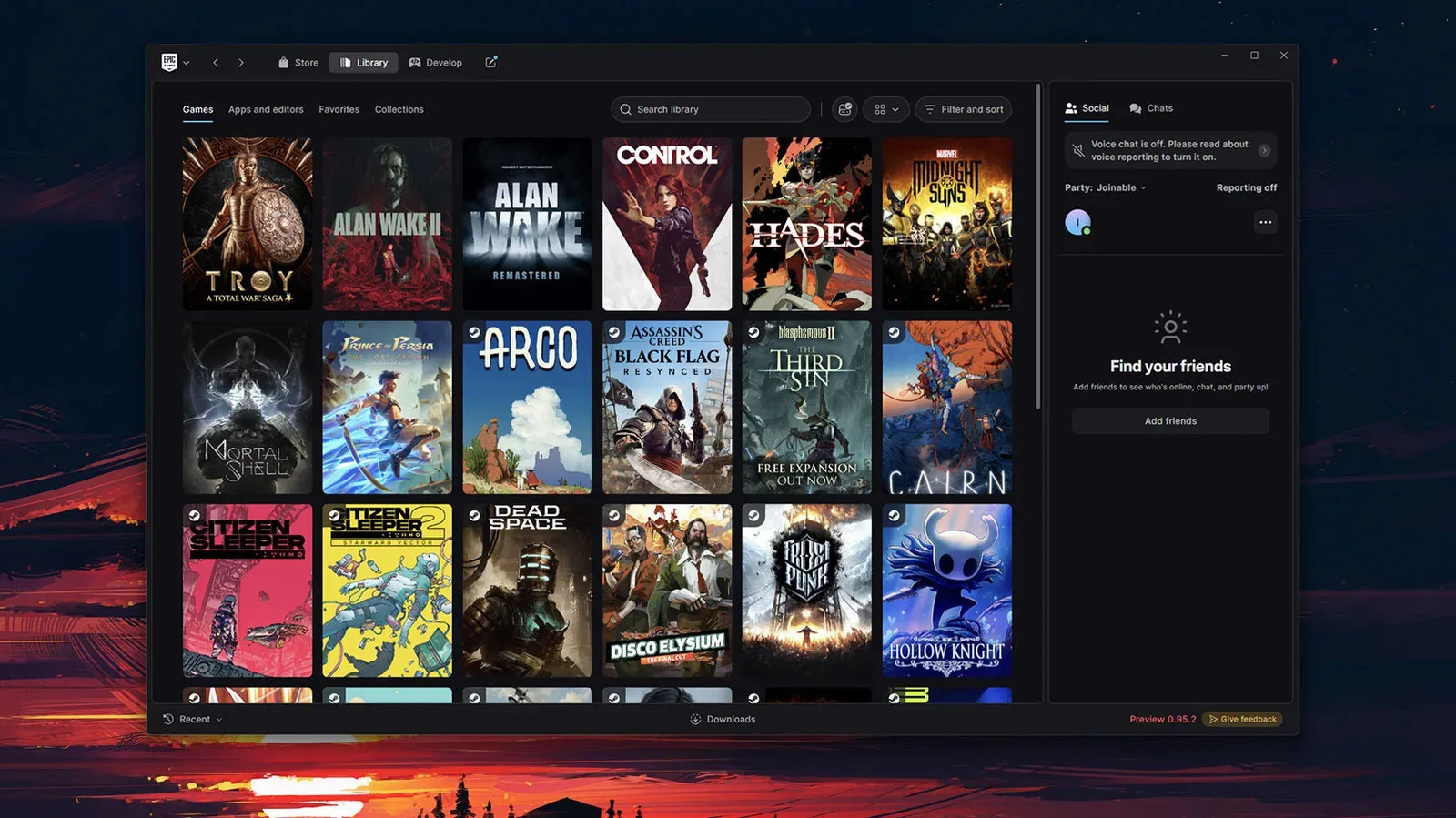
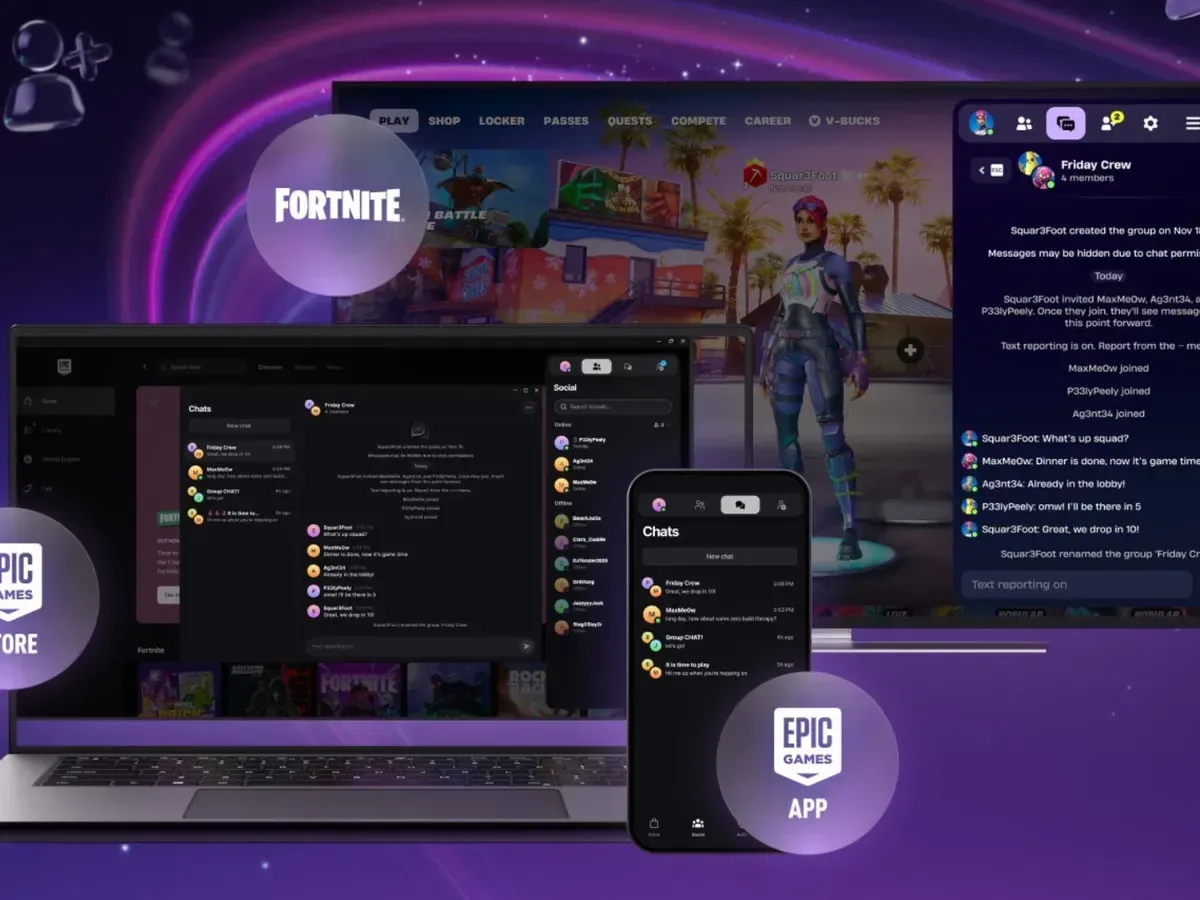
Epic’s stated goals include monitoring downloads, finding games faster, customizing the experience and bringing game information together in one place. Those can be valuable improvements. In practical terms, players should judge the overhaul by whether it reduces routine friction: Can they quickly understand what is installed? Can they manage downloads without confusion? Can they locate something they want without unnecessary detours? Does the layout make their own library easier to use?
Those questions are deliberately ordinary. A launcher succeeds or fails largely in ordinary moments, not in a flashy explanation of how its interface was produced. An AI-built component is not inherently a benefit to the person updating a game, checking storage or deciding what to play next. The benefit comes from clarity, responsiveness and features that reliably solve those tasks.
There is also a strategic choice underneath Faliszek’s criticism. Epic may decide that building Steam-style community systems is not its aim, or that its current user base does not make that route sensible. That could be a valid direction. Not every storefront needs identical social tools, feeds or rewards. But choosing a different route makes clarity even more important. If community is not the answer, Epic needs to make its alternative answer legible.
The company’s AI-first presentation has, for now, made that harder rather than easier. It has encouraged attention on the phrase “vibe coded,” on the speedboat metaphor and on the old rivalry with Valve. Those are conversation starters, but not a durable case for a launcher.
For readers following the wider effect of AI claims on game development culture, the same tension appears in the debate around reverse-engineering work and AI-assisted ports: the technology conversation can rapidly eclipse questions about the people, goals and standards behind the work.
The real competition is usefulness
Faliszek’s response ultimately reframes the competition. The important contest is not whether Epic can say its launcher was made with generative AI, nor whether it can land a joke at Valve’s expense. It is whether Epic can make people feel that its launcher belongs in their routine.
For a feature-light first release, speed and responsiveness may be a sensible foundation. But a foundation is not the finished building. Epic will need to show where the product is heading, which player problems it intends to solve and why its version of a PC game launcher should become a place people choose to spend time rather than an icon they tolerate clicking.
Until that answer is clearer, “what is the North Star?” is likely to remain the sharper criticism than any argument over vibe coding.