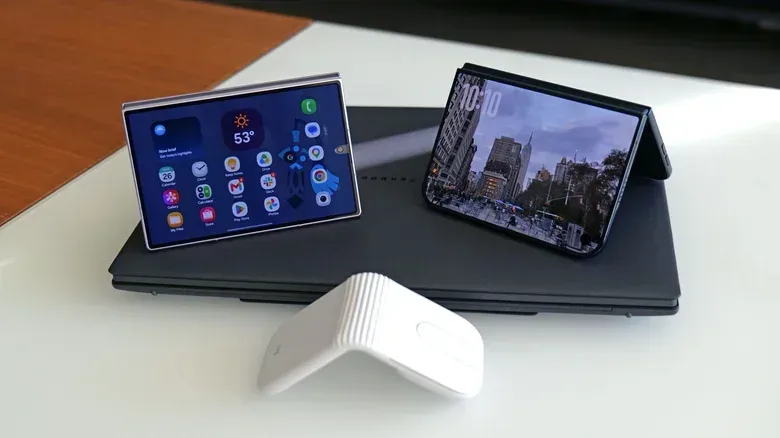
Foldable technology is often framed as a smartphone story: a handset that opens into a small tablet, or a compact flip phone that takes up less room in a pocket. That is still the most visible version of the idea, but it is no longer the only one. Flexible displays, hinged panels and designs that collapse for travel have turned up in laptops, mice, headphones and monitors—with varying levels of usefulness and wildly different price tags.
For PC and gaming audiences, the important question is not whether a gadget folds for the sheer spectacle of it. It is whether the transformation solves a real problem: more screen space in a portable setup, less clutter in a travel bag, or a display shape that better matches a desk and the game being played. The current market suggests folding designs have found several credible answers, even if the category remains expensive and niche.
What “foldable” actually means
The label covers several substantially different approaches. A traditional clamshell laptop technically folds, but contemporary foldables generally push past that familiar format. Some use a flexible display that bends at a hinge. Some place two separate screens in one chassis. Others use a rollable panel that expands. Meanwhile, accessories may simply fold or collapse into a smaller shape for carrying.
That distinction matters because the practical trade-offs are different. A flexible-screen laptop tries to make one large panel portable. A dual-screen machine prioritizes simultaneous apps and windows. A collapsible mouse is chiefly about reducing the size of an accessory. And a desktop monitor with adjustable curvature is not intended to travel at all; it changes the geometry of the screen at a fixed setup.
In other words, “foldable” is a design strategy rather than a single product category. The shared goal is adaptability: one object can occupy less space, show more information, or take on a different physical form when the situation changes.
Laptops: the most relevant category for portable PC setups
Portable computers have used hinged bodies for decades. The Osborne 1 dates to 1981, while the Grid Compass arrived in 1982 and resembles, at least broadly, the clamshell PCs still recognizable today. The newer wave changes the equation by treating the screen area itself as something that can expand, bend or multiply.
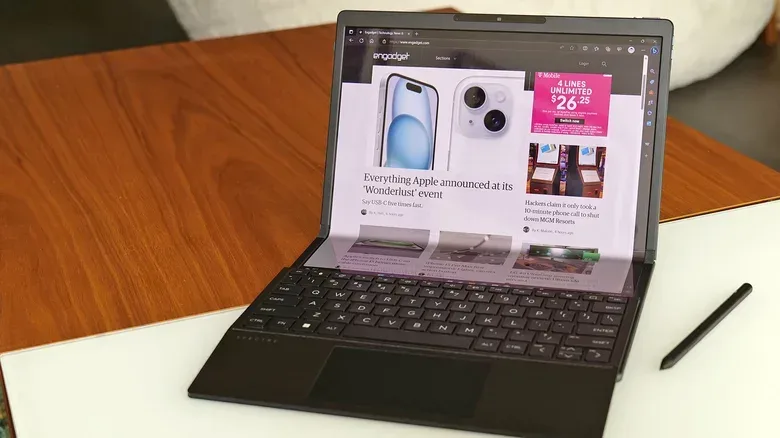
ASUS released the Zenbook 17 Fold in 2022, then moved toward dual-screen systems through the first- and second-generation Zenbook Duo. The company also brought a dual-display concept to gaming hardware with the ROG Zephyrus Duo. HP introduced the Spectre Fold in 2023, although it has not returned to the category. Lenovo has been especially active around flexible and rollable notebook concepts, including the ThinkPad X1 Fold and ThinkBook Plus Gen 6 Rollable.
For someone who plays games and also uses a PC for school, work or streaming, two screens are the clearest benefit to understand. One screen can hold a game while another carries chat, a guide, a music app, a browser or a communication tool. That does not make every dual-screen laptop a sensible gaming purchase—cost and unconventional design are major considerations—but it does make the form factor more than a novelty.
Related coverage includes Foldable Tech Goes Beyond Phones With Laptops, Mice and Displays.
It is also worth separating two-screen convenience from raw gaming performance. More display area can make multitasking easier, but it does not automatically improve frame rate or visual settings. A CPU, or central processing unit, handles general computing tasks; a GPU, or graphics processing unit, renders graphics; RAM is short-term memory used by running software. Those components remain central to how a game performs. A foldable layout changes how a player works around the game, not necessarily how the game runs.
There is a more ordinary travel benefit, too. A laptop with a detachable keyboard and two displays can make a hotel desk or temporary workspace feel less cramped without requiring a separate external monitor. The catch is that novel hardware carries a premium and can ask buyers to accept a less conventional workflow. That is likely a major reason flexible and dual-screen notebooks remain far from mainstream despite the variety already available.
Foldable phones: a pocket-sized second screen, at a premium
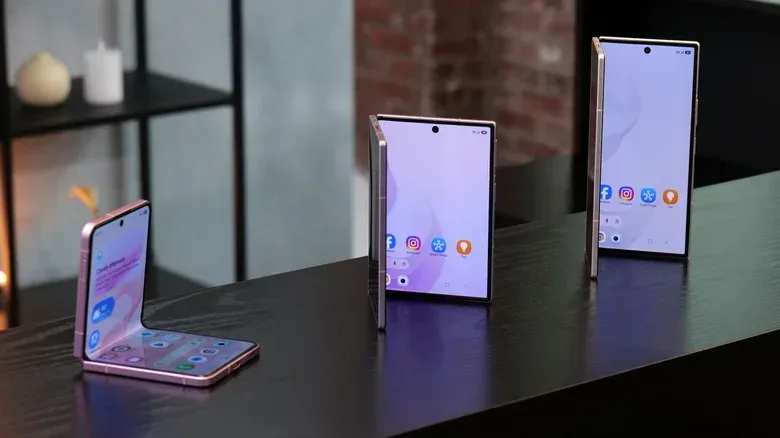
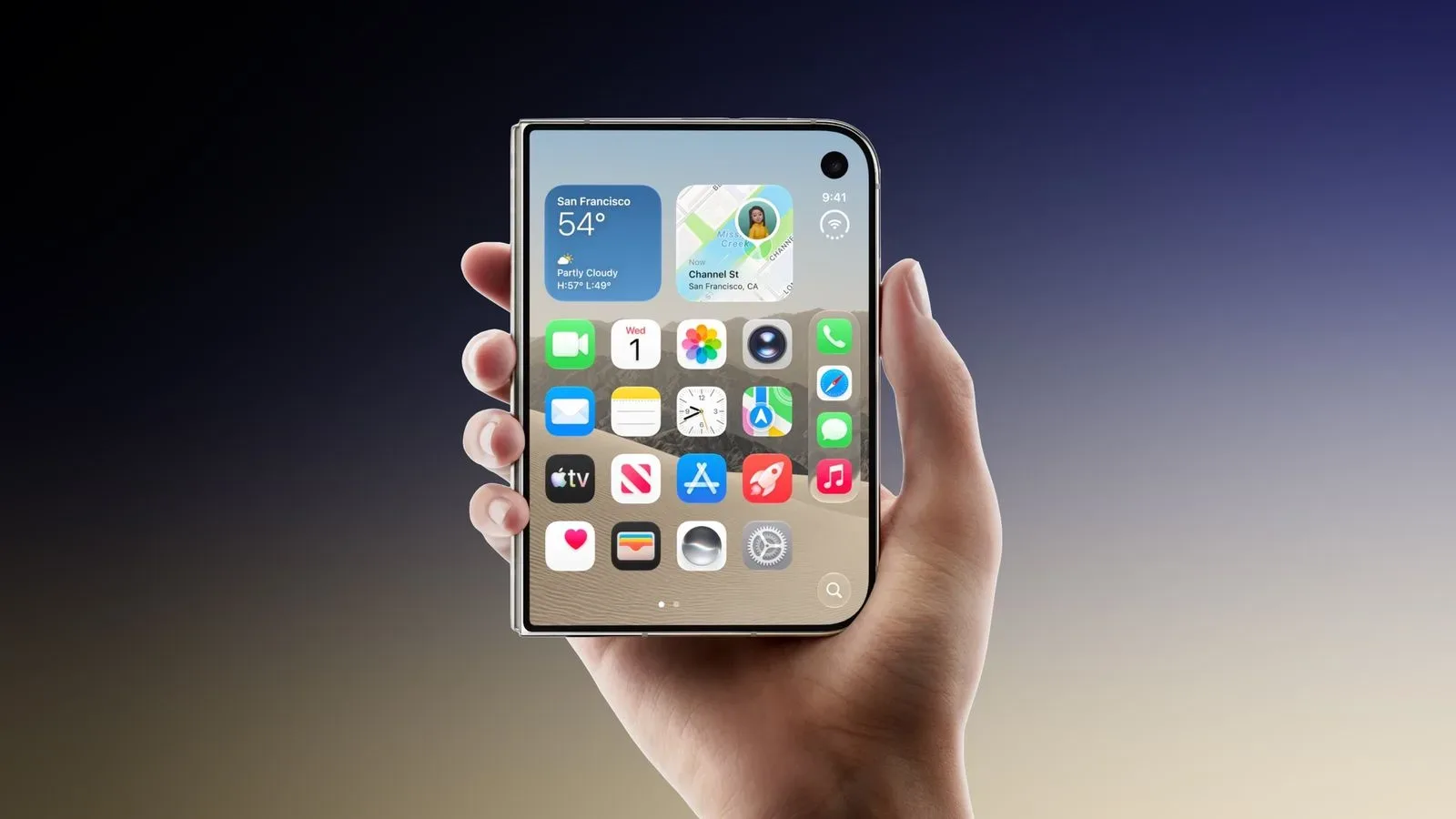
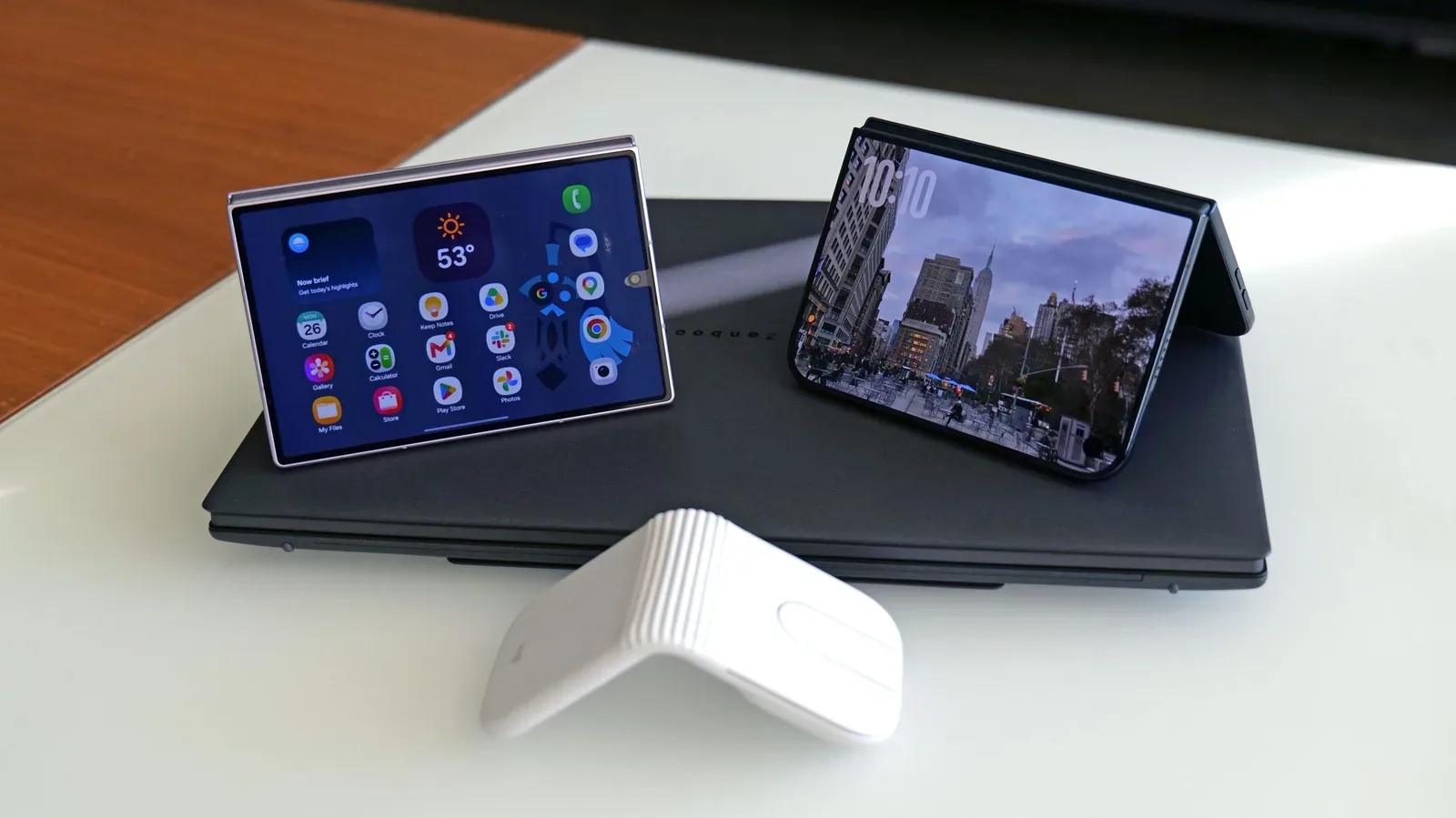
Smartphones remain the best-known flexible-display category. The original Samsung Galaxy Fold helped establish the modern large-format foldable market, and Samsung’s Z Fold line has since reached its eighth generation. Google, Motorola and Apple, with the iPhone Duo, are now among the major companies with their own foldable approaches. There are also Chinese-made foldables that are not officially sold in the United States, alongside smaller flip-style models.
The appeal of a book-style foldable is easy to describe: closed, it works as a conventional phone; opened, it offers a small-tablet-sized canvas that can still fit into a pocket or purse. For gaming, that larger interior display could be useful for games designed around touch controls, cloud play interfaces, maps, inventories and companion apps. It can also be helpful for watching video or keeping a group chat visible without switching constantly between narrow phone screens.
But price remains the category’s defining limitation. Even the least expensive large-format foldables cost at least $1,800. That makes the device’s versatility an expensive proposition, especially for players who already own a phone, a handheld, a tablet or a laptop that covers much the same recreational ground.
The battle is therefore not just over screens that bend; it is over whether software gives those larger, changing screen shapes a purpose. Multitasking is likely to be central to that competition, as explored in the growing fight over foldable-phone multitasking. A larger display is valuable only if apps use it well enough to make the extra expense feel justified.
Portable monitors show both the promise and the pricing problem
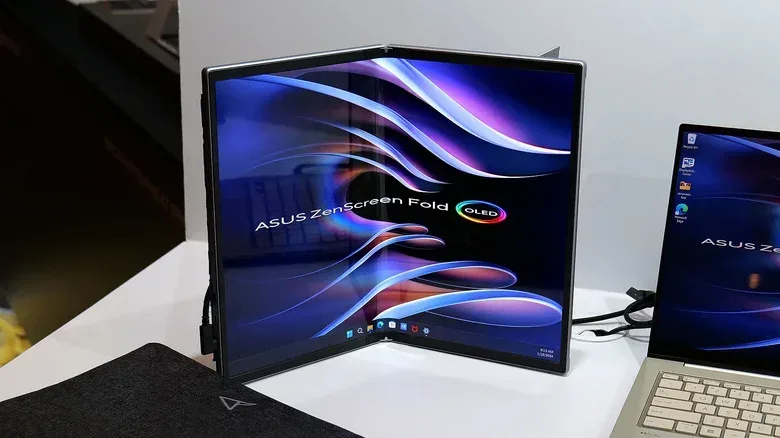
A foldable monitor may be the purest expression of the idea that flexible displays can create screen space where there was none. ASUS adapted its flexible-display work to the ZenScreen Fold, a portable monitor with dimensions similar to the Zenbook 17 Fold. Unlike a laptop, it does not include the computing hardware normally inside a notebook: no CPU, GPU or RAM.
That means it is an accessory rather than a standalone computer. Its purpose is straightforward: provide a larger screen that can fit into a backpack or small suitcase more readily than a rigid display of comparable size. For a PC player or content creator who moves frequently, the potential is obvious. A portable second screen could keep a Discord call, recording controls, a stream dashboard or reference material separate from the main display.
The drawback is equally clear. The ZenScreen Fold started at $2,000, a price that places it beyond what most users would spend for a supplementary screen. ASUS has not done much with the ZenScreen range since. This is a useful reminder that technical possibility does not equal mass-market practicality. A flexible panel can be ingenious and still fail the value test.
Flexible desktop monitors are a different kind of transformation
Corsair’s Xeneon Flex and LG’s LX3 are not portable and do not fold in half. They are still part of the larger story because their panels can shift from flat to curved. Their maximum curvature reaches 800R or 900R, depending on the display.
The “R” measurement refers to radius: the lower the number, the tighter the curve. A flat monitor presents a planar image, while a curved screen wraps the edges toward the viewer. The point is not to make a monitor smaller but to let the owner choose the form that fits a particular environment or task.
For games, adjustable curvature is an intriguing idea because preferences can differ by genre and desk arrangement. A flat mode may suit everyday desktop work, while a curve can make a wide display feel more enveloping. Still, flexibility is not inherently better. A monitor should be judged on the needs of the person using it, not on whether its panel performs a party trick. Both displays arrived in 2024, illustrating that folding-adjacent experimentation is continuing outside the phone market.
Small accessories have the most modest, but clearest, purpose
Not every foldable device needs a flexible display. Computer mice are a good example. Microsoft’s original Arc mouse appeared in 2008, and the company has revised the concept repeatedly, with the Surface Arc Mouse as the current iteration. Logitech has entered the segment with the Mobi Fold, while the myAir.0 OriMouse offers another distinctive folding design.
A foldable mouse does not give the user more pixels or turn a phone into a tablet. Its advantage is simply that it can be easier to pack. For a laptop player who dislikes a trackpad, that modest benefit may be more tangible than a dramatic-looking folding screen. The limitation is also obvious: a compact travel mouse is not automatically a replacement for a full-size mouse chosen for a particular grip, sensor or button layout.
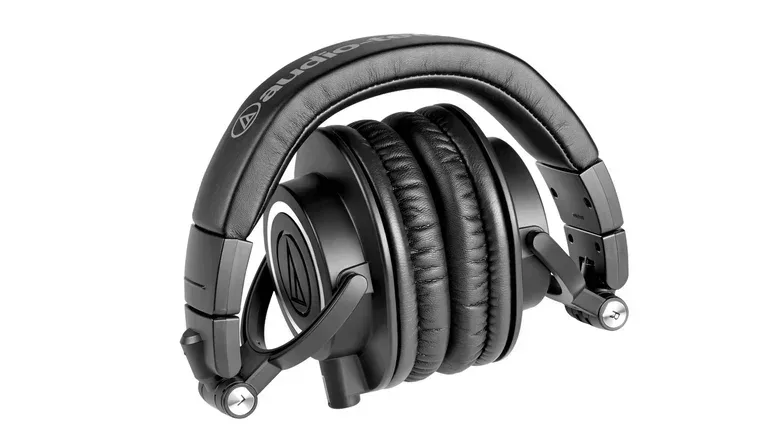
Headphones follow a similar pattern. Audio-Technica’s M50x line and Beats Solo 4 are among the many over-ear models whose headbands fold or collapse for transport. Folding does not, by itself, deliver better sound. It makes the headphones less awkward to carry. People aiming for the smallest possible loadout may still prefer earbuds, but collapsible full-size headphones offer another way to reduce the space demanded by a travel setup.
Where foldable tech stands now
There are also folding dongles and wireless charging pads, though the concept becomes less meaningful if applied to every object that can bend or be packed away. The most compelling examples are the products where changing shape unlocks a clearly different use: a phone becoming a small tablet, a laptop adding an extra workspace, a monitor altering its curvature, or a mouse becoming easier to stow.
For gaming and PC users, that creates a sensible way to assess the category. First, identify the constraint: pocket space, bag space, desk space or multitasking space. Then ask whether the folding mechanism addresses that constraint better than a conventional device would. Finally, account for the premium. The large-format phone market’s $1,800 floor and the ZenScreen Fold’s $2,000 starting price make clear that flexibility often costs dearly.
The category is no longer merely an experimental phone niche. It is a broad collection of design ideas, from second-screen laptops to adjustable desktop monitors. But the best foldable gadget is not necessarily the one that bends the most. It is the one whose altered shape earns its place in a player’s actual setup.