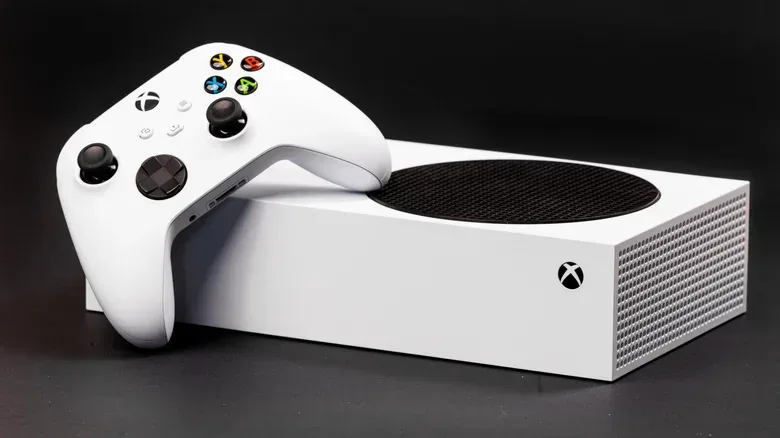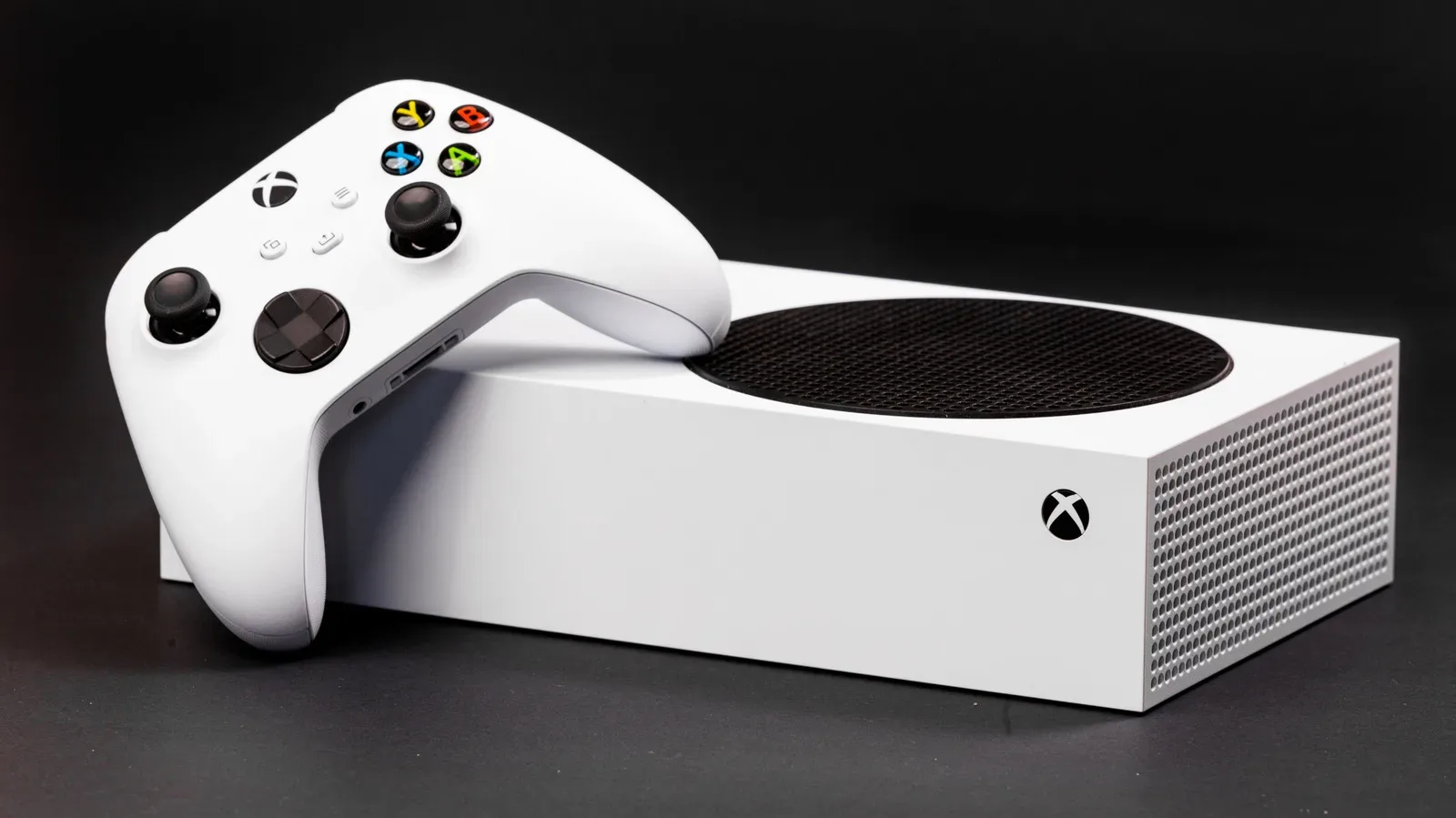
Building a new desktop PC intended to match—or preferably exceed—the Xbox Series S is possible with currently sold parts, but it does not produce a console-price result. A representative all-AMD configuration comes to roughly $740 before tax at the lowest cited prices, against a current $500 price for the 512GB Xbox Series S. That is a meaningful gap before factoring in the practical work of assembling a PC, installing an operating system and handling any compatibility setup.
The comparison is useful precisely because it is not a clean component-for-component contest. The Series S is a compact, fixed console with custom hardware, unified memory and games tailored to a single target. A desktop is assembled from separate retail components, uses distinct system memory and graphics memory, and must accommodate a much broader range of games, settings and software. The proposed PC should have more capability on paper and can be used for more than games, but that does not make it a like-for-like replacement in cost, convenience or optimization.
What the Xbox Series S is targeting
Microsoft positions the Xbox Series S as a value-focused machine capable of games at up to 1440p and 120 frames per second. Those figures are capabilities rather than a promise that every game runs at both settings simultaneously. Resolution, frame rate, graphical settings and upscaling vary by game.
Its CPU is based on AMD’s Zen 2 architecture and has eight physical cores. It runs at 3.6GHz, dropping to 3.4GHz in multithreaded workloads. The graphics side uses AMD RDNA 2 architecture with 12 compute units clocked at 1,565MHz.
One key difference is the console’s unified memory arrangement. Its 10GB of GDDR6 is shared across the system rather than divided into conventional desktop RAM and a graphics card’s dedicated video memory. The memory sits on a 128-bit bus and is described with 2.4GB/s of raw throughput. On a PC, system RAM and VRAM have different jobs: RAM holds data for the processor and operating system, while VRAM is high-speed memory on the graphics card used for textures, frame buffers and other graphics workloads.
That hardware is entry-level by desktop standards, but raw specifications do not capture the entire experience. Console developers can optimize for one known hardware configuration, with a stable memory layout and fixed graphics platform. A PC game must work across many processors, graphics cards, memory capacities, drivers and display configurations. That variability is one reason an older desktop GPU that looks comparable in a spec-sheet exercise is not necessarily the wise purchase for a new build.
The practical target: better than Series S at 1080p
The sensible goal for a new build is not to recreate every aspect of the Series S. It is to make a machine that can beat it at native 1080p, or run at 1440p with reduced settings and upscaling, while relying only on new components available from major retailers. That restriction matters: refurbished and used parts can transform a budget build, but their availability and condition are inconsistent, so they are not a dependable baseline.
It also avoids an apparent shortcut: selecting a very old graphics card. The GeForce GTX 1060 is presented as the closest rough equivalent, but it is a poor fit for a fresh system because modern-game support is the issue, not merely historical performance. Similarly, the GeForce RTX 3050 may cost around $250, yet its 6GB of VRAM is a potential limitation for contemporary games.
Related coverage includes A 2026 PC Build That Can Outpace Xbox Series S Costs About $740.
VRAM, or video random-access memory, is the memory mounted on a discrete GPU. When a game needs more graphics memory than is readily available, settings may need to come down and performance problems can become more likely. Capacity is not the only measure of GPU quality, but it is an important constraint in a long-lived gaming build. The discussion here favors 8GB or more instead of treating the lowest upfront GPU price as the only priority.
An AM4 foundation keeps the rest of the bill down
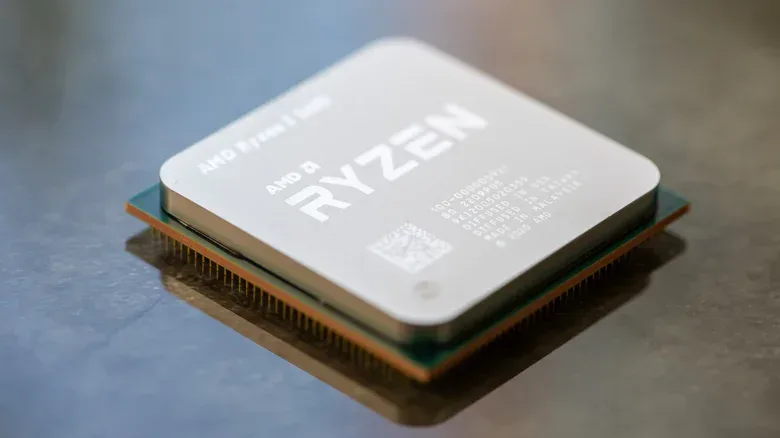
The suggested processor is AMD’s Ryzen 5 5600 at about $160. A Ryzen 5 5600X3D is the optional step-up, often available near $175 on sale. Its appeal is a larger L3 cache, which can improve gaming performance. Cache is very fast memory close to the CPU that helps it access frequently needed data with less delay than retrieving it from main system memory.
Choosing the older AM4 platform is a deliberate cost decision. AM5 is the newer socket and offers a more future-facing route, but AM4 makes it possible to use less expensive DDR4 memory and a cheaper motherboard while still moving beyond the Series S CPU’s Zen 2 basis. It is an example of the central tension in a budget PC: buying the newest platform may leave less money for the graphics card, even though the GPU often has the larger impact on gaming performance.
An ASRock B550M Phantom Gaming 4 motherboard is the proposed B550M option, with B550M boards estimated around $80 to $90. The board is chosen for VRM heatsinks and to avoid PCIe-related bottlenecks. VRM stands for voltage regulator module: it is the circuitry that supplies stable power to components such as the CPU. Heatsinks help that circuitry shed heat. PCIe is the expansion connection used by devices including graphics cards and SSDs; the point of avoiding bottlenecks is to ensure components are not needlessly constrained by the platform connection.
There is one setup caveat. The board may need a BIOS update before it supports the Ryzen 5 5600. The BIOS is motherboard firmware that initializes hardware at startup. It is not a reason to rule out the board, but it is the sort of pre-build check that does not exist with a console. A buyer should verify processor support and the installed BIOS version before assuming every part will operate together immediately.
For memory, the proposal uses a 2x4GB Lenovo DDR4-3200 kit at roughly $40 rather than one 8GB stick. That choice prioritizes dual-channel operation, in which the processor can access two memory channels. Ryzen processors benefit from that arrangement. The kit is not positioned as high-performance RAM, but it is a cost-controlled answer intended to help the system clear the Series S target.
It is important not to read “8GB of PC RAM” as an exact equivalent to the console’s 10GB unified pool. They are differently designed systems. The desktop also has separate GPU VRAM, while the console shares one memory pool. The proposed build is designed to outperform the console overall, not to mirror its allocation model.
RX 7600 is the spending priority
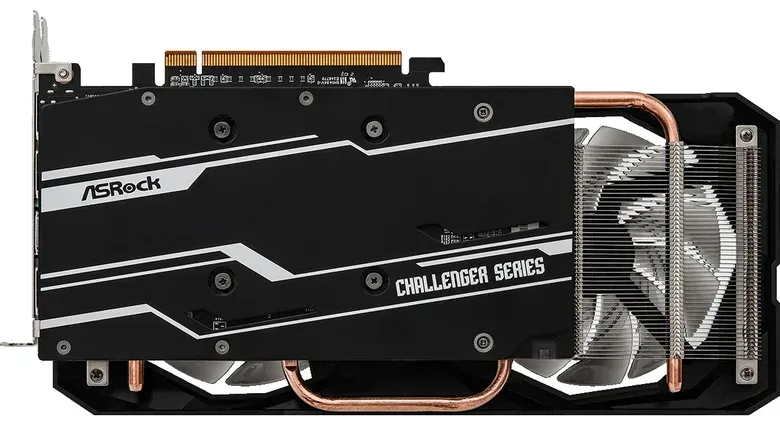
The ASRock Challenger Radeon RX 7600 with 8GB of VRAM is the build’s pivotal component. At about $330, it represents the largest named expense, and it is expected to provide substantially higher performance on paper than the Series S. The selection also keeps the system on AMD for both CPU and GPU, echoing the console’s all-AMD design without suggesting that this creates identical behavior.
Two alternatives are identified. A single-fan RTX 5050 is said to retail around $300, while Intel’s Arc B570 is listed at roughly $290 with 10GB of VRAM. The RX 7600 remains the preferred part in this particular parts list, in part to avoid possible driver or support issues that could accompany the Intel option. Drivers are software layers that let the operating system and games communicate with hardware; their maturity and game-specific behavior can affect a GPU’s day-to-day experience.
“On paper” deserves emphasis. It is useful shorthand for an assessment based on the hardware configuration and its expected tier, not a promise of identical results in every game. Consoles may benefit from targeted optimization, while PC results change with in-game settings, updates, drivers, resolution and upscaling choices. The fair reading is that the RX 7600-based desktop has a stronger hardware position, not that every title will produce one universal comparison.
The overlooked components still shape the total
Even a budget-oriented build needs cooling, storage, a power supply and a case. The Thermalright Peerless Assassin 120 SE is the selected CPU cooler at approximately $35. A 512GB SSD comparable to or better than the console’s storage is estimated near $100. Storage is not a throwaway line item: capacity determines how many large modern games can be held locally, and an SSD is the solid-state drive that handles game and system data without the moving parts of a hard drive.
Power is supplied by a 600W Thermaltake Toughpower GX2, described as having room beyond the build’s 350W TDP and carrying an 80 Plus Gold certification. TDP is a thermal design power reference used when considering cooling and power requirements; it should not be treated as a direct, universal measurement of wall-power use. The stated headroom is the relevant practical point: the proposed supply is not being pushed right to the edge by the projected configuration.
The case is a Zalman Cubix-G micro-ATX tower, estimated between $35 and $45. The micro-ATX format aligns with the B550M motherboard class. One possible snag remains: a cheap adapter could be necessary for the case’s front USB-C cable. It is a small cost and compatibility detail, but exactly the kind of detail a complete console purchase removes from the equation.
What the $740 comparison actually says
The approximate $740 pre-tax total is not a permanent shopping list. PC-component prices are volatile, with demand for computer hardware contributing to higher consumer pricing, and individual sale prices can quickly move the overall number. It is better understood as a market snapshot and a framework for evaluating trade-offs than as a guaranteed checkout total.
The result is straightforward. At $500 for the 512GB Series S, the console remains less expensive and far simpler for someone whose needs are gaming and media consumption. It is also a known target for developers. A new desktop using the described parts costs materially more, but it offers stronger hardware on paper and can handle computing tasks beyond the console’s narrower role.
That distinction should guide the purchase rather than a race to declare one platform the automatic winner. Someone seeking the most direct route to current console gaming has a clear value case for the Series S. Someone who values the broader flexibility of a desktop—and accepts the higher upfront cost, parts selection and setup responsibility—can build a machine that should exceed the console’s target. For useful Windows-side setup shortcuts once that machine is running, see this guide to Windows 11’s Win+X menu.
The real lesson is not that a PC cannot compete with a budget console. It can. It is that competing with a carefully integrated console on price, using only new retail parts and aiming for modern-game resilience, requires a considerably larger budget than the word “entry-level” might imply.
Shop the products
Check current price, model and availability at the retailer.