Steam Next Fest has delivered a particularly strange little sampler platter: a grim quest across an island where a queen is waking, a physics-led day at the beach, an unnerving flight job inside a colossal structure, a timed escape from a hand-stabbing machine, and a hitman story built around stealing faces. Demos for Queen’s Domain, Sandcastle, The Hollowing, 500 Finger Fillet and SKINFACE are all part of the current Steam-focused showcase window, though the SKINFACE demo is scheduled to arrive on October 19 rather than being available immediately.
The group is united by playable demos, not by genre. That is good news for anyone using a festival to find an unexpected favorite rather than simply confirm interest in a familiar formula. There is an RPG, a sandbox builder, a first-person horror flight simulator, a horror roguelike, and a horror thriller. Three of the five projects lean openly into dread, but they approach it through radically different player activities: exploration, piloting, survival under a ticking clock and identity theft.
For more projects appearing during the event, the Voivod: The Nuclear Warrior Steam Next Fest demo is another PC showcase entry with a very different action focus.
Queen’s Domain turns a family search into a dark RPG journey
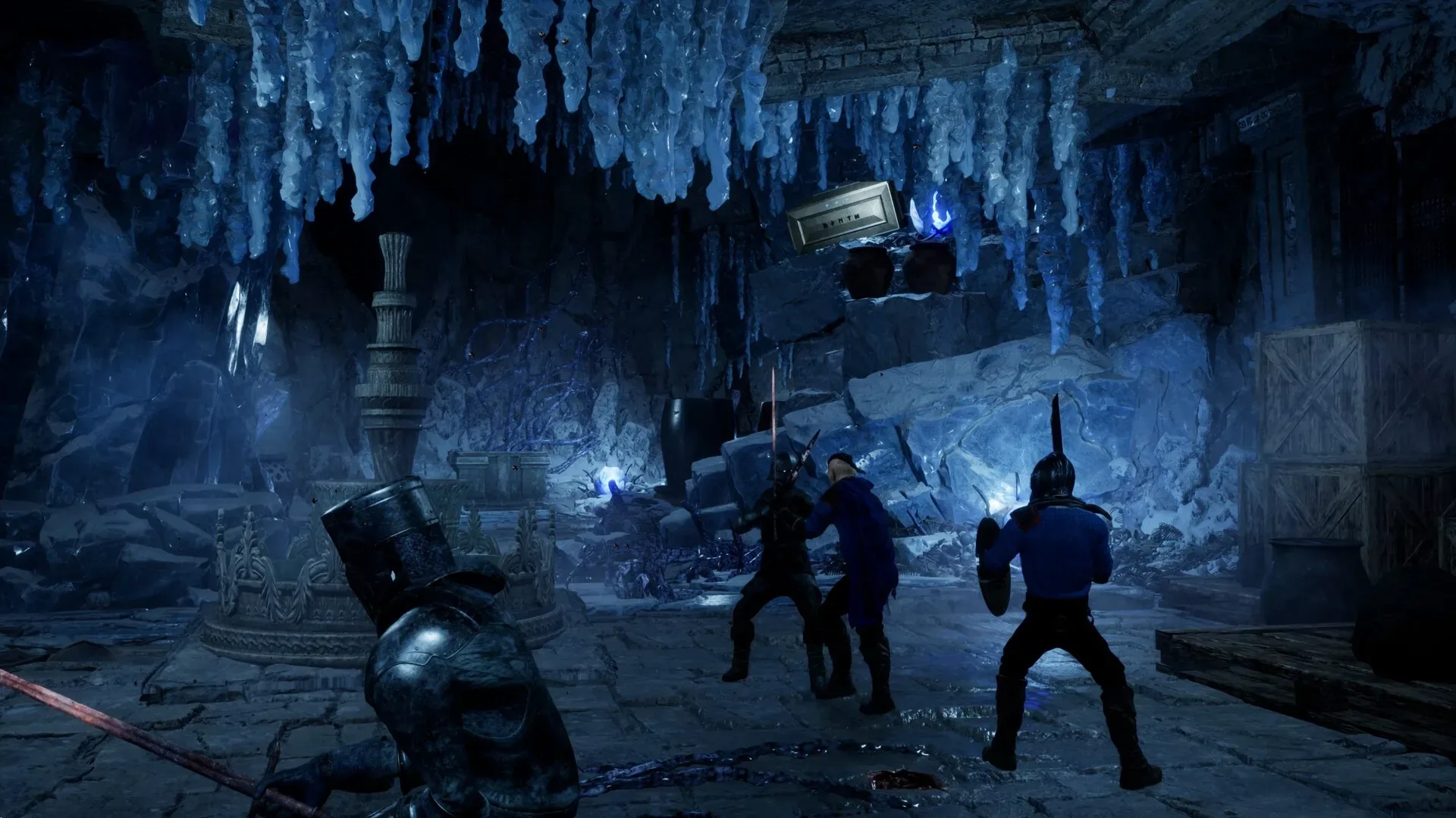
Queen’s Domain is the largest-scale proposition in this set on paper. Created by Freshly Baked Games, the development duo associated with Iron Pineapple, it is described as a FromSoftware-inspired RPG. The comparison signals an action-RPG tradition built around dangerous worlds, demanding encounters and environmental unease, but players should treat it as a tonal and design reference rather than a promise that every system will resemble any one established series.
Its premise sends the player to the Isle of Neasied in search of their father. The island is not presented as a safe reunion trip: sinister forces are gathering, while its sleeping queen has started to stir. That setup gives the demo a clear narrative hook beyond combat or atmosphere. The stated question is personal—find the protagonist’s father—but it sits against a potentially much larger threat involving the island and its monarch.
The game has reportedly passed 200,000 wishlists, a notable measure of early interest. A wishlist is not a sale or a review score, but it does indicate that a large number of Steam users have asked to be notified or reminded about the game. For a demo, that makes the playable slice important: it is an opportunity to turn curiosity into confidence before release.
Queen’s Domain is scheduled for PC via Steam and consoles on October 30, 2026. The supplied release information does not identify the console platforms, so interested players should not assume a specific system from the broad console wording alone.
Sandcastle makes the beach its building site
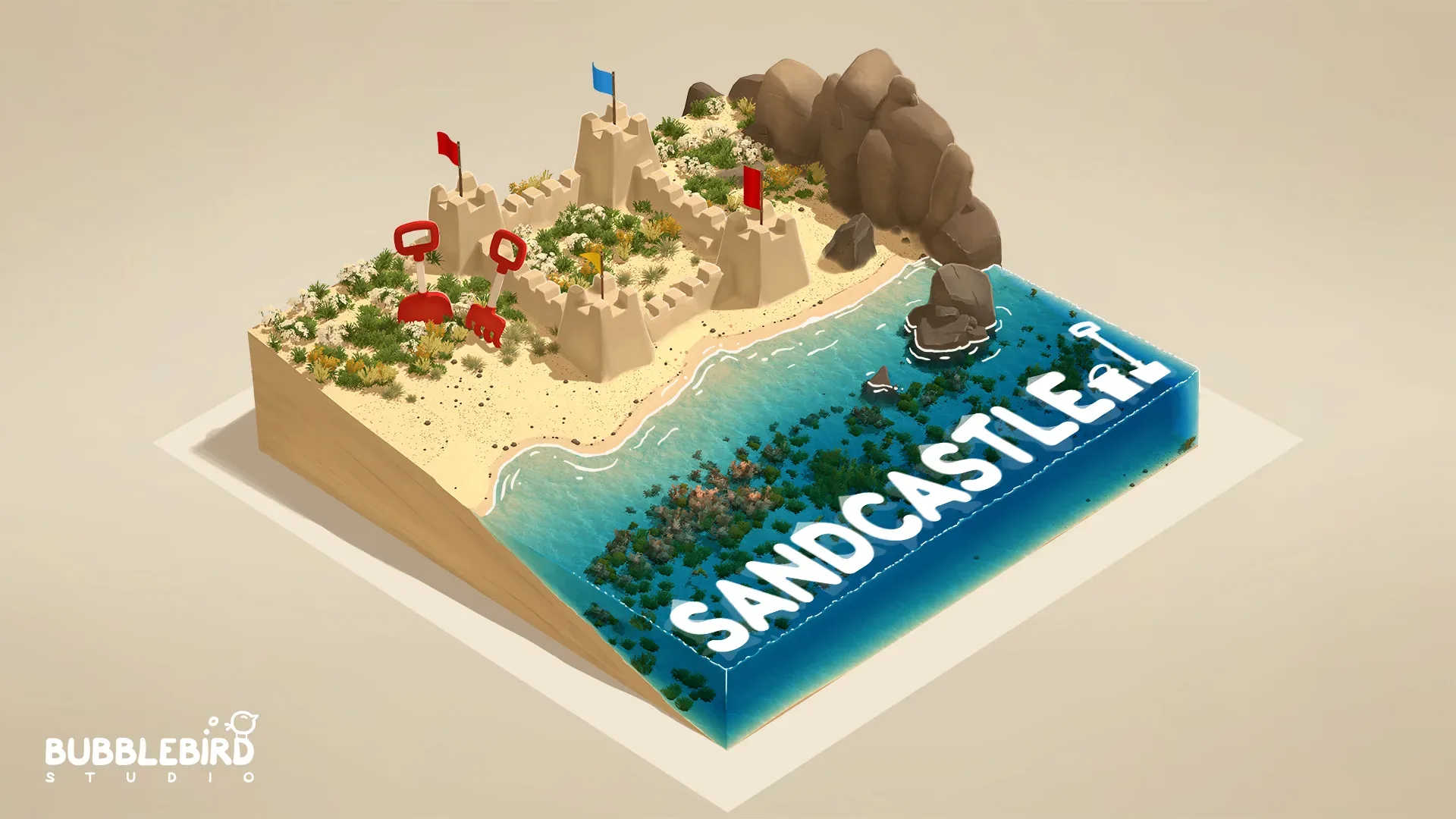
At the opposite end of the emotional spectrum, Sandcastle is a sandbox builder from Bubblebird Studio. Its core activity is exactly as invitingly literal as the name suggests: crafting sandcastles on a beach using physics-based building. “Physics-based” generally means the game’s structures and materials are intended to react through simulated rules rather than functioning as purely decorative, locked-in pieces. Here, that language implies that the character of the construction process—placement, shape and the behavior of sand-built creations—is central to the experience.
A sandbox builder usually emphasizes player-directed creation over a fixed sequence of missions. That does not confirm the extent of Sandcastle’s tools, objectives or limitations, but it does establish the main appeal: making structures rather than merely admiring a pre-made beach. Players who enjoy creating elaborate arrangements may find this demo especially useful because a short session can reveal whether the controls and construction feel intuitive.
The project is listed for 2026 and has reportedly drawn 4.5 million views through social media attention. Like a wishlist total, that figure is an indicator of visibility rather than a guarantee of the finished game’s scope. Still, a viral response makes sense for a builder whose appeal can be quickly communicated through the visual pleasure of a sand creation taking shape.
Of the five demos, Sandcastle is the clear palate cleanser. Its place beside several horror games also demonstrates the practical benefit of a multi-game event: someone arriving for an oppressive thriller can leave with a relaxing construction game on their own wishlist.
The Hollowing blends aviation and isolation
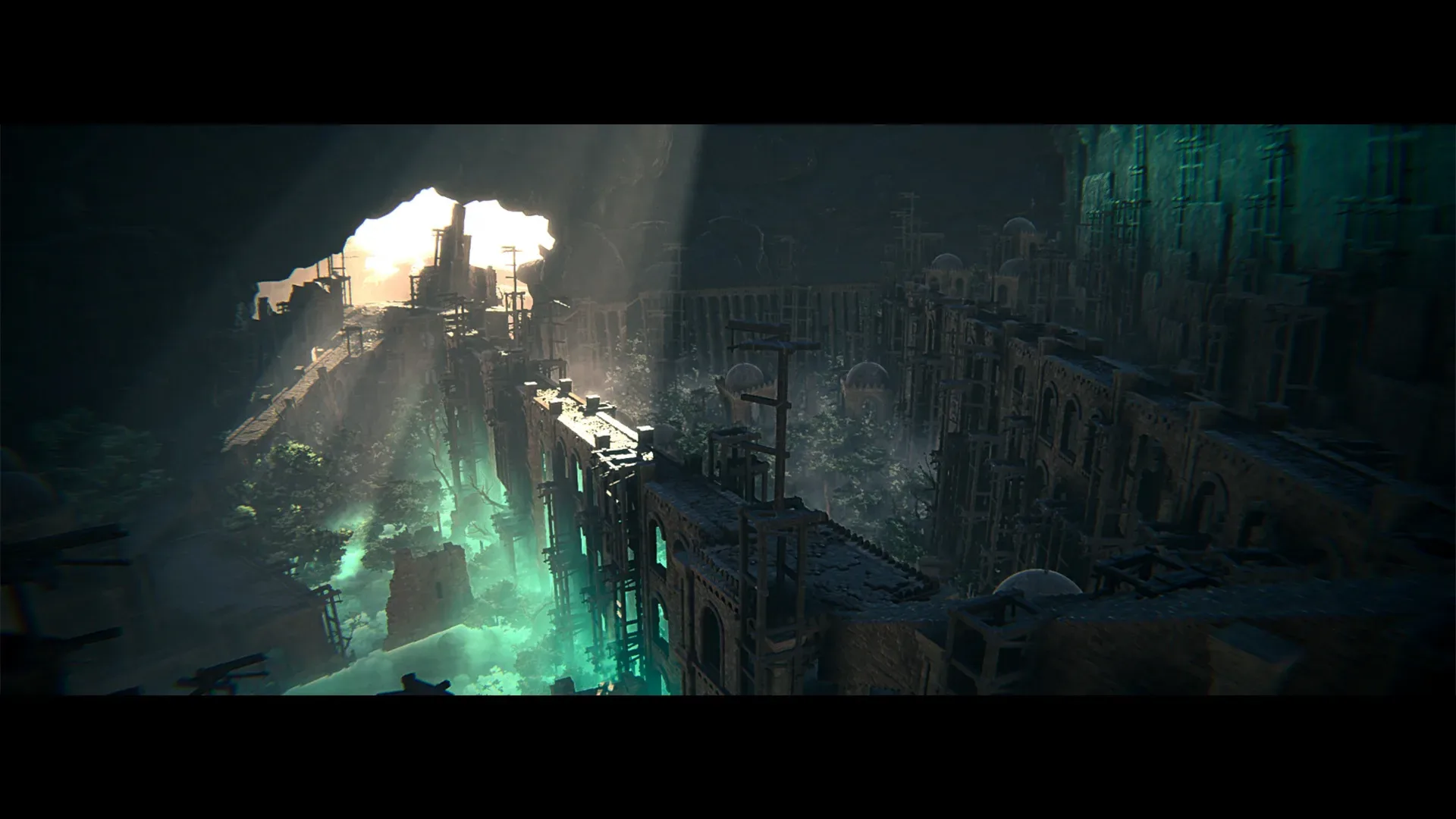
The Hollowing, from Rubeki, is described in shorthand as Iron Lung meeting Flight Simulator. The more concrete description is the useful one: it is an atmospheric, first-person horror flight sim in which players repair communications towers between settlements spread across a vast Megastructure.
A flight sim, or flight simulator, frames movement around operating an aircraft rather than ordinary on-foot navigation. The supplied details do not specify the craft, controls or degree of simulation. What they do establish is that flight is tied to the game’s central work: restoring inter-settlement communications. That makes traversal part of the tension and purpose, not simply a way of getting from one horror set piece to the next.
The term Megastructure refers here to the enormous setting containing those settlements and towers. It suggests an environment whose scale can make individual human outposts feel remote, dependent and vulnerable. Communication repair is a naturally effective objective in such a place: the task is mundane enough to be believable, yet high-stakes when distance and isolation turn a broken connection into a serious problem.
Rubeki previously created Lorn’s Lure, which has sold more than 60,000 copies. That figure provides background on the developer’s prior release, not a prediction for The Hollowing. The new game’s demo is available on Steam, offering a way to evaluate whether its combination of cockpit work, scale and horror lands as intended.
500 Finger Fillet puts its terror on a 20-minute timer
500 Finger Fillet turns its entire premise into a pressure cooker. Developed by Heather Flowers, it is a horror roguelike where the player is handcuffed to a machine that stabs hands and must escape within 20 minutes. There is no need to dress that up: it is a deliberately nasty scenario designed to make time, confinement and bodily danger inseparable.
Roguelike is a broad term, but it normally indicates a run-based structure in which repeated attempts are a major part of play. The information available does not define 500 Finger Fillet’s progression, randomization or failure rules, so those details remain unknown. Still, the label suggests that replayability and adapting to each attempt will matter alongside the immediate escape goal.
The 20-minute limit is the clearest practical feature. A fixed timer gives the game a compact format and prevents the premise from becoming abstract. Every decision exists under the shadow of an approaching deadline. For horror, that can create a different kind of fear from a slow-burn exploration game: less about what might be around the next corner, more about whether there is enough time to make the correct move at all.
Heather Flowers is also the creator of Unfair Flips, a project reported to have accumulated more than 10 million views. 500 Finger Fillet is listed to launch on November 12, with its demo included in Steam Next Fest. Players who dislike extreme bodily-threat concepts should take the description seriously; this is not vague spooky-season branding but a game whose central image is intentionally distressing.
SKINFACE builds its thriller around borrowed identities
SKINFACE is a gruesome horror thriller from Adam Pype and Ties Groen. Its player character is a faceless hitman able to steal other people’s faces. The idea immediately establishes an identity-based horror angle: faces are ordinarily markers of personhood and recognition, so making them something a killer can take transforms disguise into something far more grotesque.
The supplied description does not explain precisely how face stealing works mechanically, whether it affects stealth, dialogue, access or combat. It is best understood, for now, as the game’s defining premise rather than a full feature list. Even so, it suggests a thriller interested in the disturbing potential of impersonation, not merely shock imagery.
SKINFACE is planned for late 2026. Its new Steam demo drops on October 19, so it has a slightly different timetable from the other playable entries. That distinction matters for anyone browsing the event and not seeing it right away: the demo’s absence before that date would reflect its scheduled rollout, not necessarily a change in the game’s plans.
What these demos can—and cannot—tell players
Demos are useful because they make broad descriptions answerable through play. For Queen’s Domain, the immediate questions are likely to be whether its dark-RPG atmosphere and island quest create a compelling opening. Sandcastle’s demo can show whether physics-based building feels expressive. The Hollowing can establish whether piloting and repairs complement its ominous setting. 500 Finger Fillet has to prove that its constrained 20-minute premise produces tension rather than frustration, while SKINFACE needs to show how its face-stealing concept translates beyond an arresting elevator pitch.
They are still samples, however, not final guarantees. A demo may represent only an opening section or a carefully chosen vertical slice—a self-contained segment intended to communicate a game’s core appeal. It cannot settle questions about the total length, full system depth, later-game variety, performance across all hardware or the final balance of a release. That is especially worth remembering for projects with announced dates later in 2026.
Even with those limits, this lineup makes a persuasive case for demo browsing as discovery rather than obligation. It offers a focused glimpse at five games whose identities are unusually easy to distinguish: seek a father while a queen wakes, make a sandcastle, repair a gigantic world’s communications from the air, escape a horrific machine, or wear someone else’s face. Steam users do not need to be in the market for every one of those experiences. They only need to be curious enough to try the strange one.