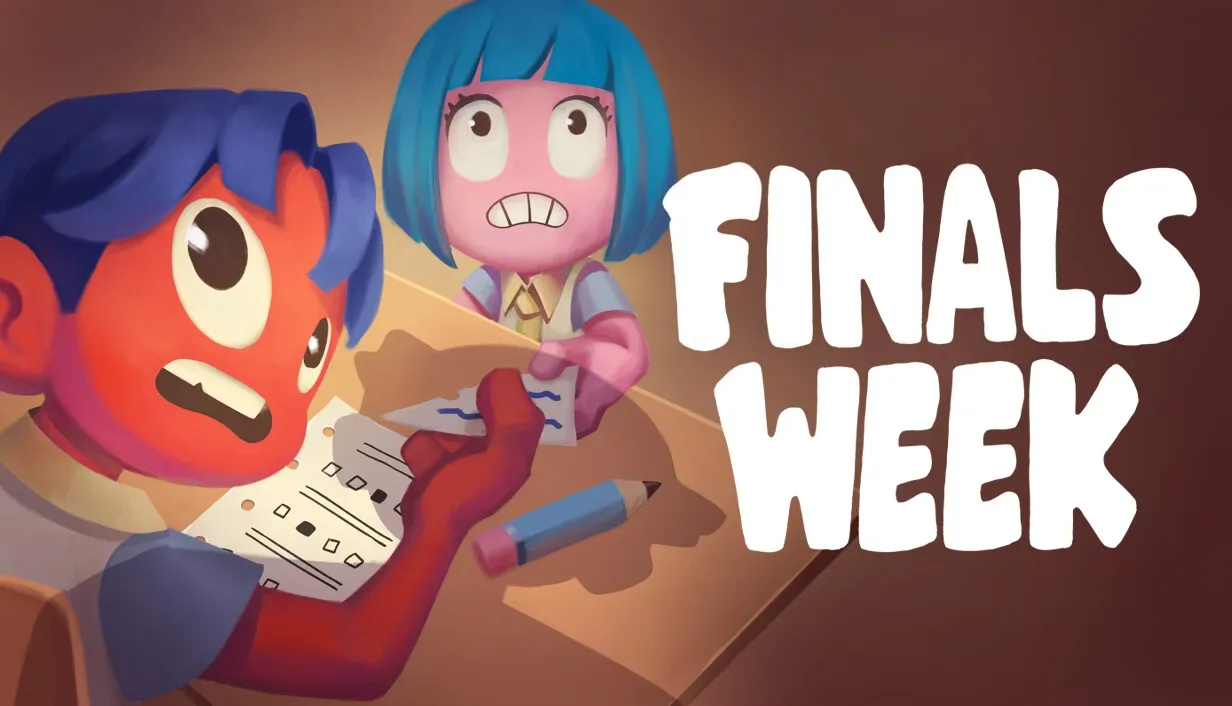
Finals Week, a cooperative cheating simulator from developer DESTINYbit and publisher Pretty Soon, is set to launch on Steam on October 29, 2026. Its premise is deliberately mischievous: a group of friends faces the last week of tests at a 1990s-style school and attempts to pass by doing practically anything other than studying.
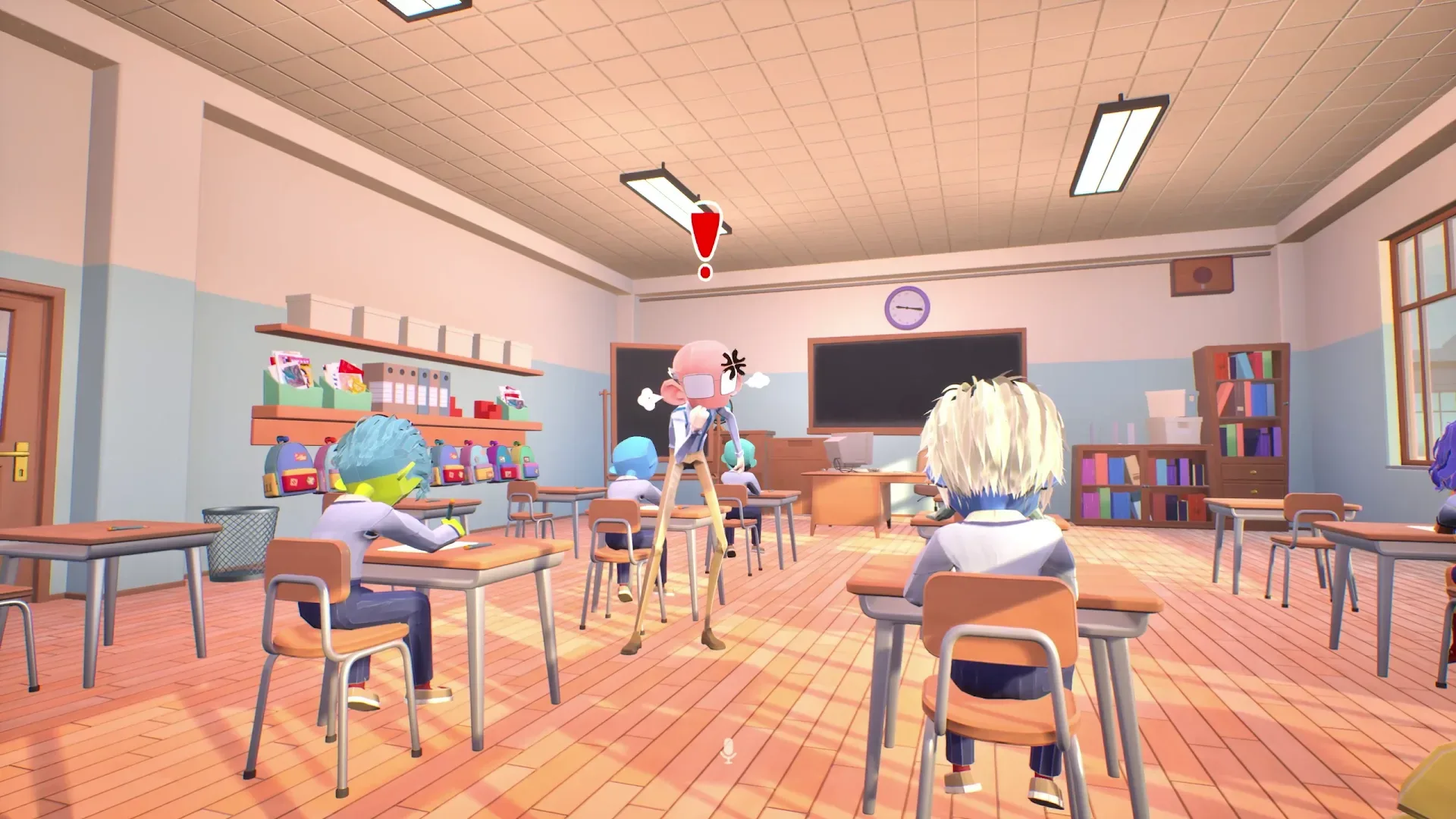
The game’s central idea is not a solo power fantasy about outsmarting an exam. It is a shared-pressure co-op scenario in which the squad needs to coordinate information, tools, distractions and escape routes while avoiding a patrolling teacher. The stated rule is wonderfully unforgiving: everyone passes, or everyone fails.
That framing could make Finals Week less about getting a single player safely through a test and more about keeping a fragile group plan intact. One player may need to watch the room, another may be moving an answer across the classroom, and another may be trying to occupy the professor long enough for the operation to work. A successful scheme appears to depend on communication as much as it does on whichever absurd prop the team has brought into play.
A co-op game built around bad academic decisions
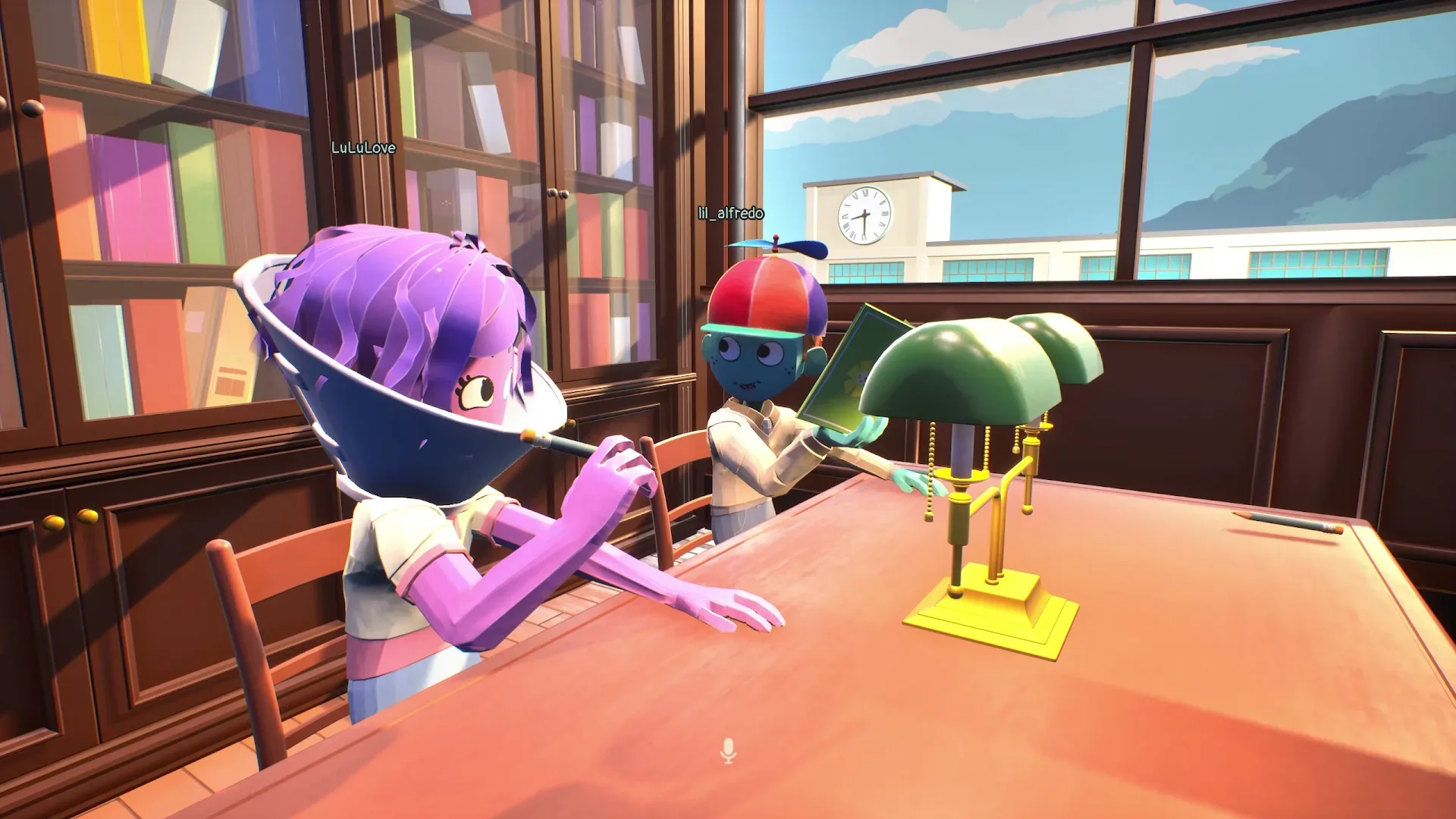
Finals Week is set during escalating examinations rather than in one static classroom challenge. As the tests become harder, players are encouraged to improvise cheating methods and cooperate with classmates. The known options include copying answers, passing textbooks and whispering using proximity chat.
Proximity chat is voice communication that depends on the relative in-game position of players. Rather than everyone hearing every teammate at the same volume regardless of location, players close to one another can communicate more directly. In a classroom game about avoiding attention, that detail has obvious comic potential: a whispered answer may be useful, but a poorly timed or poorly positioned conversation could also expose the plan.
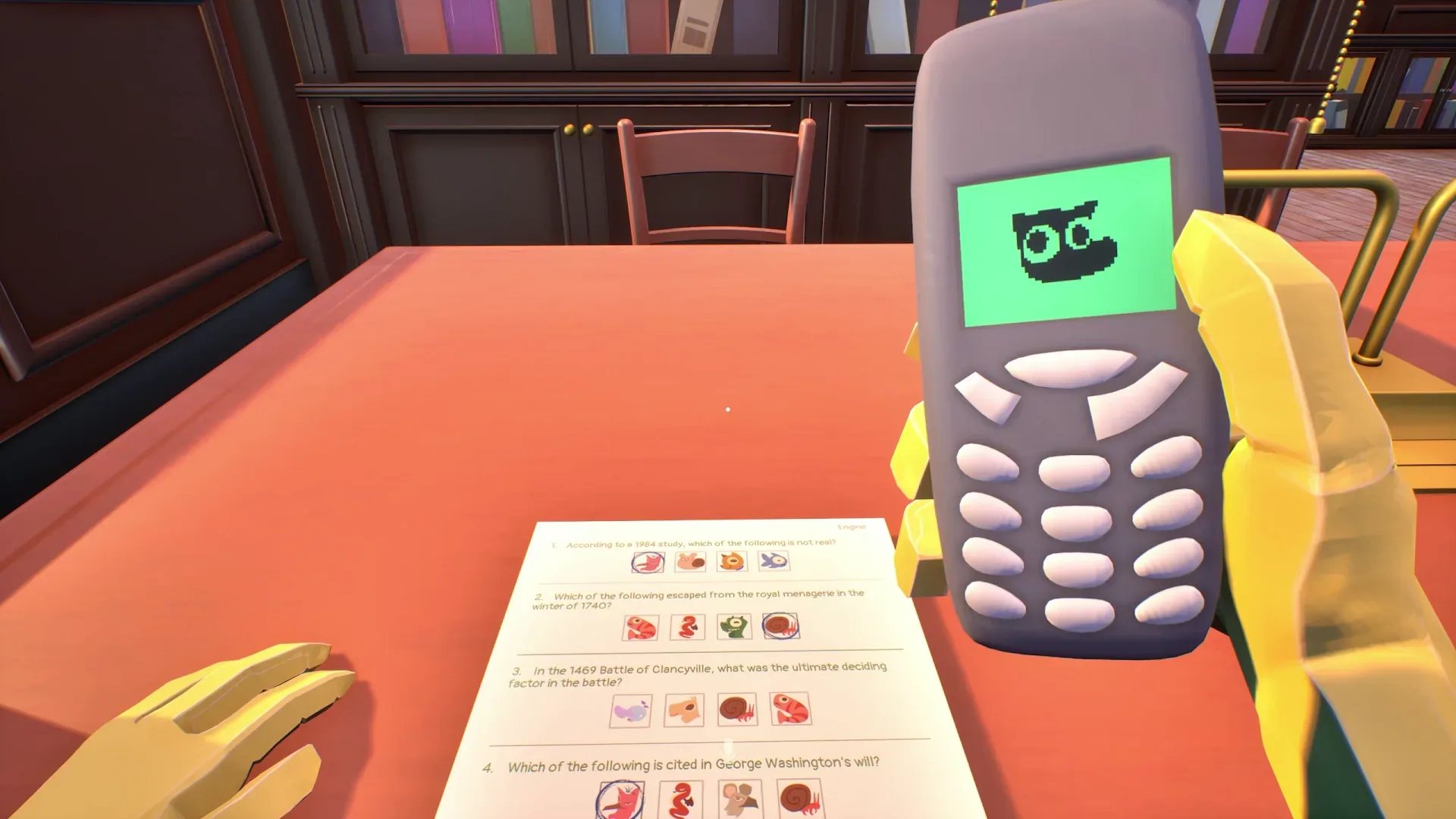
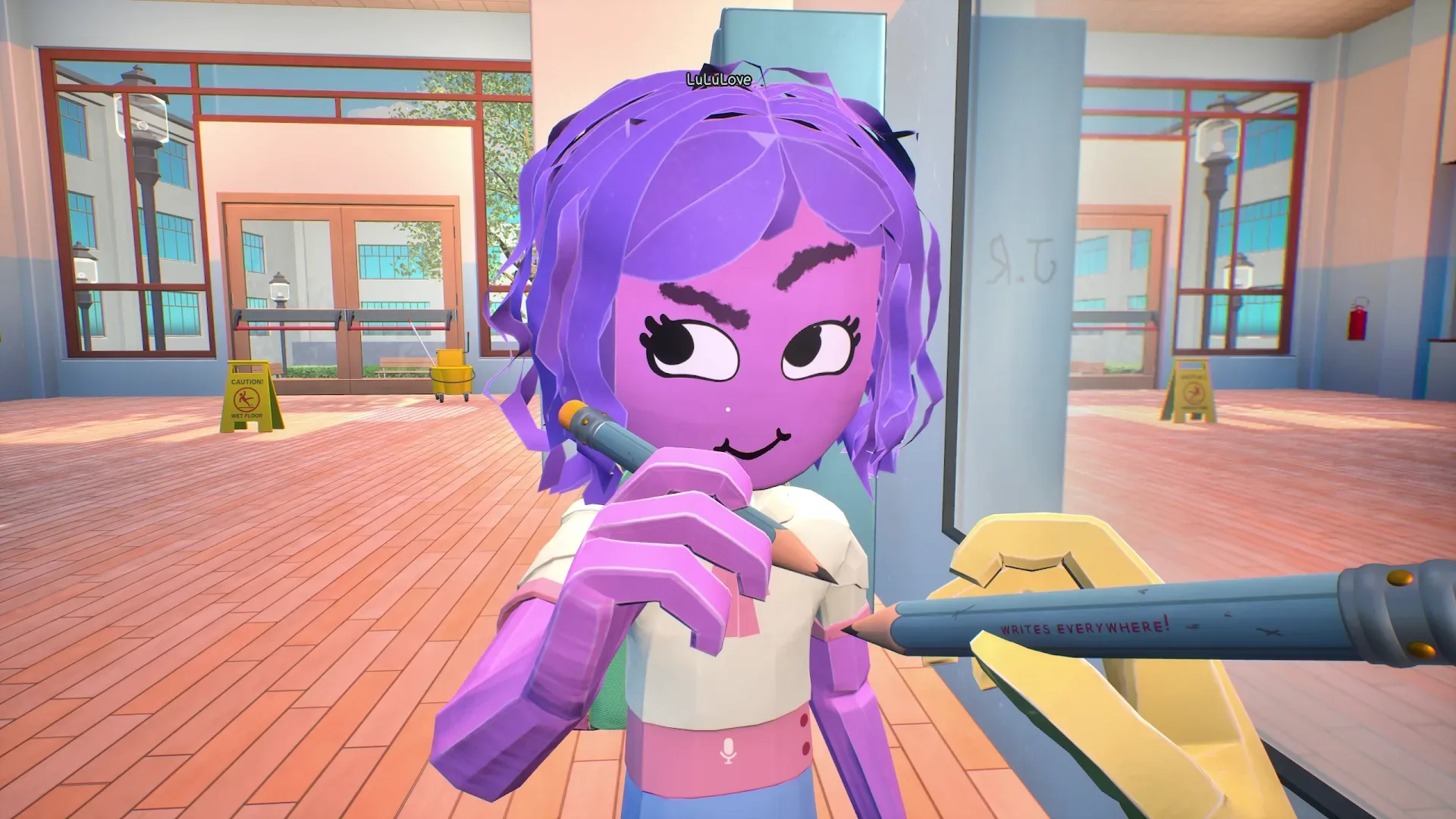
Players can also send answers through an indestructible cellphone, use walkie-talkies and binoculars, pass paper balls, conceal textbooks and throw objects. The tool list goes considerably beyond ordinary school supplies. A pen can function as a tranquilizer blowgun, while classroom equipment and environmental distractions can be turned toward the group’s questionable objective. Players can even draw notes on desks, walls and other players.
Those interactions suggest that the game’s comedy comes from treating a relatively familiar setting as a playground for elaborate schemes. A desk is not just a desk if it can become a surface for notes; a classroom object is not merely scenery if it can create a diversion. The variety of described tools also matters because it gives teams options beyond a single prescribed solution.
That does not mean every approach will be equally safe. Finals Week puts a teacher on patrol, establishing a clear risk-and-reward loop: the more a squad attempts to bend the rules, the greater the chance that its behavior will be noticed. The game’s tension appears to come from executing plans under observation, not from memorizing material for the tests.
Related coverage includes Finals Week Brings Co-op Cheating Chaos to Steam on October 29.
Getting caught is an obstacle, not necessarily the end
Detection has a playful twist. Players caught by the teacher can be fitted with increasingly ridiculous restraints. These make the task of cheating more difficult, but they do not necessarily take that player out of the action. That is an important distinction for a co-op game whose core promise is collective chaos.
In practical terms, a restrained teammate could turn into a new planning problem for the whole squad. If the group’s result is shared, leaving someone behind is not an attractive solution. The team may have to alter its method, redistribute tasks or find a way to work around the imposed limitation. Finals Week therefore seems designed to turn failure states into complications that create stories, rather than immediately closing down the session.
The emphasis on cooperative consequences also changes the meaning of “cheating” within the game’s fictional setup. A player focused only on their own answer would be working against the team’s stated win condition. The strongest approach is likely to be one that accounts for the entire classroom, the teacher’s movement, the available supplies and the limitations imposed on anyone already caught.
It is worth keeping the context clear: Finals Week presents this behavior as a comedic videogame objective within an exaggerated school setting. Its systems are built around fictional tools, patrolling teachers and cartoonish restraints—not real-world academic advice.
Secret passages, distractions and the value of a backup plan
Among the available tactics, players can crawl through secret passages, distract the professor and combine tools with environmental interactions. Secret routes are particularly notable because they add a spatial element to what might otherwise be a desk-bound premise. Instead of simply relaying answers across a room, players may be able to navigate around the school and approach a problem from another angle.
That potential for movement should pair naturally with the game’s social tools. Binoculars could help a player observe activity at range, walkie-talkies can support coordination when a teammate is elsewhere, and throwable objects offer a direct way to create commotion. The indestructible cellphone, meanwhile, sounds like a reliable communication aid in a game otherwise structured around things going wrong.
Finals Week’s appeal will likely rest on how these individual mechanics overlap. A plan might begin as a quiet exchange of information and become a frantic recovery once someone is spotted. A distraction may buy the seconds needed to move a textbook. A passageway may provide an alternate route when the main room becomes too risky. Or an attempt at stealth may dissolve into paper balls, noise and a teammate wearing a restraint that makes the original plan impractical.
This is the distinction between a game merely containing funny items and one built to generate co-op anecdotes. The supplied details indicate that Finals Week has systems meant to collide: surveillance, communication, physical props, environmental interaction, movement options and group-level consequences. The funniest moments may arise not from a tool behaving perfectly, but from several players trying to use incompatible ideas at the same time.
The school hall provides breathing room between exams
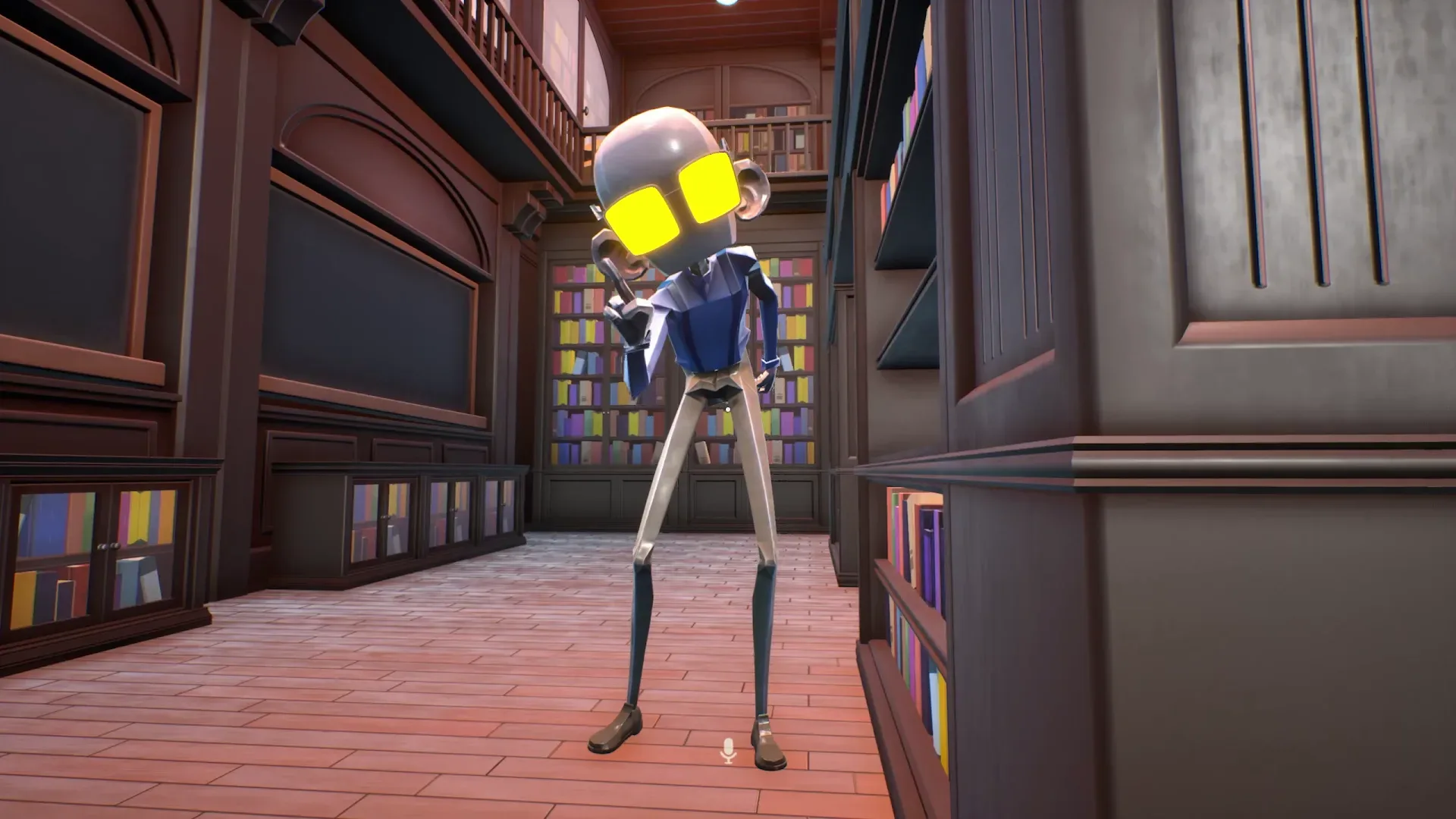
The action does not remain exclusively inside examinations. Between tests, squads can spend time in the school hall, interact with the setting, play basketball and plan what to do next. This intermission space gives the team a chance to reset after a difficult exam and think through its next strategy before another round begins.
It also contains progression in the form of unlockable outfits, hairstyles and colors. These are customization rewards rather than a stated competitive advantage, but they suit a game built around playing with friends and producing memorable mishaps. A group can develop its own visual identity while moving from one increasingly difficult test to the next.
The hall’s basketball activity and environmental interactions reinforce the broader tone: this is a school portrayed as a social sandbox, not a realistic examination simulator. The gap between exams is part of the rhythm. Players can socialize, experiment with the environment, coordinate their next scheme and personalize their character before returning to the pressure of the classroom.
What the 1990s-style setting adds
Finals Week is described as taking place at a 1990s-style school, a choice reflected in its mix of props and communication. Textbooks, paper balls, handwritten notes and walkie-talkies sit alongside a cellphone that cannot be destroyed. The setting establishes a recognizable school-era texture while allowing the game’s gadgets to be exaggerated for comedy and utility.
The tone is important because it explains why the premise can accommodate such a broad range of tactics. The game is not presenting a sober classroom drama; it is using the anxieties of final exams as a platform for co-op slapstick. The tranq-blowgun pen, secret passages and escalating restraints make that plain. Players are asked to approach each test as a puzzle with plenty of room for disorder.
For groups looking for other PC releases, Joking Joystick also tracks the wider calendar in its October 16, 2026 games release roundup. Finals Week arrives later in the month, on October 29.
What is confirmed for Finals Week
- Platform: Steam.
- Release date: October 29, 2026.
- Developer: DESTINYbit.
- Publisher: Pretty Soon.
- Core structure: Co-op exam challenges in a 1990s-style school, with increasingly difficult tests.
- Team rule: Everyone passes, or everyone fails.
- Known tactics and tools: Answer-copying, textbook passing, proximity-chat whispering, an indestructible cellphone, walkie-talkies, binoculars, paper balls, throwable items, hidden textbooks, a tranquilizer-blowgun pen, environmental distractions and note-drawing.
- Between-exam activities: Time in the school hall, basketball, environmental interaction, strategy planning and cosmetic unlocks.
Finals Week’s hook is straightforward, but the details point to a broader party-game structure: cooperative planning undermined by suspicion, interruptions and escalating nonsense. Whether a squad relies on a careful whispered relay, a secret-passage detour or a spectacularly bad distraction, the final grade is shared. That makes every teammate’s questionable decision everybody’s problem when Finals Week reaches Steam on October 29, 2026.