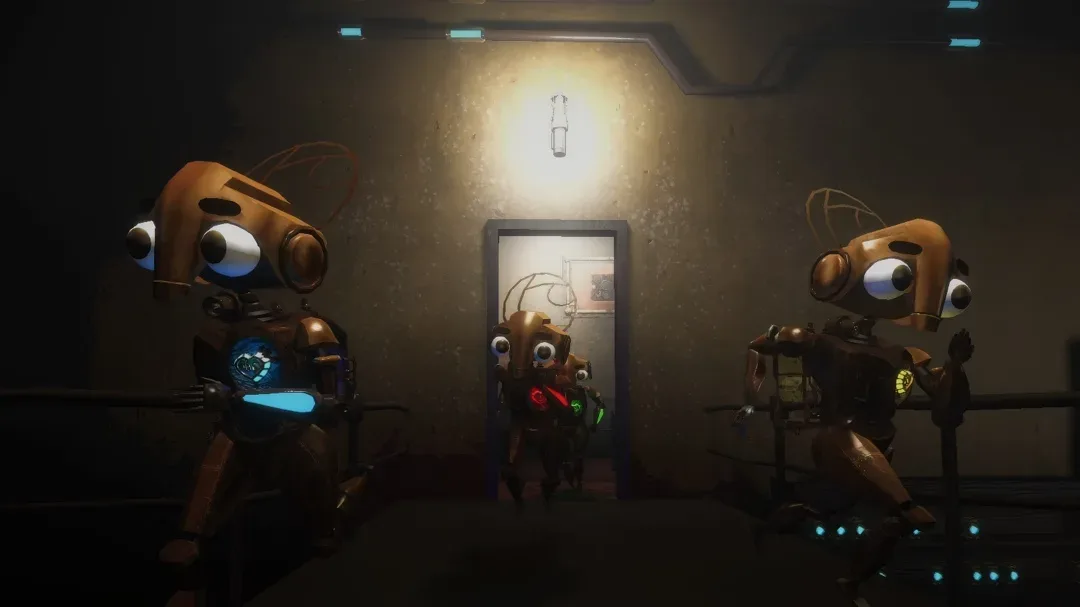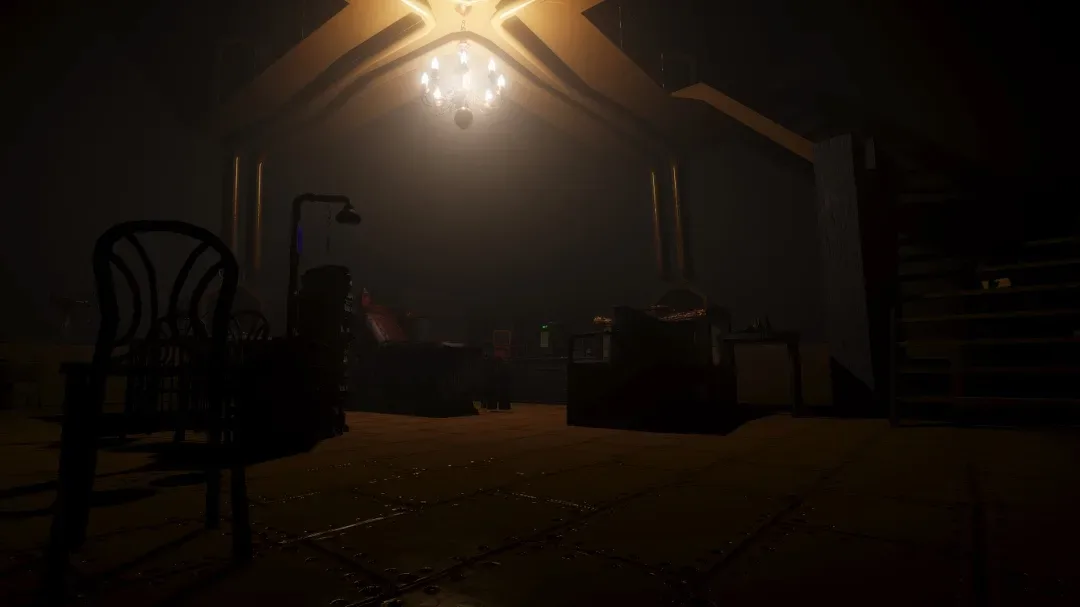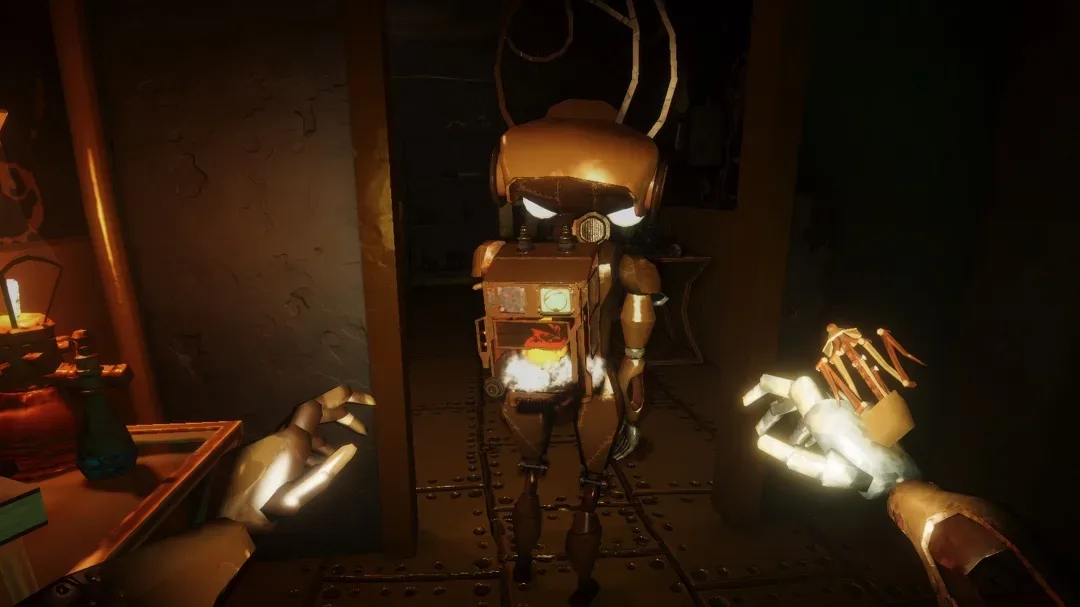
Expendabots, a co-op horror extraction game built around disposable robots and risky recoveries, now has a demo on Steam for PC and Mac. Blue Brain Games and Collision Games released the demo on October 9, 2026, giving players access to an introductory slice that starts aboard the Airship and sends squads into the Biolab dungeon.
The premise is immediately practical: one to four players control Expendabots that enter dangerous, procedurally generated islands and dungeons, gather useful materials and loot, make what they need in the field, and try to leave alive. Or, more precisely in this setting, try to leave with the squad still functioning.
That last point is more than flavor. Expendabots places recovery and replacement at the center of its co-op structure. A fallen robot does not necessarily mean that player is permanently out of the operation. Its mechanical heart can make its way back to a newly printed body, while surviving teammates can also retrieve the heart themselves. The system suggests that deciding whether to push onward, make a replacement body, or mount a recovery attempt will be a recurring part of a successful run.
Players looking for a closer overview of the demo’s setup can also view the Biolab demo coverage.
For more context, explore Dismissed OpenAI Safety Researchers Say Firings Could Chill Internal Debate.
What is in the Expendabots demo?
The available demo is a focused introduction rather than a statement of the full game’s progression. It contains the Biolab dungeon, distinct enemies and challenges tied to that location, and a tutorial covering the essentials: controls, crafting and extraction. Progression is capped at level 5.
The Airship serves as the starting point before a squad moves into the Biolab. That structure establishes the main rhythm of the game: prepare, enter an unpredictable location, collect resources, manage threats and reach extraction. The supplied details do not define every objective or reward inside the dungeon, but the demo is intended to show how its exploration, crafting and survival systems connect.
Procedural generation means the game’s islands and dungeons are assembled with variation rather than being fixed in precisely the same arrangement every time. In practical terms, this can make route planning, resource gathering and threat avoidance less about memorizing one layout and more about responding to what a particular expedition presents. The demo specifically centers on the Biolab, while the broader game concept includes procedurally generated islands and dungeons.
The portable 3D printer is the key survival tool
Every Expendabot carries a portable 3D printer. Rather than treating crafted gear as something prepared only before a mission, the game makes fabrication part of the expedition itself. Robots collect filament from loot and use it as the material for printing useful items in the field.
Confirmed printable items include gear, emergency power cells and decoys, with other field items also part of the system. This matters because the printer links scavenging directly to survival options. Filament is not simply a score item to carry out; it can become an immediate answer to a problem encountered before extraction.
- Gear gives the squad a way to turn acquired filament into equipment during a run.
- Emergency power cells provide a named example of a resource intended for difficult situations.
- Decoys are particularly relevant in a game where enemy detection is based on sight, sound, or both.
- New bodies give the mechanical-heart system its co-op importance, allowing a fallen teammate a route back into action.
The specific balance between spending filament now and conserving it for a later emergency is not detailed, and the demo should not be assumed to represent every recipe or system planned for the full release. Still, its stated design makes the printer the central bridge between exploration and problem-solving. Players do not only search for an exit; they gather the means to shape their chances of reaching it.
Noise is part of the danger
Expendabots’ horror element is tied to enemy awareness. Enemies react to sight, sound, or both, creating different kinds of danger depending on the opponent. Some encounters may be about avoiding a visual line of detection, while others may punish noisy movement or communication. The game’s proximity voice chat makes that second category especially notable: enemies can hear players.
Proximity voice chat is voice communication governed by in-game distance rather than a single private team channel. Players close to one another can communicate more directly, while separation changes how easily teammates can hear each other. Here, the feature carries an additional consequence because hostile creatures can react to voices. Conversation becomes an in-world action with a possible cost, not just a convenience layered over the game.
That can make a normal co-op habit—calling out an enemy, asking for help or warning teammates—notably more complicated. A squad may need to decide when a spoken warning is worth the risk, when to stay quiet, and how far apart players can safely operate when communication itself is constrained by distance and enemy hearing.
It also gives decoys a clear potential tactical role. A decoy is generally understood as something meant to draw attention away from its user, and Expendabots explicitly includes them among printable field items. The available information does not state exactly how decoys behave against each enemy type, so players should not assume a universal solution. But with sound-aware enemies in the game, a tool designed around distraction fits the broader tension between being noticed and getting away.
Extraction changes how failure is read
“Extraction” describes the act of successfully leaving a hostile area after a run. In Expendabots, extraction is not merely the endpoint of a dungeon; it is the condition that turns scavenging and survival into a completed squad operation. Loot must be found under pressure, resources may be spent on field printing, and the team must still get out.
The robots’ expendable identity adds a different wrinkle to this familiar objective. A player character going down can create a recovery decision rather than an automatic end to that player’s involvement. Teammates may collect the mechanical heart, or the heart can find its own way back to a newly printed body. This makes the group’s status part of the resource equation. Printing and preserving a replacement body may compete with other needs, while retrieving a heart can expose surviving teammates to more danger.
The available information does not establish whether every fallen robot can always be restored, how long a recovery takes, or what restrictions apply. Those are questions for players to explore in the demo rather than details to presume. What is clear is the intended co-op fantasy: the squad is made of machines that can be rebuilt, but keeping everyone together is still an active challenge.
Who the demo is best positioned to help
The demo is useful for players interested in a multiplayer horror game where co-operation is built around resource decisions as well as combat or evasion. It supports up to four players, but the one-to-four-player range also means it is designed to accommodate smaller groups rather than requiring a full four-person team.
For a group, the Biolab is a chance to see how much coordination is practical when voices can attract attention. For solo players, it offers a way to assess the core loop of entering a hostile space, looting filament, printing supplies and aiming for extraction without relying on a large squad. The tutorial should establish the control, crafting and extraction basics before players tackle the dungeon’s particular hazards.
Because progression ends at level 5, prospective players should approach the demo as a vertical introduction, not a complete measure of long-term advancement. The more meaningful questions it can answer are immediate ones: whether the printer-driven scavenging feels useful under pressure, whether detection rules are readable, and whether the body-and-heart recovery setup produces memorable co-op choices.
How to approach an early Biolab run
The demo’s confirmed systems point to a cautious first-session approach, even without assuming details that have not been specified. Completing the tutorial first is the clearest way to learn controls, crafting and the extraction process. Once in the Biolab, players can treat filament as a flexible survival material instead of automatically saving or spending it.
- Learn the extraction process early. Knowing the basic exit objective gives scavenging a clearer purpose.
- Pay attention to what attracts enemies. Since opponents can react to sight, sound, or both, identifying the immediate threat type should inform movement and communication.
- Keep the printer in mind before a crisis. Filament can become gear, power cells, decoys and other field items, making it more than ordinary loot.
- Consider the squad when someone falls. The mechanical heart can return to a new body or be recovered by teammates, so a downed player creates a group decision rather than a simple dismissal.
- Remember the level-5 cap. The demo is meant to teach and sample the loop, not reveal every stage of progression.
Expendabots is available to download as a demo on Steam for PC and Mac. The release is accompanied by a new trailer, screenshots and a press kit, while the playable slice concentrates its robot-rebuilding, voice-sensitive horror and extraction ideas inside the Biolab.