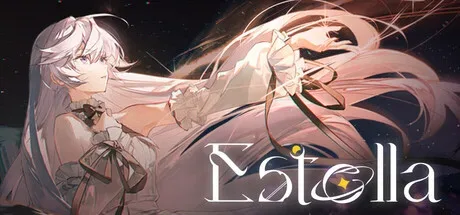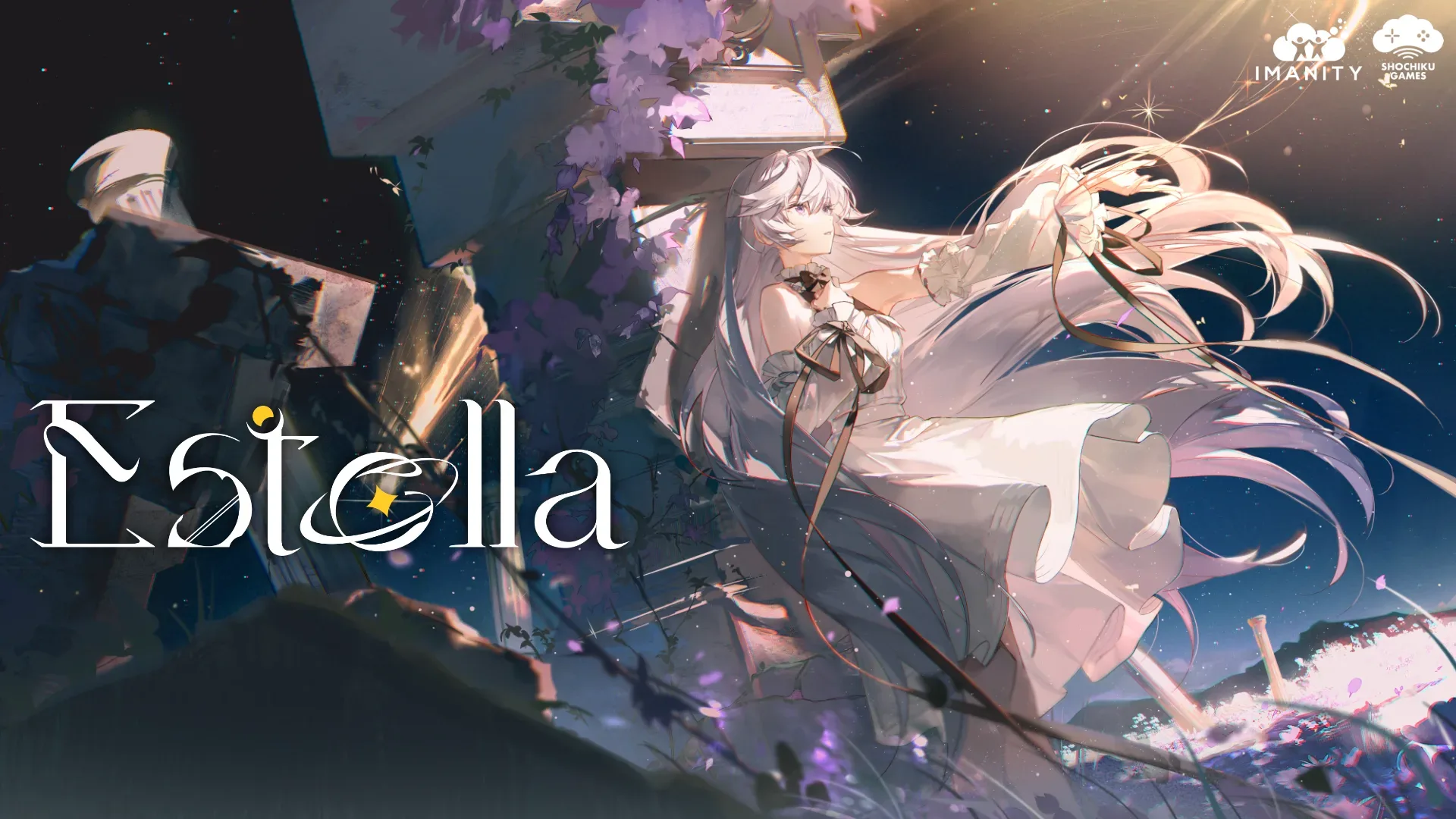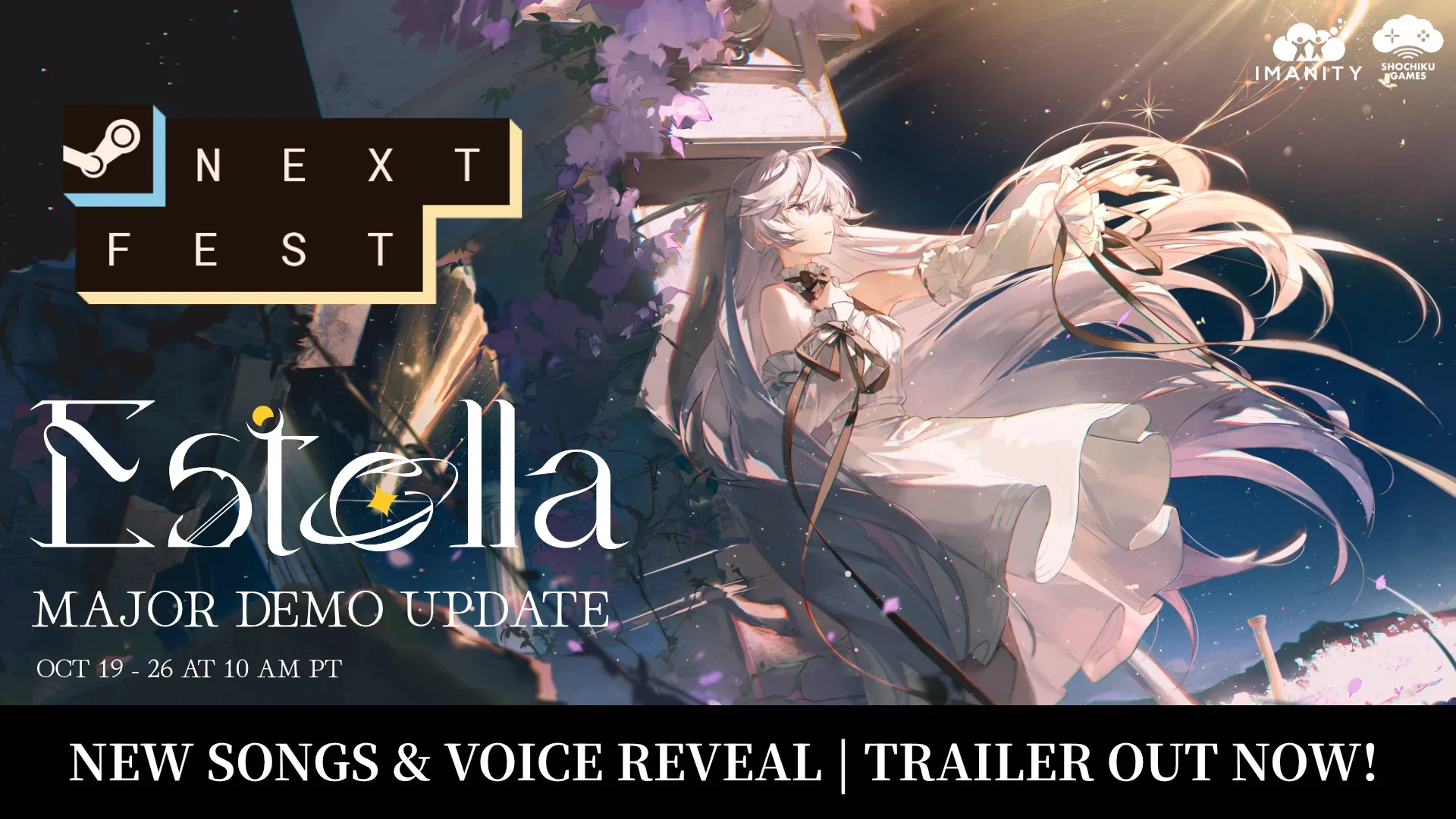
Estella, the upcoming 3D music rhythm action game from Imanity Co., Ltd. and Shochiku Games, has received an updated demo on Steam alongside a new promotional video. The update focuses on presentation and play feel while adding three songs to the demo, and the trailer gives players their first look at a real-time Multiplayer Mode built for as many as 32 competitors.
The release remains planned for this winter on PC through Steam. Pricing has not been announced. Its Early Access debut is planned to include Chapter 1 and roughly 40 songs, placing this demo refresh in the important space between an initial reveal and the game’s first public release build.
A revised demo, not simply a larger song sampler
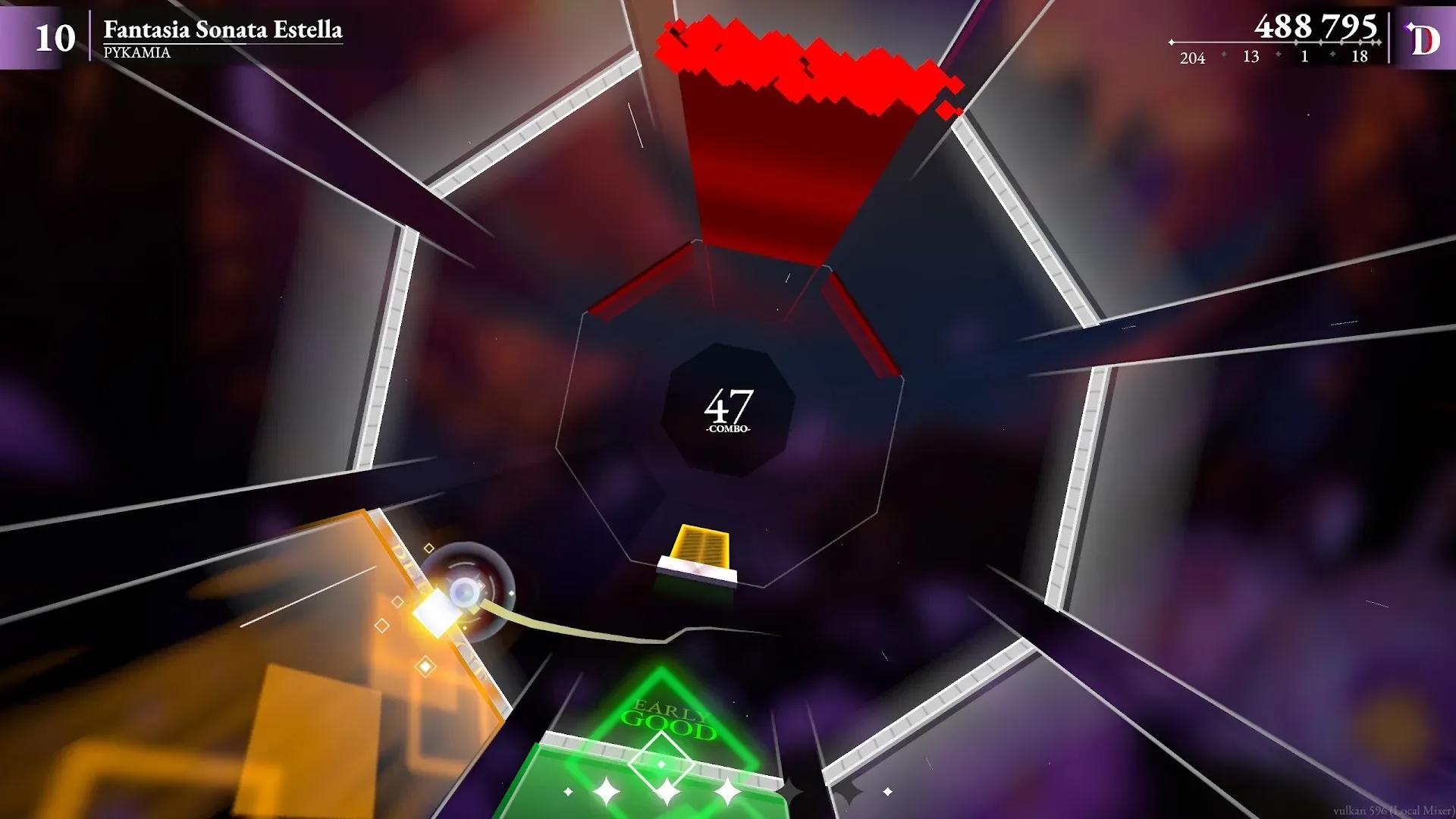
The demo update makes changes to Estella’s main visual, game UI, and overall gameplay experience. That distinction matters for a rhythm game: the UI, or user interface, is the on-screen layer that conveys the information needed to play, whether that means lane guidance, timing feedback, scores, or menus. A revised interface can substantially affect how readily newcomers understand a song’s patterns and how confidently returning players read them at speed.
“Overall play experience” is necessarily broader and less specific. It indicates that the update is intended to refine the way the game feels in use, but it does not identify individual mechanical changes. Players should therefore avoid assuming alterations to timing windows, difficulty systems, controls, or progression until those details are formally specified.
Three additional songs are now part of the demo. The newly added material includes tracks previously shown at Tokyo Game Show 2026, expanding the public slice of the game while giving prospective players more music to evaluate. In rhythm games, a song list is not merely a soundtrack: it determines the range of tempo, arrangement, and charting challenges that players will repeatedly encounter. More demo tracks can make it easier to get a sense of whether a game’s musical and mechanical direction is a good fit.
Octagonal lanes and mouse-and-keyboard play
Estella is described as a 3D music rhythm action game in which players race across octagonal lanes using a mouse and keyboard. The octagonal-lane description points to a playfield organized around eight-sided routes rather than a conventional straight set of note columns. The available details do not establish exactly how notes, movement, scoring, or lane transitions work, but the premise suggests that spatial navigation is part of the rhythm challenge.
That setup also separates the game from titles designed around a single instrument-shaped input scheme. Estella’s confirmed mouse-and-keyboard controls place it squarely in the PC control environment, with the mouse likely relevant to directional or positional interaction and the keyboard handling further inputs. The exact division of responsibilities has not been detailed, so it is best understood as an input foundation rather than a complete controls breakdown.
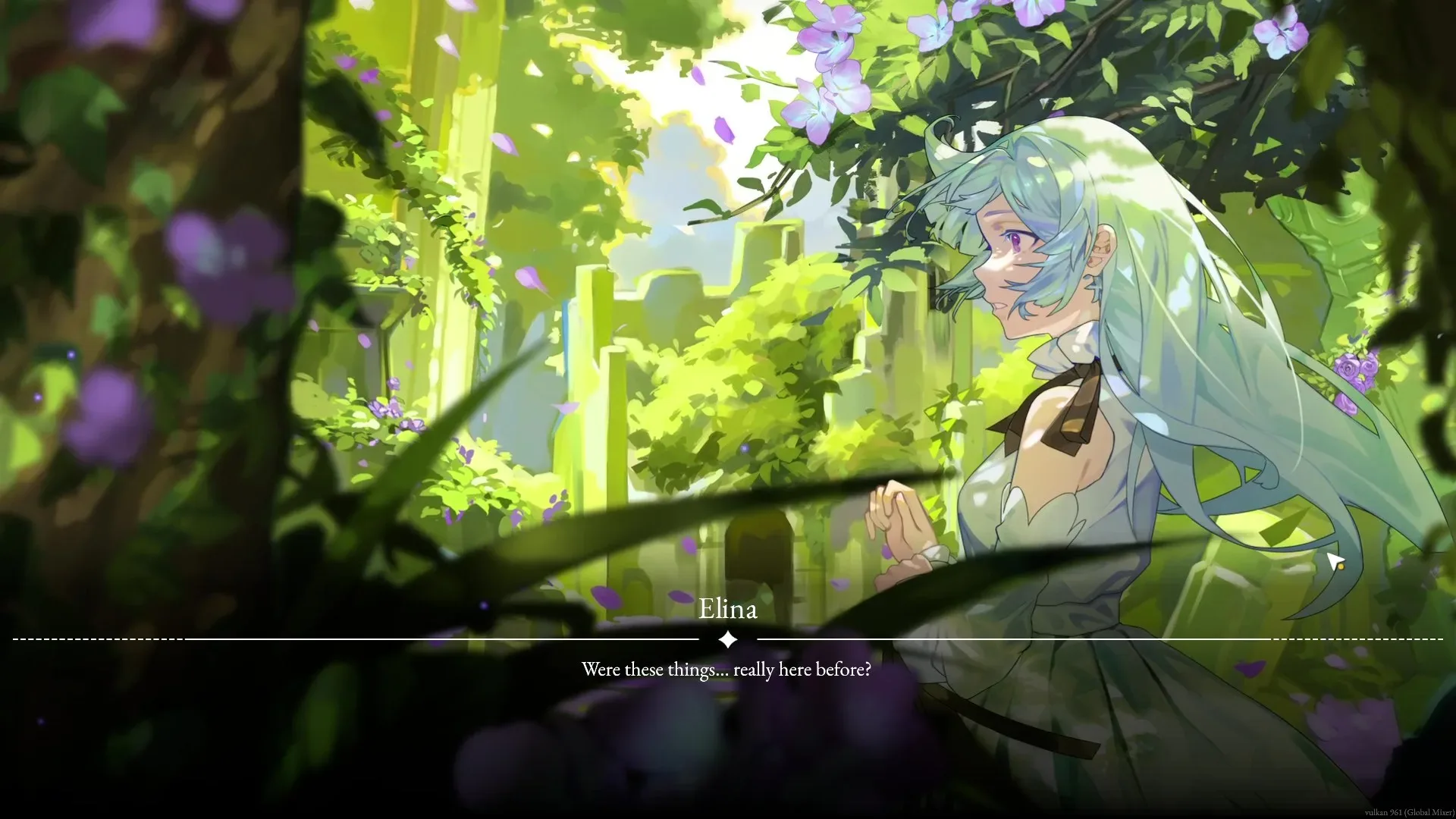
The new video synchronizes gameplay footage with music, providing a better sense of the project’s visual rhythm than a written feature list alone can offer. It also introduces the Chapter 1 theme, Elina, composed by Kyiku & rinri and performed by vocalist Es. Saima Nakano provides the voice of the protagonist, Elina, in the footage.
Related coverage includes Estella’s Updated Steam Demo Adds Songs and Previews 32-Player Multiplayer.
Multiplayer is the trailer’s biggest new reveal
The promotional video’s most significant newly shown feature is Multiplayer Mode. Up to 32 players can compete for scores in real time. In this context, real-time competition means participants are competing concurrently rather than merely comparing leaderboard results after separate runs. Score competition is familiar territory for rhythm games, but a potential 32-player field could make a successful performance feel more like a shared event than an isolated score attack.
Several practical questions remain open. There is no confirmed information on matchmaking, private lobbies, regional play, spectator features, scoring rules, song selection, cross-platform support, or whether all 32 slots will be available at the Early Access launch. Estella is currently announced only for Steam on PC, so there is no basis to infer versions on other platforms.
One overview lists the game’s player count as one, while the trailer material describes a multiplayer mode for up to 32 players. The supported reading is that a solo play offering is planned alongside the newly previewed multiplayer competition, but the precise structure has not been laid out. Until more details arrive, prospective players should treat the 32-player mode as confirmed in concept and shown in footage, without assuming its full set of online options.
Chapter 1 centers on Elina’s exile
Estella’s campaign structure is organized by planets, with each planet presented as a chapter. The first chapter follows Elina after a mysterious purple flower spreads through a forest overnight and numbs the hearts of the people affected by it. Elina alone recognizes that something is wrong, but is branded a heretic and banished from her homeland.
Two years later, she awakens alone with translucent hands. The purple curse continues to spread, while a dim golden light appears before her. Elina’s journey is framed around reclaiming the home she lost. That premise gives the game’s opening musical chapter a specific character perspective rather than treating its songs as disconnected stages.
The announced structure leaves room for the game to use music, environments, and chapters together: each planet can function as a distinct narrative unit, while Chapter 1 establishes the central conflict and Elina’s motivation. However, no further planets, chapter count, story branching, or campaign length have been confirmed. The approximately 40-song figure applies to the intended Early Access lineup, not necessarily to a complete final version.
What is confirmed for the early song lineup
A partial planned track list identifies several artists and songs expected to be part of Estella. It is a partial list, so it should not be treated as a complete catalog or final order of play. The named tracks are:
- Fantasia Sonata Estella — PYKAMIA
- lost night meteor — kanase.
- Reblossia — Dadadaizu
- Exit This Earth's Atomosphere — Camellia
- PUPA — Morimori Atsushi
- enchanted love — linear ring
- Festival Forever — TAKIO
PUPA, enchanted love, and Festival Forever are identified as newly included following Tokyo Game Show 2026. The broader projected lineup of about 40 songs is a meaningful number for an Early Access rhythm release, although players should remember that neither a complete song list nor the division between demo content and launch content has been supplied.
What the demo means for interested players
For players considering Estella, the updated Steam demo is presently the clearest route to assess the project’s core proposition: three-dimensional lane racing, mouse-and-keyboard rhythm play, and a music-driven world led by Elina. The new songs broaden that first impression, while the video establishes that score competition is intended to be part of the game’s future identity.
The update is also a reminder that early public builds can evolve in more than one way. New tracks are the obvious addition, but the work on visual presentation, UI, and play experience may prove just as consequential for a genre where legibility and responsiveness underpin every song. The game’s final judgment will depend on details not yet announced, including the full Early Access song lineup, the shape of multiplayer access, and its eventual price.
Estella joins a wider stream of projects still defining their technical and platform ambitions before release; for another recent example of a game emphasizing a major technical step forward, see Stranger Than Heaven’s move beyond PS4. For now, Estella’s concrete next step is simpler: a refreshed Steam demo that lets players hear more of its planned musical direction and see the multiplayer race taking shape.