PC gaming is having a notably strong stretch, even if putting together a new machine is not necessarily getting easier. Hardware pricing pressures tied to AI data centers remain a consumer headache, and the platform still carries familiar irritations: uneven ports, Windows complications and enough graphics settings to make a person briefly miss the plug-and-play simplicity of a console.
Yet the larger commercial picture is increasingly hard to ignore. Newzoo market-intelligence director Emmanuel Rosier describes PC as riding a positive wave over the last two or three years, while the forecast for the wider games business points to slower growth for consoles than for PC and mobile. That does not mean consoles are disappearing, or that PC has solved every problem. It does suggest that the reasons people, publishers and developers choose a platform are shifting.
The key word is choice. A PC is not a single fixed ecosystem or a single hardware generation. Its audience can move between free-to-play games, paid releases, long-running live-service games, small independent projects, controller-led games and mouse-and-keyboard games. That breadth can make PC more resilient than a market shaped around expensive dedicated boxes and recurring blockbuster releases.
A changing business mix
One useful way to understand the divergence is to separate the games themselves from the business models behind them. A business model is simply the route through which a game makes money. A premium game is bought upfront. A free-to-play game costs nothing to begin playing but can earn money through microtransactions, or smaller purchases made within the game. A live-service game is designed to continue receiving updates and to encourage repeat engagement over an extended period.
Rosier says that roughly half of PC revenue comes from microtransactions, reflecting the prominence of free-to-play and long-lived service games on the platform. On console, premium games remain the biggest share of the business. The distinction is meaningful, but it should not be treated as a clean divide between one-off console games and endlessly updated PC games.
Many of console gaming’s largest premium releases are recurring sports series or giant franchises such as Call of Duty. They can function as continuations of an existing relationship with a franchise: players return annually or repeatedly, and publishers receive recurring revenue from that audience. In that sense, the commercial behavior can resemble a live service even when the player’s initial transaction is the purchase of a full-priced game.
PC has heavyweight evergreen games too. Minecraft, Fortnite and Roblox remain enormous names in its leading ranks. But the platform’s chart picture is described as less concentrated around those usual giants, with more newcomers and independent games surfacing among the most played or most profitable titles. That does not make every smaller PC launch a success. It does mean there are more routes for games outside the biggest franchises to find an audience.
Why a wider catalogue matters
Rosier’s central point is not that PC players reject blockbusters. It is that they have more alternatives alongside them. That matters both for players deciding what to play and for publishers deciding where to launch.
Related coverage includes PC Gaming Gains Momentum as Console Growth Slows, Analyst Says.
For an independent publisher, releasing on Steam first can be a comparatively straightforward starting point. If the game connects with an audience, a console expansion can follow. This approach allows a project to establish demand before taking on the additional work and business considerations involved in bringing it to other platforms. It also means PC’s catalogue can continually add unusual projects, smaller productions and games that may not fit the release expectations of a console audience dominated by familiar names.
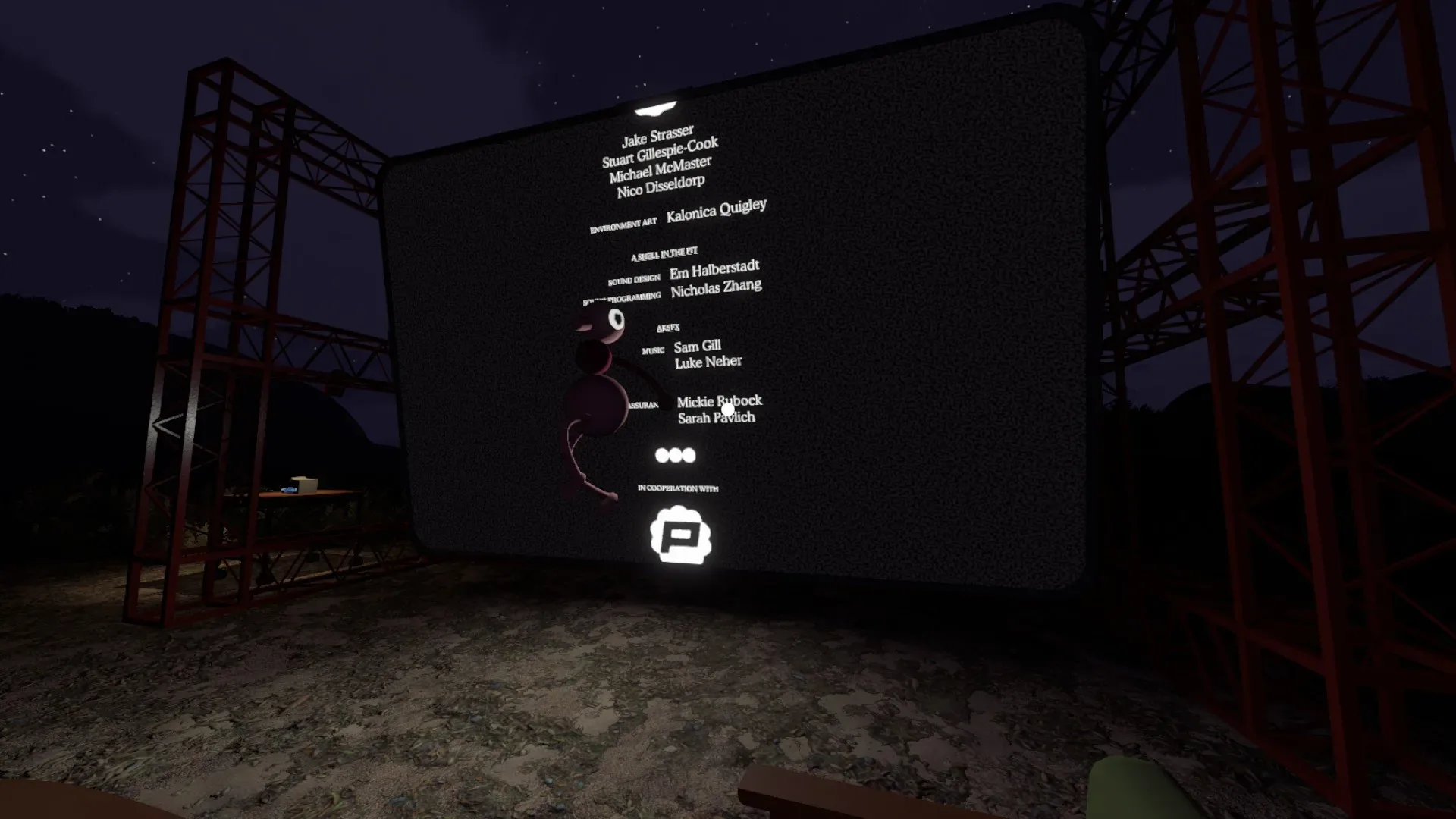
The case of Big Walk illustrates how player reach and revenue do not always line up in the same place. It attracted more users on PS5 through its inclusion in PlayStation Plus, but generated substantially more money on PC. Subscription inclusion can put a game in front of many people, while a direct PC release may be better positioned to turn interest into purchases. Neither outcome is automatically better in every circumstance; the example is a reminder that a high player count and the strongest revenue result can occur on different platforms.
Readers interested in the game itself can explore Big Walk’s hidden mailbox-sized finale. In market terms, though, the more interesting lesson is that platform strategy is not reducible to a single metric. Visibility, audience size and sales are related, but they are not identical.
Consoles confront a mature market
Console gaming remains central to the industry, but it faces conditions that make rapid growth harder. Rosier characterizes the console market as mature and suggests it may be approaching a ceiling. A mature market is one where the core customer base and the established buying patterns are already well developed. Growth can still happen, but attracting additional customers becomes more difficult than it is in a market that is still rapidly expanding.
Pricing is an especially important challenge. A new console generation must persuade existing owners to buy another dedicated device while also attracting people who do not already see themselves as console customers. If hardware pricing climbs too far, both groups can hesitate. That creates a basic adoption problem: the price of entry is not merely the console, but potentially games, accessories and subscription commitments as well.
PC hardware is hardly immune from affordability concerns. AI data-center demand has contributed to price increases that affect consumers trying to build or upgrade a machine. This is a real counterweight to any easy claim that PC is simply cheap. Building a powerful gaming computer can be difficult precisely because component costs are under pressure.
Still, a household is more likely to already have a computer than a new dedicated console. That existing device can lower the initial barrier to trying PC games, even when it is not an ideal high-end gaming system. The distinction is important: lower entry friction does not mean every person can immediately run every demanding new release at maximum settings. It means the path into the ecosystem may begin with hardware already in the home.
Regional growth changes the equation
Geography is another major factor. Consoles have struggled to find comparable success across Asia outside Japan, while PC gaming has substantial strength in countries including China. Large markets matter enormously to worldwide growth estimates. When a platform has deep traction in a country with a huge potential audience, it can materially alter the global balance even if another platform remains popular in more established console territories.
This also helps explain why a broad PC catalogue is commercially valuable. A platform serving many regions and player preferences does not have to rely on one style of game, one purchasing model or one local market. Free-to-play releases, service games, premium games and independent projects can coexist. That range gives publishers multiple ways to meet audiences where they are rather than assuming the same console-led model fits everyone.
More developers, particularly in Asia, are investing in PC as well. The effect can reinforce itself: a growing audience makes PC more attractive to creators, and a broader stream of games makes the platform more attractive to players. This is not a guarantee that all games will succeed there, nor proof that every developer should avoid consoles. It is the kind of momentum that makes a platform more compelling as a default consideration rather than a secondary port.
PlayStation releases and the expanding PC library
PlayStation’s decision to bring some of its games to PC is another part of the story. Access to titles once closely associated with a console can give players another reason to treat a PC as their primary or shared gaming device. Rosier’s view is that this widened access may have encouraged more people to play on PC because they could reach almost every exclusive there.
The practical implication is bigger than any one release. Hardware ecosystems have traditionally competed in part through exclusivity: a game may motivate someone to buy a specific machine because it cannot be played elsewhere. When more notable games reach PC, the value proposition of one flexible device becomes stronger. A player can keep access to the extensive PC catalogue while also gaining games that might previously have demanded a separate purchase.
That does not erase the appeal of consoles. Their advantages remain clear: straightforward setup, a consistent hardware target for developers, couch-friendly use and familiar platform services. Nor does a PC automatically deliver a smoother experience. The report’s own picture acknowledges poor PC ports, troublesome operating-system behavior and the extra work of configuration. The point is that PC’s benefits are accumulating even with those frictions still present.
What “momentum” does—and does not—mean
Momentum should not be mistaken for a declaration of victory in a permanent platform war. It means current performance and projected growth are favorable. Rosier says some publishers’ first-half PC results were strong enough, including double-digit growth in some cases, that the 2026 PC forecast may need to be revised upward. Forecasts are estimates, not promises, but an upward revision would signal that actual results are exceeding prior expectations.
The historical contrast makes the present trend clearer. From 2015 through 2020, PC was described as nearly flat while consoles were booming amid the growth of live-service games, including Fortnite. The direction has since changed. PC is now expanding while console growth looks comparatively slower.
That reversal is not explained by a single technical advantage, a single storefront or a single exclusive. Steam’s central presence and feature set are valuable. PC supports both mouse-and-keyboard and controllers. Mod support can extend a game’s life or enable new ways to play. Graphics can scale higher on capable hardware. And a computer has uses beyond games and streaming. Each of these helps, but their combined effect is more important than any one feature.
- For players: PC offers a wide mix of input methods, game types and purchasing models, though hardware prices and setup complexity remain real trade-offs.
- For smaller publishers: A PC-first launch can provide a path to prove demand before expanding to consoles.
- For large publishers: Strong PC results and a global audience make the platform difficult to treat as an afterthought.
- For console makers: The challenge is not only competing for games, but sustaining an attractive hardware entry price in a mature market.
PC gaming’s current strength, then, is not a matter of consoles suddenly becoming irrelevant. It is a product of market structure: a varied catalogue, enduring free-to-play and service-game spending, easier access for many homes, significant international growth, and a more open route for games that do not belong to the industry’s most entrenched franchises. With costs rising across hardware and players still expecting convenience, that flexibility may be PC’s most durable advantage.