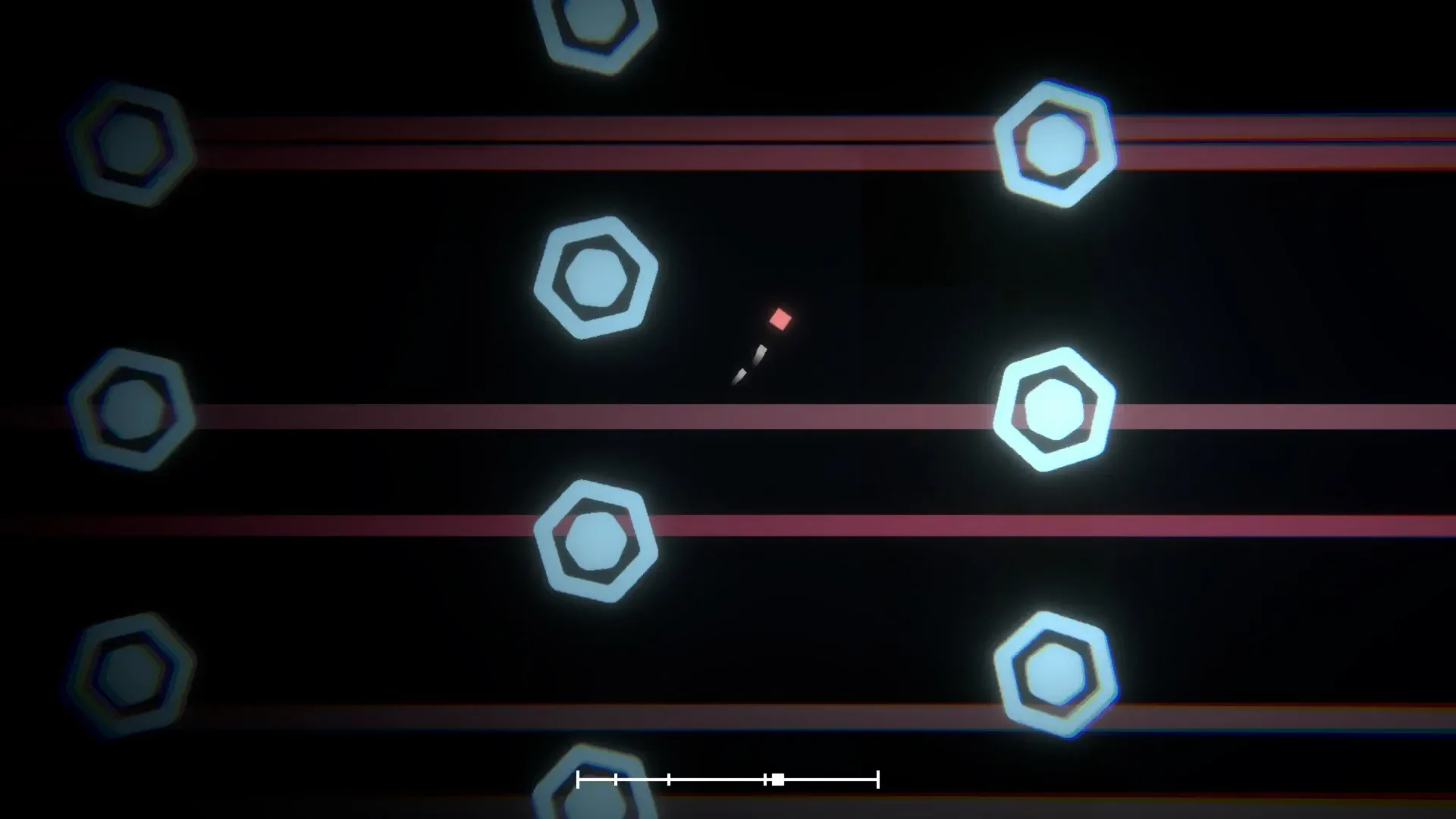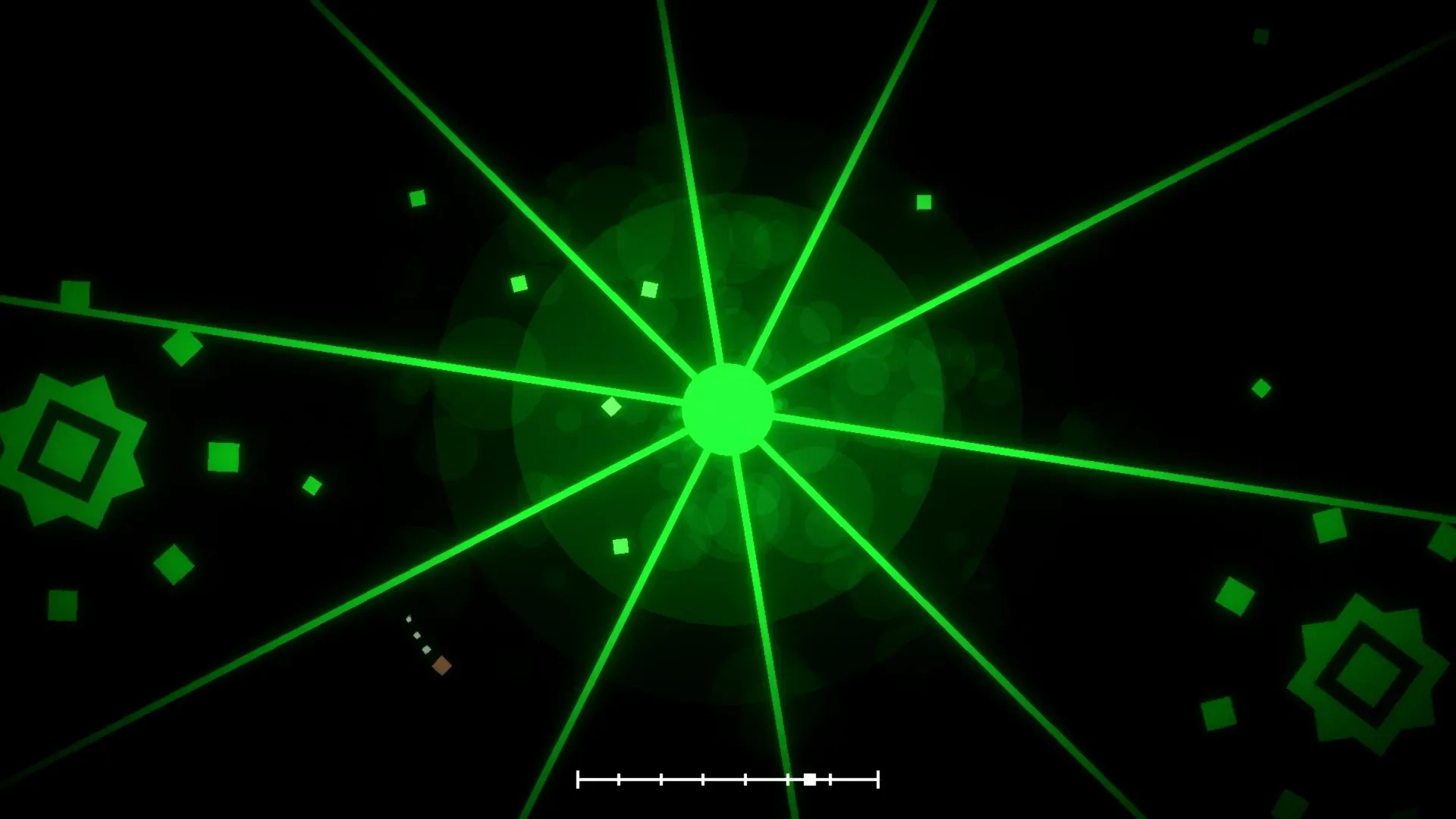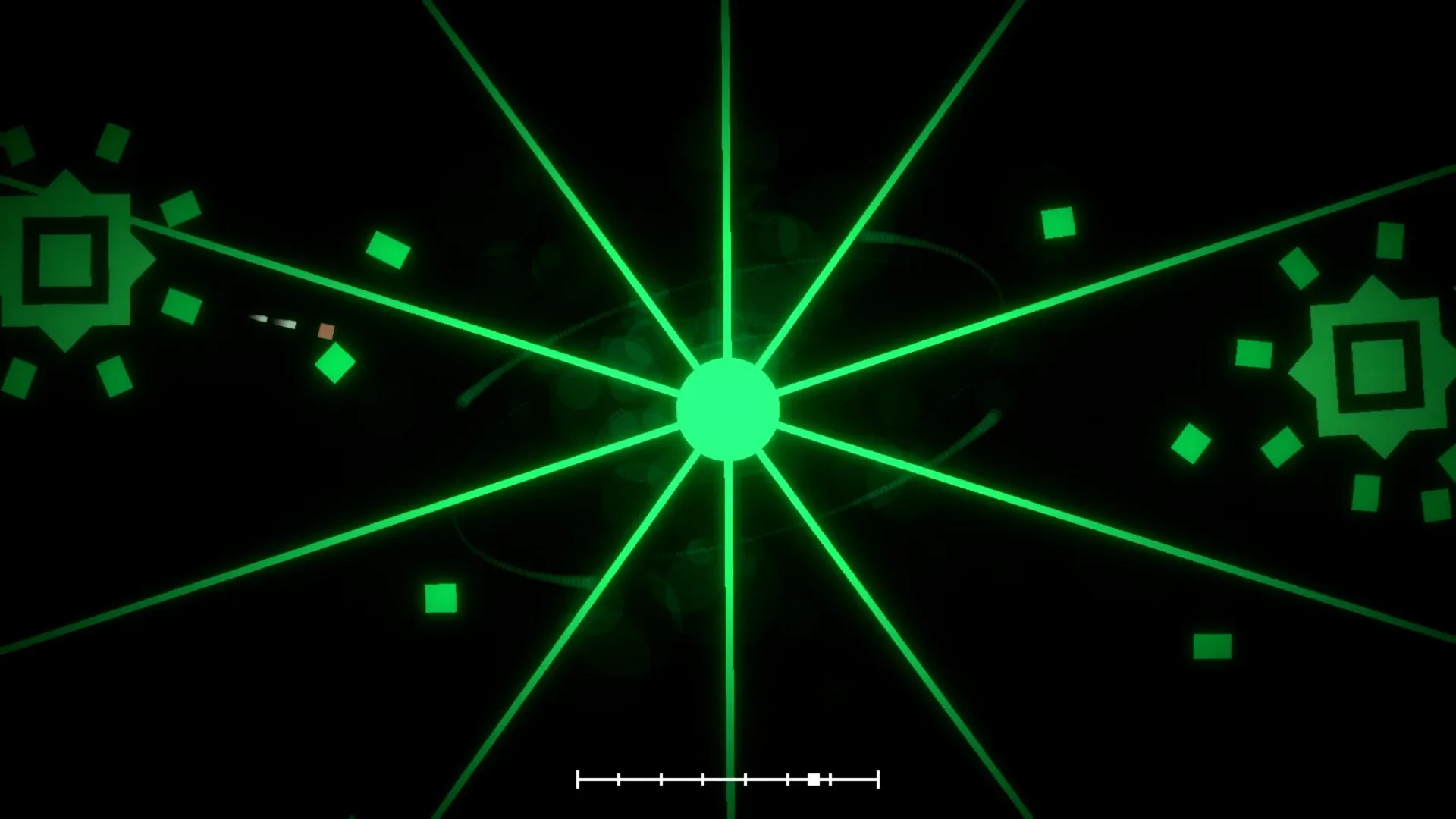
Afterbeat 1.0 is now available on PC through Steam, taking the rhythm-led bullet-hell game formerly known as Project Arrhythmia out of Early Access. The full release is framed around two major parts of the game: a rebuilt structured campaign for players who want an authored route through its beat-synchronised hazards, and expanded tools for the community that has already made thousands of custom stages.
The PC launch is priced at £13.75, $14.99 or €15.49, with a 25% discount during its first week. It follows an Early Access run that began in 2019. On Steam, the game currently carries an “Overwhelmingly Positive” user rating.
A bullet hell where the rhythm is part of the danger
Afterbeat combines bullet-hell action with rhythm-driven level design. In a bullet hell, the central challenge is usually surviving dense and carefully patterned waves of projectiles or hazards rather than simply overpowering enemies. Safe spaces can be small, fleeting and deliberately positioned to demand precise movement.
Here, those patterns are tied to the music. Levels evolve and hazards move to the beat, meaning the soundtrack is not merely background dressing: it helps establish the cadence of attacks and environmental changes. Players still need the usual spatial awareness associated with the genre, but recognising the pulse may also help make sense of when an obstacle is about to shift, arrive or repeat.
That is an important distinction for anyone approaching the game expecting a conventional action title. Rhythm games are often understood as tests of timed button presses; bullet hell games are more often tests of positioning and reaction. Afterbeat’s premise puts timing and movement in the same system. The result is intended to make musical structure legible as gameplay structure, while leaving room for dense, demanding hazard layouts.
Local co-op supports up to four players. That makes the game a potentially useful fit for players who want a shared, same-screen challenge rather than an online-only experience, although the fundamental pressure of navigating beat-linked hazards remains at the centre of play. The 1.0 update also includes improvements to the multiplayer user interface, aimed at making that portion of the experience clearer to use.
What the 1.0 Story Mode adds
The headline addition is a fully revised Story Mode. It contains 22 levels, five bosses, new mechanics and new environments, and it supports multiple endings. The campaign is the largest part of the update, providing a defined sequence of levels alongside the game’s more open-ended community content.
Its fiction is set in 207X, where a disease named LMNS has devastated the world. Chiral researcher Anna Schroeder investigates possible cures with HAL, her supercomputer companion. Their work uses a pulse- and rhythm-based interface, tying the narrative’s scientific premise directly to the game’s musical interaction.
Related coverage includes Afterbeat 1.0 Launches on PC With Revamped Story Mode and Level Editor.
Multiple endings suggest that Story Mode is designed to offer more than a single fixed resolution, though no specific conditions for reaching those outcomes have been detailed. Likewise, the new mechanics and environments have been confirmed as part of the revision without a complete breakdown of each addition. Players interested primarily in the campaign should therefore view 1.0 as a substantial refresh rather than simply a version-number change.
For a game that spent years in Early Access, a rebuilt campaign can matter as much as an increase in raw level count. Early Access communities often engage deeply with experimental systems and creator tools, while newcomers may look for a guided starting point that establishes the game’s rules. The addition of improved tutorials is significant in that context: rhythm-based bullet hell can be easy to describe but difficult to internalise until players understand how visual patterns, movement and musical timing are meant to connect.
Level editor and Custom Level hub receive a major expansion
Afterbeat’s other defining feature is its community-driven level ecosystem. More than 2,000 community levels have been uploaded, and the 1.0 launch expands the tools and spaces built around those creations.
The Level Editor has been significantly upgraded with additional creation tools. A level editor is an in-game suite that lets players build stages rather than only play developer-made content. In Afterbeat’s case, that creation work is particularly relevant because a level’s hazards and evolution can be organised around music and rhythm. More tools can give creators greater control over how that relationship is expressed, whether they are working on simple beat cues or more complex sequences of changing obstacles.
The release also redesigns the Custom Level hub, the area used to discover creations made by other players. Discovery is a practical issue in any game with a large user-generated catalogue. A library can grow quickly, but a stronger hub is what helps players move from knowing that content exists to finding a level they actually want to try. The revision is therefore not only about making more stages; it is about making the existing body of community work easier to browse.
Local file importing for custom levels has also been added. In practical terms, this gives creators and players another route for using custom material from local storage, alongside the game’s community-facing systems. The announcement does not specify file formats or the exact workflow, so prospective creators should avoid assuming more than the feature explicitly confirms. Still, its arrival broadens the options around sharing and accessing user-made levels.
That emphasis on player creation places Afterbeat in a corner of PC gaming where a launch can be the beginning of a game’s next phase rather than the end of its development story. The revised Story Mode offers an official core, while the editor and custom-level infrastructure aim to support a much wider stream of creations over time.
Languages, onboarding and the practical value of 1.0
Afterbeat has been localised into Spanish, Japanese, Chinese and Russian. Localisation refers to adapting a game for particular languages and regions; it can be especially helpful in a title whose tutorials need to explain an unusual interaction between rhythm and projectile avoidance. The newly improved tutorials and the added language support both lower potential barriers for players joining after the full launch.
The 1.0 update is consequently notable for how its pieces reinforce one another. A revised campaign gives players a formal way into the game. Tutorials can clarify its central rhythm-and-movement ideas. Localisation broadens the audience able to access that guidance. Co-op interface improvements support group sessions, and the editor plus redesigned Custom Level hub serve the community that will continue building around the game after the campaign ends.
Music-focused game design has long found different forms across the medium, from performance-like timing systems to games that turn sound into a navigational clue. For another example of music being treated as something playable rather than merely incidental, Retro Song Bird’s Game Boy cartridge music-library concept takes a very different route. Afterbeat’s approach is instead built around survival, pattern recognition and construction tools.
For players deciding whether the PC release is for them, the clearest draw is the combination of styles: dense bullet-hell-style avoidance, hazards that follow a musical pulse, and a sizeable pool of player-made stages alongside the new 22-level Story Mode. For existing Early Access players, 1.0 brings a substantial campaign overhaul and a more capable set of tools for making and finding custom content.
Afterbeat is available now on Steam for PC, with its 25% launch discount running for the first week after release.