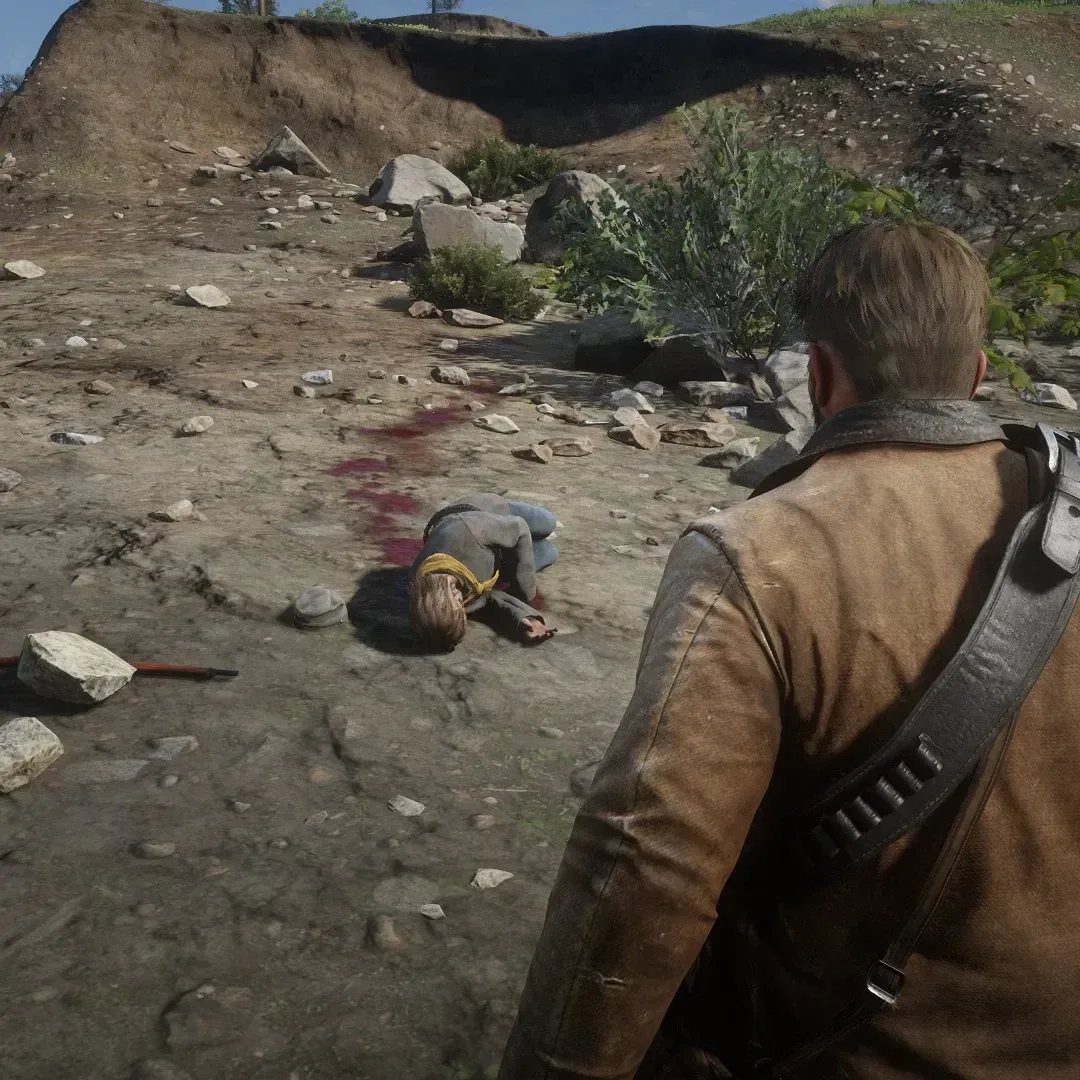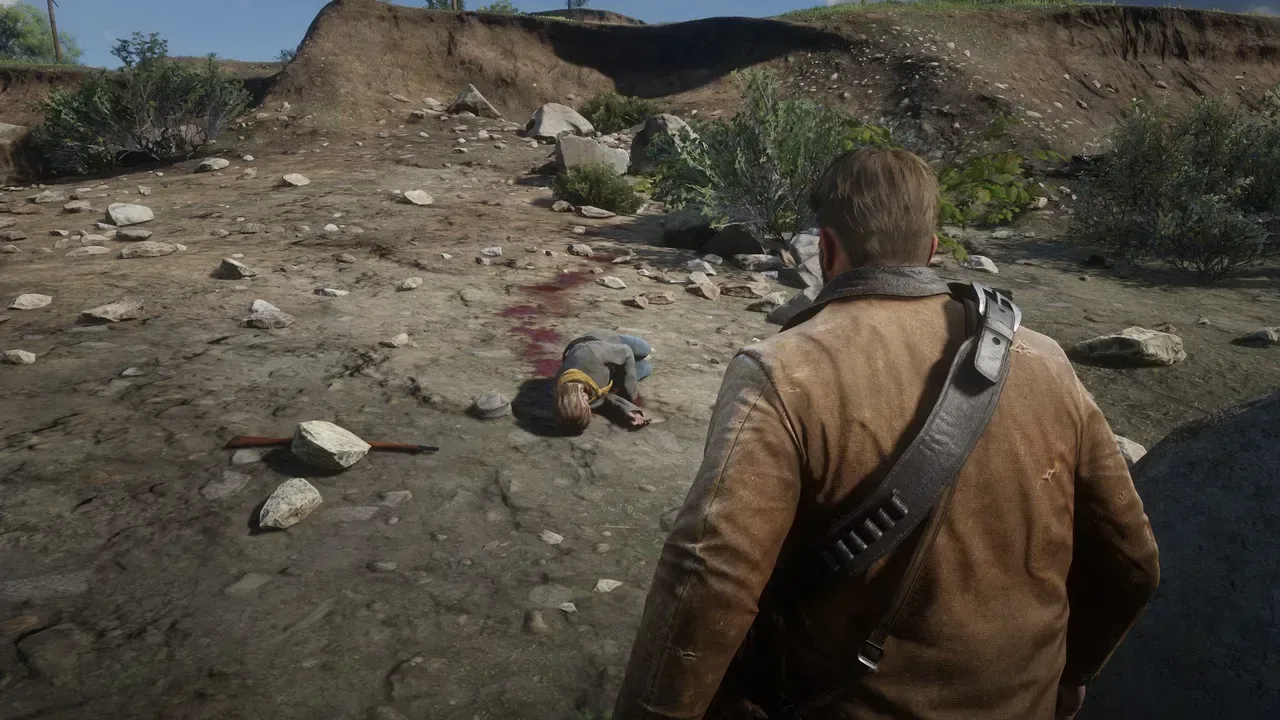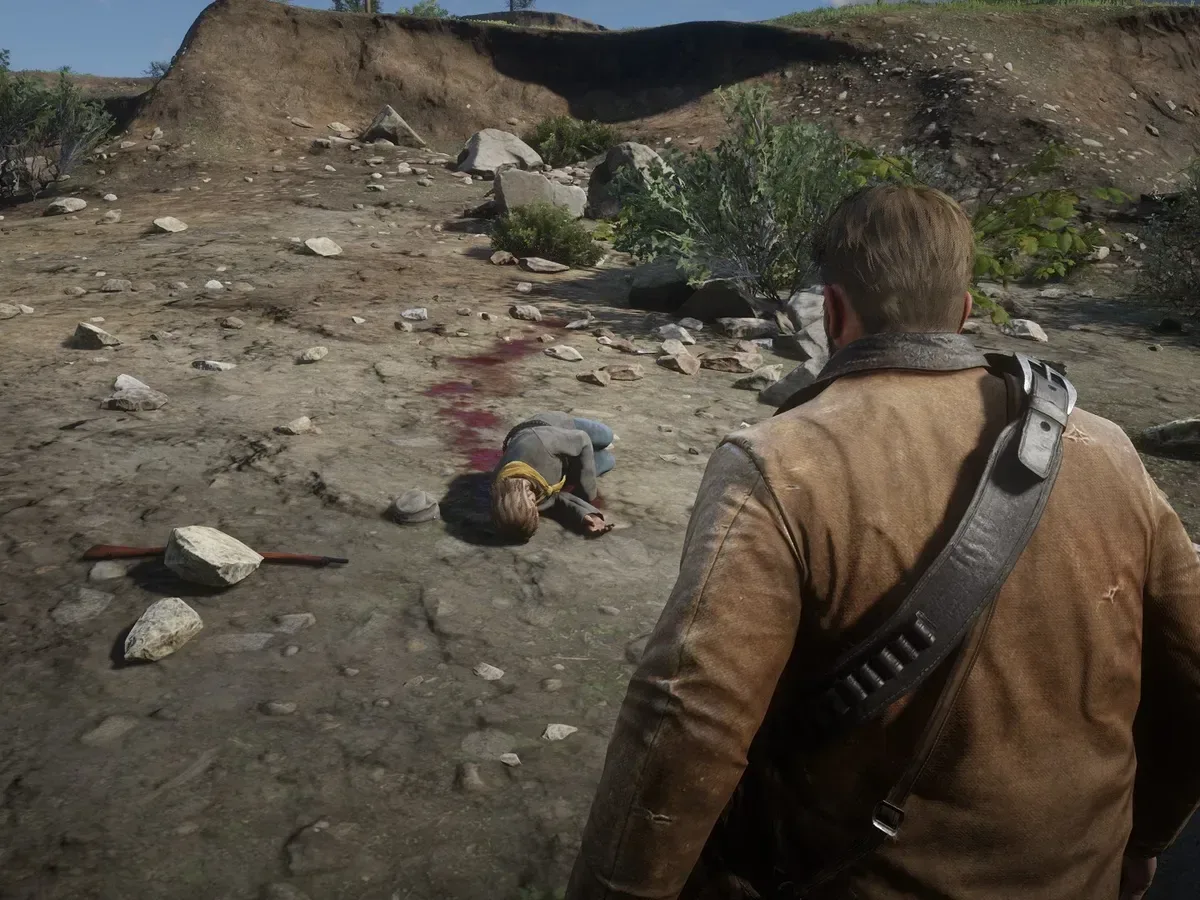
Red Dead Redemption 2’s frontier is built for grudges, and a new PC mod wants those grudges to have names, medical records and occasionally a hunting party. Created by nicklovin99, enRage adds a systemic NPC relationship layer inspired by the rival-making structure popularized by Middle-earth: Shadow of War. Rather than treating hostile characters as interchangeable encounters, the mod assigns identities, allegiances and evolving opinions to people across the world.
The result, at least in concept, is a more personal version of open-world conflict. An enemy may fear Arthur Morgan, like him, or actively want him dead. Members of a group are tracked within their organization, and the consequences of killing one affiliated NPC can flow upward or outward when that person’s place is inherited by a new member. That turns a routine shootout into the beginning of a continuing relationship with a gang rather than the end of a disposable encounter.
enRage is in Early Access through Nexus Mods. Its description includes an AI-transparency notice stating that Claude Code assisted with the creation of its scripts and systems. That wording matters: it describes AI help in developing the mod’s technical logic, not an assertion that the game’s characters are being driven by a live conversational AI model.
What enRage adds to Red Dead Redemption 2
The mod organizes NPCs by gangs, groups and affiliations. The tracked population includes the O’Driscoll Boys, Lemoyne Raiders, U.S. Army, Wapiti people, Bronte Family, Murfree Brood, Skinner Brothers and Van der Linde gang, as well as unaffiliated characters. Players can view this information through new menus designed to expose the relationships normally hidden behind the game’s ordinary combat and mission structure.
Its Hierarchy page is the central ledger. It tracks NPCs and shows their disposition toward Arthur. In a system like this, “hierarchy” is more than a list of faction members: it is a way to preserve continuity after a conflict. If an affiliated character is killed, enRage passes their standing within the group to a replacement. The gang therefore remains a moving structure rather than a checklist of enemies that evaporates after an encounter.
That is the core appeal of a nemesis-style design. A rival is memorable not simply because they are difficult, but because the game connects their present behavior to earlier events. They have a place in a group, a reason to react, and a future that can be altered by the player’s choices. In a game already full of hostile camps and factional tensions, that kind of persistence could make a random roadside fight feel like it has consequences beyond its immediate loot or wanted-level fallout.
Relationships extend beyond Arthur’s immediate fights
enRage also includes a World page that tracks interactions among NPCs. The stated examples are unusually domestic for a Western crime game: characters can adopt stray dogs, recover from alcoholism and begin feuds with one another. The point is not that every event must become a major quest. It is that the population is meant to appear as though it has an existence outside the player’s camera and objectives.
This approach resembles the kind of simulation associated with games such as RimWorld, where personal attributes and relationships can produce unscripted stories. Here, traits including calm, sharp, introverted and drunk are tracked alongside faith or lack of faith and an NPC’s work. The mod uses these factors as part of a broader social model in which clashing outlooks can contribute to gang wars, even if Arthur never arrives to witness their beginning.
That does not mean every generated situation will necessarily be meaningful or balanced. Simulation-heavy systems can produce fascinating stories precisely because they combine variables in unforeseen ways, but their outcomes can also be messy, opaque or tonally strange. The promising part is the attempt to make Red Dead Redemption 2’s existing factions feel less like fixed pools of combatants and more like organizations capable of changing over time.
Injuries, intimidation and information
Another major element is the mod’s X-ray page. It displays NPC skeletons and injuries, with limping and paralysis shown as possible conditions in the mod’s trailer. This is distinct from a simple health bar. A health bar communicates how close an enemy is to defeat; an injury system can communicate what happened to that character and potentially affect what they can do afterward.
The mod also adds an interaction option for enemies who have been injured and held at gunpoint. Arthur can force such a character to share information about another member of their gang. In practical terms, that creates an alternative to ending every confrontation with a kill. An encounter can instead become an intelligence-gathering moment that feeds back into the larger faction network.
There is a useful tension in that design. A player looking for a safer short-term route might eliminate a witness or enemy immediately. A player looking to understand a gang’s structure might keep a wounded opponent alive long enough to interrogate them. The mod’s systems therefore appear intended to make violence carry more than one kind of consequence: it can remove someone from a hierarchy, leave a lasting injury, generate knowledge, or deepen a group’s hostility.
If a gang becomes sufficiently angered, enRage can have it send hunting parties after Arthur. That is a substantial change in the texture of travel. Red Dead Redemption 2’s open world is often deliberately slow, giving players room to ride, hunt and wander between story missions. The prospect of retaliatory pursuers makes those journeys less neutral. A past decision can intrude on a later trip across the map without needing to be attached to a predefined mission marker.
Why the Nemesis comparison fits—and where it should be treated carefully
The comparison to Shadow of War is useful because both ideas center on procedurally sustained rivalries: named opponents, social ranks and reactions to the player’s actions. enRage’s version is adapted to Red Dead Redemption 2’s gangs and period setting rather than duplicating a fantasy army structure. Its emphasis on affiliations, injuries, personal traits and off-screen social events points toward a broader population simulation.
Still, “inspired by” is the more accurate framing than assuming a one-for-one recreation. The available details establish that enRage tracks NPC attitudes, hierarchy changes, group information and wider interactions. They do not establish that every feature or behavioral rule from Shadow of War has been reproduced. Players interested in the mod should read its current documentation and treat trailer footage as an illustration of development work rather than a guarantee of every possible scenario.
That caution is especially worthwhile with Early Access mods. “Early Access” generally means the project is available while still being developed, so systems can change and the current feature set may not represent a final version. The supplied information does not specify compatibility requirements, installation steps, performance impact, save-file behavior or which game updates it supports. Those are practical questions prospective users will need to verify directly before changing a Red Dead Redemption 2 installation.
AI-assisted modding is becoming a bigger part of the discussion
enRage arrives amid a wider burst of AI-connected game modding experiments. Recent projects have used AI-related tools in efforts to bring games into browsers, combine existing games, or construct projects from well-known intellectual property. The reaction has not been uniform: companies have issued DMCA takedowns in some cases, while others have spoken more positively about the possibility of easier access, revived older games and more people taking part in creation.
In this case, the disclosure is comparatively specific. Claude Code assisted with the scripts and systems. A coding assistant can help a creator draft, modify or organize code, but it does not erase the need for a modder to decide what the system should track, how it should interact with a game, and whether its results make sense. The notable creative choice in enRage is the design goal: making consequences travel through an NPC population in a game that already gives its world a strong cinematic identity.
That distinction is useful amid the broad use of the term “AI.” AI-assisted programming, automated porting, generative text, image generation and live character dialogue are different technical and creative practices, with different risks and implications. enRage is presented as an AI-assisted scripting project, and the features described are conventional game-system concepts: faction records, status variables, injury states, relationship changes and event tracking. Its novelty is in the scale and integration of those ideas inside Red Dead Redemption 2.
PC players also sit at the intersection of game mods, operating-system tools and the devices used to manage them. For a separate practical look at PC-adjacent setup considerations, see this guide to what an HDMI port on a Ugreen NAS does. It is unrelated to enRage itself, but it reflects the wider hands-on environment in which enthusiasts tinker with both software and hardware.
The real promise is stories that remember
Red Dead Redemption 2 already places Arthur in a world shaped by competing gangs, institutions and communities. enRage’s ambition is to turn more of that backdrop into an active record of who was hurt, who took a predecessor’s position, who knows whom and who now has reason to pursue the player.
For players who enjoy emergent storytelling, that is the intriguing part—not merely an added menu full of names, but the possibility that a name becomes important because the game’s systems remember an earlier decision. A camp ambush could leave a survivor with an injury. An interrogation could reveal a connection. A faction that has suffered losses could retaliate later on the road. Whether enRage delivers that consistently will depend on its continued development, but its premise is a compelling match for Red Dead Redemption 2’s unusually detailed open world.