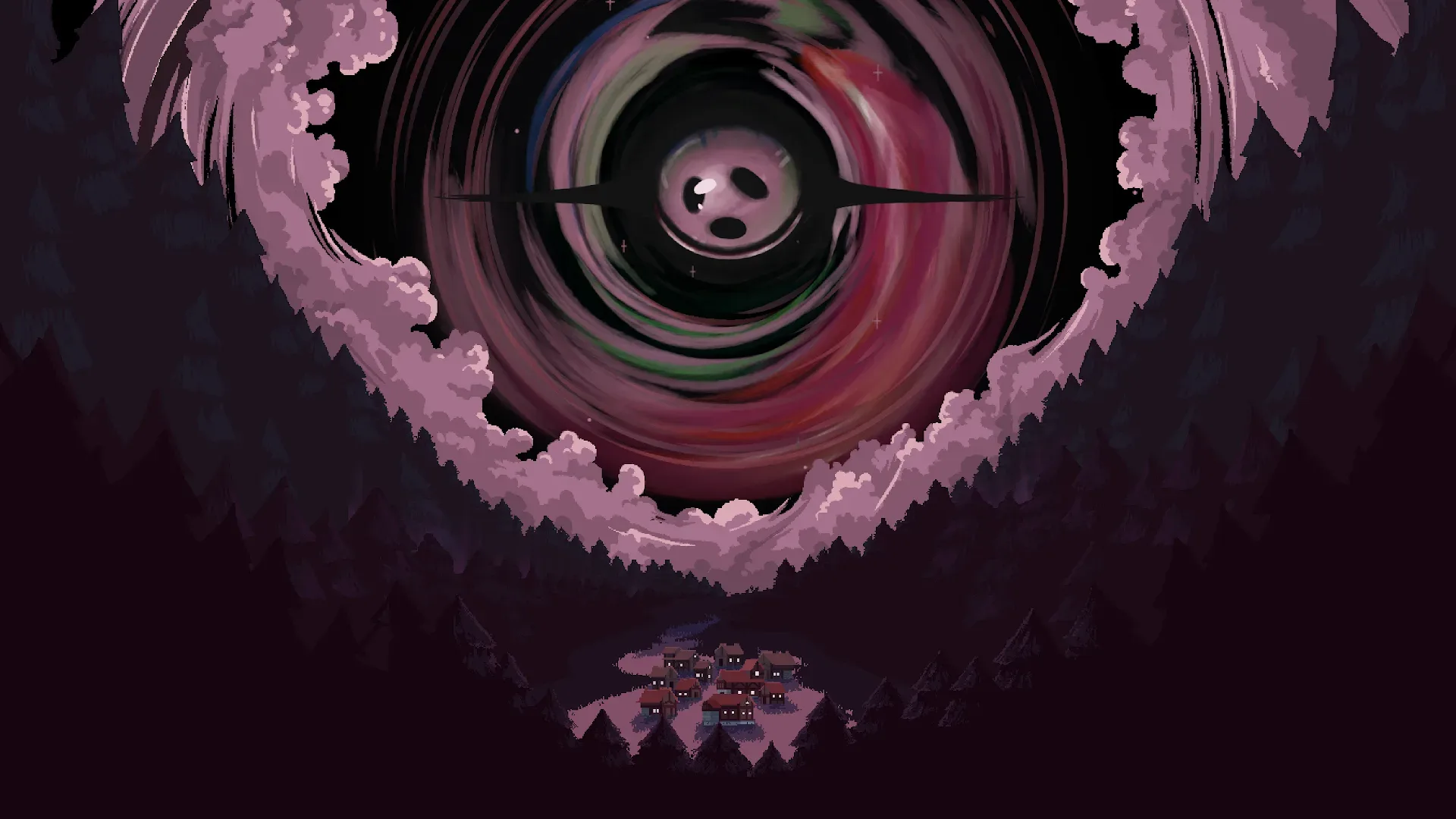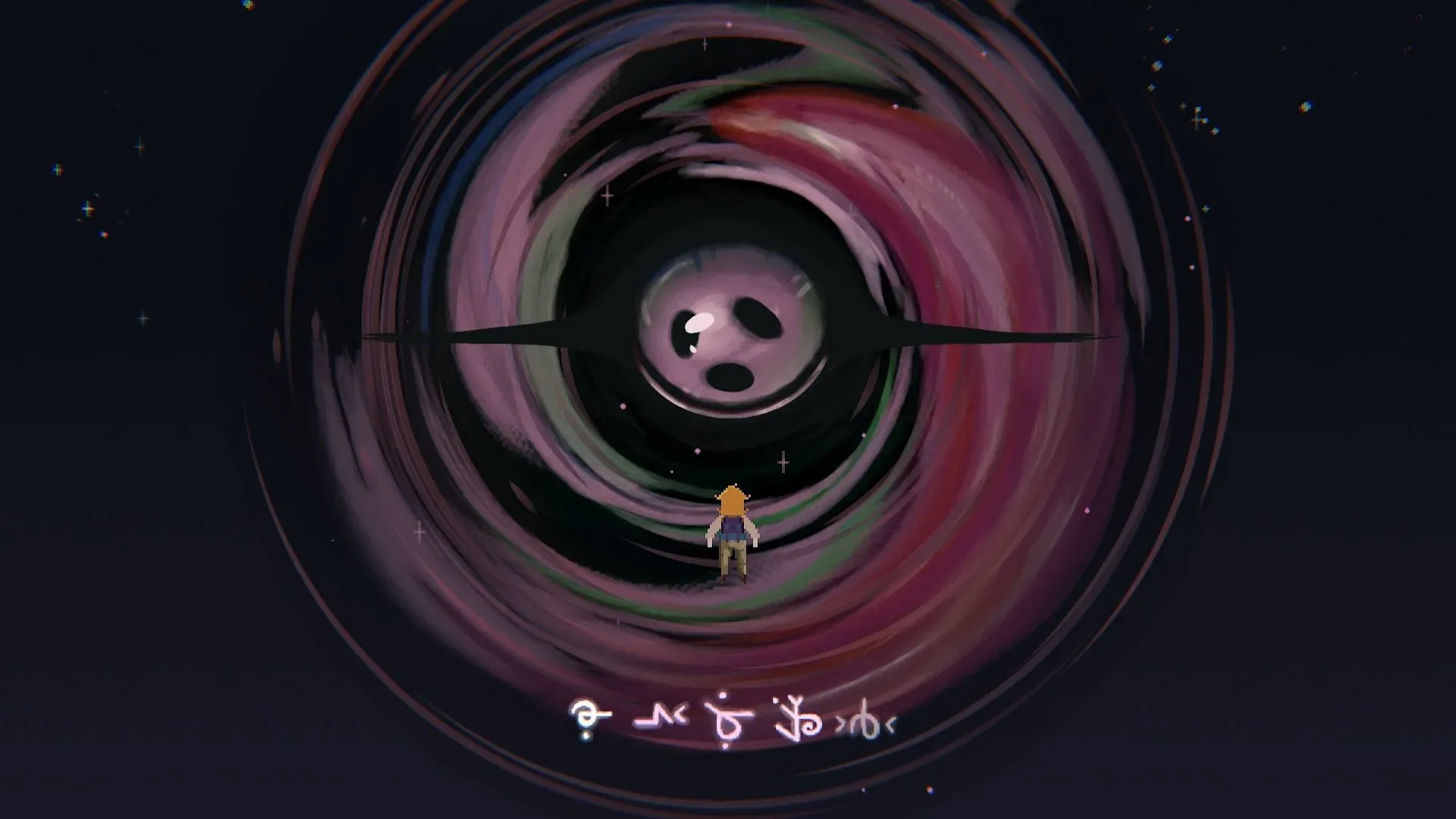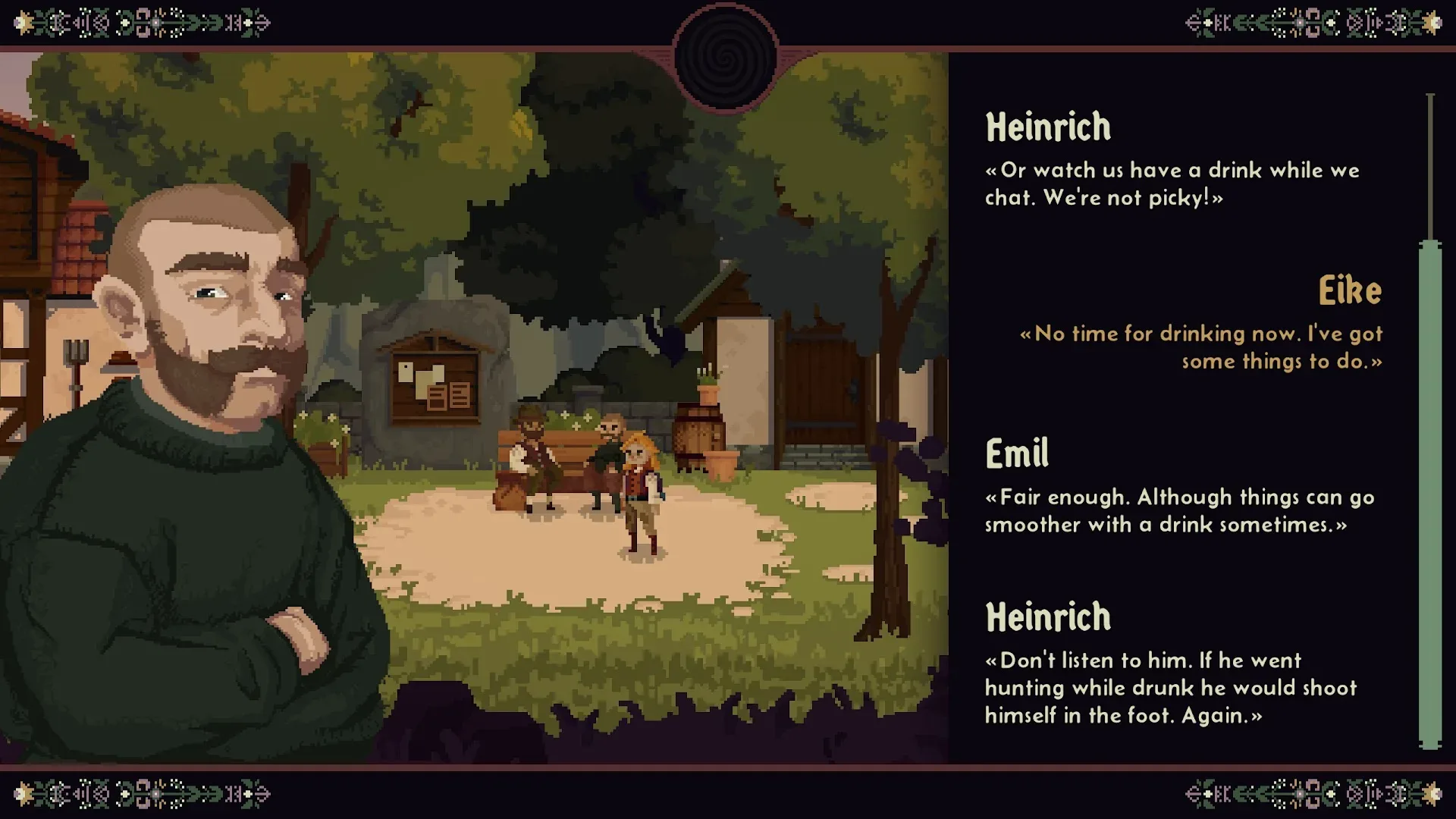
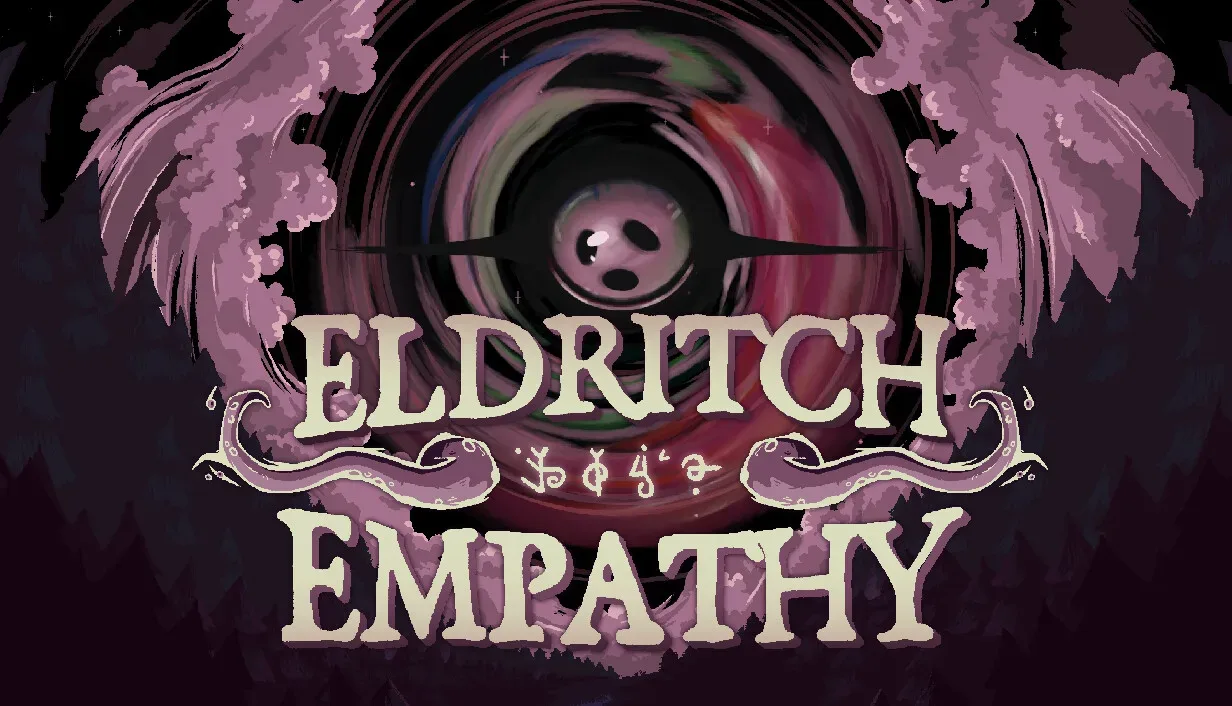
LUAL Games and team17 have announced Eldritch Empathy, a Lovecraftian narrative puzzle game planned for PC in 2027. Its central proposition is notably less about simply defeating strange creatures than understanding them: players will investigate monsters, study their corrupted emotions, solve puzzles and expand a grimoire while a cosmic threat presses in on a village.
That combination gives the game a potentially distinctive tension. The player has research tools, but also limited time and a sanity meter that fades through interactions. They can attempt to purify a creature’s corruption or permanently purge its host. Neither path is presented as a disposable combat choice. The outcomes are intended to have lasting, irreversible effects on the village and the people in it.
A mystery where knowledge is the key resource
The premise begins with the sudden emergence of a monstrous behemoth able to peel back reality’s veil. From there, players investigate otherworldly creatures found across woods, mountains and mines. The stated objective is not merely survival, but to make sense of the threat through observation and research.
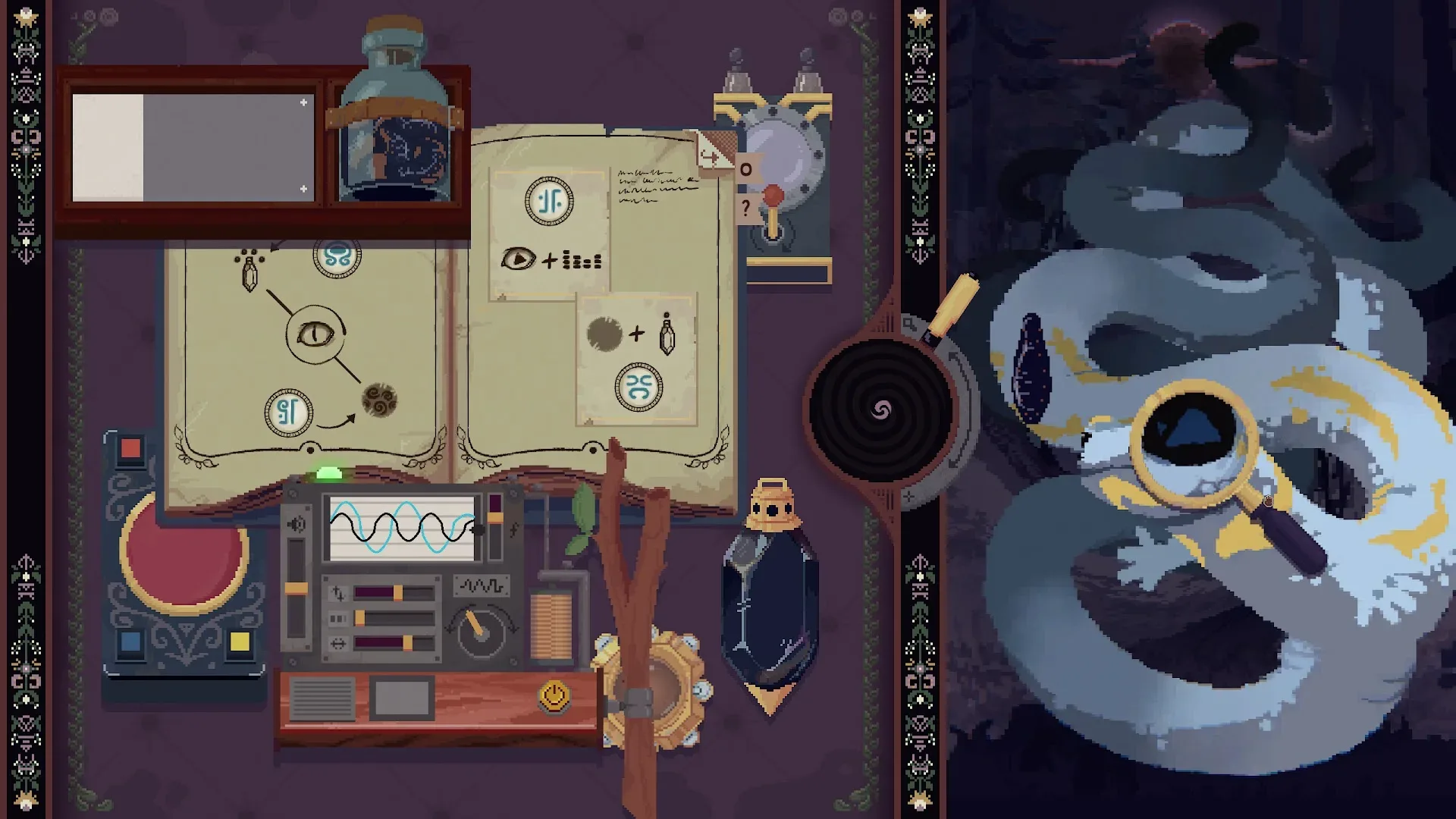
“Identify Emotions” is one of the game’s outlined pillars. In practical terms, that means analysing corrupted creatures with tools and gathered research. The announcement does not detail every puzzle type or research instrument, so it is too early to say how granular that analysis will be. Still, the framing suggests that information is expected to be actionable: discoveries should help players interpret what they encounter and decide how to respond.
The grimoire appears to be the record at the heart of that loop. Traditionally, a grimoire is a book of occult knowledge; here, it is described as something the player updates through investigation. Rather than treating the book as mere flavour text, the game’s structure indicates it will hold knowledge needed to plan more effective attempts. That makes the act of documenting discoveries part of progression, not simply a collectible checklist.
Sanity loss is designed to change the rhythm of a run
Eldritch Empathy uses rogue-like elements, though it should not be assumed to be a conventional action roguelike. The stated design revolves around repeated attempts, mounting knowledge and improving a build, with puzzle-solving and investigation at the forefront.
Its sanity system is the main pressure mechanism described so far. Interactions drain sanity by varying amounts. When that resource reaches zero, the character succumbs to the darkness and wakes again. Crucially, the player retains knowledge and research collected before the collapse.
That persistence is important. In a roguelike structure, a run generally means one attempt through a repeating gameplay cycle. Failure or a reset is not necessarily the end of progress; instead, information, upgrades or unlocked options can make the next run more informed. Eldritch Empathy’s version appears to make research the enduring reward. A failed expedition may still reveal enough about a creature, an emotion or a location to reshape the next plan.
The resulting question for players may be less “Can I clear every encounter right now?” and more “What can I afford to learn before sanity expires?” If the balance supports it, the system could turn curiosity into a calculated risk. Interactions are not free, but avoiding them may leave the player without the understanding needed to make good decisions later.
What “build” may mean here
The announcement says players can gather knowledge and improve their build across attempts, but it does not specify whether a build consists of tools, abilities, research options, character attributes or another system. The safe takeaway is that the game intends for players to prepare differently as they accumulate insight. More details will be needed before the progression model can be evaluated.
That ambiguity is worth keeping in mind because “rogue-like” can describe a broad range of structures. In Eldritch Empathy’s case, the announced features point to a narrative investigation game with repeat-run planning, rather than offering enough evidence to define its full genre mixture more narrowly.
Purify or purge: empathy is presented as a mechanical choice
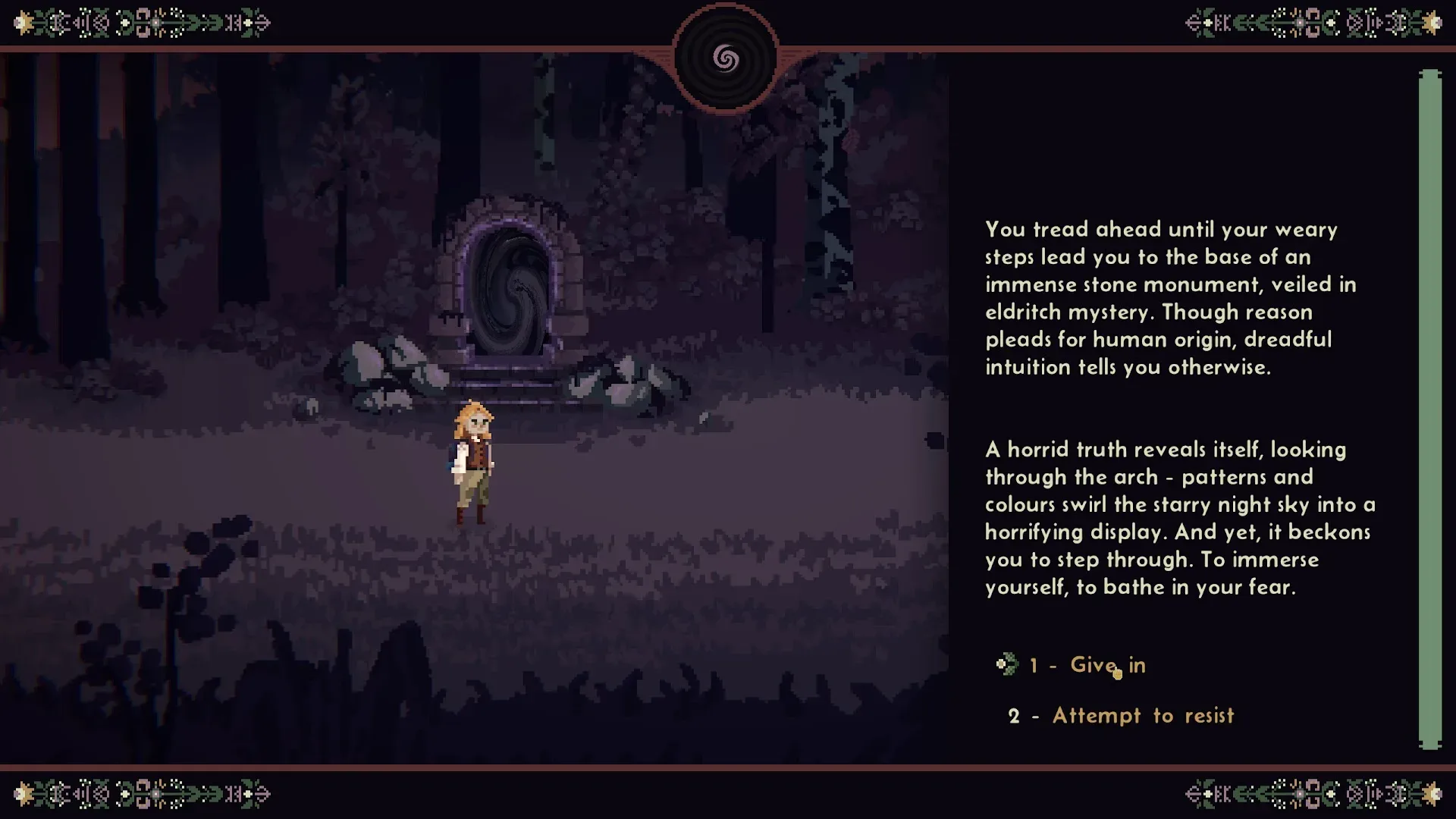
The game’s title is reflected most directly in its treatment of corrupted creatures. Players can choose empathy and attempt purification, or violence and permanently purge the host. The difference is not framed as a cosmetic dialogue branch: the developers say both choices carry consequences that cannot be undone for the village and its community.
Irreversible decisions can give a narrative puzzle game more weight, particularly when the affected people are part of the ongoing play space rather than distant story variables. A purge may solve an immediate problem while removing someone from the community; a purification attempt may ask for a different allocation of time, research or sanity. Those are possibilities suggested by the premise, not confirmed systems, but they illustrate why the design’s moral framing matters.
The strongest version of this concept would make both approaches meaningful rather than treating one as automatically correct. The announcement promises consequences, but has not yet explained how village conditions are tracked, how residents react or whether players can see the long-term effects of individual choices immediately. Those details will be central to whether the empathy-versus-violence idea becomes a lasting source of tension.
A cosmic-horror setup with a village-scale stake
Cosmic horror commonly centers on forces too vast or alien to understand fully. Eldritch Empathy’s behemoth and reality-bending threat fit that broad tone, while its village focus gives the story a more intimate frame. The player is investigating a danger that feels otherworldly, but the announced consequences land on a specific community.
That scale could help distinguish the game’s choices from abstract morality meters. A decision is said to affect the fate of the village, not merely alter a single end-screen value. It also fits the mechanics: each encounter can be approached through observation, research and judgement, while the village provides a continuing reason to care about the accumulated effects.
Players interested in PC games that put unusual structures at the center of their design can also keep an eye on WE’RE ALL IN!, which turns party-game spectating into a strategic bet. The two games are very different in tone and format, but both show how a focused core idea can shape the player’s decisions.
What is confirmed, and what remains unknown
The confirmed details are substantial enough to establish Eldritch Empathy’s direction: it is coming to PC in 2027; it blends narrative puzzles with rogue-like progression; players investigate creatures and corrupted emotions; sanity drains through interactions; knowledge and research carry across attempts; and purification or purging can permanently change the village’s future.
Several practical details remain unannounced. There is no precise release date within 2027, no platform information beyond PC, and no disclosed price. The announcement also does not specify storefronts, controller support, language options, accessibility settings, save structure or the full scope of the game’s locations and creatures. It does not establish whether every consequence can be traced directly to a particular decision, or how much variance there will be between separate playthroughs.
For now, Eldritch Empathy’s appeal rests on a clear but demanding pitch: investigate the unknowable with tools and careful observation, spend sanity to gain understanding, and accept that solving one horror may reshape the lives around it. LUAL Games and team17 have set the game’s PC launch window for 2027, with more still to be revealed before then.