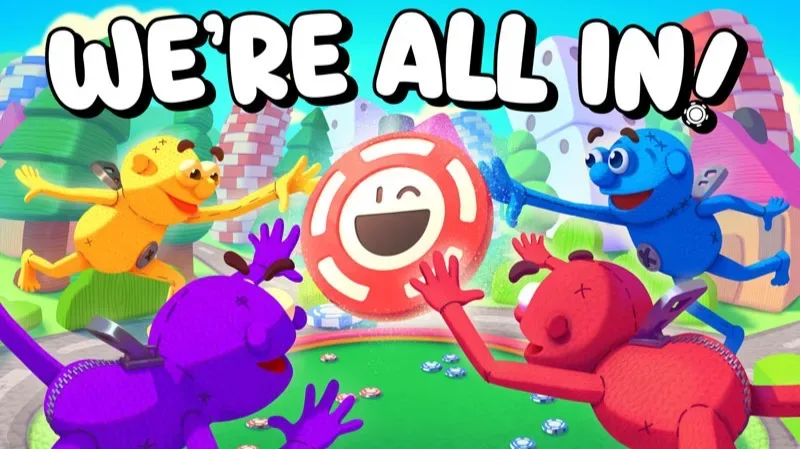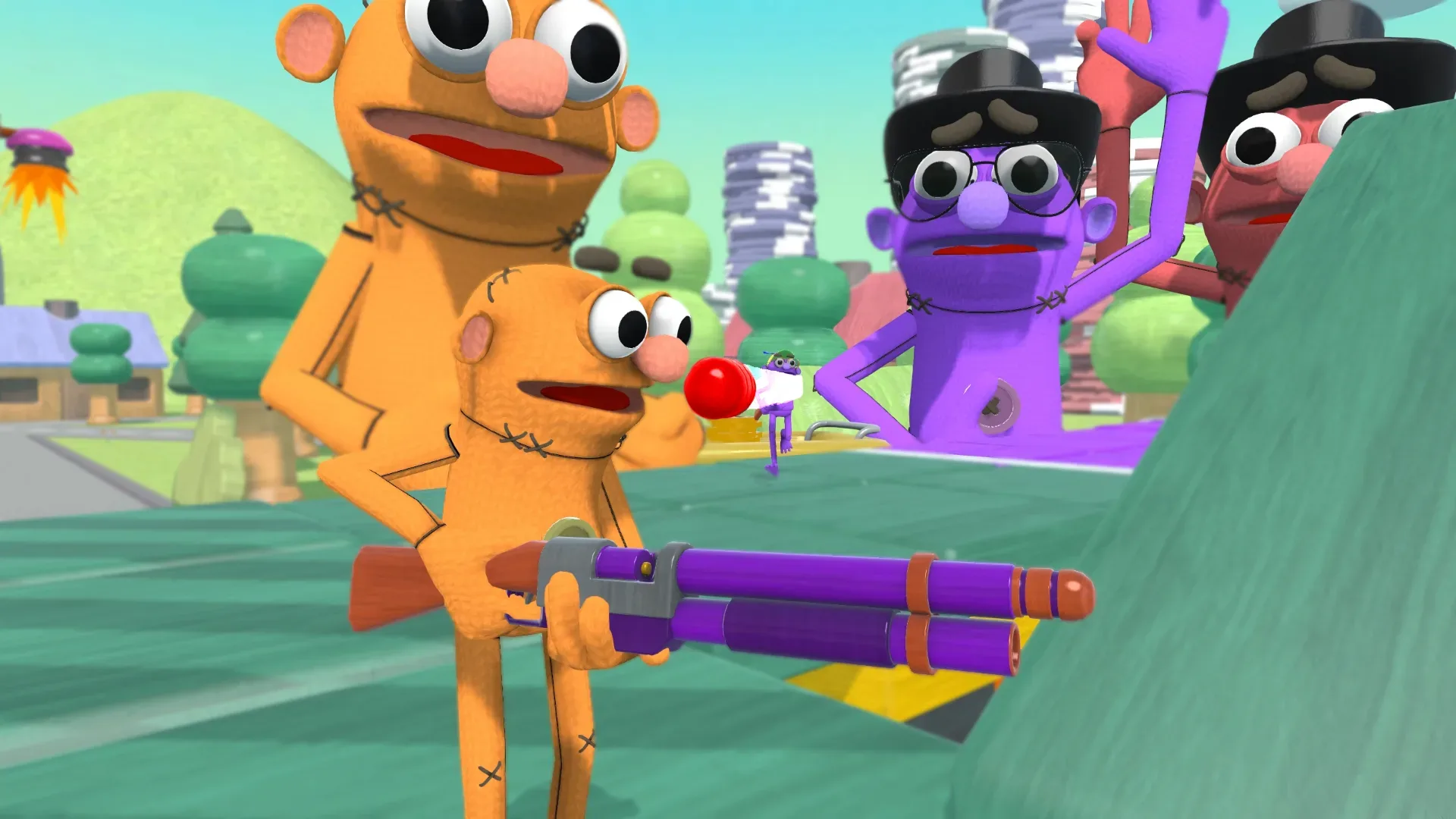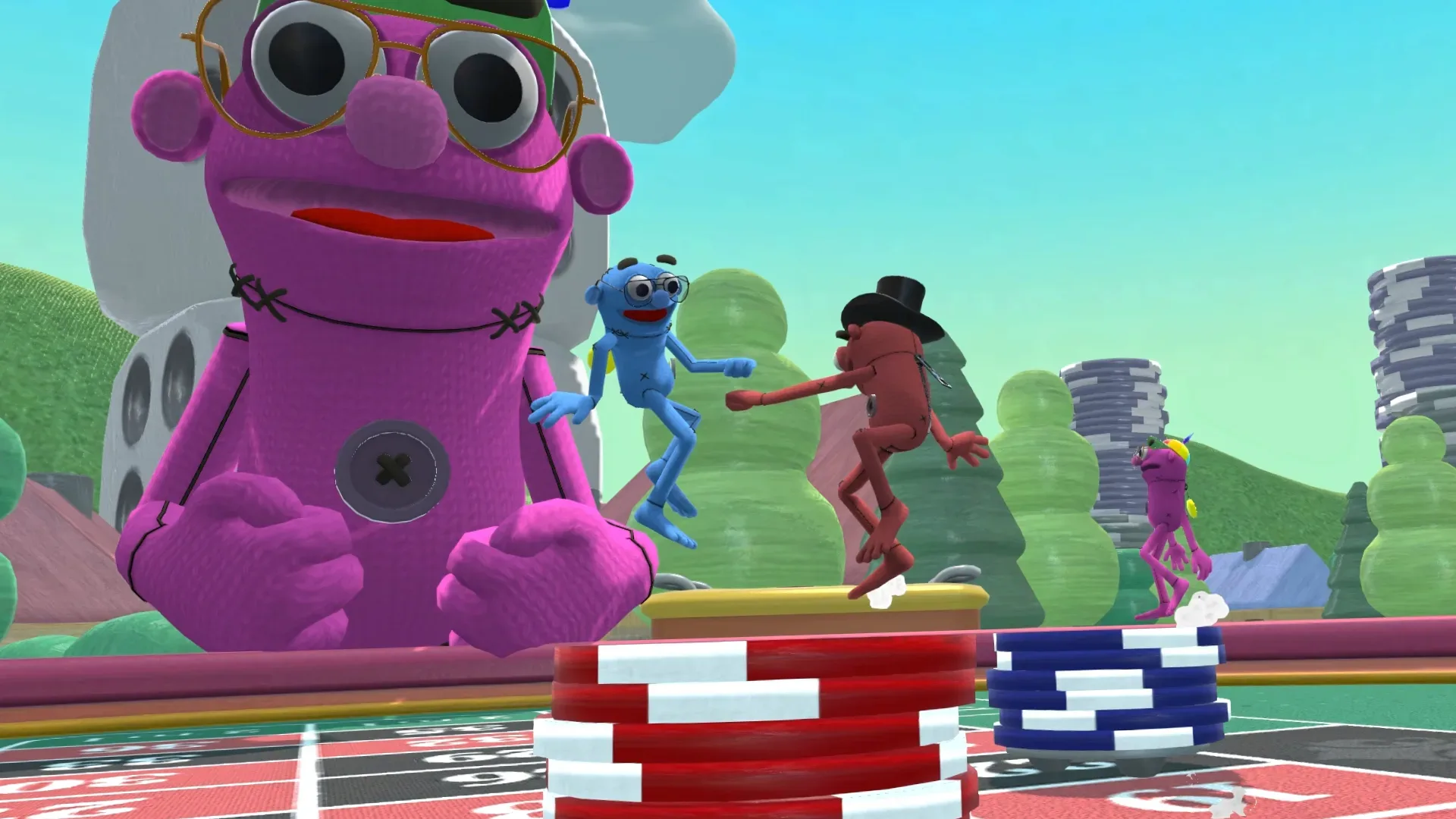
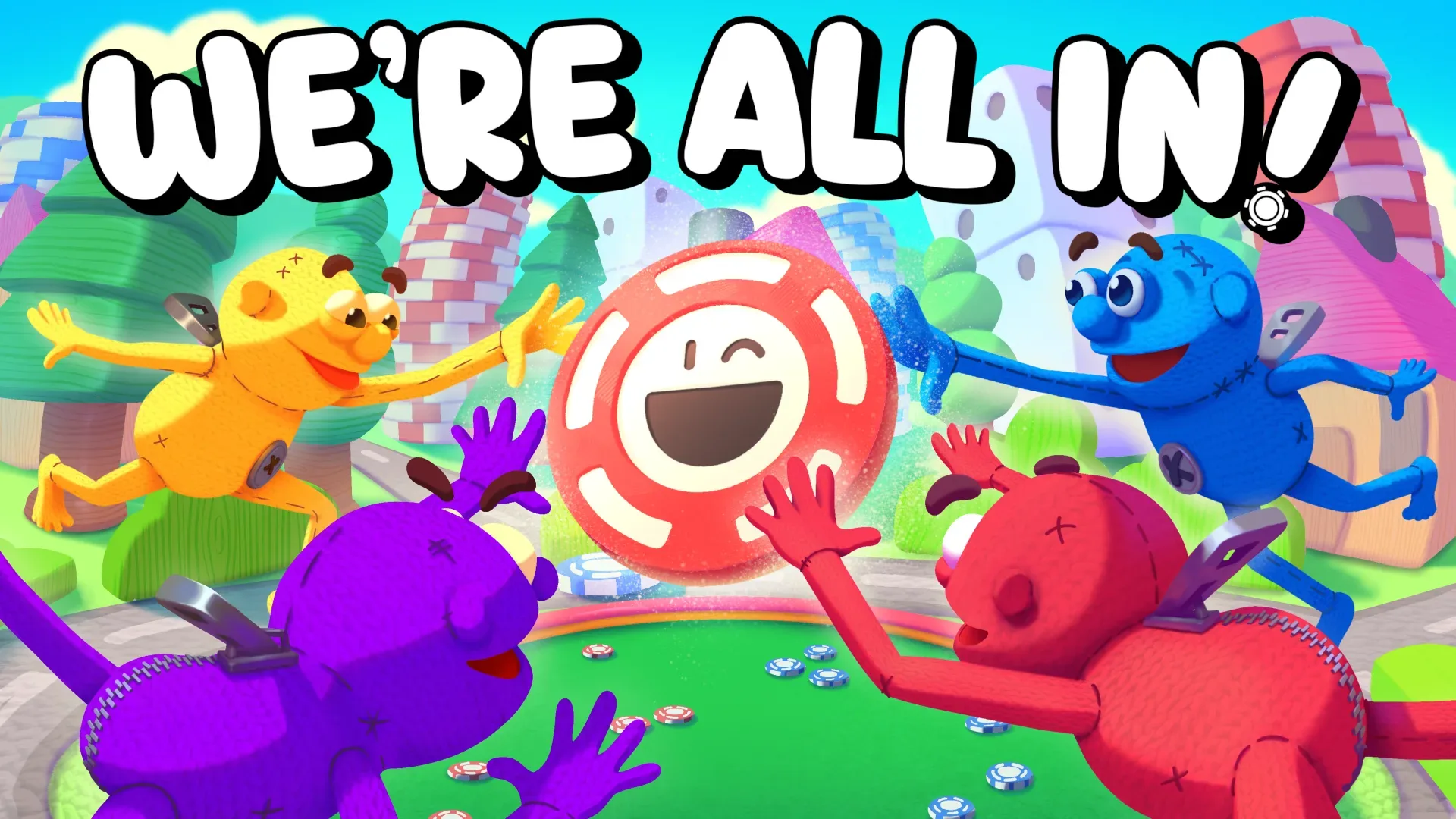
WE’RE ALL IN! has launched on Steam for PC, bringing a social twist to the familiar mini-game party format: not every player has to be in the action to have something meaningful to do. Black Lantern Collective and Blast Furnace Games’ new game supports online sessions for one to eight players, built around competing in rapid contests while the rest of the group can choose whom they expect to win and place wagers using fictional in-game currency.
The central idea is straightforward but has potentially significant consequences for a party session’s social dynamic. Before a round begins, players pick a contestant and wager on that contestant’s likelihood of winning. Chips can turn into stars, and the eventual winner is the player who finishes a session with the greatest combination of stars and cash. The game’s wagers use pretend currency only; there is no indication of real-money gambling.
That makes WE’RE ALL IN! less about simply being the best at every individual challenge and more about reading the room. A player who knows they are inconsistent at a particular activity may still profit by recognizing which friend excels at it. Conversely, the person who dominates a mini-game may become a highly visible choice for everyone else at the table. Success is therefore presented as a blend of performance, luck, and prediction.
A party game where the sidelines still matter
Many competitive party games face the same logistical issue: when a round only accommodates a few active participants, the people waiting for their turn can become passive observers. WE’RE ALL IN! explicitly tries to give that audience a stake in the result. Players who are not competing can wager on a contestant, move around the table to watch the match from different angles, and heckle the people in the round.
In practical terms, betting creates a reason to pay attention to a match even when someone else is holding the controller—or, in this case, taking the active role online. A close obstacle race does not only determine who wins the event; it can also determine whether a prediction pays off. That extra layer could make one-on-one contests more useful in a larger session, since everyone else still has a decision to make before the winner is known.
“Spectating” here should not be confused with the passive viewing modes commonly seen in esports or multiplayer shooters. It is a game mechanic tied directly to the session’s economy. The wagering player is trying to judge skill, assess a matchup, and account for the uncertainty of the mini-game. The game also makes room for the less formal part of a couch-party atmosphere: moving around to find a preferred viewpoint and loudly backing—or undermining—a chosen competitor.
Dozens of events, from paint battles to moving-goal soccer
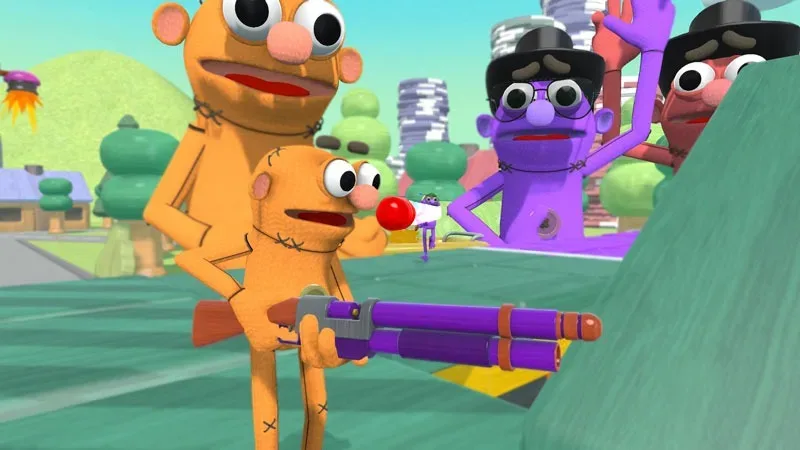
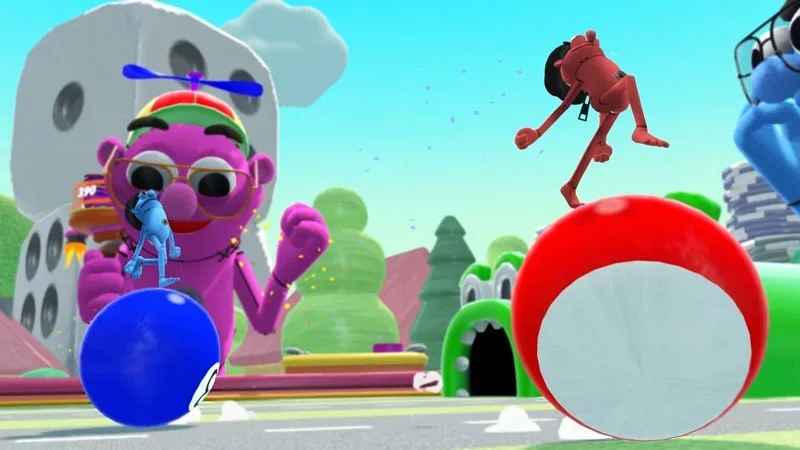
WE’RE ALL IN! includes dozens of mini-games across one-versus-one, free-for-all, and team formats. The listed activities cover a deliberately broad set of skills and outcomes, including Paint Tiles in a one-on-one format, free-for-all grenade-launcher battles, soccer with moving goalposts, laser-dodging challenges, obstacle-course races, coin tosses, and button-mashing contests.
That lineup suggests the prediction system is meant to operate across very different kinds of uncertainty. A button-mashing event may favor a friend with quick inputs or endurance. A race could reward route execution and recovery after a mistake. A coin toss, on the other hand, foregrounds chance. The game describes its overall formula as a mix of skill and luck, and that variety matters because it prevents the act of wagering from being reduced to always picking the same mechanically gifted player.
Related coverage includes WE’RE ALL IN! Launches on Steam With Mini-Game Betting for Up to Eight Players.
The moving-goalposts soccer example is especially useful as a description of the game’s approach. A normal sports-style contest asks players to react to opponents and the ball; shifting the goals adds another changing condition. For bettors, that creates an extra unknown. For competitors, it means a lead may not stay safe merely because someone has the stronger fundamentals. Likewise, laser-dodging and obstacle courses emphasize immediate movement and survival, while grenade-launcher free-for-alls can introduce the chaos of several contestants pursuing different targets at once.
Players can also shove opponents during rounds. That mechanic is small on paper, but it changes how an event can play out. A race or positioning-based challenge may not be strictly about executing an ideal route if another player can physically interrupt it. It is another source of volatility for those placing bets: past performance is valuable information, but it is not a guarantee when direct interference is allowed.
Why prediction can change who wins the whole session
The game’s scoring structure makes individual mini-game victories only one part of a larger contest. Chips earn stars, while the final result considers both stars and cash. As a result, a player’s broader decision-making may matter even if they are not the strongest direct competitor in every event.
There are two distinct questions players will need to consider before a wager: who is most likely to win, and how much uncertainty belongs in this particular game. The first is a judgment about opponents. The second is an assessment of the event itself. A player who reliably excels in Paint Tiles may be an easy choice in a head-to-head match, whereas a coin toss should be understood as chance-led rather than a test of a friend’s recurring strength.
This is analysis of the announced design rather than a claim about a tested optimal strategy, but it points to the intended appeal: a session can reward attention and social knowledge. Learning that one participant thrives under pressure, struggles with button mashing, or gets rattled in a free-for-all could be as useful as mastering a challenge personally. The format encourages players to build informal scouting reports on one another as a night goes on.
That can also create a playful tension around reputation. Dominant players could draw wagers whenever they enter a familiar kind of event, while players who are overlooked may have an opportunity to surprise the table. The outcome of a single round is important, but the shifting perception of each participant may be just as central to the game’s party-game appeal.
Lobby control, cosmetics, and the social setup
Beyond the mini-games themselves, WE’RE ALL IN! offers highly customizable lobbies and unlockable cosmetics. The supplied details do not specify every lobby option or how cosmetics are earned, so prospective players should not assume a particular ruleset, progression path, or cosmetic catalogue beyond those broad features. Still, lobby customization is a relevant promise for a game designed around groups: different circles may prefer more controlled team contests, chaotic free-for-alls, or a mix of formats.
Its eight-player ceiling also puts the game in a practical sweet spot for online groups that want a party activity without a huge roster. Sessions can be played from one to eight participants, so the concept is not restricted to a full room. Naturally, the group-reading and heckling elements will have more potential personalities to work with as the player count rises, but the stated range allows smaller gatherings too.
For groups seeking a digital alternative to a shared tabletop night, the appeal lies in that combination of competition and commentary. The best board games often give people something to discuss even outside their own turn, a quality explored in this look at beginner-friendly board games for group gatherings. WE’RE ALL IN! applies a related principle to online mini-games: the person not currently competing is still making a call, tracking a stake, and watching for a payoff.
Release details and supported languages
WE’RE ALL IN! released on Steam on November 20, 2026, and is available for PC. Its listed price is US $7.99, UK £6.49, and EU €7,79.
The game supports English, French, Italian, German, Spanish, Japanese, Korean, Polish, Portuguese, Russian, Chinese, Turkish, and Ukrainian. That language list gives the online party game a broad stated localization footprint, though the available information does not break down whether every element—such as interface text, audio, or additional features—is localized in the same way.
At its core, WE’RE ALL IN! is pitching a simple social bargain: compete when called upon, predict when watching, and keep an eye on everybody’s habits. With dozens of events spanning direct skill challenges and luck-driven outcomes, a win may come from crossing the finish line first—or from correctly deciding who will do it.