A new seven-day key-request lineup puts 27 games in front of press profiles, heavily weighted toward PC but with several notable console entries across PlayStation 5, Xbox, Nintendo Switch and Nintendo Switch 2. The mix is unusually broad: cosmic-horror decision-making, tidy-up simulation, tactical shooting, turn-based supernatural westerns, railway building, parkour, visual novels, incremental games and a handful of projects that are gleefully difficult to summarize without sounding like someone shook a genre-tag jar.
That breadth matters because this is a visibility and key-request list rather than a conventional release calendar. A title appearing here means it has become available for request through a profile-tailored system; it does not, by itself, establish a release date, price, review score or universal platform availability. For players, the useful takeaway is not that every game has suddenly launched, but that there is a substantial batch worth tracking—particularly for those looking beyond the same handful of marquee genres.
PC accounts for the overwhelming majority of the lineup. Console players are not entirely left at the loading screen, however: Station to Station is listed for PS5 and Nintendo Switch 2; Hard West 2 for Xbox and PS5; Zero Hour and The Falconeer: Revolution Remaster for Xbox, PS5 and PC; and Rooftops & Alleys: The Parkour Game for Xbox, PS5, PC, Nintendo Switch 2 and Nintendo Switch.
Cosmic dread, tactical choices and games that turn the player into the problem
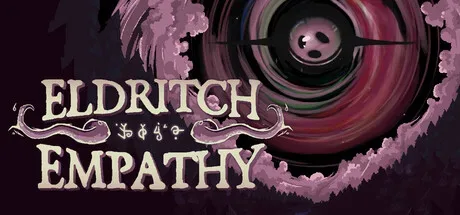
Eldritch Empathy is one of the most distinctive concepts in the PC batch. It is described as a Lovecraftian roguelite built around learning the language of an eldritch behemoth. Players can study cosmic horrors to understand their mysteries, or eliminate them and face the consequences. Its central promise is therefore more complicated than a standard monster-hunting loop: choices are said to influence humanity’s fate.
Roguelite generally describes a game structured around repeatable runs and persistent progression or unlocks, rather than a single uninterrupted campaign. Here, the genre framing suggests that knowledge, decisions and outcomes may be as important to the experience as combat. The language-learning angle also makes the setup unusual. In a field full of cosmic threats designed to be shot, escaped or survived, Eldritch Empathy proposes that comprehension itself may be a tool—with consequences if it is ignored.
At the more overtly martial end of strategy sits Hard West 2, listed for Xbox and PS5. It is a turn-based tactics game in an American West setting where supernatural forces are firmly part of the terrain. Players control a supernatural posse pursuing the mysterious Ghost Train. Turn-based tactics means actions are handled in ordered turns, emphasizing positioning and deliberate decision-making over reflexes. The Ghost Train premise gives its frontier setting a specific objective and a suitably strange adversary.
Zero Hour, available for Xbox, PS5 and PC, approaches tactical tension from a first-person perspective. Its online team-based play is set in fictional locations interpreted in Bangladesh, and its description emphasizes grounded close-quarters combat, real-life scale and resource management. In this context, close-quarters combat refers to confrontations in compact spaces where angles, movement, equipment and limited resources can become decisive. It is a markedly different proposition from an arena shooter: the stated focus is on coordinated, constrained engagements rather than sheer spectacle.
The console-and-PC group also includes The Falconeer: Revolution Remaster. Players take the role of the Falconeer, an airborne warrior navigating an oceanic world shaped by poisonous decisions and dissent. Multiple campaigns examine different perspectives and loyalties while pointing toward the mystery of the Ursee. The description makes clear that this is not merely a flight premise; the multi-campaign structure is intended to show a divided world through more than one vantage point.
Movement is the mission in Rooftops & Alleys and Rogue Climber
Rooftops & Alleys: The Parkour Game has the widest listed platform coverage in the group: Xbox, PS5, PC, Nintendo Switch 2 and Nintendo Switch. It offers large maps designed for parkour exploration, either alone or with friends, alongside time trials, trick challenges and multiplayer modes including TAG, Capture The Flag and Trick Battles.
Parkour is movement through an environment using techniques such as running, jumping and traversing obstacles, and its appeal in games often rests on how naturally the player can connect those motions. The listed activities suggest both self-directed map exploration and more structured competition. Time trials put the emphasis on route efficiency; trick challenges point to expressive movement; and the multiplayer modes give those skills a direct social use. For a broader overview of this PC-and-console selection, see this rundown of the 27-game batch.
PC-only Rogue Climber narrows the movement fantasy into a short-time-limit climbing action game. The stated challenge is to manage equipment, refine builds and platform through traps and enemies in pursuit of a higher climb. A build is the combination of tools, abilities or upgrades that shapes how a player approaches a run. Pairing build choices with platforming means advancement is not presented as purely a test of jumping precision; preparation and equipment management are part of the ascent.
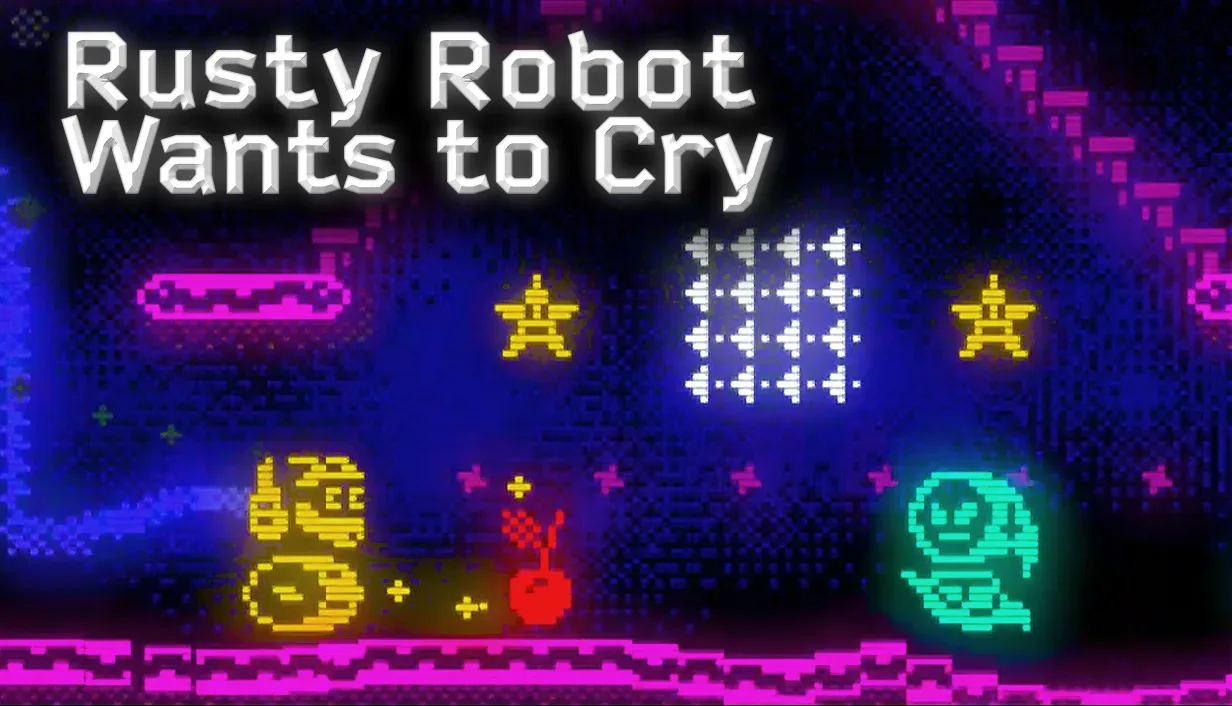
Also reaching back toward arcade logic is Rusty Robot Wants to Cry, a PC platformer described as a retro-arcade remix. It combines ideas associated with Arkanoid, Xonix, Digger and Snake, then frames its immediate goal simply: get the key and reach the door. That direct objective is a useful counterweight to its multi-reference design. The game’s pitch points to recognizable arcade-style building blocks reworked into a platformer rather than a recreation of any one older game.
Relaxing systems, cleaning jobs and handmade fish
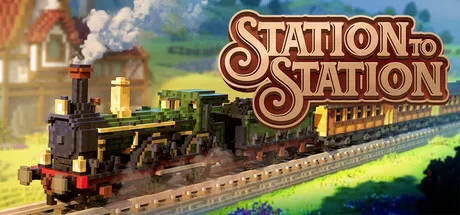
Not every entry wants to overwhelm players with hostile worlds. Station to Station, coming to PS5 and Nintendo Switch 2, is a minimalist railway-connection builder in a voxel-art world. Voxel art uses small three-dimensional units, often producing a deliberately block-like visual style. The game’s emphasis on relaxation and connections positions it as a compact construction puzzle rather than a railroad-management simulation defined by industrial detail.
Love Locks takes an even more unexpected route to relaxation. This PC cleanup simulation asks players to remove 100,000 love locks, solo or near friends, from the Seine. Keys can be fished out with a magnet, while tools range from lockpicks to lasers; the removed symbols of romance become scrap metal. Its premise is knowingly absurd, but the core loop is legible: clear a massive accumulation, improve the tools available and keep making progress. The inclusion of proximity with friends makes it sound built for a companionable rather than competitive cleanup session.
Drawquarium is another PC game with a cozy creative hook. Players draw their own fish, build an aquarium, feed and raise the fish, and collect golden scales to unlock decorations. It can also be used as animated desktop wallpaper. That optional wallpaper feature separates it from a self-contained aquarium-builder: the player’s fish can become an ambient part of their desktop rather than staying solely inside the game window.
Asteroid Cruncher uses a more destructive version of the same forward-motion appeal. It is a roguelite incremental game where players break asteroids, gather ore, fight aliens and purchase upgrades. Incremental games are structured around repeated actions and escalating improvement, with upgrades increasing the player’s capacity to progress. Combining that model with roguelite framing implies a cycle of runs, resource collection and renewed attempts rather than a one-time linear climb.
Mech Reign also works in the incremental space, but its focus is squad construction. The PC game is an incremental autobattler in which players assemble five mech fighters, devise equipment combinations, conquer an alien planet and become stronger from run to run. In an autobattler, combat proceeds automatically after the player makes strategic setup choices. The meaningful decisions are consequently concentrated in squad composition, equipment pairing and long-term improvement rather than real-time button execution.
Horror takes several sharply different forms
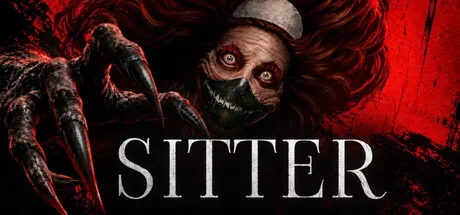
Sitter is a PC first-person detective thriller starring Ethan Sanders, who investigates his grandmother’s murder after her caregiver disappears. It is described as taking roughly 1.5 hours for an initial playthrough and having three endings. That scope makes it a focused mystery rather than an indefinitely sprawling detective game. The alternate endings establish that the investigation’s outcome can vary, though no detail has been provided about the choices or conditions that lead to each result.
PC game Matryoshka turns observation into a horror mechanic. Cursed entities have found their way into Matryoshka dolls, and players must inspect them carefully, then burn and seal the cursed dolls. The tension comes from the penalty on both sides: overlooking a curse has consequences, but burning an innocent doll does too. As a spot-the-difference puzzle, it asks players to identify meaningful visual discrepancies; its horror framing turns uncertainty and close inspection into the main threat.
Draw Death takes a much more overtly aggressive approach. This macabre gothic storybook survivor has players draw a route through hordes, master drawn shapes, time combos and develop ten unusual hunters into powerful crowd-clearing characters. The orchestral score is part of the stated presentation. Its “survivor” label indicates a survival-focused action structure, while the drawing-based path mechanic distinguishes it from a game based only on aiming or melee attacks.
Then there is scopecreep, a short active incremental game about a whispering flame hungry for souls. Players fight spirits, collect essences and feed a hunger that may never be satisfied. “Active incremental” signals that the game expects direct player input as part of its progression loop, instead of relying exclusively on passive accumulation. The premise supplies a deliberately ominous motivation for resource gathering: every essence is fuel for something that wants more.
Fleshbag is the strangest and most explicitly physical sandbox in the list. Its voxel-built character has anatomically correct organs and feels whatever the player does to him. A physics sandbox gives players room to experiment with interactions rather than directing them through a fixed sequence of missions. The description should be enough for prospective players to set expectations: its interest lies in bodily simulation and experimentation, not a conventional hero’s journey.
Stories, open worlds and unusual roles
My Funeral Is Sunday is a Japanese-inspired slice-of-life visual novel for PC. A girl invites three friends to her own funeral on Sunday while she is still alive, and the weekend is experienced through Haruto’s eyes. Dialogue choices shape responses. The premise is striking, but the genre label matters: a visual novel is story-led, commonly built around reading scenes and choosing dialogue or decisions rather than action-based challenges. Here, the choices are specifically tied to how characters respond during an unusual weekend.
Westlanders brings a Wild West setting to open-world survival and legacy play on PC. Players can explore and fight, build from a customizable wagon, recruit allies and grow settlements, either alone or cooperatively. The wagon acts as a particularly useful organizing idea: rather than beginning from a conventional static base, the game’s building and expansion systems are framed around a movable, customizable starting point. “Legacy” is part of the game’s own description, but no further detail is provided about how that system operates.
Lord of Undead offers a role reversal in its PC open-world RPG: players are the Dark Lord. The listed activities include gathering souls, summoning undead armies, learning dark abilities, crafting gear, building a base and desecrating lands. It is a large menu of progression systems, all tied to an unapologetically villainous fantasy. The open-world label indicates exploration beyond a narrowly prescribed path, while the base-building and army-summoning elements suggest multiple ways to expand power.
Aquanaut is a top-down bullet-hell roguelike in an accursed ocean. Players battle, collect treasure and attempt to grow powerful before drowning. In a bullet hell, dense projectile patterns make movement and avoidance central to survival. The top-down view and underwater setting give the game a clear spatial identity, while its roguelike structure points to recurring attempts under mounting pressure.
Vegelypse goes for hand-painted 2.5D beat ’em up chaos. Players control the Hard Rock Cacti Band while fighting hordes of mutated fruits and vegetables, with roguelite elements layered into the action. A beat ’em up traditionally emphasizes close-range fights against waves of enemies, while “2.5D” usually means side-on or two-dimensional gameplay presented with some depth. The result sounds less interested in subtlety than in embracing its bizarre band-versus-produce setup.
Smaller curiosities with clear hooks
Elements Destiny is a PC 2D fantasy RPG with pixel-art retro visuals, a deep story, challenging turn-based combat and handcrafted artwork. Its music is described as massive. The combination sets clear expectations: an old-school visual language paired with deliberate combat and a story-forward approach.
Worst Class Ever supports up to six players in an asymmetric party format: one teacher versus five students. The students hide among NPC classmates to pull pranks and survive, while the teacher has to distinguish them from the crowd and restore order. Asymmetric multiplayer means competing sides have different roles, abilities or objectives. Here, one side relies on blending in and deception, while the other relies on observation and identification.
Demidoff Corp Pico is a free Pico-8-format prologue to the Ural-based metroidvania Demidoff Corp. Players explore mines, collect malachite and fight enemies to discover what happened to the fluffy agent before the main game. A prologue is a smaller introductory work that sets up a larger one, while metroidvania commonly refers to exploration-driven action games where progress is tied to new abilities or access. The listing identifies this as a retro-format entry point, not the main game itself.
Ranchonauts is also listed for PC, although no description accompanies its name. It would be irresponsible to infer its genre, setting or mechanics from the title alone. For now, it is simply an additional PC listing awaiting firmer detail.
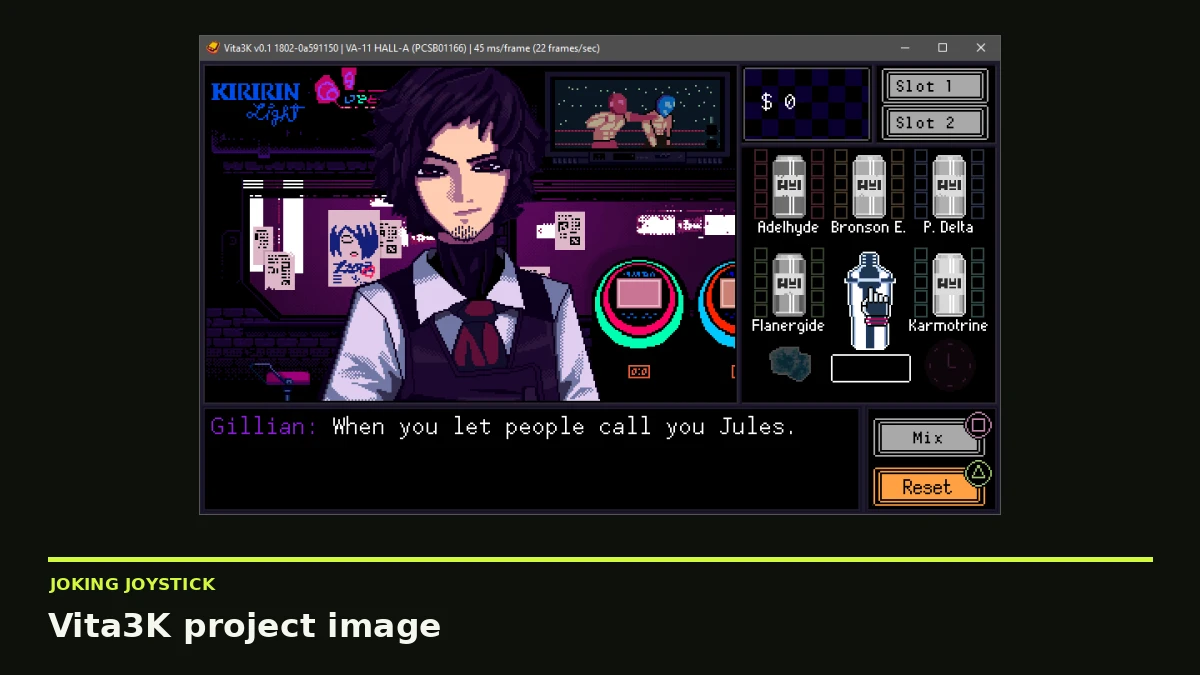
The larger pattern is less about one dominant trend than a willingness to stretch familiar structures in odd directions: a cleanup game about love locks, a fish creator that can become desktop wallpaper, dolls that demand forensic inspection, an eldritch language lesson, and an autobattling mech squad. PC’s share of the list remains substantial, a space that continues to encompass games with exceptionally specific pitches as well as broader genres. That ecosystem also includes technical projects and tools; for another PC-focused update, see Vita3K Build 4342’s experimental development snapshot.
For players using the lineup as a discovery tool, the sensible next step is to separate the titles by desired commitment. Sitter and Rogue Climber explicitly point to compact sessions; My Funeral Is Sunday and Demidoff Corp Pico offer contained story-led premises; Love Locks, Drawquarium and Station to Station emphasize calmer loops; while Zero Hour, Rooftops & Alleys, Westlanders and Lord of Undead suggest systems that may reward deeper investment. The list does not supply the missing specifics—such as dates, prices or feature breakdowns—but it does provide enough to identify which unusual premise deserves a closer look.