Drunken Goddess Reflux will not release its planned public demo on October 19. Alliance Arts, the game’s co-developer and publisher, has replaced that plan with closed online play sessions for people who agree in advance to participation requirements and rules covering gameplay posts and streams.
The shift is notable not simply because a demo is changing course, but because of the reason behind it: the team is worried that publicly exposing the game could make it easier for someone to quickly imitate its presentation and mechanics with AI-assisted tools, then release a competing lookalike before the original game launches.
Alliance Arts says the decision was not solely about AI. It had intended to offer a public demo while placing limits on uploading and streaming gameplay, but concluded it could not properly administer or enforce those restrictions. That practical moderation problem is closely tied to the broader concern. Once a playable build is public, footage, interface details, rules and its most immediately marketable ideas can spread far beyond the developer’s control.
A public demo becomes a smaller, controlled playtest
Under the revised approach, Alliance Arts plans to host online sessions in a closed setting. Access will be limited to participants who have reviewed and accepted the requirements, including the rules on sharing and streaming gameplay.
That does not mean a closed test makes copying impossible, nor does it guarantee that the game’s ideas will remain confidential. It does, however, change the studio’s ability to define who gets access and what conditions apply. A broadly downloadable public demo is built for reach: anyone can play it, record it, inspect it and circulate clips. A closed playtest trades some of that reach for a more managed audience.
For an independent game, that trade-off can be painful. Demos are a direct way to turn curiosity into wishlists, feedback and community interest. Streamers and social clips can introduce a game to audiences who may never encounter its store page otherwise. Restricting that circulation potentially reduces a key marketing opportunity, especially for a project still approaching release.
But the studio’s announcement makes clear that it sees uncontrolled visibility as carrying a different kind of cost. The concern is not just that an audience might see the game early. It is that an imitator could see enough to reproduce the sellable surface of the concept at much greater speed than a conventional development cycle might have allowed.
What the game is, and why its hook is easy to describe
Drunken Goddess Reflux is framed around a Russian roulette-inspired premise, set in a bar in Hell. The player sits opposite an anime demon girl described as someone who may kill for the player—or kill them—and drinks shots in an effort to outlast her. Its store-page pitch promises players must survive the night while sampling seven “flavors of ruin.”
Related coverage includes Drunken Goddess Reflux Cancels Public Demo Over AI Copycat Fears.
That setup helps explain the anxiety. A sharp premise is an enormous asset for a small game: it gives people an immediate answer to the question, “What is this?” Yet the clearer and more compact a game’s hook is, the easier it may be for a bad-faith fast follower to mimic the visible ingredients—theme, tone, basic loop, screenshots and store-page framing—without reproducing the original work’s full craft.
The game is currently listed as the 65th most-wishlisted title on Steam by SteamDB’s ranking. That level of attention makes a demo potentially valuable as promotion, but it also makes the project conspicuous. A game that has already accumulated substantial interest is not an obscure idea sitting unnoticed in a prototype folder; it is a visible target with evidence of demand.
Alliance Arts is also associated with Needy Streamer Overload, another game with a conspicuous anime-forward identity. That history does not establish anything about the new game’s eventual quality or commercial outcome. It does show that the publisher is not treating presentation as an incidental detail. In a crowded digital storefront, a distinctive look and instantly legible tone can be central to how a game gets discovered.
Why AI changes the copycat conversation
Copycat games are not a new phenomenon. Developers have long faced titles that echo popular mechanics, genres, art directions, names or marketing language. The newer concern is about acceleration: accessible AI tools may help a small team or opportunistic publisher produce placeholder art, text, code assistance or rapid prototypes at a pace that makes imitation more tempting and more immediate.
It is important to separate a few terms that can get collapsed together.
- Imitation means borrowing a broad concept, genre convention or readily recognizable premise. Not every similar game is a ripoff, and genre influence is a normal part of creative work.
- Reverse engineering generally means analyzing a product to understand how it functions. In game-development discussion, the term can encompass examining gameplay behavior or reconstructing systems from observation.
- Recompilation, or “recomp” work, refers to rebuilding or translating software so it can run in a different or newly produced form. The term has been part of current discussion around AI-fueled technical reconstruction.
- A fast follower is a competitor designed to reach a market quickly after another work demonstrates audience interest. The phrase is descriptive, not a legal finding.
Alliance Arts’ specific worry is about the last of these: works that imitate or replicate the new game’s presentation and gameplay, then arrive ahead of the original launch. The claim is framed as a concern about what could happen, not an allegation that any particular person has already copied Drunken Goddess Reflux.
The studio’s fears arrive amid wider attention on AI-fueled reverse-engineering and recompilation efforts, particularly after the release of Anthropic’s Claude Opus 5.5. The practical issue for developers is less about one model’s name than the cumulative effect of tools that can lower the barrier to generating assets, drafting code, summarizing observed systems or rapidly iterating on a prototype.
Speed matters in storefront-driven markets. A nearly identical-looking page, trailer thumbnail or one-sentence premise can capture searches and casual attention even if the actual game is thinner. Players might recognize the original only after encountering the derivative, or mistake the derivative for an official version. That potential confusion is especially consequential for a smaller studio relying on a clear identity rather than a massive advertising campaign.
The examples shaping developer anxiety
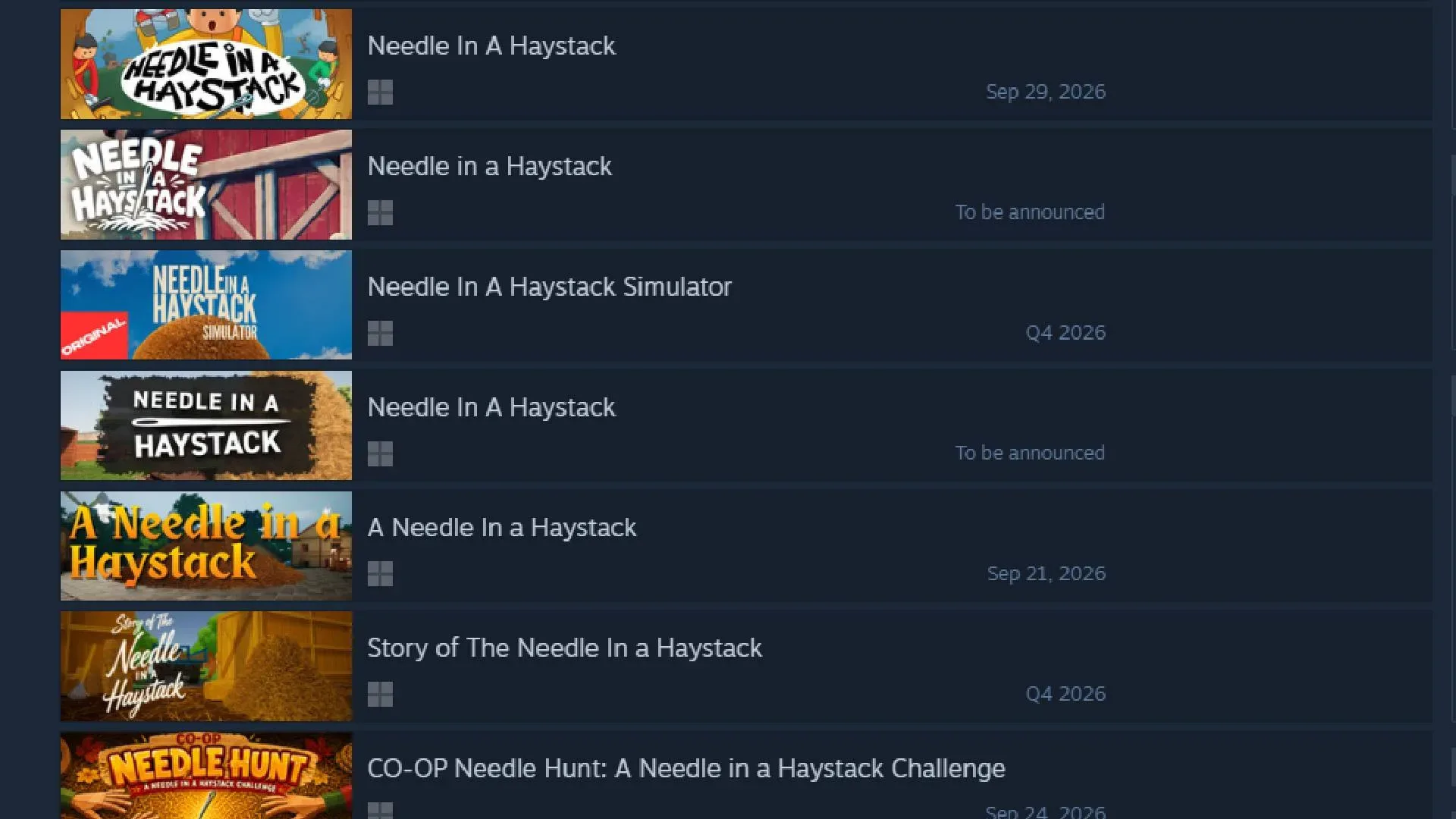
The concern is not isolated to one project. Meccha Chameleon, a breakout Steam game, was quickly followed by an AI-aided copy. Another example involves Family Time, an unreleased game whose concept was reportedly copied in highly specific fashion on Steam.
These cases help explain why developers may view early exposure differently now. A public demo is usually an invitation: play this, talk about it, and help build anticipation. In an environment where a visible concept can inspire a rapid lookalike, the same demo may also feel like a detailed blueprint for someone more interested in capturing a moment than in making a complete original game.
Prominent independent developer Lucas Pope has expressed a similarly guarded approach to discussing a future project, citing fears that it could be absorbed by AI or copied. That does not mean secrecy is becoming an industry-wide rule, and it would be premature to treat every restricted demo as evidence of an AI crisis. It does show a recognizable defensive instinct among creators whose work depends heavily on novel framing and careful execution.
There is also a difficult distinction between a legally actionable infringement and a commercially harmful imitation. A game may not reproduce protected material closely enough to trigger a straightforward legal outcome, yet could still compete for attention by echoing the original’s pitch, aesthetic signals and core loop. For creators, the damage can happen in search results, storefront recommendations and player perception long before any formal dispute reaches a conclusion.
The marketing cost of keeping the door closed
Alliance Arts’ move is a reminder that demos are not merely technical samples. They are marketing instruments, feedback channels and social-media fuel. A public demo can reveal whether tutorials communicate the rules, whether players understand the stakes, and which moments people choose to share. Closed sessions can still provide some feedback, but they are designed around a narrower and more accountable group.
For players, the immediate implication is simple: there will not be a normal public demo download on the originally planned date. People interested in Drunken Goddess Reflux may instead need to watch for information on eligibility and participation conditions for the closed sessions. The available details establish that these play sessions are planned online and require agreement to posting and streaming rules; they do not establish a general-public alternative or a new launch timetable.
For other developers, the situation raises a less comfortable question: how much should a studio reveal before release? The answer will vary. Some games gain strength from broad audience feedback and viral clips. Others may decide their differentiating ideas are too exposed by a lengthy demo, a feature-by-feature trailer or unrestricted creator access. The choice is not between total secrecy and total openness, but between different levels of access, timing and risk.
That tension is already visible across PC game marketing. Projects such as Nonolith can introduce their central mechanics through a trailer, while a hands-on demo necessarily reveals far more about pacing, controls, systems and edge cases. The more a game’s appeal rests on a concise, easily understood loop, the harder it may be to decide how much of that loop to place in public hands before launch.
A defensive measure, not a solution to copying
A closed playtest is best understood as a risk-management decision rather than a technological answer to AI. It can limit casual access, place explicit conditions on participants and make circulation less frictionless. It cannot stop outsiders from independently pursuing a similar idea, eliminate leaks, or settle the wider question of how storefronts should handle alleged lookalikes.
Still, it reflects a material shift in how at least some teams are weighing the value of a public demo. Developers have historically used demos to prove that an unusual idea works. Now, for projects with high wishlist momentum and a readily repeatable visual premise, proving the idea publicly may also mean exposing it at the moment competitors are paying the closest attention.
Drunken Goddess Reflux’s delayed public showing therefore carries a broader message: for Alliance Arts, the benefit of a wide-open demo no longer outweighs the perceived risk of uncontrolled distribution. Whether the closed sessions preserve enough excitement to compensate is an open question. What is clear is that the team has chosen a smaller audience and tighter rules over the exposure that a public demo traditionally provides.