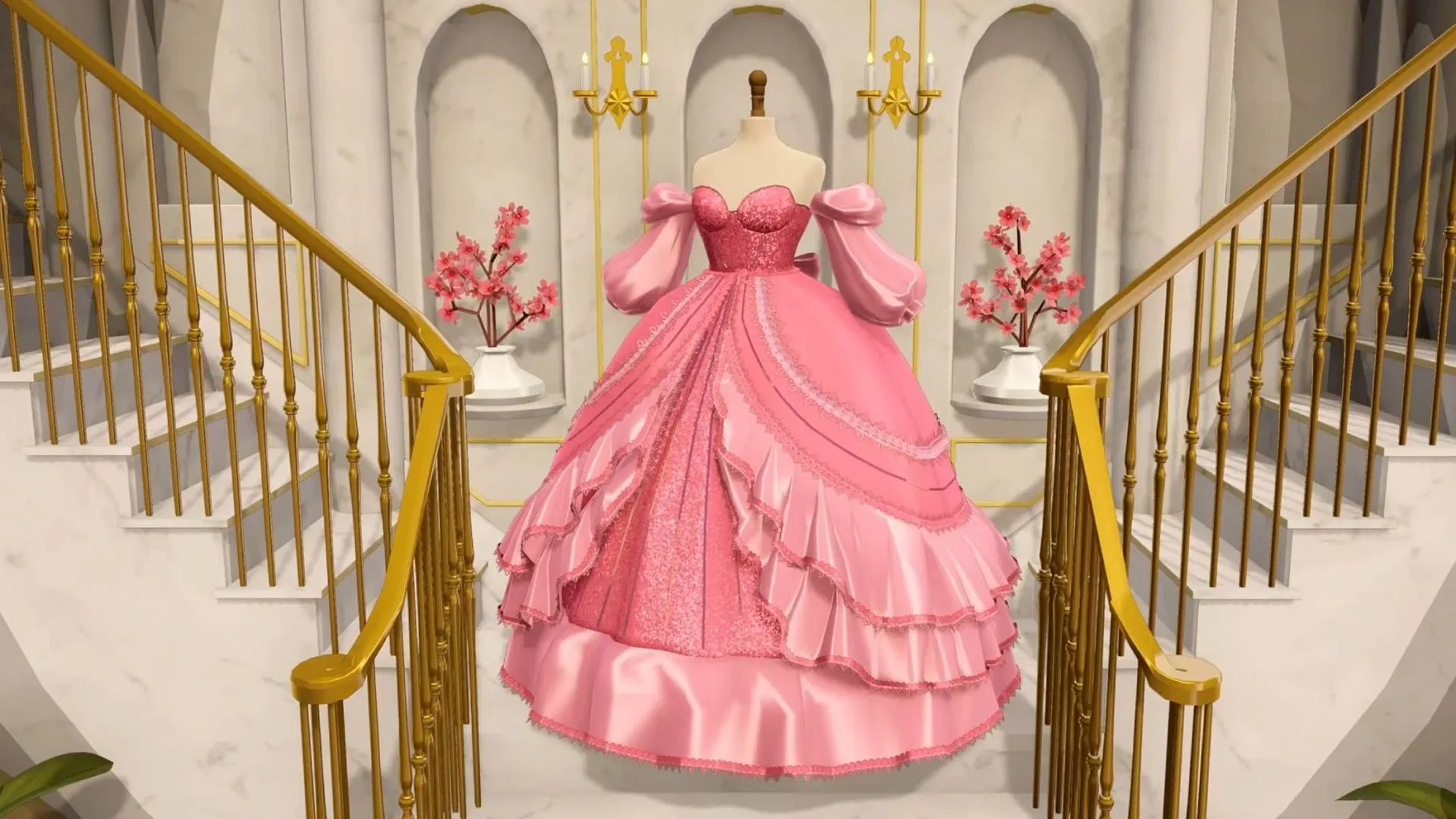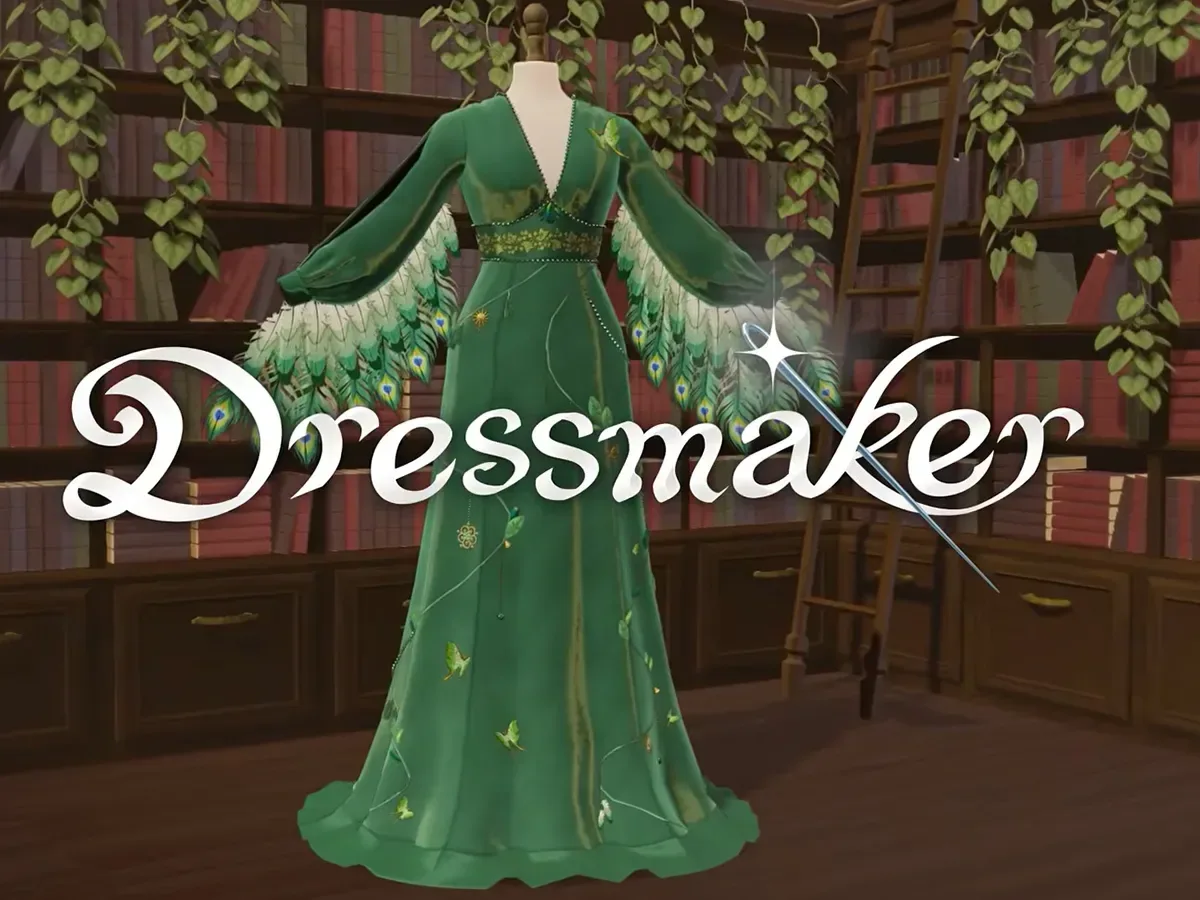
Dressmaker is attracting attention on Steam for making the act of creating clothes feel central rather than decorative. Early reactions suggest its appeal is not limited to one familiar audience for fashion games: players drawn in by childhood dress-up nostalgia, people with sewing experience, returning cosplayers, and partners who reportedly tried the game “just to test it” have all found something compelling in the virtual worktable.
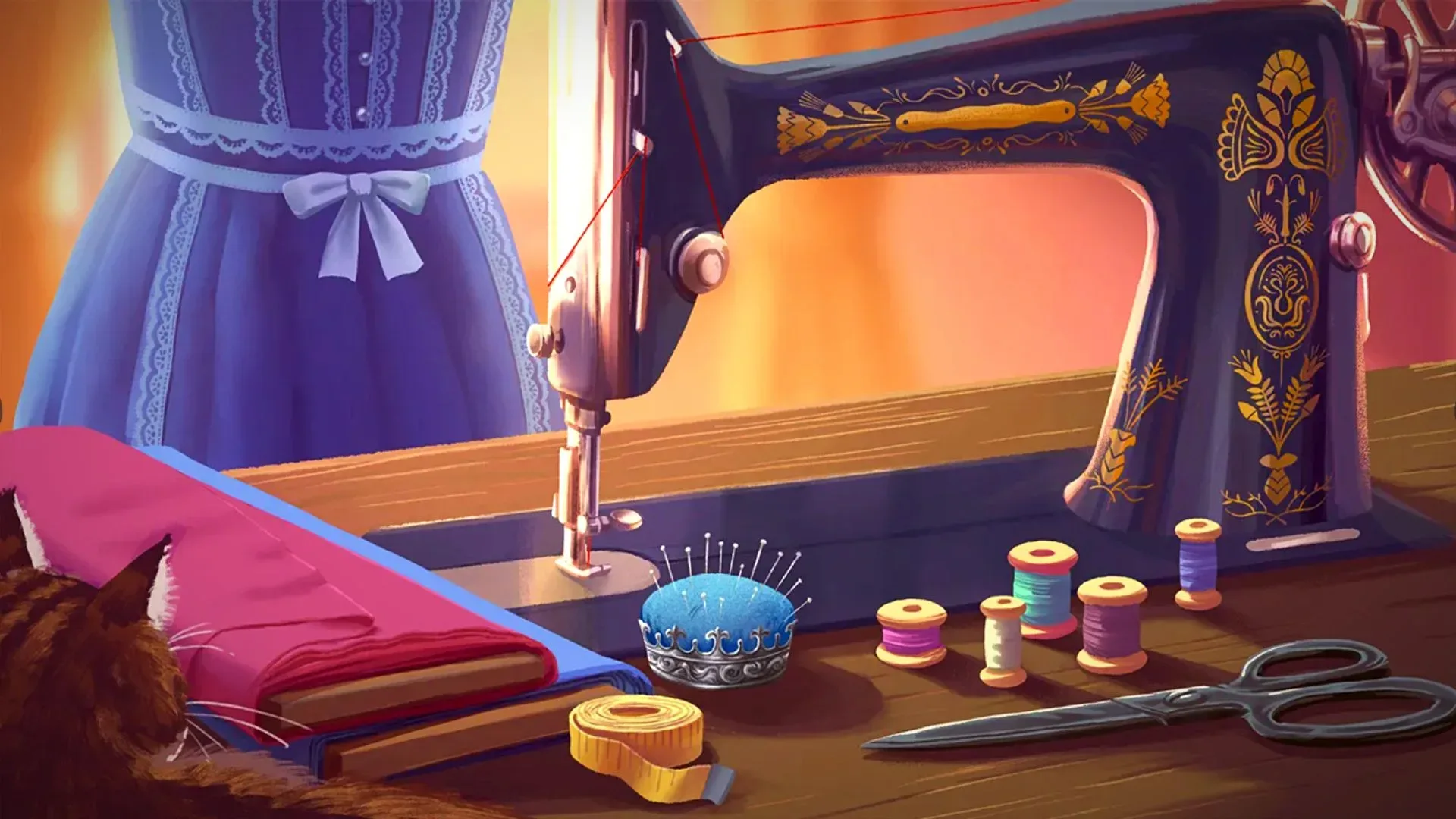
That breadth is the most interesting part of the response. Dress-up games have often been treated as a lightweight genre, defined by quickly selecting pre-made tops, shoes, hairstyles, and accessories. Dressmaker appears to put more emphasis on the processes behind clothing instead. Footage of the game shows players handling fabric in a way meant to communicate material properties, including twisting a selected cloth to see how it responds to light and how its texture reads.
That distinction may sound small, but it changes what the player is being asked to notice. A garment is no longer only a final look on a character. Fabric becomes a material with a visual identity, and choosing it becomes part of the creative decision. For anyone who has spent time sewing, costume-making, or simply staring at clothing details in games, that is a much more specific fantasy than clicking through a wardrobe.
From paper dolls to a virtual worktable
The enthusiasm around Dressmaker is also tied to a recognizable lineage of play. Digital dress-up games and physical paper dolls gave players a compact creative loop: choose a figure, select clothes, experiment with combinations, then start again. The point was rarely competition or mastery in the conventional videogame sense. It was the pleasure of arranging, revising, and imagining an outfit into existence.
For more context, explore Anything But Ghosts Sets May 7, 2027 Release as Curry Barker Reunites With Cooper Tomlinson.
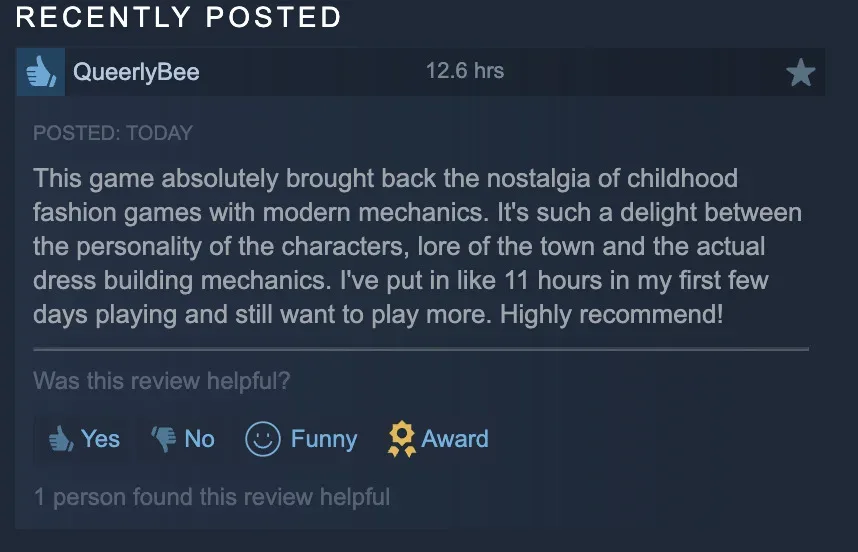
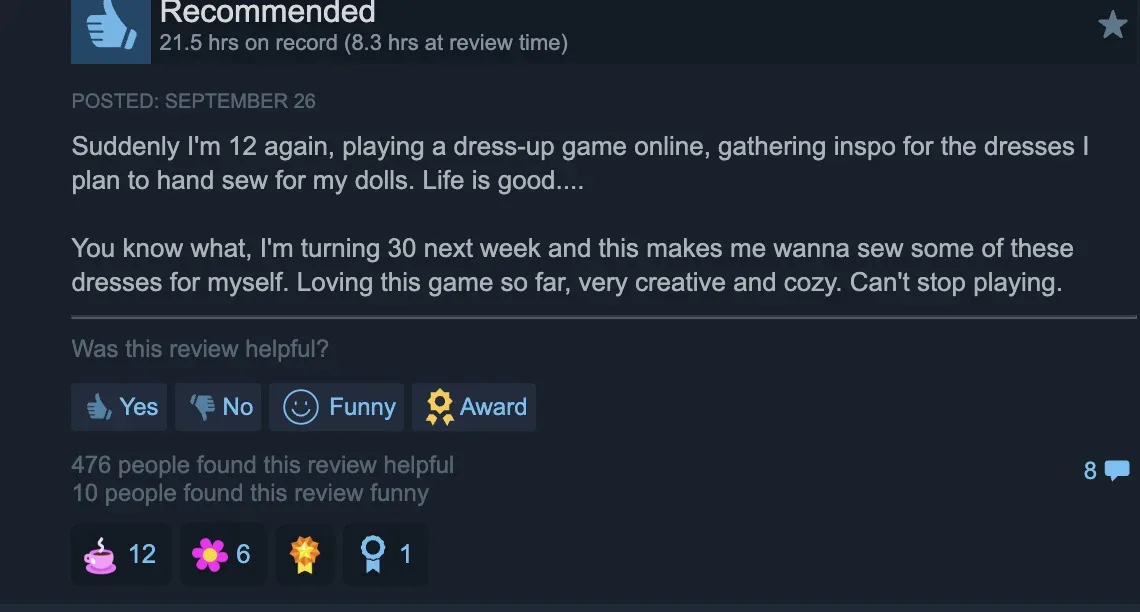
Early comments on Steam repeatedly frame Dressmaker through that memory. One player described being transported back to being 12, while another called it a return to childhood fashion games with more contemporary mechanics. Those responses do not establish every feature of the game, but they do indicate why its presentation is resonating. The familiar impulse to dress a digital doll remains intact, while the attention to cloth and construction gives the activity more texture.
There is a practical reason that extra texture matters. In a conventional outfit picker, two garments can feel interchangeable if they occupy the same visual role. A game that foregrounds fabric behavior encourages a different kind of consideration: not just whether a color matches, but whether a chosen material looks appropriate for the design a player has in mind. It makes the player’s attention move from “what looks nice?” to “what is this outfit made from, and what does that do to the look?”
That is not necessarily a sewing tutorial, and Dressmaker should not be assumed to replace real-world instruction. Still, the player response includes praise for its realism from people who say they have actual sewing experience. In this context, realism means the game is acknowledging details that fabric-focused players recognize, rather than reducing clothing creation to an entirely abstract menu exercise.
Related coverage includes Dressmaker Steam Reviews Highlight the Pull of Detailed Virtual Sewing.
What “fabric behavior” means in a game
Fabric behavior is a useful phrase here because it describes the visual and physical character that separates one textile from another. The available footage is said to let players twist their chosen material to inspect its lighting response and texture. Put simply, the game is giving players a way to look at the cloth before committing it to an idea.
Lighting response refers to how a surface appears when light hits it. Texture is the visible character of the material itself. In a virtual dressmaking setting, those qualities can matter as much as color, because they shape the impression of a finished garment. A clothing-design game that pays attention to them can make selection feel more deliberate, even when the player’s primary goal is simply to make something beautiful or unusual.
The visible emphasis on inspecting cloth also explains why the game has generated interest beyond a purely nostalgic crowd. A former cosplayer, for example, may be especially receptive to a game that focuses on construction-minded details, while someone without any craft background may simply enjoy having more to manipulate. The common denominator is not expertise. It is the pleasure of working through a tangible-looking creative process.
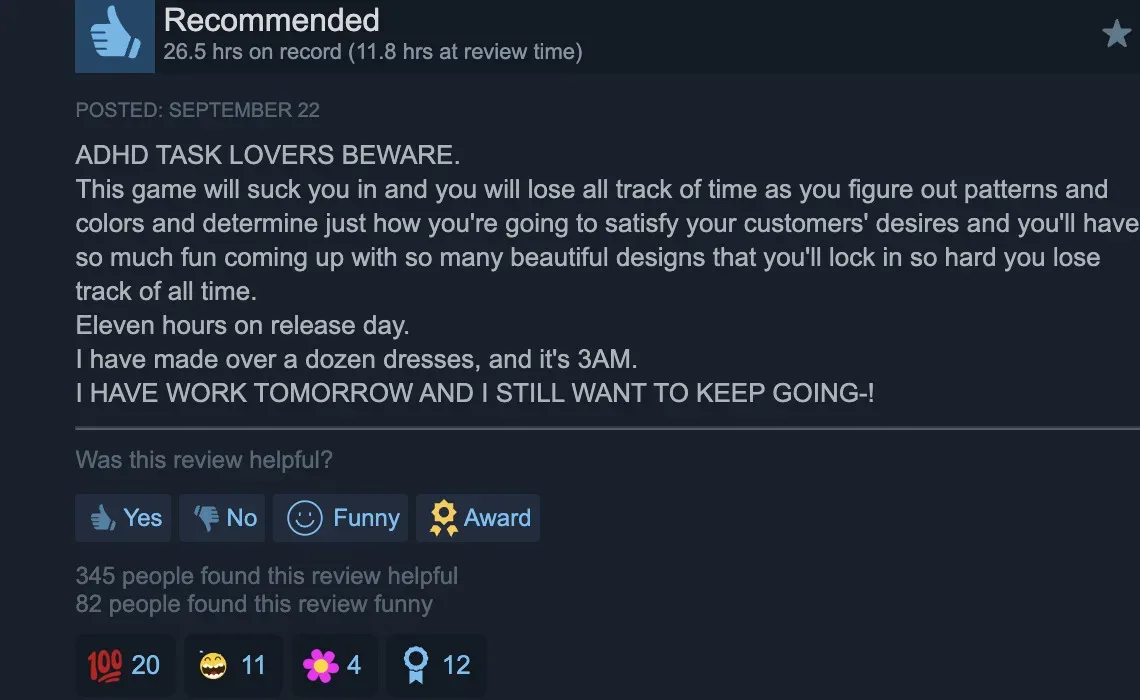
That process has its own videogame appeal. Many games make repetition satisfying by attaching it to combat, loot, building, or score chasing. Dressmaker’s apparent hook is quieter: select, inspect, alter, and refine. The friction is not an enemy encounter; it is the question of how a material will look and whether the emerging outfit feels right. The very fact that one player lamented having work the next day while still wanting to continue is a concise endorsement of that loop.
Steam reactions show an unexpectedly wide audience
The reviews being shared around the game are funny in their variety, but they also sketch a real pattern. Players have praised Dressmaker’s realism, its ability to stir fashion-game memories, and its capacity to occupy someone far longer than intended. One comment jokes that a child is suddenly doing homework and chores without argument. Another says it was purchased for a girlfriend, then tested by the buyer—who clearly did not stop at a brief trial.
Perhaps the clearest example is the Steam review declaring, “I am a straight, white man and this is my game of the year so far.” It is intentionally blunt, but its underlying point is simple: games built around fashion, clothing, and craft do not need to justify themselves to a narrow demographic. A focused theme can still offer a broadly satisfying creative experience.
That is worth saying plainly because the industry has often treated fashion-oriented games as a niche adjacent to “serious” games rather than part of the medium’s larger creative range. The reaction to Dressmaker pushes against that assumption without needing to turn the game into something it is not. It does not need combat, irony, or a more traditionally coded gameplay hook to be worth players’ time. Making outfits, evaluating materials, and pursuing a particular visual idea can be the game.
It also helps that the responses are not all framed as irony. People are not only sharing screenshots to laugh at the premise. They are talking about realism, nostalgia, and the desire to continue playing. One player’s request to make an outfit for a pigeon may be the most comedic response in the batch, but it still communicates investment: once the clothing system is appealing, players naturally want to apply it everywhere.
Why the response matters
Early Steam enthusiasm should be read carefully. Individual reviews are anecdotes, not a full account of a game’s quality, sales, or long-term community. They cannot tell us which systems will hold up after dozens of hours, nor can they confirm what features may arrive later. But they are useful evidence of the immediate connection players are making with Dressmaker’s premise.
In this case, that connection appears to come from specificity. The game is not merely offering fashion as a theme pasted over generic mechanics. Its visible fabric interaction suggests an interest in what makes clothes feel like clothes. That commitment gives people who know the subject something to recognize and gives newcomers a more tactile-looking form of creative play.
It may also offer a reminder for anyone browsing PC games in search of a lower-pressure creative experience. Dressmaker’s appeal, based on the reaction so far, is not that it asks players to prove expertise in fashion or sewing. Instead, it seems to invite them to look closely, try ideas, and get absorbed in the details. That can be enough to turn a small design decision into the familiar “one more thing” urge.
For a broader look at the conversation surrounding the game’s fabric-focused approach, see this report on Dressmaker’s detailed virtual sewing.
Dressmaker is available now on Steam. Its early audience is making one point especially clear: a carefully considered fashion game can be both a nostalgia trip and a genuinely absorbing creative sandbox—and it can make almost anyone want to keep stitching together one more outfit.