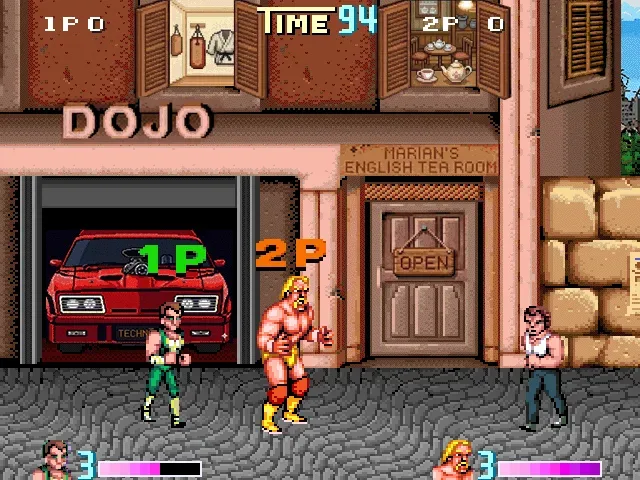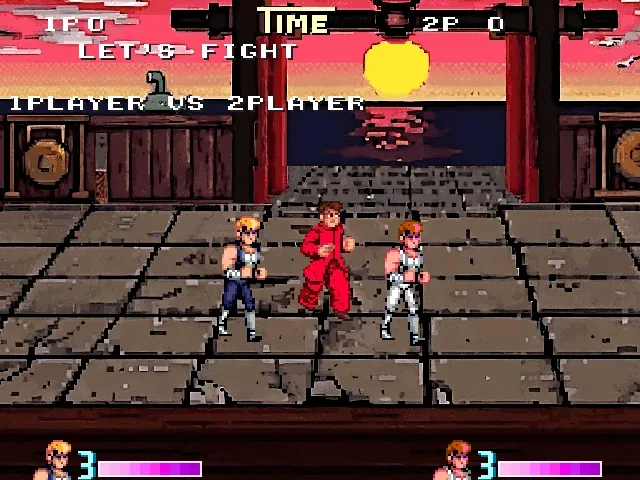
Double Dragons is being positioned as an unusually expansive reimagining of the classic 1980s beat ’em up for PC. Rather than simply revisiting familiar street-brawling territory, the project frames itself as an alternate-history sequel to the first two mainline games: a version of the series’ past in which Technosoft, rather than the genre’s better-known rivals, takes on the kind of arcade brawler associated with Final Fight.
That premise is a deliberately playful one, but it also signals the project’s larger aim. Double Dragons treats the earlier games as a kind of post-apocalyptic New York mythology and intends to build a new, “definitive” story around that interpretation. The campaign is said to provide a complete ending, including a twist, rather than leaving its revisionist premise as background flavor.
The announced scope is substantial: six major missions spread across 14 levels, upgraded pixel art, quality-of-life changes, additional weapons, more bosses and a broader range of enemies. It also promises 20 playable fighters, character-specific endings and a selectable Blood Mode with individual fatality-style finishers. Three separate retro-inspired mini-games round out the package.
An alternate sequel, not merely a remake
The key distinction here is between a remake and an alternate-history sequel. A remake generally retells or rebuilds an existing game, whether closely or with major mechanical revisions. An alternate-history sequel instead imagines what could have followed from a past that diverged from the established one. Double Dragons appears to use that freedom to create a fresh continuation while still drawing heavily on the identity, characters and urban ruin of the original games.
Its championship-edition framing suggests a maximalist approach: not simply recreating a short arcade-style run, but assembling a larger package around the brawler format. The reported 14 levels and six-mission structure are the clearest expression of that ambition. A mission can imply a broader narrative chapter, while levels are the individual stages played within that framework. The two terms need not mean the same thing, and the stated numbers suggest the campaign may vary its pacing across larger story segments.
There is a practical appeal to that structure. Traditional beat ’em ups are often remembered for immediacy: walk forward, clear the screen, pick up a weapon, defeat a boss, repeat. That directness remains the genre’s strength, but a larger campaign needs enough variation in enemies, weapons and encounters to stop that loop becoming monotonous. Double Dragons specifically claims more of each, which is a meaningful promise for a game built around repeated close-quarters combat. The details of how those systems work, including balance, move sets and co-op options, have not been provided.
The project is also described as a love letter to Yoshihisa Kishimoto, the original creator associated with the series. That language communicates reverence, but it should not be read as a technical description. What is concrete is the stated intent to honor the early games while supplying a new storyline and a considerably enlarged roster.
Twenty fighters makes character choice central
A roster of 20 playable fighters would make character selection one of Double Dragons’ main attractions. In a beat ’em up, a character roster matters only if combatants feel meaningfully different in motion: reach, speed, throws, crowd control, special moves and weapon handling can all change the rhythm of an encounter. Double Dragons has not detailed those distinctions, so players should not assume the scale of the roster automatically means 20 radically different play styles. Still, the number makes replayability an obvious goal.
Related coverage includes Double Dragons Reimagines the Classic Brawler for PC.
The roster includes Jeff, described as a much-requested palette-swapped rival. “Palette swap” is a retro-gaming term for a character or enemy visually differentiated from another primarily through changed colors. In older games, this was an efficient way to get more visual mileage from the same character art. The practice is often remembered as a limitation of the era, but it has also become part of the language and charm of classic arcade games. Featuring Jeff therefore seems designed to acknowledge a specific piece of series-adjacent fan interest while embracing the aesthetic conventions of the period.
Each fighter is said to have a unique ending sequence. That is an important addition to a game whose story is presented as a major draw. A single ending asks players to see the campaign through one fixed lens; separate endings make the full story potentially more fragmentary, with different fighters providing different perspectives or payoffs. It also gives a reason to replay a campaign after its central plot is already known.
There is, however, no information yet on which characters are available at the outset, whether anyone must be unlocked, or how extensive those endings are. The headline feature is the promise of a distinct ending per fighter, not a disclosed progression system.
Blood Mode is optional—and that distinction matters
Double Dragons also includes a toggleable Blood Mode. When enabled, it reportedly gives every fighter a distinct fatality finisher. A finisher is an end-of-fight animation or move intended to punctuate a victory; “fatality” here indicates a more overtly brutal version of that idea.
The toggle is worth emphasizing. It suggests that the heightened violence is an optional presentation and gameplay feature rather than an unavoidable part of every run. Players who want a rougher, more exaggerated arcade tone can enable it, while those interested chiefly in the brawler campaign and retro presentation can leave it off. The available information does not explain whether Blood Mode changes anything beyond the finishing moves, so it should not be assumed to alter difficulty, enemy behavior or story content.
This fits the project’s broad attempt to reconcile old-school visual language with modern expectations. “Quality-of-life” improvements are similarly broad but generally refer to changes that reduce friction without changing a game’s essential challenge or genre. Examples can include clearer menus, more flexible options, checkpoints or interface improvements—but none of those specific features have been confirmed for Double Dragons. At present, the phrase establishes an intention to make the experience smoother than a strict period imitation, not a list of defined systems.
Three mini-games widen the retro tribute
The campaign is not the only component. Double Dragons is also set to include three mini-games that each reference a different strand of older game design.
- WWF King of the Ring is described as a wrestling-style brawl. Its title evokes the spectacle of tournament wrestling, although no further information has been given about its rules, roster or match structure.
- Player Vs Player + is described as a three-way fighting game inspired by International Karate +. A three-way format is notable because it departs from the conventional one-versus-one fighting-game setup, creating the possibility of simultaneous threats and shifting alliances.
- A Fistful of Yen is a martial-arts-themed throwback that pays homage to the Commodore 64 game Bruce Lee. That reference reaches beyond the central beat ’em up formula and into home-computer action-game history.
The trio gives the package a compilation-like identity: one campaign rooted in scrolling brawler tradition, plus compact modes shaped by wrestling, competitive fighting and martial-arts action. That breadth could make Double Dragons especially appealing to players who enjoy the design vocabulary of multiple 1980s game scenes, rather than only one franchise. It may also be a way to make the project’s alternate-history premise feel larger than its main story.
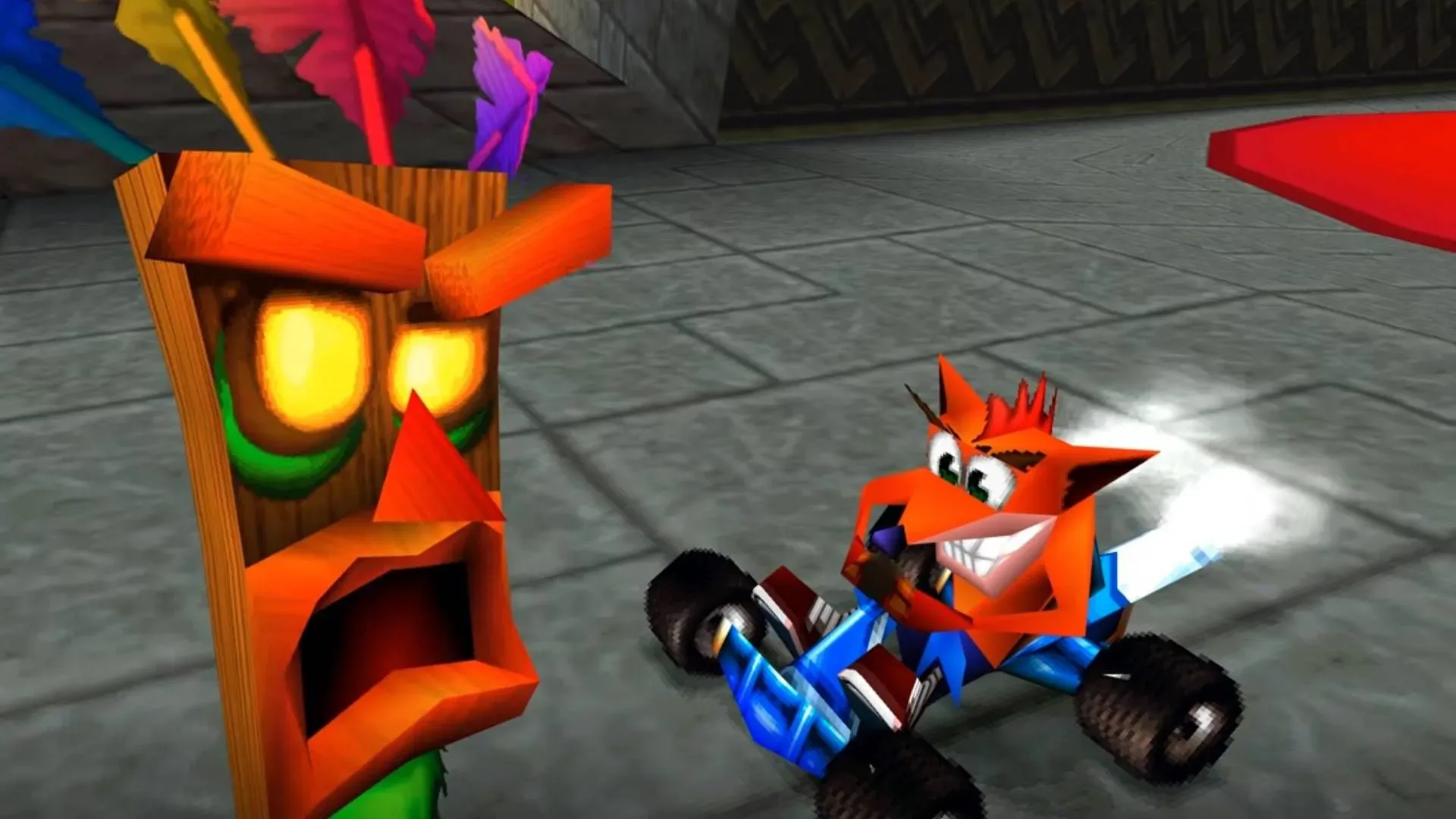
For context, PC-based retro reworkings can take very different approaches to preservation and modernization. Crash Team Racing: Turbocharged’s proposed PC route, for example, illustrates how a classic console game can be revisited through a different technical and preservation-focused lens. Double Dragons’ approach is less about updating a single known release and more about building an imagined continuation around an established arcade legacy.
What remains unclear
The current details make a strong case for ambition, but they leave several practical questions unanswered. No release date beyond its PC framing has been supplied, and no additional platforms have been confirmed. There is no stated price, developer credit, storefront listing, system requirements or information on controller support. The announcement also does not clarify whether the core campaign supports solo play only or any form of local or online multiplayer—an especially important omission for a genre closely associated with cooperative play.
Likewise, the campaign’s 14 levels, expanded enemy selection and increased number of bosses identify scale, but not exact content. There are no named locations, bosses, weapons or mechanics beyond the general promises. The twist ending is part of the story pitch, but its nature is understandably undisclosed.
What is clear is the intended shape of the game: Double Dragons aims to be more than a nostalgic coat of paint on a classic beat ’em up. It is presented as a full alternate sequel with a longer campaign, a 20-character roster, individualized conclusions, optional graphic finishers and a small arcade of genre tributes beside the main event. Whether those pieces cohere will depend on details still to come, but the project’s stated goal is unmistakably large: give an 1980s brawler mythology a new, deliberately fictional future on PC.