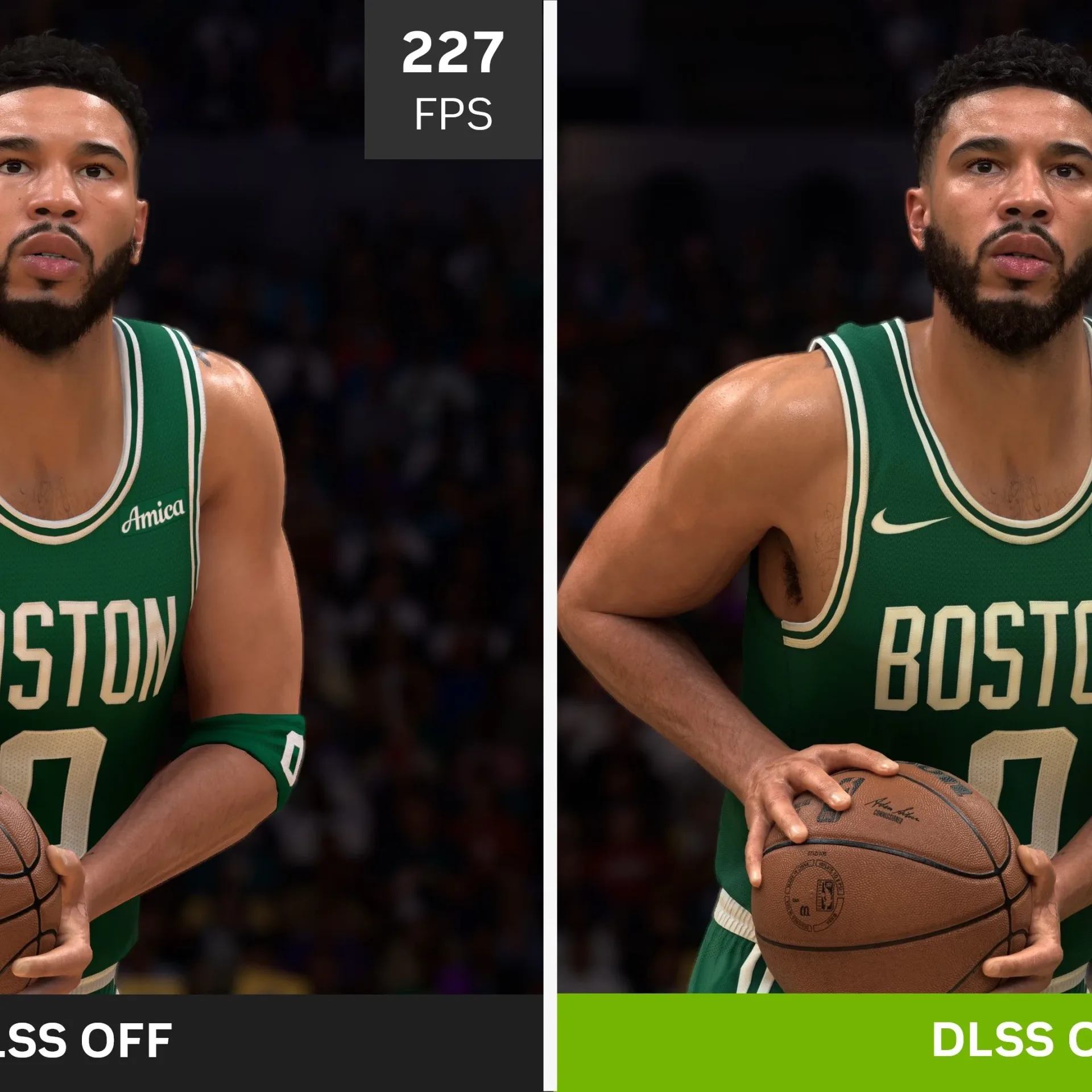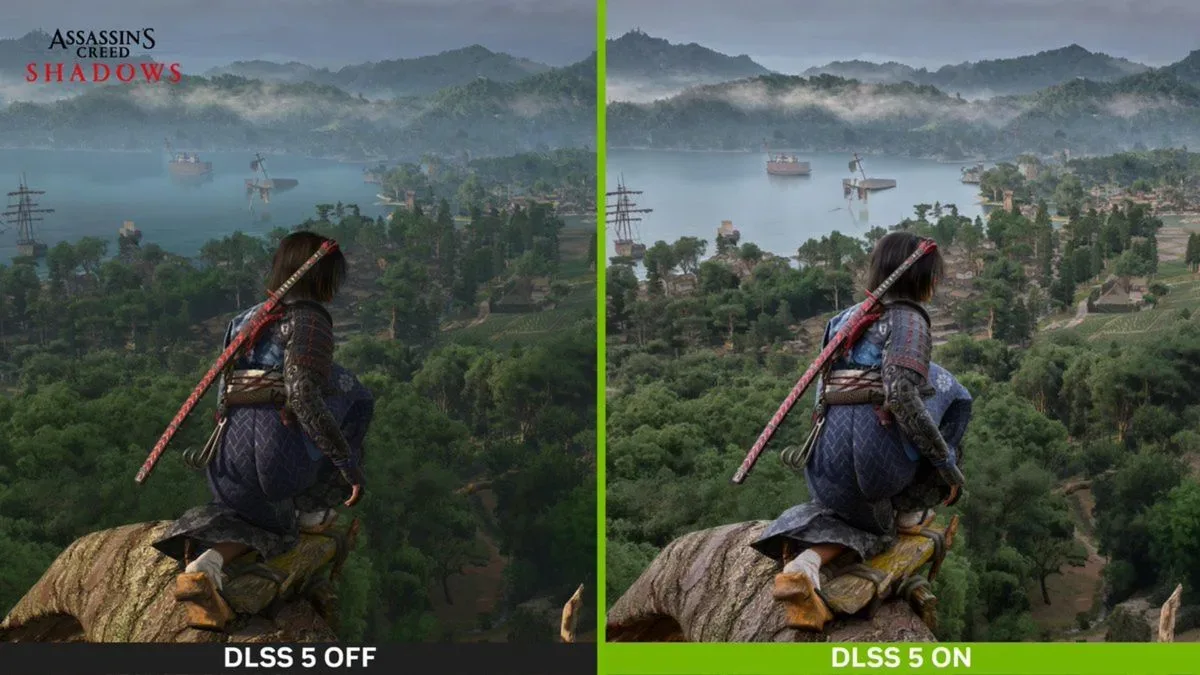
Nvidia’s planned DLSS 5 rollout arrives with a familiar promise: a more convincing picture, pushed closer to photorealism through a generative-AI-driven rendering layer. The technology is set to reach GeForce RTX 50 Series GPUs first, with NBA 2K27 positioned as its initial showcase. On the surface, that pairing makes immediate sense. A basketball simulation is trying to recreate recognizable athletes, arenas, broadcast lighting, uniforms, and the finely tuned physical language of a real sport. If a tool can make that specific kind of game appear more lifelike, it has found a reasonable test case.
But “more lifelike” is a narrow target, not a universal definition of visual improvement. Video games are not merely incomplete photographs waiting for sufficient GPU horsepower to rescue them. They are designed spaces, filled with deliberate choices about color, texture, proportion, movement, contrast, facial expression, atmosphere, and what the player is meant to notice. The exciting question around DLSS 5 is not simply whether it can make a digital face resemble a human face more closely. It is whether a system built around photorealism can reliably serve games whose beauty depends on not resembling ordinary life too closely.
That distinction matters because games have already spent decades learning that technical fidelity and artistic identity are related, but not interchangeable. The old race toward “realistic graphics” helped drive remarkable improvements in lighting, materials, animation, environments, and character models. It also encouraged a habit of treating every new graphical feature as automatically better because it looked nearer to a screenshot from reality. Players have since become much better at recognizing that a distinctive visual style can outlast a pile of expensive effects.
DLSS 5 is described as opt-in, not a universal filter
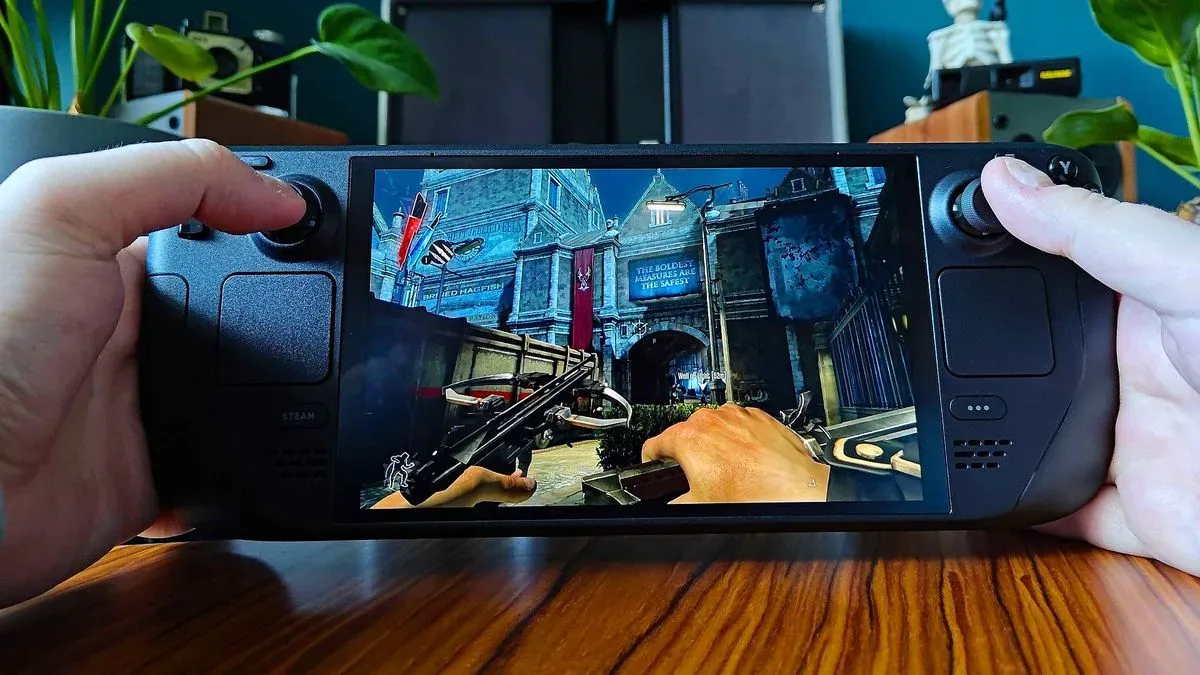
Nvidia has indicated that developers choose whether to support DLSS 5, and that the feature is principally intended for games pursuing a photorealistic presentation. That is an important boundary. No one needs an automated realism glaze spread over every game with bold linework, painted surfaces, exaggerated proportions, or intentionally unreal color. A title such as Dishonored, for example, would lose something fundamental if its sharply authored, painterly world were pressed toward a generic version of reality.
The company’s described developer controls are also more granular than a simple switch marked “make everything look expensive.” Developers can reportedly select among three AI models for individual objects, characters, and, in some instances, clothing. Sliders can then adjust structural and tonal intensity within the system’s limits. That suggests an effort to let artists tailor the output rather than surrender an entire frame to one automatic process.
Still, controls are not the same thing as unlimited authorship. A creator can choose settings, but the available settings inevitably reflect the goals embedded in the model. If those models are oriented toward a photorealistic result, the concern is not that every supported game will suddenly become identical. The concern is subtler: small alterations to facial features, skin texture, materials, shadows, or scene contrast could gradually sand away choices that had been consciously made by an art team. The result may look more detailed in isolation while feeling less like the game it is supposed to be.
Realistic games are not all trying to be photographs
Even games commonly described as realistic show why the word needs more precision. Battlefield 6, Control, Grand Theft Auto 6, The Last of Us Part II, and Hunt: Showdown can all contain convincing lighting, detailed faces, believable weaponry, and environments that evoke real places. Yet each has a visual language beyond raw realism. One may favor harsh clarity and spectacle, another oppressive architecture and surreal light, another heightened urban satire, another cinematic intimacy, and another macabre historical horror.
None of those directions requires a game to pass as live-action footage. In fact, complete visual indistinguishability from filmed reality could be a strange ambition for an interactive medium. Games need readable spaces, clear animation, meaningful silhouettes, dramatic feedback, and visual priorities that guide a player under pressure. A slightly heightened object, a selective shadow, an unreal but evocative palette, or an intentionally imperfect face can communicate more effectively than a perfectly observed replica.
This is why the framing of graphics as an objective ladder is so unhelpful. Resolution, frame rate, texture detail, and lighting accuracy can be measured. Whether a scene feels memorable, coherent, expressive, unsettling, warm, or alive cannot be settled by counting pixels. The same medium that gives us meticulously scanned faces also gives us surrealist worlds, cel shading, pixel art, low-poly abstraction, and stylized animation. Those are not lesser stops on a route to photorealism. They are valid destinations.
It is also worth remembering that aesthetic attachment has never depended solely on technical progress. People continue to return to older games not because they mistake their hardware limits for modern fidelity, but because their visual systems communicate mood with unusual confidence. The practical side of enjoying older hardware has its own complications, from display connections to signal conversion, as covered in this guide to mapping a retro console HDMI adapter connection. But a crisp connection does not erase the charm of a game that was built around the visual vocabulary of its era.
NBA 2K27 may be the clearest fit—and still not the final argument
NBA 2K27 is a logical early candidate for DLSS 5 because professional basketball simulation makes realism part of its pitch. Its athletes are meant to evoke real people, and a more photoreal result can strengthen the appeal of watching a digital recreation of a familiar sport. Nvidia’s comparison material has emphasized that kind of improvement: players rendered with DLSS 5 can appear closer to their real-world counterparts.
Yet even here, the word “better” should remain personal and contextual. Hand-crafted character work may have small irregularities or stylized compromises, but those features do not necessarily make it inferior. They can be part of the designers’ interpretation of an athlete, a game’s animation language, or the visual gap that reminds players they are entering a simulation rather than watching a television broadcast. Some audiences will prefer the closest achievable resemblance; others may prefer a crafted look with a little more visible mediation between reality and the game.
That is not anti-technology. It is a request for technology to be judged by its purpose. The best rendering advance is not always the one that overwhelms the image with the most detail. Often, it is the one that enables a studio to make its intended image more clearly: stable motion, clean edges, convincing lighting where it belongs, and performance headroom without flattening the game’s personality.
The AI question is larger than an image-quality toggle
Generative AI brings an additional layer to the debate. Some players see AI-generated or AI-altered imagery as uncanny even before they can identify a specific defect. Others have broader objections to using generative systems in creative production, particularly amid continuing anxieties about disruption to artistic work. For those people, an image that looks technically more photographic may be less immersive precisely because its method becomes impossible to ignore.
That reaction cannot be dismissed as resistance to novelty. Immersion is not a benchmark number. It is a state of attention. A player who starts scrutinizing a face for AI artifacts, wondering what was changed from the original asset, or feeling uncomfortable about the technology behind the shot is no longer focused on the story, match, puzzle, or world. Ironically, the pursuit of realism can become a reminder that the scene is artificial.
There is a useful parallel in discussions of immersive media more broadly. Better hardware and smarter software can expand what creators attempt, but they do not automatically determine what makes an experience meaningful. Recent thinking around immersive storytelling and shared spaces likewise points toward an industry where the human experience matters as much as the technical mechanism. A tool earns its place when it supports expression and connection, not merely when it produces a more elaborate demonstration.
Let games keep their distance from reality
DLSS 5 may prove valuable for studios that actively want photorealistic presentation, especially on RTX 50 Series hardware and in projects where simulation is central to the fantasy. Its opt-in structure and reported per-element controls give developers meaningful agency, at least in principle. The rollout will ultimately be judged game by game, implementation by implementation, rather than by a single before-and-after image.
But the larger lesson should be uncomplicated: graphics do not become objectively great just because they become more photographic. A game can be spectacularly realistic and artistically bland. It can be technically imperfect and visually unforgettable. The medium is healthier when a basketball simulation can chase authenticity, a horror game can distort history into nightmare, a surreal adventure can ignore real-world materials entirely, and a couch multiplayer game can prioritize instant readability over cinematic skin pores. For a reminder that play itself often has priorities far removed from graphical one-upmanship, see the unwritten rules that make couch multiplayer work.
Nvidia’s latest ambition may deliver impressive results in the right context. The mistake would be allowing photorealism to become the default yardstick for every context. Games do not need to look exactly like reality to make players believe in them. Sometimes the crucial bit of magic is the distance between the real world and the one on screen.