Diablo 5 may still be a couple of years away, but its intended design philosophy is already becoming a major point of debate. Game director Joe Shely has framed the next entry as a game that will retain fast, execution-based combat mechanics while putting greater overall emphasis on character planning and long-term investment.
In a post responding to the wider conversation around Diablo 5, Shely described the balance in shorthand familiar to players who think about games in both mechanical and strategic terms: Diablo 5 will include “DEX” elements, meaning moment-to-moment execution, but will be an “INT/STR game” on balance, meaning planning and investment.
“While Diablo 5 will continue to feature some DEX (moment-to-moment execution) mechanics, on balance the game will be an INT/STR game (planning and investment).”
It is a compact statement, but it draws a fairly clear line through one of action RPGs’ longest-running tensions. How much of a player’s success should come from rapid inputs, positioning and on-the-fly reactions? And how much should come from decisions made before combat begins: selecting skills, choosing equipment, creating synergies and accepting trade-offs in a build?
For Diablo fans, that distinction matters because “methodical” is not simply another word for slow. A deliberately paced action RPG can still ask players to react quickly. The bigger question is whether those reactions are supported by a character build with meaningful identity, or whether the central loop increasingly becomes clearing repeatable content as fast as possible while chasing higher numerical thresholds.
What planning and investment could mean for Diablo 5
Shely has not laid out a detailed Diablo 5 systems breakdown in the material available so far. There is no confirmed list of skills, item categories, progression rules or endgame activities attached to the post. That makes it important not to treat the DEX/INT/STR phrasing as a feature announcement.
Still, the terms are useful for explaining the direction being signaled. Moment-to-moment execution concerns what happens during a fight. It can include timing attacks, moving out of danger, using abilities in the right order and responding to changing enemy behavior. Those elements reward attention and mechanical fluency.
Planning and investment, by contrast, refer to choices that shape a character over time. In an action RPG, a build is the combination of abilities, equipment and progression decisions that determines how a character functions. Investment is the process of committing resources and playtime to make that plan work. The appeal is not merely gaining bigger numbers; it is making a collection of interconnected decisions produce a coherent play style.
Related coverage includes Diablo 5 Director Signals a More Deliberate ARPG, but Fans Want Proof.
A game can contain both ideas, and Shely explicitly says Diablo 5 will. His emphasis is one of balance. The suggestion is that fast play should not be the only, or dominant, measure of success. A well-considered character should matter substantially.
That prospect connects to the conversation that followed Diablo 5’s reveal at BlizzCon, where Diablo 2 was invoked as a point of reference. Some players have argued that returning to that kind of identity would require a meaningful shift away from more recent approaches to itemization and overall game design.
Itemization is the term for how a game structures loot: what properties gear can have, how those properties interact with character abilities, and whether a new item presents a genuinely interesting choice. Deep itemization is not automatically about having the largest possible pile of drops. It is about whether a player can understand why an item helps a build, what it costs to use it, and what alternative it displaces.
That is why calls for a more deliberate Diablo 5 are often paired with calls for greater skill-system and itemization depth. Players looking for that direction are generally asking for decisions that have texture: choices that affect how a character is assembled, not only how quickly it erases a room of enemies.
The challenge is not merely slowing the game down
The discussion also reveals a potential misunderstanding worth avoiding. A methodical action RPG does not necessarily mean every encounter must be sluggish or every character must feel weak. Nor does depth require inconvenience for its own sake.
Rather, the practical test is whether Diablo 5 can make preparation matter even after players become powerful. If a build is engaging only until it finds the most efficient route to mowing through content, then planning may become a temporary step on the way to “blasting.” In this context, blasting is community shorthand for rapidly clearing enemies and activities with minimal resistance or deliberation.
The source material specifically contrasts Shely’s statement with Diablo 4’s focus on infinitely scaling content that can be cleared in seconds. Infinite scaling generally describes a structure where challenge can keep rising through increasingly difficult tiers or levels instead of ending at one fixed finish line. It gives players a reason to continue improving characters, but it can also place enormous value on clear speed: if progression is repeatable and enemies keep getting tougher, efficiency becomes a powerful organizing principle.
That is not automatically a flaw. Diablo 4’s seasonal cycle and its Pit progression provide a place for players who enjoy logging in, pushing a character further and measuring how far a build can go. The important point is that Shely appears to be identifying a different balance for Diablo 5, one where the game’s core may be less centered on rapid repetition and more centered on build construction.
Whether that balance can survive contact with a live player base is the reason many responses have been guarded.
Why the early reaction is skeptical
On Reddit, the most visible reaction was blunt: one commenter wrote, “they said all this before,” complete with laughing emojis. Another response argued that developers often promise a slower, more methodical experience before players ultimately demand the ability to move through content at speed.
A separate commenter took the concern a step further, predicting that even if the team starts from the stated goal, pressure from players wanting faster clears could lead to a later redesign. These reactions are not evidence that Diablo 5 will abandon its direction. They are evidence that a portion of the audience does not consider directional language enough to settle the question.
That distinction is healthy at this stage. Diablo 5 is not close enough to release for players to evaluate its builds, items or combat loop directly. Shely’s post establishes an ambition, not a demonstrated implementation. The skepticism is therefore less a verdict on a finished game than a demand for systems that make the ambition visible.
For these players, the eventual proof would likely be found in practical questions: Are skill choices meaningfully different from one another? Does equipment open up new possibilities rather than simply increasing output? Are there worthwhile trade-offs between offense, defense, convenience and specialization? Does the endgame leave room for thoughtful progression rather than treating every build as a race toward the quickest clear?
None of those questions has a confirmed answer yet. But they show why “planning and investment” carries more weight than a simple pace preference. It is a promise about the role character-building decisions could play throughout the game.
There is optimism, too
The reaction on X was not uniformly doubtful. One player, Dagon5, welcomed the possibility of Diablo 5 taking a different route from Diablo 3 and Diablo 4, specifically pointing to itemization depth and skill systems as areas where a stronger commitment could pay off.
That response captures the opportunity in Shely’s framing. Diablo does not need to discard responsive combat to give more prominence to building a character with purpose. The stated DEX component acknowledges that combat execution remains part of the formula. The INT/STR emphasis says the game may ask players to think harder about what they bring into that combat.
It is also possible for different Diablo games to serve different appetites. Diablo 4 is expected to continue receiving seasons after Diablo 5 launches, leaving an established home for players who enjoy its particular approach to seasonal progression and pushing through the Pit. A newer entry that leans more heavily into deliberate buildcraft could broaden the series’ range rather than invalidate the appeal of what came before.
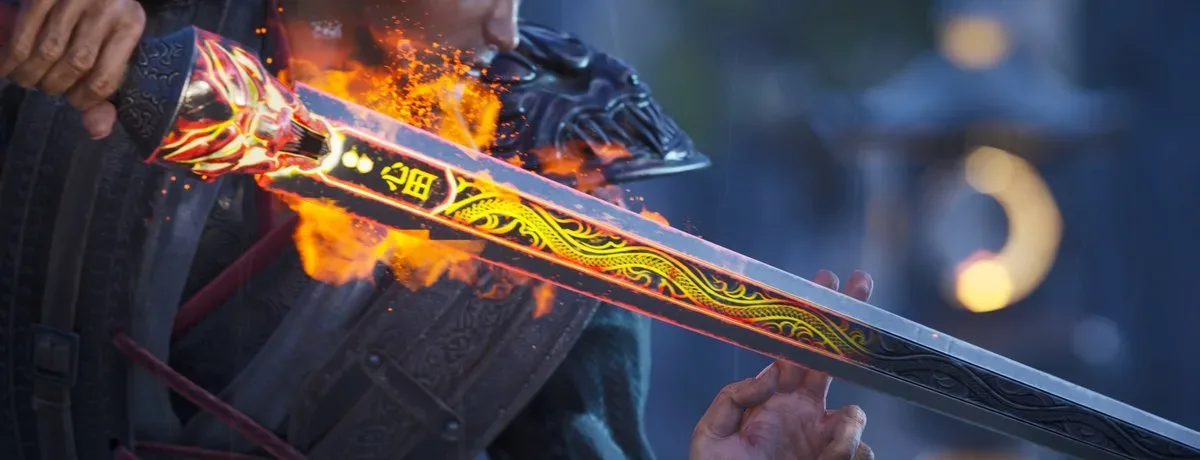
The broader PC action-game landscape also continues to make room for varied interpretations of combat depth. For instance, Burning Sword: Death Sun’s approach to Qi risk and boss duels illustrates how a game’s combat stakes can be shaped by more than speed alone. Diablo 5’s specific systems remain unknown, but the principle is similar: mechanics gain character when players must weigh decisions rather than simply repeat the fastest available action.
What to watch as Diablo 5 takes shape
For now, players should read Shely’s comments as a high-level design signal. They point toward a Diablo 5 that wants moment-to-moment competence and long-range character strategy to coexist, with the latter carrying more of the game’s overall weight.
The phrase will become meaningful only when it is attached to concrete details. Future discussion around Diablo 5 will be more revealing when it addresses how characters develop, how loot changes builds, how seasonal or endgame progression works, and whether the game gives players reasons to pursue alternatives instead of funneling everyone toward maximum clear speed.
Until then, the mixed response makes sense. Optimistic players see a chance for a more distinctive Diablo built around itemization and skill choices. Skeptical players have heard broad aspirations before and are waiting to see the trade-offs, limits and systems that would turn those aspirations into a durable game. Diablo 5’s director has made the intended priority clear. The next task is showing how that priority survives in play.