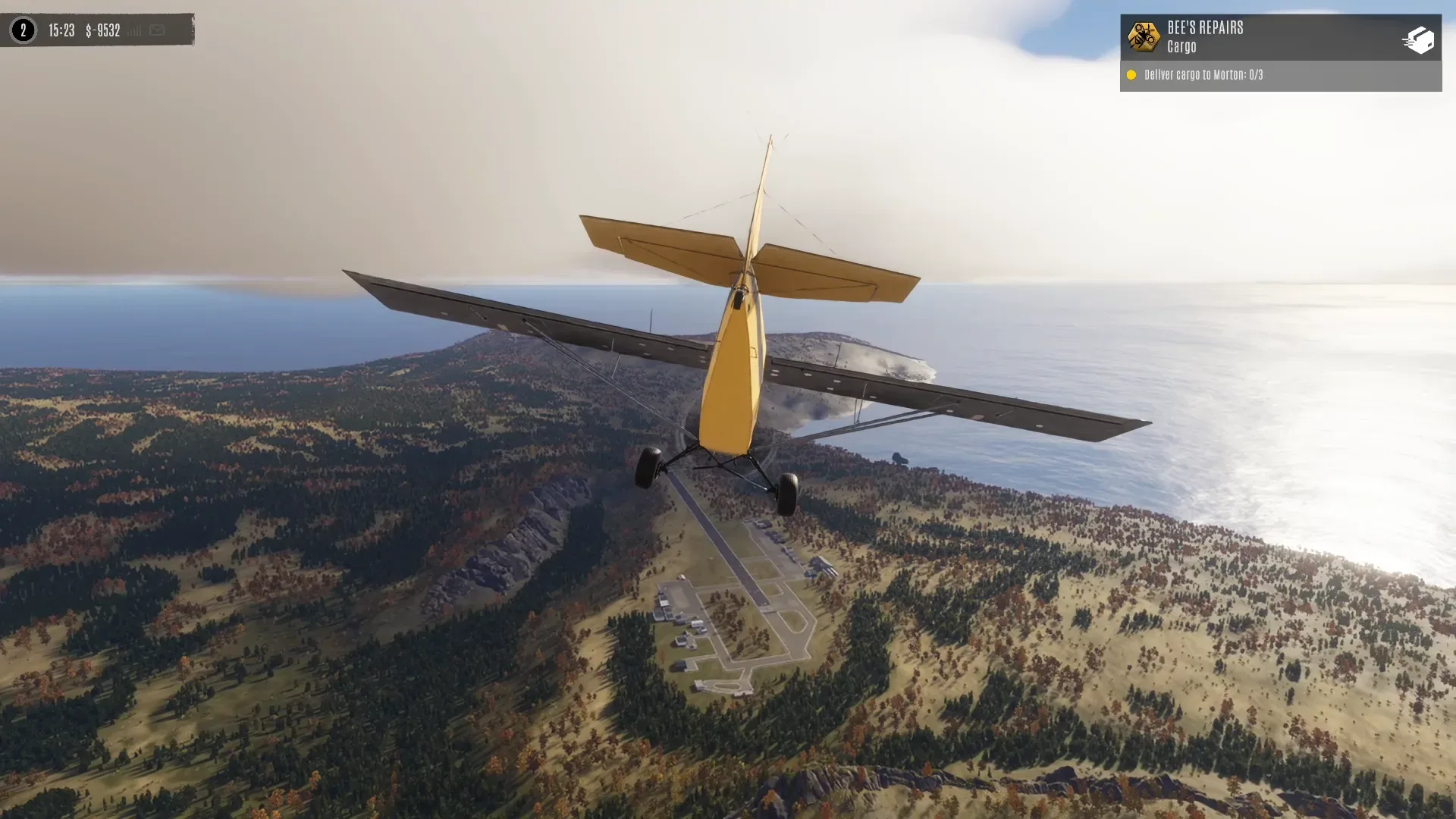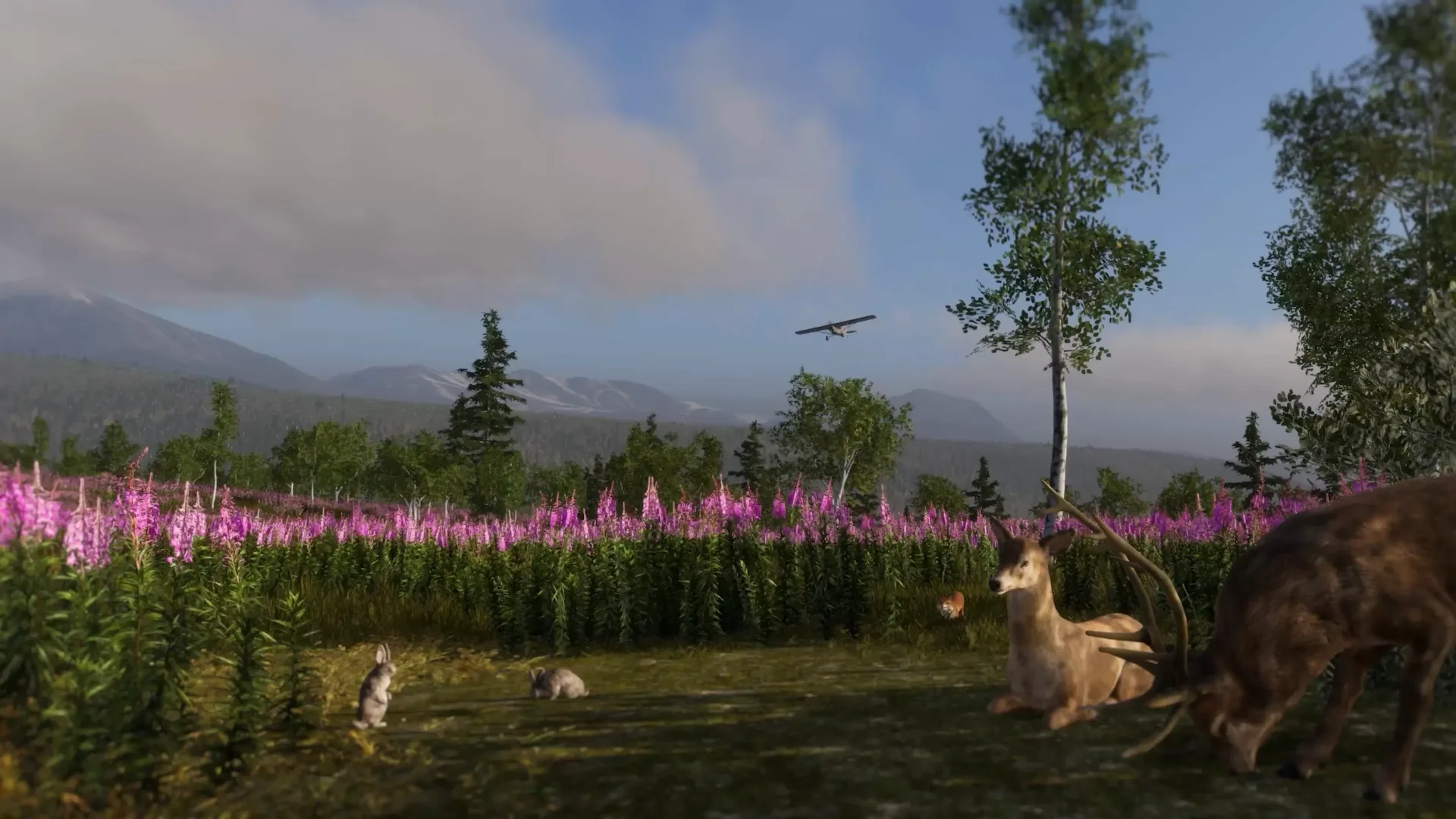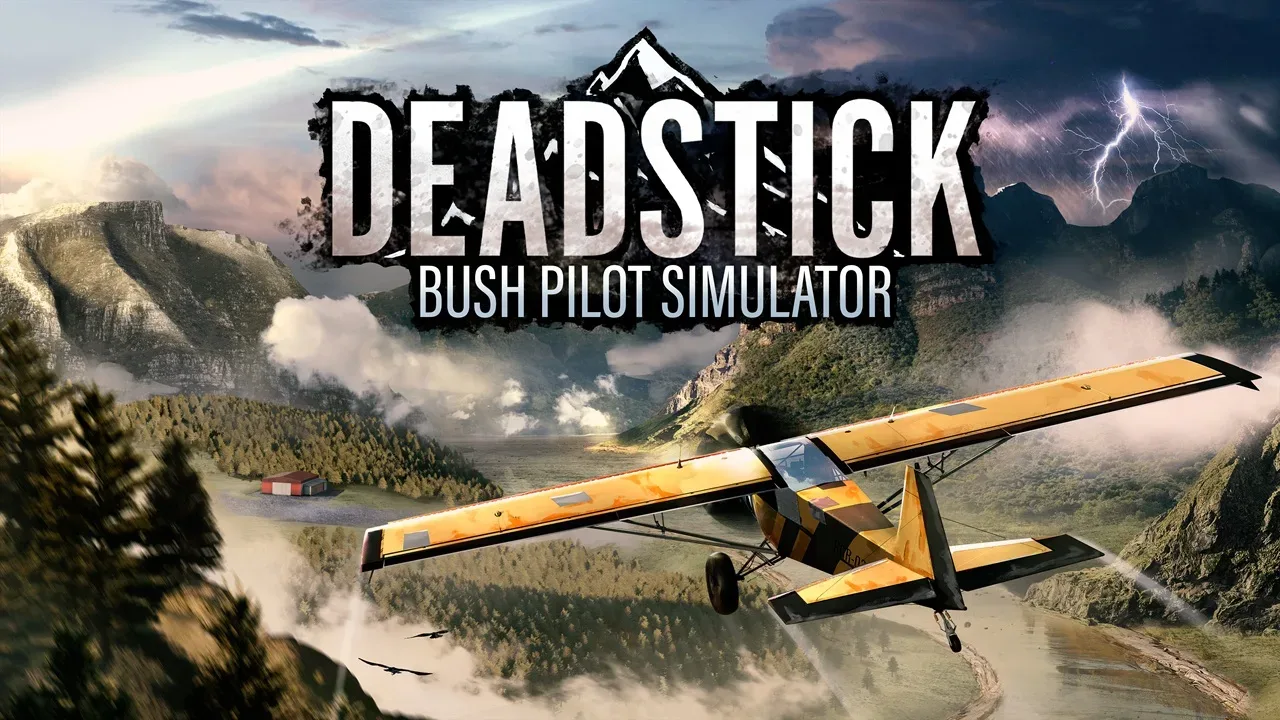
Deadstick: Bush Pilot Simulator has received its first playable demo on Steam. The demo puts players in the role of a newly hired contract pilot on Bleakrock, an island defined by difficult terrain, volatile weather and the sort of landing conditions that make a smooth touchdown feel less like routine and more like a small personal miracle.
Its opening structure is deliberately practical. Players begin at Redshore Flight School, complete basic lessons, earn a commercial licence and then move into cargo jobs using their own aircraft. That progression establishes the game as a simulation about operating a working aircraft in remote conditions rather than simply sightseeing from above.
The demo arrives ahead of a planned early 2027 Steam launch for the full game. That larger version is intended to expand the premise into a flight-courier business: players will take jobs across the wilderness, use their earnings for aircraft-related costs and improvements, and invest in airport infrastructure to open up further work.
A flight sim where the landing is only part of the job
Deadstick’s core idea is bush flying. In this context, that means flying through remote country where terrain, weather and airfield limitations are central to the challenge. The game’s jobs are not presented as a chain of pristine runway approaches. Instead, pilots are expected to plan routes, contend with rugged ground and changing conditions, and manage the plane itself from departure through delivery.
That distinction matters because the simulation’s announced systems put attention on decisions that occur before a player lines up for a landing. Route planning is part of the workload, as is evaluating the relationship between the aircraft, its cargo, the weather and the destination. A job may therefore be more than a test of steering an aircraft accurately; it can become a question of whether the flight was prepared sensibly in the first place.
The game also makes damage a meaningful concern. Its damage model reacts to heavy landings, creating a direct consequence for rough handling. The available information does not specify every repair outcome or component-level failure, but the basic intent is clear: getting cargo to its destination is not the only measure of success if the aircraft arrives having absorbed a punishing impact.
What the demo says it simulates
The demo includes several systems that are especially relevant to the rhythm of a bush-flight game. They are not merely technical vocabulary on a checklist; each one can affect the choices a pilot makes during a job.
- Battery drain: The aircraft’s electrical power is not treated as inexhaustible. Monitoring battery use adds another operational consideration alongside the flight itself.
- Weight distribution: Where weight sits in an aircraft can matter, not just how much is carried. Cargo work therefore has a connection to aircraft behaviour rather than functioning solely as a numerical job objective.
- Stall behaviour: A stall is a flight condition associated with a loss of lift. Including stall behaviour suggests that airspeed and aircraft attitude require care, particularly when flying slowly or setting up an approach.
- Crosswind correction: Winds that blow across a runway can push an aircraft off its intended path. Correcting for that drift is an important part of making a controlled approach and landing.
- Heavy-landing damage: Landing too hard has consequences in the game’s damage model, turning touchdown quality into an operational issue rather than a cosmetic animation.
These elements collectively point to a simulation that wants the player to respect margins. In plain terms, the aircraft should not be handled as though every runway is wide, every load is identical and every weather report is a friendly suggestion. The game’s challenge is built around the friction between a contract pilot’s need to complete work and the conditions that make doing so safely difficult.
Related coverage includes Deadstick: Bush Pilot Simulator Demo Takes Flight on Steam.
Why Redshore Flight School is a useful starting point
Beginning with basic lessons at Redshore Flight School gives the demo a defined onboarding path. That is particularly valuable for a game featuring flight concepts such as stalls, crosswinds and load distribution, because they can sound imposing without an opportunity to learn the game’s interpretation of them.
The stated sequence—training, commercial licence, then cargo work—also gives the demo a straightforward career arc. Instead of dropping players directly into the most complicated assignments, it frames the first day as the start of a contract-flying career. The licence acts as a progression marker between instruction and paid work, while cargo jobs provide a clear reason to take the aircraft into Bleakrock’s harsher environments.
For players trying the demo, the practical implication is that patience is likely to be part of the experience. The flight-school segment is the place to establish the fundamentals before taking on jobs where weather, terrain, aircraft condition and landing quality can all matter. The available details do not set out the full lesson list or job types, so prospective pilots should treat the demo as an introduction to its systems rather than assume it represents every planned activity from the full release.
Bleakrock’s wilderness is the operational challenge
Bleakrock is the island setting for Deadstick’s flight simulation, and it is described as an unforgiving wilderness. The phrase is supported by the game’s promised combination of extreme weather and rugged terrain. Those are not simply scenic details: they are conditions the player must navigate while trying to complete cargo contracts.
Rugged terrain can make careful path selection important, while extreme weather raises the stakes of getting both the flight and the approach right. Crosswind correction is especially relevant in that setting. A pilot attempting to land cannot assume that pointing the aircraft toward the runway is sufficient; wind can require active correction to maintain the desired track.
Weight distribution and stall behaviour create a second layer of concern. Cargo is central to the game’s contract-pilot premise, but a loaded aircraft is not necessarily an aircraft that should be treated casually. Players will need to account for the simulation’s handling systems while moving goods, rather than viewing the package as an abstract delivery counter.
This combination should appeal most to players who enjoy deliberate simulations with tangible operational pressure. Deadstick is presenting flying as a chain of connected tasks: choose and plot a route, manage conditions, operate the aircraft, preserve its condition and finish the job. The excitement is likely to come from managing those constraints cleanly, not merely reaching a waypoint at speed.
The full game’s planned business layer
The planned full release broadens the role from individual contract pilot to operator of a flight courier service. Players are expected to take a range of jobs, then spend the money earned on upgrades, hangars, maintenance and repairs. Airports are also intended to be investment targets: improving runways will unlock additional work.
That framework connects the simulation’s flying systems to longer-term decisions. A hard landing is more meaningful when maintenance and repairs are part of the wider plan. Likewise, a successful cargo run has value beyond the immediate completion screen if its earnings can feed into upgrades, hangar costs or airport improvements.
The runway-investment concept is particularly notable because it ties progression to the environment rather than only to the aircraft. Improving airports to unlock more jobs suggests that access to work can develop alongside the courier service itself. The details of those upgrades, their costs and the exact jobs they unlock have not been outlined, so it is best understood as the intended structure for the full game rather than a complete feature breakdown.
It also gives Deadstick a potential economic loop with clear trade-offs. Money earned from flying can be directed toward keeping the current operation functioning—maintenance and repairs—or toward expanding it through upgrades, hangars and airport work. The game has not detailed how flexible those choices will be, but the announced systems suggest a career mode where flying well supports the next stage of the business.
What players can try now—and what remains for 2027
The Steam demo is available now and includes the initial Redshore Flight School path, the commercial-licence setup and the move into cargo work. It is also where players can encounter the core simulation priorities: route planning, rugged conditions, weather, battery use, weight distribution, stall behaviour, crosswind correction and landing-related damage.
The full version is planned for an early 2027 Steam release. Its stated additions centre on operating the courier service over time, including the ability to spend earnings on upgrades, hangars, maintenance and repairs, plus investments in airports and runways. A planned release window is not a guarantee, however, and no more precise launch date is currently provided.
Players looking for another PC game built around survival in severe environments can also see how Arctic Drive approaches Arctic survival, though its setting and structure are distinct from Deadstick’s single-pilot flight-courier premise.
For now, Deadstick’s demo is a chance to see whether its blend of instruction, cargo flying and aircraft management has the right kind of turbulence. The game is not promising effortless postcard flights over Bleakrock. It is promising a plane, a contract, difficult conditions and enough simulated consequences to make a gentle landing feel like a professional achievement.