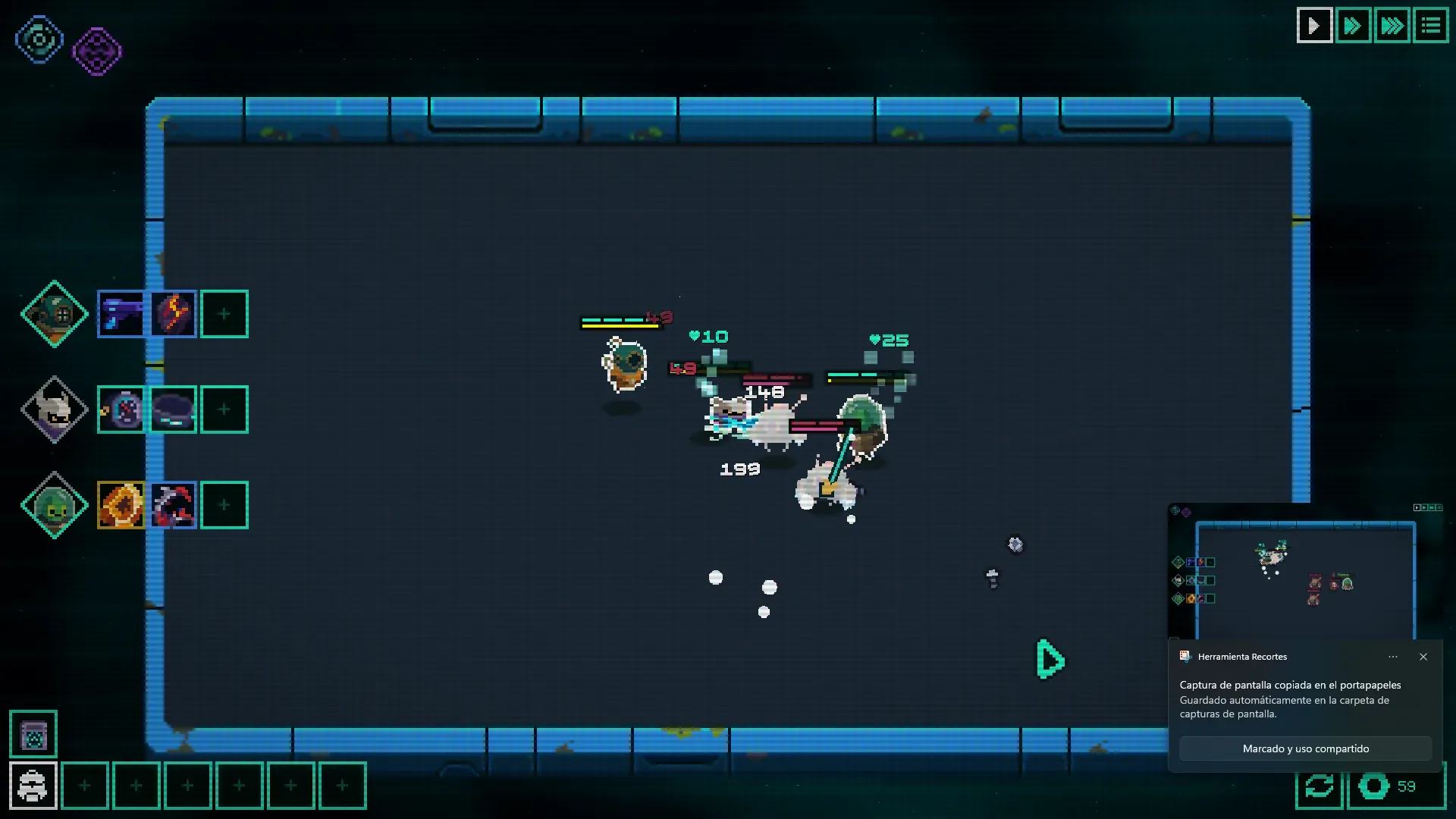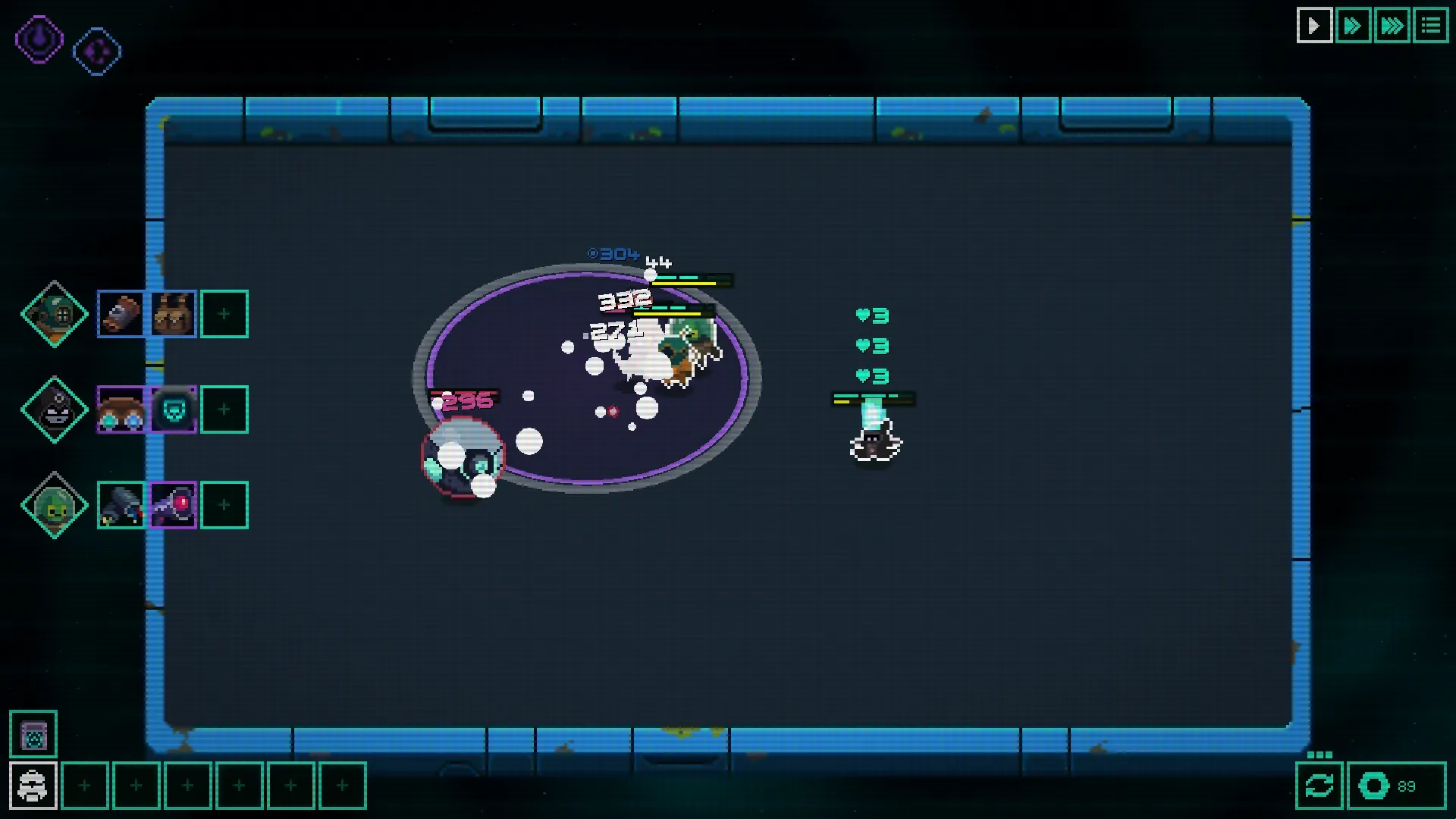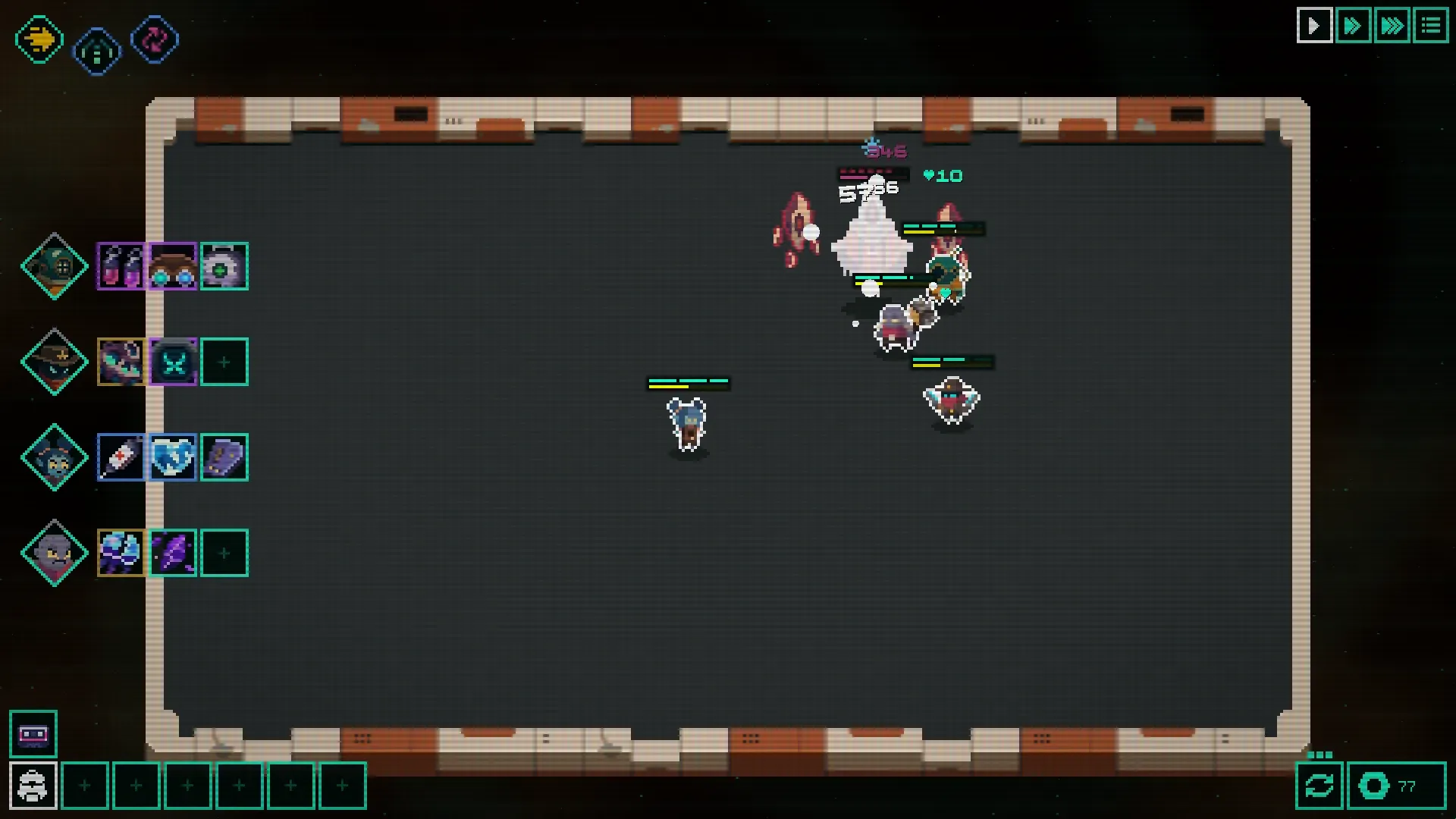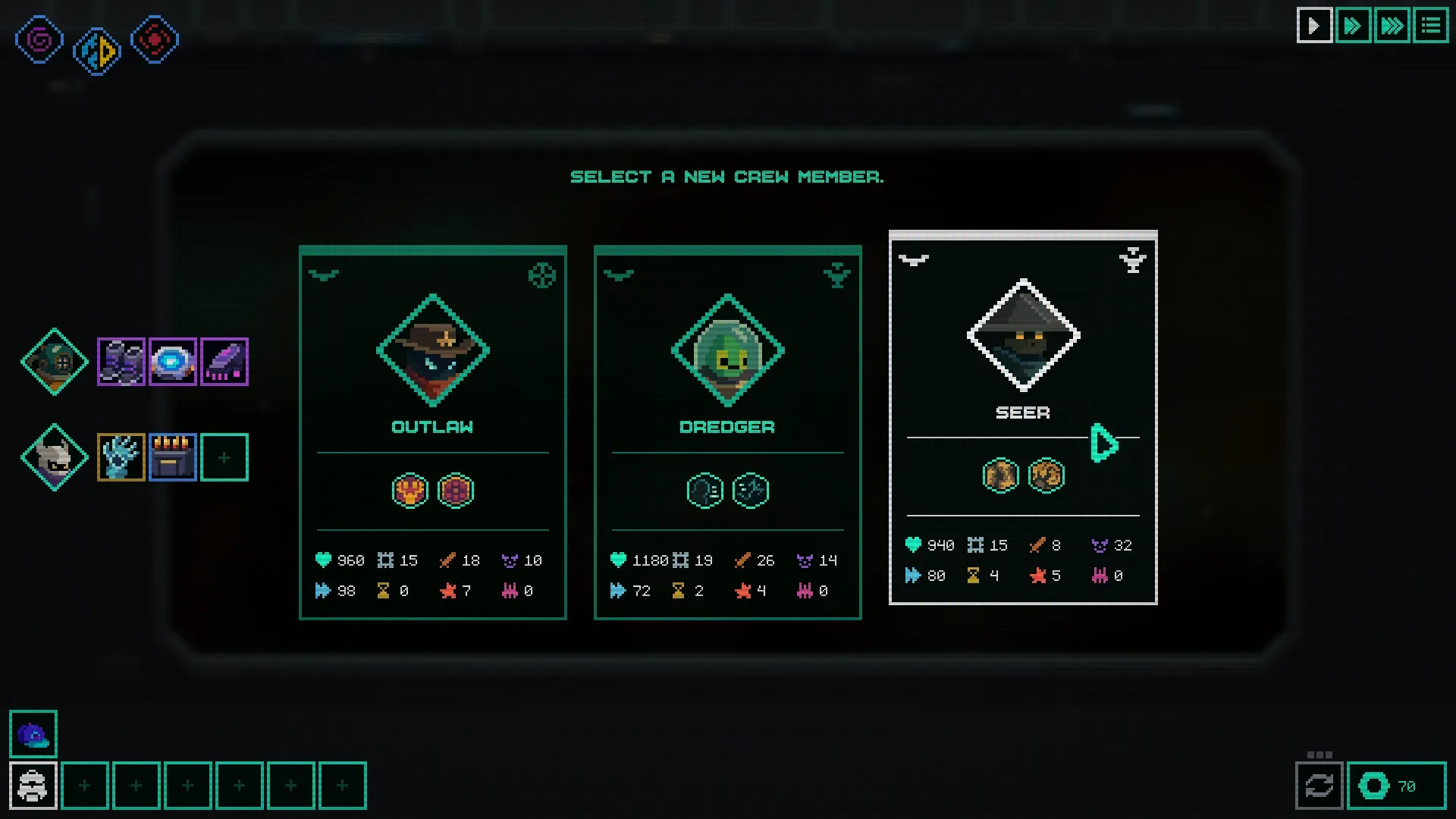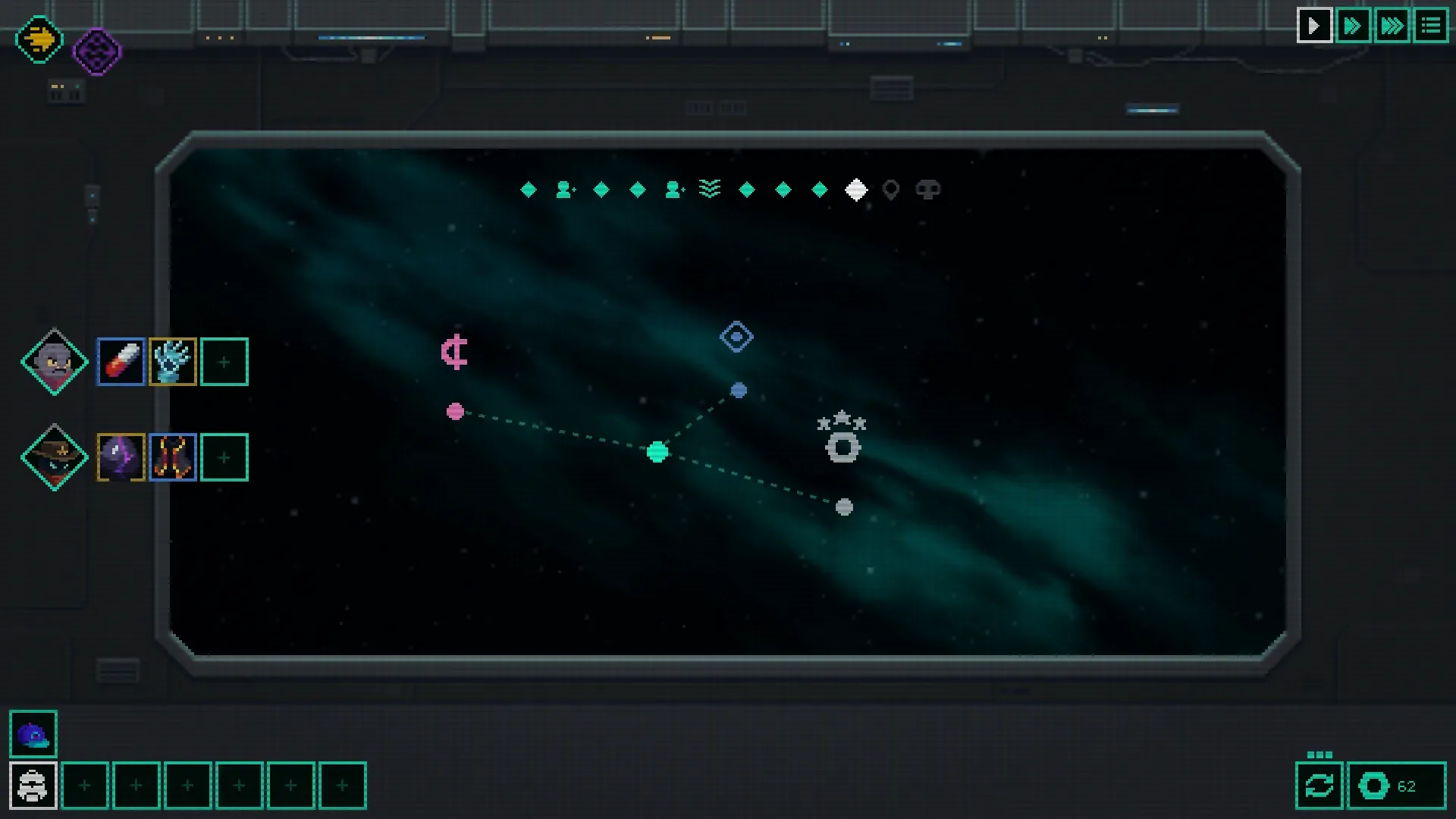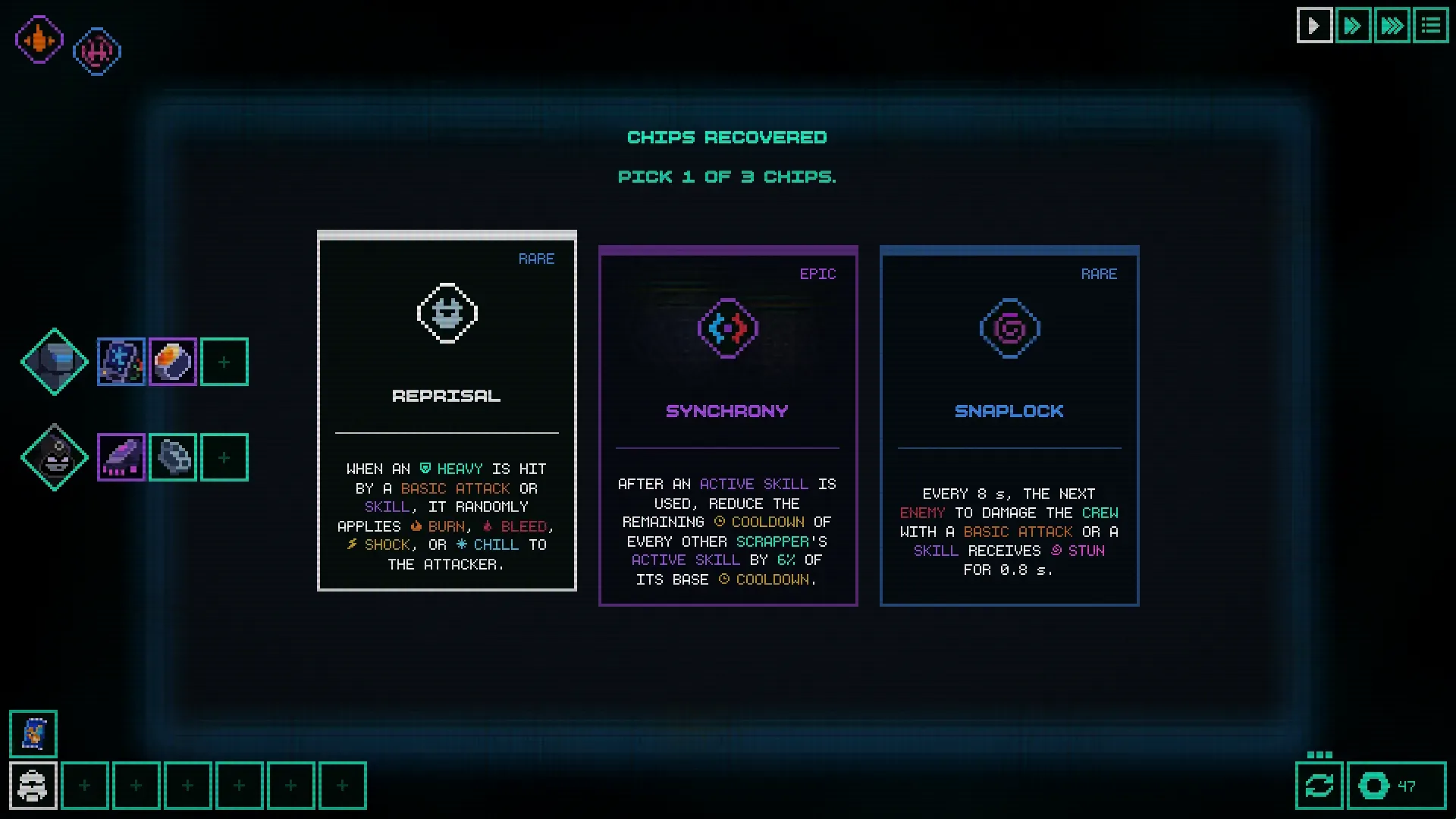
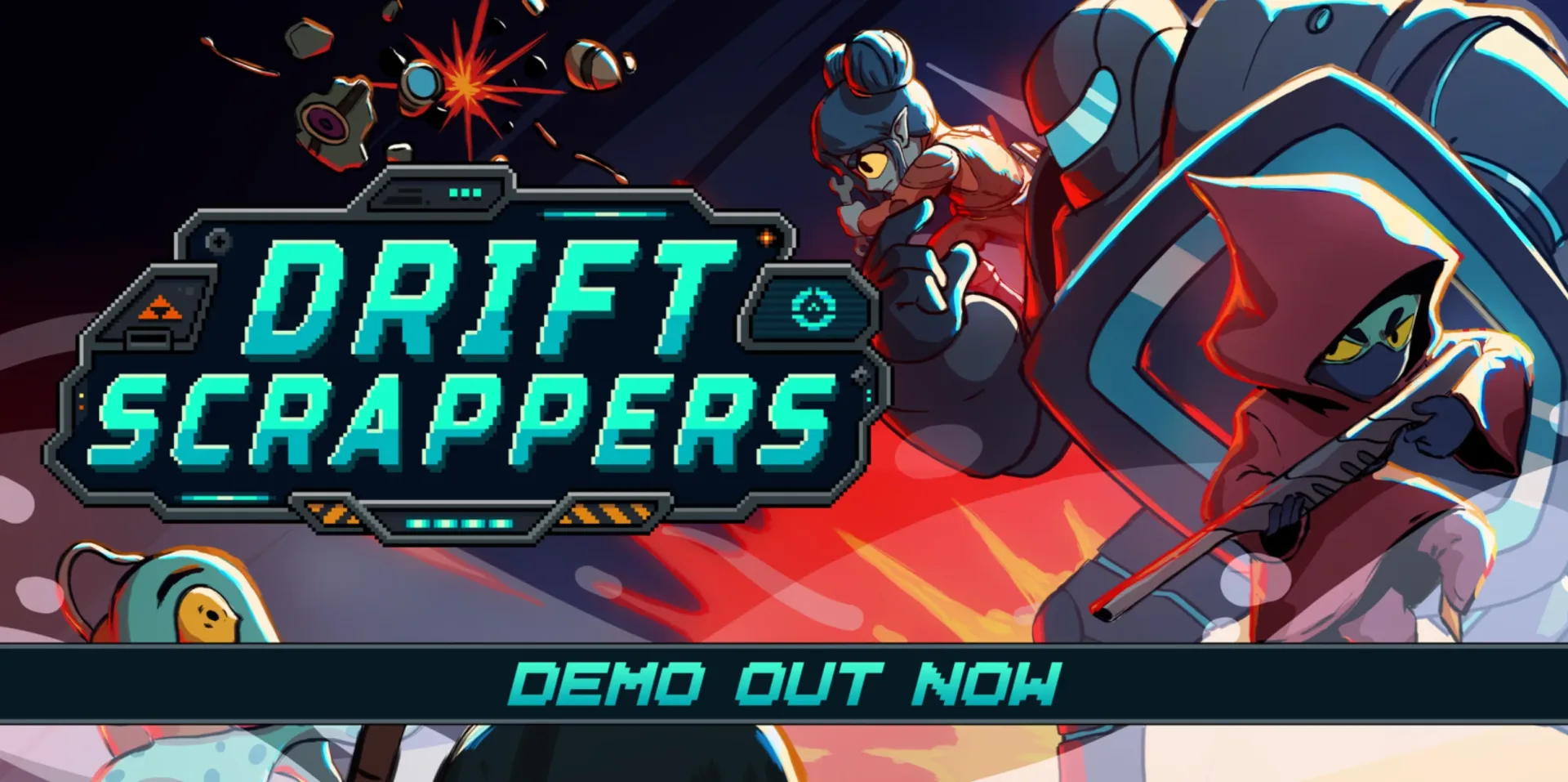
Drift Scrappers, a sci-fi roguelite autobattler from Howltide, has a demo available on Steam. The game asks players to assemble a crew of space scavengers—called scrappers—then shape that group through character gear, crew-wide chips, initial positioning and pad placement.
The available details point to a game where preparation is as important as the automated encounters themselves. Players can field up to five scrappers at once, with each member bringing a defined role and its own abilities. Rather than controlling every action during combat, the central decision-making appears to happen around crew composition and the systems that modify it.
A roguelite autobattler built around crew construction
Autobattler describes a strategy format in which units fight automatically after the player has set a lineup, equipped them or otherwise made tactical choices beforehand. That does not necessarily mean the player’s decisions are simple. In this kind of structure, a small change before a battle—such as moving a unit, changing its equipment or choosing a different group bonus—can alter how the whole team performs once the action begins.
Drift Scrappers frames that structure around a scavenger crew operating in a science-fiction setting. Its maximum party size of five gives the game a clear upper boundary for lineup-building: players will be choosing not merely which scrappers they like, but which roles and abilities complement one another within those five slots.
That distinction matters because a roster system can create more meaningful decisions than simply selecting five individually powerful characters. A crew may benefit from a blend of different functions, abilities or positioning needs, while another arrangement may lean harder into a particular tactic. The details currently available do not define the individual roles or the exact combat rules, so it is too early to label any one strategy as optimal. What is clear is that the game is designed to make the team itself the foundation of a run.
Gear is personal, while chips affect the whole team
Drift Scrappers separates its build systems into two levels. Each scrapper has access to individual gear, while chips apply effects across the crew. This is an important split because it gives players both targeted and broad ways to adjust a build.
- Gear is assigned to a specific scrapper, allowing a player to tailor one member of the crew.
- Chips affect the entire team, making them a shared layer of build construction.
- Relics are among the items that can be unlocked between runs, though their precise effects have not been detailed.
In practical terms, this setup suggests a useful planning question for each run: should a player use gear to reinforce one scrapper’s existing job, or use crew-wide chips to create a broader advantage that benefits several members? The answer will depend on the available options, the selected crew and how those effects interact. Since the game specifically emphasizes combining gear and chips, the most interesting choices may come from finding pairings in which an individual loadout and a shared bonus support the same overall plan.
This approach also gives the game room for different kinds of experimentation. A player can change a single crew member without completely abandoning a team-wide chip strategy, or keep favorite gear choices while testing a new set of shared effects. It is a system suited to iteration: adjust one layer, observe the result, then decide whether the rest of the build still fits.
Related coverage includes Drift Scrappers Demo Lands on Steam.
Positioning and pads add a board-level decision
Build choices in Drift Scrappers are not limited to who joins the crew and what they carry. Players select starting positions and can use pads to give their squad an advantage. Those two features introduce spatial decision-making into an otherwise automated battle format.
Starting positions are exactly what they sound like: the place each scrapper occupies when combat begins. Pads appear to be board elements that confer some form of benefit, although the demo announcement does not specify their effects or placement rules. Even without those particulars, their inclusion signals that a crew’s arrangement is intended to matter alongside its gear and chips.
For prospective players, that means a failed attempt may not always demand a full rebuild. A different opening formation or a better use of pads could be another avenue for improving a team. Conversely, a lineup that looks strong on paper may need a different placement approach to get the most from its abilities. The system makes the pre-battle phase more than an inventory screen: formation is part of the build.
Progression continues between runs
The game uses roguelite progression, with new scrappers, items, chips and relics unlockable between runs. A roguelite typically combines repeat attempts with some form of persistent progress, rather than resetting every available option permanently after each loss. Here, the stated purpose of those unlocks is to open additional combinations for players to try.
That emphasis on combinations is notable. Persistent unlocks can serve several purposes, but Drift Scrappers presents them primarily as new material for buildcrafting. A newly unlocked scrapper potentially changes the kinds of five-member crews that can be assembled. A new item, chip or relic could create another route for modifying an existing group. The result should be a growing pool of possible strategies over time, rather than a fixed set of choices from the beginning.
It also places the game’s replayability in its system interactions. The supplied information does not promise a particular narrative structure, a campaign length or a final release date. It does, however, clearly identify repeated runs and accumulating options as key parts of the experience.
Higher difficulties and endless loops set the long-term challenge
Beyond regular runs, Drift Scrappers includes higher difficulties and endless loops. The latter suggests players can continue pushing a build beyond an initial successful stretch to see how long it remains viable. Endless modes are especially compatible with autobattlers because they test whether a team has enough scaling, flexibility or resilience to keep up as challenges continue.
There is no detail yet on how difficulty levels change the game, how endless loops are structured or what milestones players can reach. Still, their presence gives the demo’s underlying systems a clear long-term target. It is not only about winning a single encounter; it is about refining a crew until it can withstand a more demanding sequence of battles.
Players who enjoy games driven by seasonal and repeatable combat systems may also recognize the appeal of adjustable challenge and sustained runs from other games that build progression around repeatable activities. Drift Scrappers’ version is more specifically focused on squad construction: five scrappers, their individual equipment, team chips and positional choices.
What the Steam demo establishes
The Steam demo provides an opportunity to see how these layers work together before more is known about the full game. The confirmed pillars are straightforward: recruit a crew of up to five, account for individual roles and abilities, equip personal gear, apply crew-wide chips, set positions, use pads and work toward new unlocks between runs.
For players drawn to strategy games where the important choices happen before the fight begins, Drift Scrappers’ premise is focused and readable. The game is not presenting scavenging merely as a setting; it is using a scavenger crew as the vehicle for a modular, repeatable build system. The challenge will be in discovering which scrapper lineups, gear choices, chip effects and formations can keep working when higher difficulties and endless loops begin to press the team.
The demo was released on November 13, with Steam identified as the platform for this early playable version.