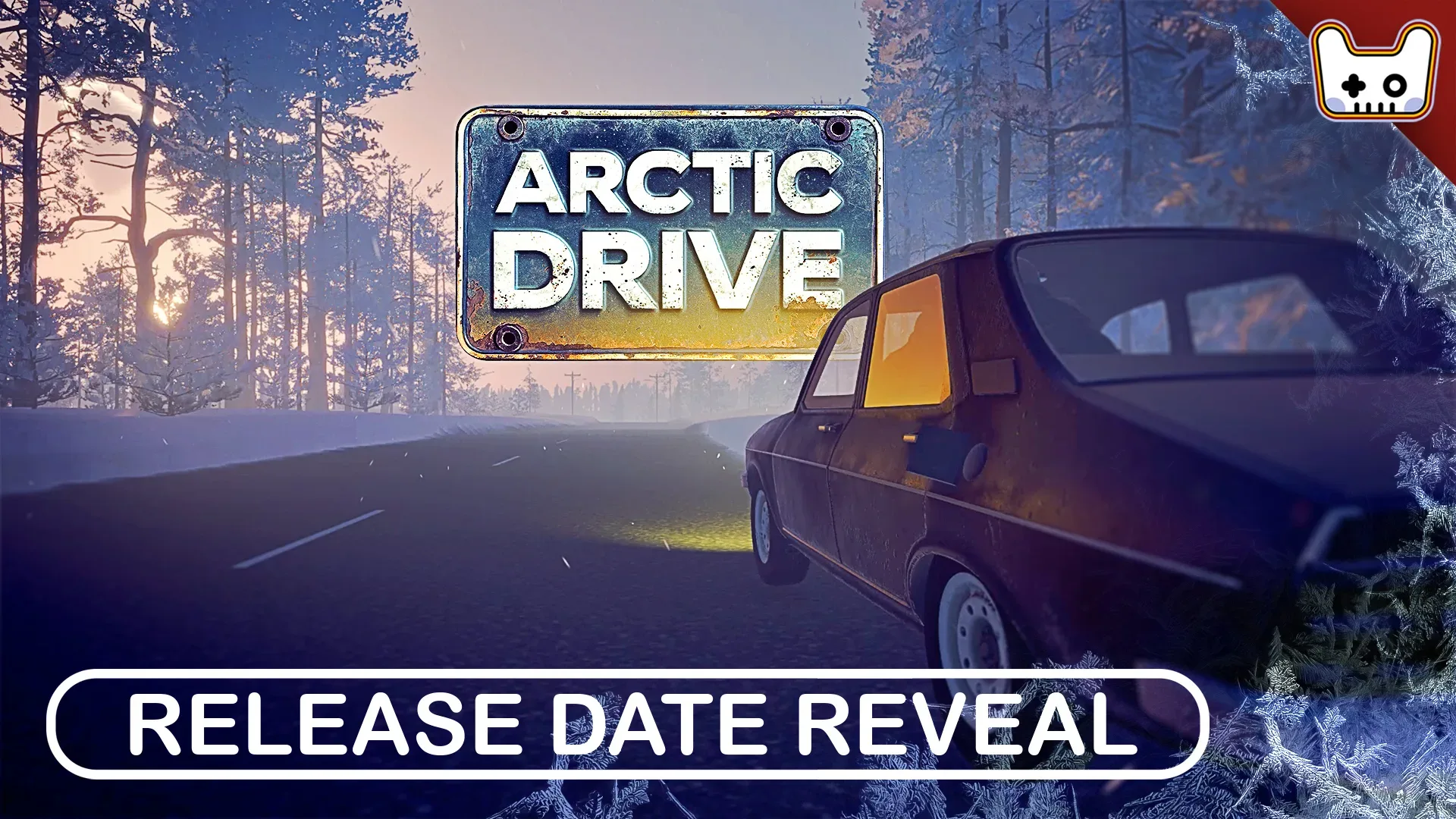
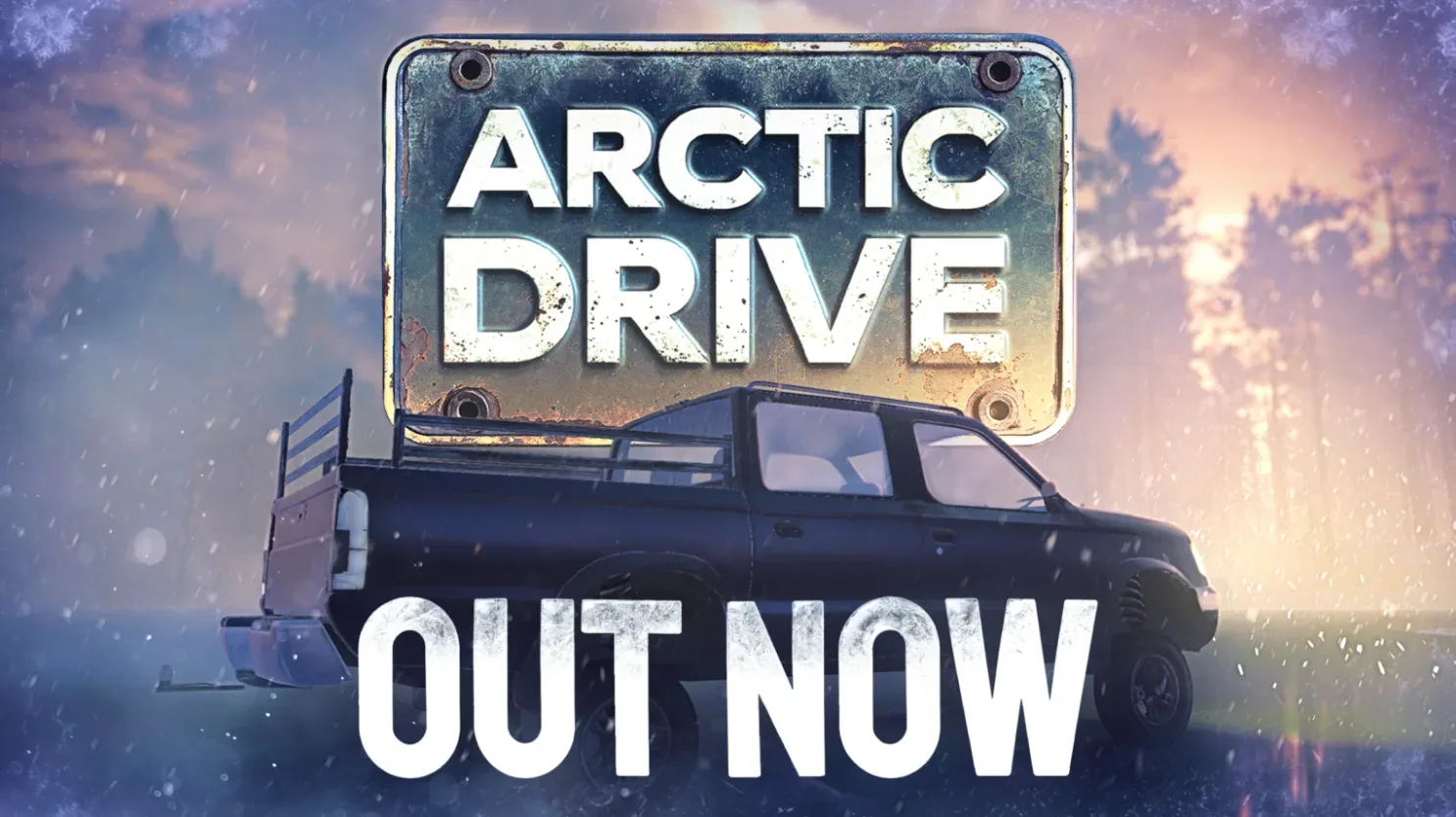
Arctic Drive is now available in Early Access on PC through Steam and on Xbox Series X|S. Released on November 25, 2026, the survival game puts a working vehicle at the center of a northward journey through a hostile Arctic landscape. The initial Early Access version supports as many as four players, with players able to choose between a story-led Scenario mode and a freer Sandbox alternative.
The premise is pleasingly direct: the car is not simply transportation between activities. It is the activity, the mobile shelter, and the piece of equipment that must remain functional if a run is going to continue. Players search locations for supplies and replacement parts, attach salvaged components to their vehicle, turn used gear into materials at workbenches, and eventually trade for stronger vehicles as they press farther north.
That focus distinguishes the game’s survival loop. Food, consumables, repairs, crafting materials, weather and route selection are all framed around the condition and capability of the vehicle. In the Arctic, a dodgy engine is less “minor inconvenience” and more “the universe has filed an objection to your entire expedition.”
A survival game where the vehicle carries the run
Arctic Drive’s basic structure is built around driving into unknown territory, stopping at points of interest, and weighing the value of whatever can be recovered against the risks of continuing. Parts and supplies can be found while scavenging, while used equipment can be broken down at workbenches into crafting materials. Those materials can then be made into consumables and repair parts.
In practical terms, that means scavenging is tied to maintenance rather than existing as a separate loot chase. A useful find may help restore a current vehicle, provide the materials for a needed item, or support a later upgrade. The game also allows players to swap vehicles, making progression not just a matter of adding parts to one car indefinitely, but of deciding when a different vehicle is worth pursuing.
Workbenches, in this context, are stations used to convert gear into materials and make new usable items or repairs. Consumables are items that are spent when used rather than permanently equipped. The supplied details do not specify the full list of craftable items, components or vehicle types, so players should regard the broader system as the confirmed framework rather than assume a particular crafting recipe or upgrade path.
Vehicle survival is also connected to the environment. Dynamic snowstorms and changing weather affect progression, while the roads and biomes change as the expedition moves north. “Dynamic” here means conditions are not merely a static visual backdrop: the weather is designed to have gameplay consequences. Exactly how storms alter driving, visibility, resource use, navigation, or access to locations has not been detailed.
Scenario mode offers a directed route; Sandbox emphasizes exploration
The Early Access build presents two ways to approach the frozen road. Scenario mode follows Brian’s journey through the Arctic and is described as goal-driven, objective-based play. That structure should suit players looking for defined tasks and a clearer throughline while still dealing with the game’s driving, scavenging and survival systems.
Related coverage includes Arctic Drive Enters Early Access on Steam and Xbox Series X|S.
Sandbox mode, meanwhile, is intended for open-ended exploration, looting and staying alive on the road. It is the less prescriptive option: rather than prioritizing a story objective, the focus is on making decisions from the resources, routes and hazards available in a particular run.
Neither description promises that the two modes have entirely separate mechanics. The important distinction is their emphasis. Scenario mode provides objectives within Brian’s Arctic trip; Sandbox mode gives more room for self-directed exploration and survival. Players who want to learn systems under a defined set of goals may gravitate toward Scenarios, while groups more interested in discovering points of interest and experimenting with vehicle progression may prefer Sandbox.
For readers following platform-specific game releases and community response, Joking Joystick’s coverage of the Golden Cat Awards’ platform-specific shortlists offers another look at how platform distinctions can shape the wider conversation around games.
Up to four players can take on the road together
Arctic Drive supports co-op for up to four players in its Early Access form. The game describes its central format as drive-centered co-op survival, which makes the shared vehicle particularly important. A group will be travelling, scavenging and maintaining gear around the same core expedition instead of simply occupying a wintry map side by side.
Co-op can change the texture of a survival game even without further specifics on role assignment or item sharing. With several players, exploration and vehicle upkeep become shared priorities: someone might search a point of interest while others manage the broader trip, but the supplied launch information does not confirm formal roles, permissions, or any division-of-labor features. What is clear is the player limit and the game’s emphasis on cooperative survival built around driving.
That emphasis matters because the vehicle is presented as a lifeline, not merely an optional convenience. A game structured around maintaining one key piece of transport gives groups a common operational problem. Salvage, repairs, upgrades and decisions about when to trade for a better vehicle all feed into the same question: can the expedition keep moving?
What Early Access means for Arctic Drive
Early Access means the game is being sold and played while development continues. It is not the same as a final, feature-complete release, and its content, balance and systems can change as updates arrive. Arctic Drive’s developers expect the Early Access period to last less than a year, though that is a plan rather than a guarantee.
The team intends to gather player suggestions and feedback through the Steam Forums and the Arctic Drive Discord. A roadmap is also in place to outline upcoming content and updates. The supplied details do not list those individual roadmap additions, their dates, or a final release target, so those items remain areas to watch rather than confirmed launch-window promises.
This feedback phase is especially relevant for a systems-heavy game. Vehicle parts, crafting materials, weather pressure, changing routes, loot locations and vehicle trading all interact in the central survival loop. Players can potentially identify where that loop feels too punishing, too generous, unclear, or especially satisfying. The stated feedback channels indicate that the development team plans to use community input during the Early Access period, but they do not guarantee that any particular player suggestion will be implemented.
Strong early attention, with the road ahead still evolving
Arctic Drive begins Early Access with nearly 200,000 wishlists, following a demo played by more than 100,000 players. Those figures show meaningful pre-release interest and a substantial group that has already had some exposure to the game’s concept. They should not be read as a measure of current sales, a review score, or a promise of how the game will develop; they describe wishlisting and demo participation.
For players deciding whether the current build matches their interests, the confirmed proposition is clear. Arctic Drive offers a cold-weather survival experience where driving is the backbone of progression, not an intermission between scavenging encounters. It includes four-player co-op, objective-led Scenarios involving Brian’s journey, and a Sandbox mode for more open-ended road survival. Snowstorms, weather, evolving roads and changing biomes are part of the attempt to make the push north increasingly demanding.
The Early Access question is therefore less about whether there is a survival framework in place and more about how much players want to participate while its future content and updates are still being shaped. The core pitch is already unusually focused: find what you can, keep the vehicle alive, make better use of salvaged gear, and hope the next stretch of road does not turn a promising expedition into a snowbound repair bill.