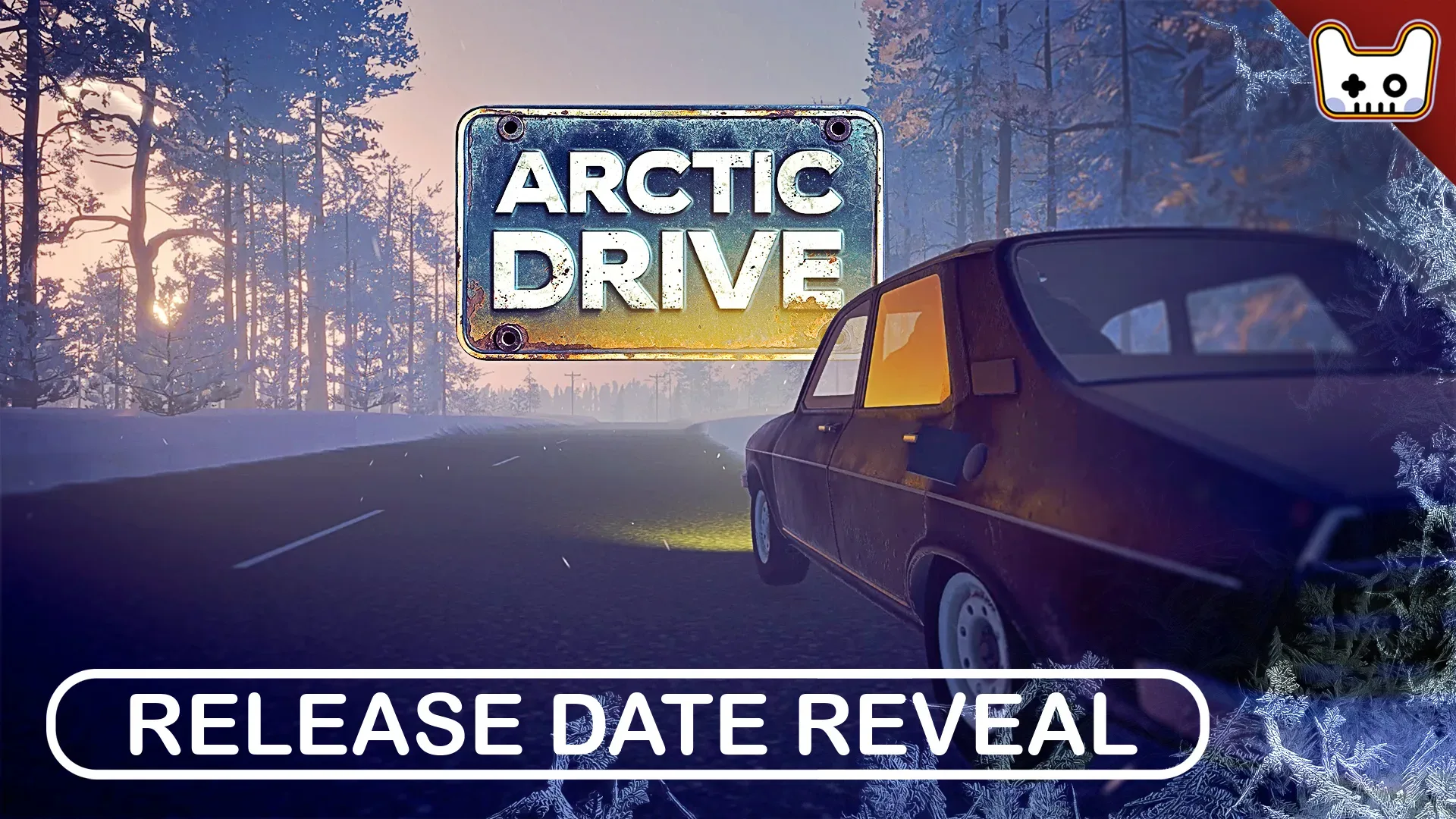
Arctic Drive is scheduled to enter Early Access on Steam and Xbox on November 25, 2026. Developed by PlayTogether Studio and Pebbles Games and published by Bonus Stage Publishing, the game frames an Arctic survival journey around an unusually central piece of equipment: the vehicle carrying players through the wilderness.
The premise is straightforward, even if surviving it may not be. Arctic Drive is a one-to-four-player cooperative survival simulation set in a procedurally generated winter landscape. Players are expected to search for supplies, maintain and repair their rig, then keep it moving toward safety while managing the threats of the environment.
Two pre-release playtests have already produced a sizeable travel figure. Nearly 50,000 players covered almost 5 million kilometres in-game across those tests, the development teams say. That total does not establish how the finished experience will play, but it does indicate that the driving-and-survival loop has received a substantial round of pre-launch participation before Early Access begins.
A survival game where the car is part of the survival equation
Many survival games make tools important. Arctic Drive appears to put the car closer to the centre of the whole system. It is transport, a practical means of hauling supplies, and apparently the line between a recoverable expedition and a very cold problem with no obvious solution.
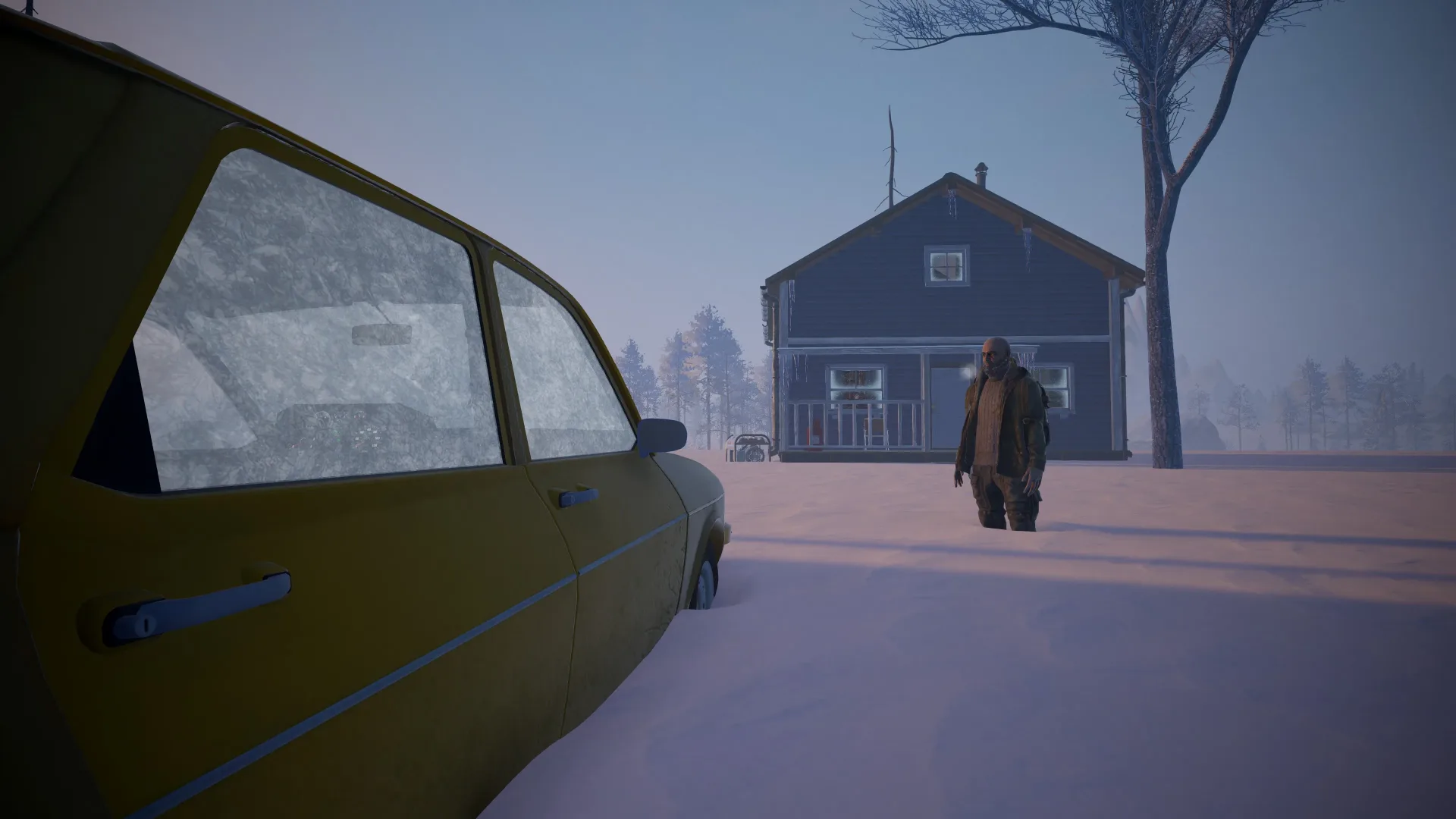
The game’s listed features include fully simulated vehicle damage, with a deformable chassis and individual parts. In plain terms, the rig is not simply described as having a single abstract health bar: damage is intended to affect its physical structure and components. The developers have not detailed the precise repair procedures or failure states, so players should not assume a particular level of mechanical complexity beyond what has been announced. Still, the stated system makes vehicle condition a core consideration rather than cosmetic scenery.
That focus provides a useful contrast with games where reaching a destination is mostly a matter of holding accelerate and avoiding obstacles. Here, the journey is also about preserving the machine that makes the journey possible. A collision, hard terrain, or the cumulative strain of travel could matter because the vehicle must continue carrying people and gear through a hostile climate.
Repair work is explicitly part of the advertised loop. Players will find supplies, fix the rig and haul it onward. It is a sensible structure for a winter survival game: progression is not merely locating resources but getting those resources into a usable vehicle and taking them somewhere meaningful.
Vehicle upkeep has been a notable concern in other driving games too, as illustrated by a recent look at clarified career repairs in NASCAR 26. Arctic Drive is pursuing a very different kind of driving challenge, however. Its stated purpose for damage and repair is survival in a generated wilderness rather than competition on a track.
Related coverage includes Arctic Drive Heads to Steam and Xbox Early Access on November 25.
Physical cargo, trailers and mobile bases
Arctic Drive’s equipment handling is also presented as physical rather than menu-only. Objects can be lifted and loaded, meaning cargo management is intended to involve moving items through the world and into the vehicle. That matters when supplies, storage space and mobility are closely linked.
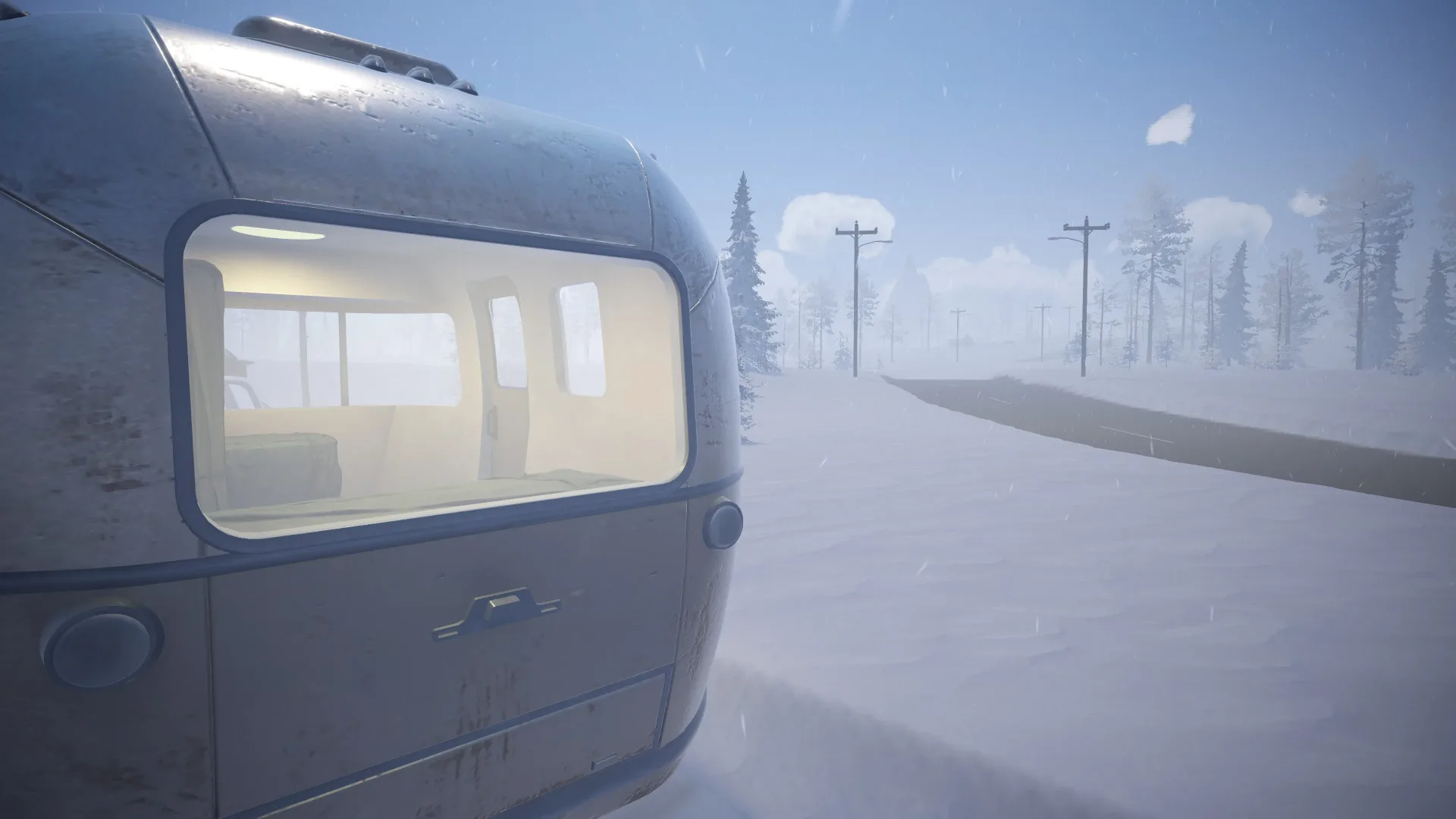
The game will also include trailers and RVs that can be converted into mobile bases. A mobile base is exactly what it sounds like: instead of treating shelter as a fixed building left behind on the map, players can potentially build useful living and storage capacity around something that travels with the group. The announcement does not specify the full construction system, the available conversions, or whether every vehicle can serve this role. What is confirmed is the broader goal of making trailers and RVs into movable hubs.
For co-op teams, this could create natural divisions of responsibility without requiring the game to assign formal classes. One player might focus on locating resources, another on loading and arranging cargo, and another on tending to repairs or route decisions. That is an inference from the announced systems, not a confirmed role structure, but physical objects, limited transport and repairable vehicles tend to create exactly those practical conversations.
It could also make a successful expedition feel less like a clean run from point A to point B. Bringing home—or simply bringing along—the right supplies matters if the group must physically carry them. A trailer is therefore not just extra visual flavour; it could be the difference between a team that has room to prepare and one that has to leave useful gear behind.
The wilderness is generated, and so are the travel complications
The Arctic environment will be procedurally generated. Procedural generation means the game uses systems to create its wilderness rather than relying only on one fully fixed map arrangement. Arctic Drive has not specified how locations, resources, roads or objectives will vary, so the safest expectation is variability in the general environment, not a promise of any particular type of random event.
That variability fits the game’s vehicle-led design. If the surroundings change from trip to trip, route planning and packing decisions should remain relevant rather than becoming entirely memorised. The value of a working vehicle also rises when the next stretch of wilderness cannot be approached as a known, rehearsed route.
Weather and visibility are named dangers. Arctic Drive will feature blizzards, whiteouts and a full day-night cycle. A whiteout is a condition in which snow and light can severely reduce contrast and visibility, making it difficult to distinguish terrain or landmarks. In a game centred on travel, that is more than atmosphere: limited sight lines can complicate navigation, slow decision-making and make the condition of the rig even more important.
A day-night cycle likewise establishes a changing environment over time. The announcement does not say whether particular threats intensify at night or whether players can skip time, so those details remain unknown. Its presence does, however, support the broader picture of travel that has to be planned around shifting conditions rather than conducted in a permanent, clear daylight window.
Hunger, thirst and temperature form the human side of the challenge
The game is not solely about maintaining machinery. Players will manage hunger, thirst and body temperature. These are familiar survival-game systems, but their combination with an Arctic setting gives them a direct relationship to the vehicle and the proposed mobile-base setup.
Body-temperature management refers to tracking a character’s exposure to cold and the means used to stay warm. The announcement does not outline specific warming items, shelters or penalties. What it confirms is that cold will be represented as a survival concern alongside food and water, rather than merely as visual ambience.
This is where Arctic Drive’s stated feature set forms a coherent chain. Weather can limit visibility. The cold affects the people making the journey. Supplies must be found and moved. The vehicle can be damaged but repaired. Trailers and RVs can become mobile bases. Each part points back toward a game about preparing for the next leg of an uncertain trip, not just driving through snow for its own sake.
Scenarios or sandbox, alone or with a crew
Arctic Drive will offer optional scenarios as well as an open sandbox mode. The terms describe two potentially different ways to engage with the same survival systems. Scenarios generally suggest directed situations with defined conditions or objectives, while a sandbox emphasizes open-ended play and player-set goals. The exact objectives, scenario count and progression structure have not been announced, so those distinctions should be treated as the broad formats confirmed for Early Access rather than a detailed feature list.
Online co-op supports one to four players. This is an important limitation as well as a feature: the confirmed multiplayer format is a small group, not a large shared-world server. The game can also be approached solo, based on the stated one-to-four-player support, allowing players to take on navigation, loading, vehicle maintenance and personal survival without a crew.
For groups, Arctic Drive’s premise has obvious room for emergent mishaps: poorly packed cargo, an inconvenient repair job, a sudden loss of visibility, or disagreement over what deserves the last space in the trailer. None of those specific situations has been promised, but the announced combination of physical loading, damage, weather and cooperative survival gives the game its potential personality.
What the November 25 launch does—and does not—confirm
The confirmed date is November 25, 2026, for Steam and Xbox Early Access. The announcement identifies Xbox Early Access but does not name a specific Xbox console model, confirm cross-play, state a price, or offer a timetable for leaving Early Access. Those are details prospective players will need to wait for rather than infer from the platform wording.
Likewise, the announced feature list should not be mistaken for a complete specification of the build. There is no confirmed information here on server hosting, controller support, save systems, mod support, localisation, accessibility options, minimum PC requirements or the exact scope of content available on day one.
What is clear is the intended foundation: a generated Arctic wilderness, a repairable and physically consequential vehicle, movable base options, survival needs, severe weather, scenarios and sandbox play, with room for up to four online players. Arctic Drive’s Early Access version will be the first opportunity for the wider Steam and Xbox audience to see how tightly those systems hold together when the road disappears into the snow.