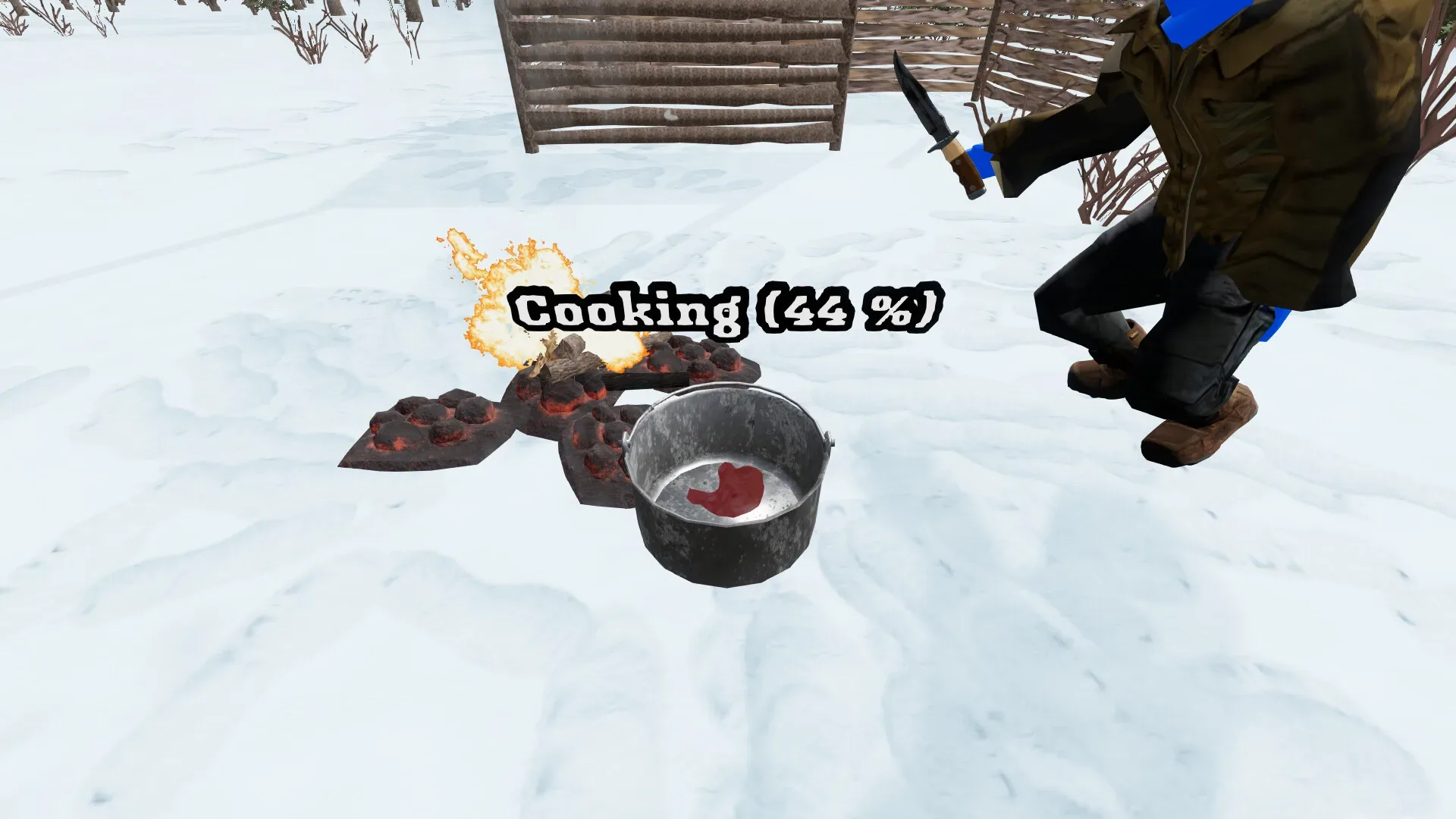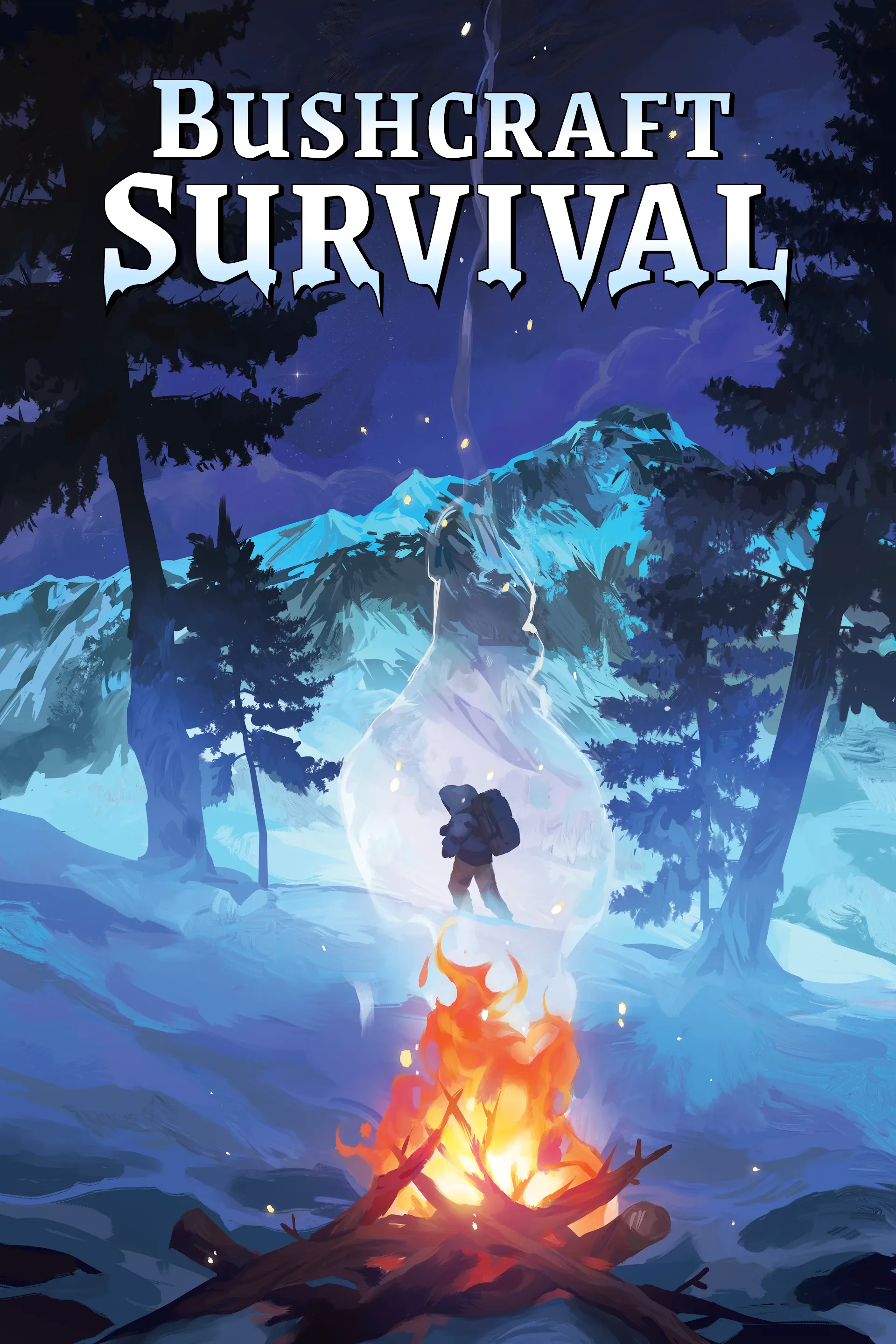
Bushcraft Survival, a cold-weather forestry survival game from solo developer Michael Burt of Michael Jared Software, is planned for PC via Steam Early Access in 2027. Bonus Stage Publishing will publish the project, which places players in Northern Canadian forests with a small pack of tools, a helicopter departure, and the immediate problem of remaining alive after the rotors disappear over the trees.
A free demo is currently available on Steam. That gives interested players a way to examine the game’s approach before its Early Access release, although the announced information does not set a specific 2027 launch date or describe the demo’s exact boundaries.
A survival game centered on the work between tree and shelter
The clearest distinguishing feature in Bushcraft Survival is not simply that players can build a cabin-like refuge. It is that the announced construction process is meant to involve the individual handling stages. Players fell spruce trees, remove branches, position logs, and tie those logs together by hand. The game does not use blueprints for shelter construction.
In practical terms, blueprint-free building means construction is presented as an activity based on arranging materials rather than choosing a finished structure from a preset menu and supplying a required resource count. The announcement does not spell out every limitation or building outcome, so it would be premature to promise unrestricted construction. But the stated design direction points toward a more tactile, process-led survival loop: gather wood, prepare it, place it, secure it, then rely on the result.
That sequence matters because it puts forestry at the center of the game’s identity. A spruce is not merely a glowing resource node that becomes a number in an inventory. It is described as something that must be worked through stages. The detail is specific enough to show where the developer’s priorities lie: the game wants the preparation of materials to be part of the challenge, not an invisible step skipped on the way to a shelter.
“Bushcrafters notice fast when a game gets the craft wrong. In Michael's game you take the branches off a spruce before you cut it down. That was when we knew,” said Asmo Saloranta of Bonus Stage Publishing.
Cold, damp clothing and fire are part of the pressure
The setting is an icy forest in Northern Canada, and the initial setup is intentionally spare. A helicopter leaves the player with a backpack and a few tools before flying away. Survival then depends on managing exposure as well as assembling a safe place to stay.
The announced mechanics specifically include keeping clothing dry and maintaining a fire. Those are useful details because they describe hazards with a direct relationship to player choices. A fire is not framed solely as a cooking station; it is part of enduring the cold. Dry clothes are not just cosmetic equipment; they are an ongoing condition to protect. Wildlife, including moose, adds another named environmental concern.
Related coverage includes Bushcraft Survival Targets Steam Early Access in 2027.
Survival loop is the term commonly used for the repeating set of activities that keeps a player progressing—or at least alive—in a survival game. Bushcraft Survival’s outlined loop begins with material collection and shelter work, then overlaps with warmth, dryness, food preparation, and interaction with wildlife. The sequence can change based on immediate need. A player caught without a reliable fire may prioritize fuel over building; a player with shelter but little food may turn to fishing, trapping, hunting, or cooking.
The announced feature list includes ice fishing, trapping, hunting, and open-fire cooking. Each belongs naturally to that loop, but the available details do not establish how deep their individual systems go, how food preservation works, or which animals beyond moose are present. Likewise, the announcement does not say whether wildlife behavior is designed around passive observation, direct danger, hunting systems, or a combination of those elements. Those are sensible questions for the demo and for later Early Access updates rather than facts to assume now.
Survival Mode and Sandbox Mode serve different appetites
Bushcraft Survival will include Survival Mode and Sandbox Mode. The names strongly indicate two different ways of approaching the same wilderness toolset, though their exact rules have not been detailed.
Survival Mode is the most likely home for the game’s core pressures: cold, clothing condition, fire maintenance, food gathering, shelters, and wildlife. Sandbox Mode, by contrast, generally signals a less structured environment focused on experimentation or building. That distinction is an interpretation of the mode names rather than a confirmed list of settings, so players should wait for the developer to clarify what systems can be changed, relaxed, or expanded in each mode.
Even so, including both at announcement is notable. A process-heavy construction system can appeal to players who enjoy facing consequences for poor preparation and to people who simply want to make a shelter, refine its layout, and learn the tools without feeling rushed. Separate modes could make room for both groups without forcing a single pace onto every session.
Solo runs or a four-player camp
The game supports single-player play and online co-op for up to four people. Co-op is especially relevant to the stated building process because a task-driven wilderness game can produce natural division of labor. One player might search for usable wood while another keeps a fire going, prepares a meal, or handles fishing and traps. That is a potential implication of the feature set, not confirmation of any formal jobs, shared inventories, role systems, or required teamwork.
Four-player support also raises practical questions that have not yet been answered: how progress is saved, whether the game uses hosted sessions or dedicated servers, whether survival conditions scale with group size, and what happens when members join an established camp. None of those details were announced. For a game that emphasizes manually placed materials, construction permissions and persistence will be particularly important items to watch as development moves toward Early Access.
The ski lodge is positioned as the starting point for each run, where new tools await for the next outing. The description suggests a recurring structure rather than a single one-and-done drop into the forest. However, it does not confirm a broader progression economy, permanent upgrades, unlock conditions, or the precise way those new tools are earned. The safest reading is that the lodge functions as a staging location linking runs, with additional tool access being part of that loop.
What Early Access means here—and what remains unknown
Early Access is a release model in which a game is made available before its developers consider it complete, allowing an audience to play while further development continues. It can be a good fit for systems-led survival games because building, resource balance, co-op stability, and long-term replayability often benefit from player feedback. It also means prospective players should distinguish the confirmed premise from guarantees about the final scope.
For Bushcraft Survival, the confirmed foundation is substantial but focused: a Northern Canadian forest setting, manual spruce-based shelter work without blueprints, cold and wetness concerns, fires, food-gathering activities, wildlife including moose, solo play, and online co-op for up to four players. Survival and Sandbox modes are also confirmed. What has not been specified includes a final release date, a price, the length or contents of the demo, complete platform plans beyond PC Steam, controller support, mod support, and the full roadmap for Early Access.
That separation is worth keeping clear. A very specific tree-preparation detail can tell players much about the intended feel of a game, but it cannot by itself answer every question about content breadth, technical performance, or the rate at which features will arrive. The free demo is the immediate opportunity to see how the game communicates its hands-on ambitions.
For players tracking other projects that enter development through Steam’s evolving-release model, Gently Packed’s Early Access opening is another recent example of a PC game making that route part of its launch plan. Bushcraft Survival’s pitch is very different: less about a single carefully packed object, more about turning a few tools and a frozen stand of spruce into the beginnings of a livable camp.
The appeal is in the deliberate pace
Survival games often advertise danger, but Bushcraft Survival’s announcement spends much of its attention on preparation. Removing branches, laying logs into position, tying them down, drying clothing, and feeding a fire are all actions with a slower rhythm than a conventional crafting menu. That can make the result of a successful shelter feel earned, provided the controls and systems communicate each step clearly.
There is room for tension without turning every moment into combat. The helicopter’s departure establishes isolation; cold creates a constant practical demand; limited starting gear encourages improvisation; and wildlife can make a comfortable-looking stretch of forest less predictable. Ice fishing, trapping, hunting, and open-fire cooking broaden the set of ways players may address food needs, while co-op gives groups a chance to turn the same tasks into a shared camp routine.
For now, Bushcraft Survival is a clearly defined concept with a 2027 Steam Early Access target rather than a fully detailed product roadmap. Players curious about its manual approach to forestry and shelter construction can try the available demo, while watching for fuller information on mode rules, co-op implementation, progression, and the project’s eventual Early Access date.