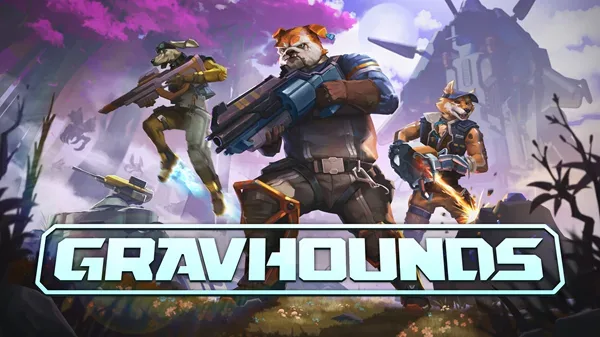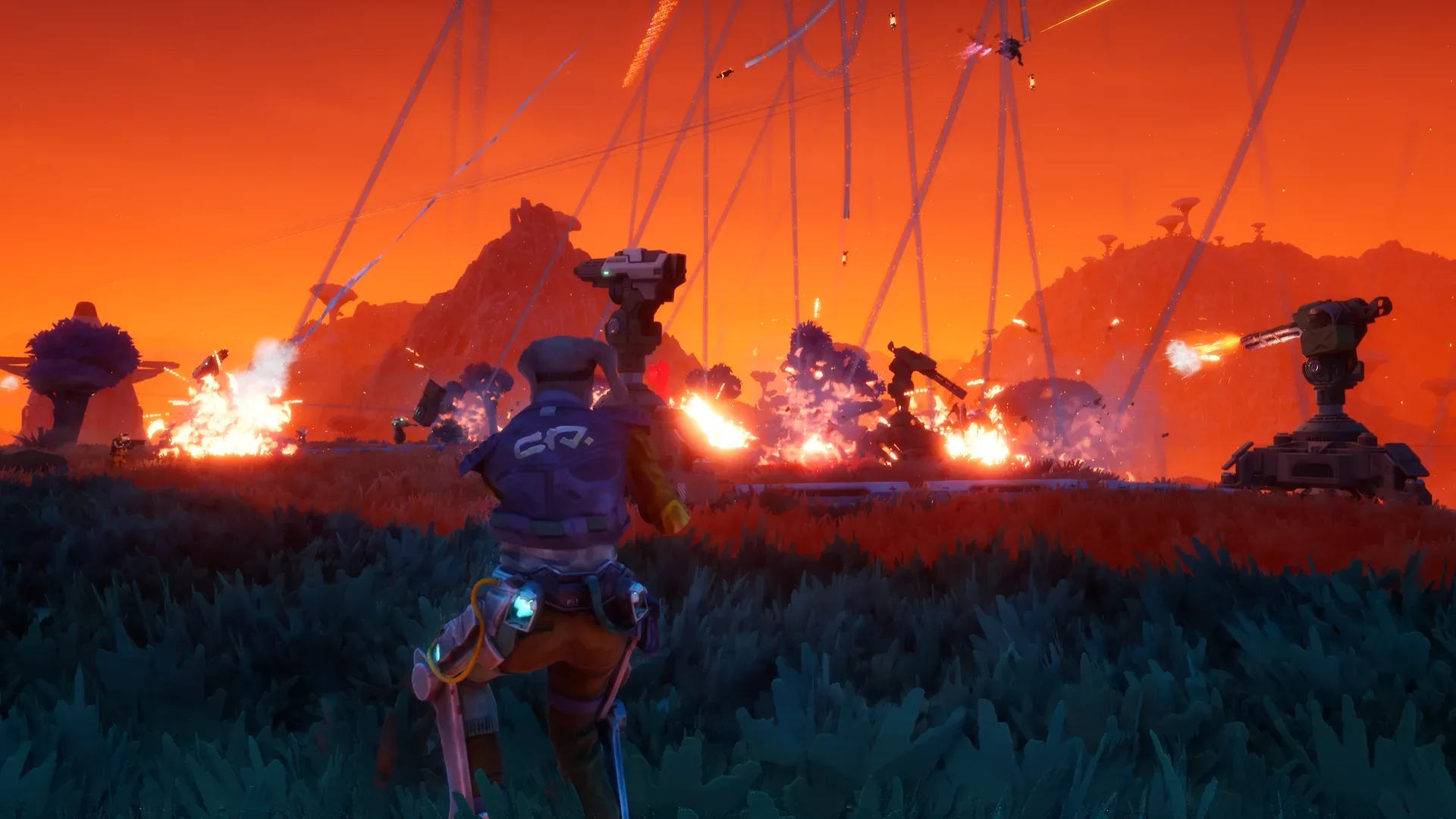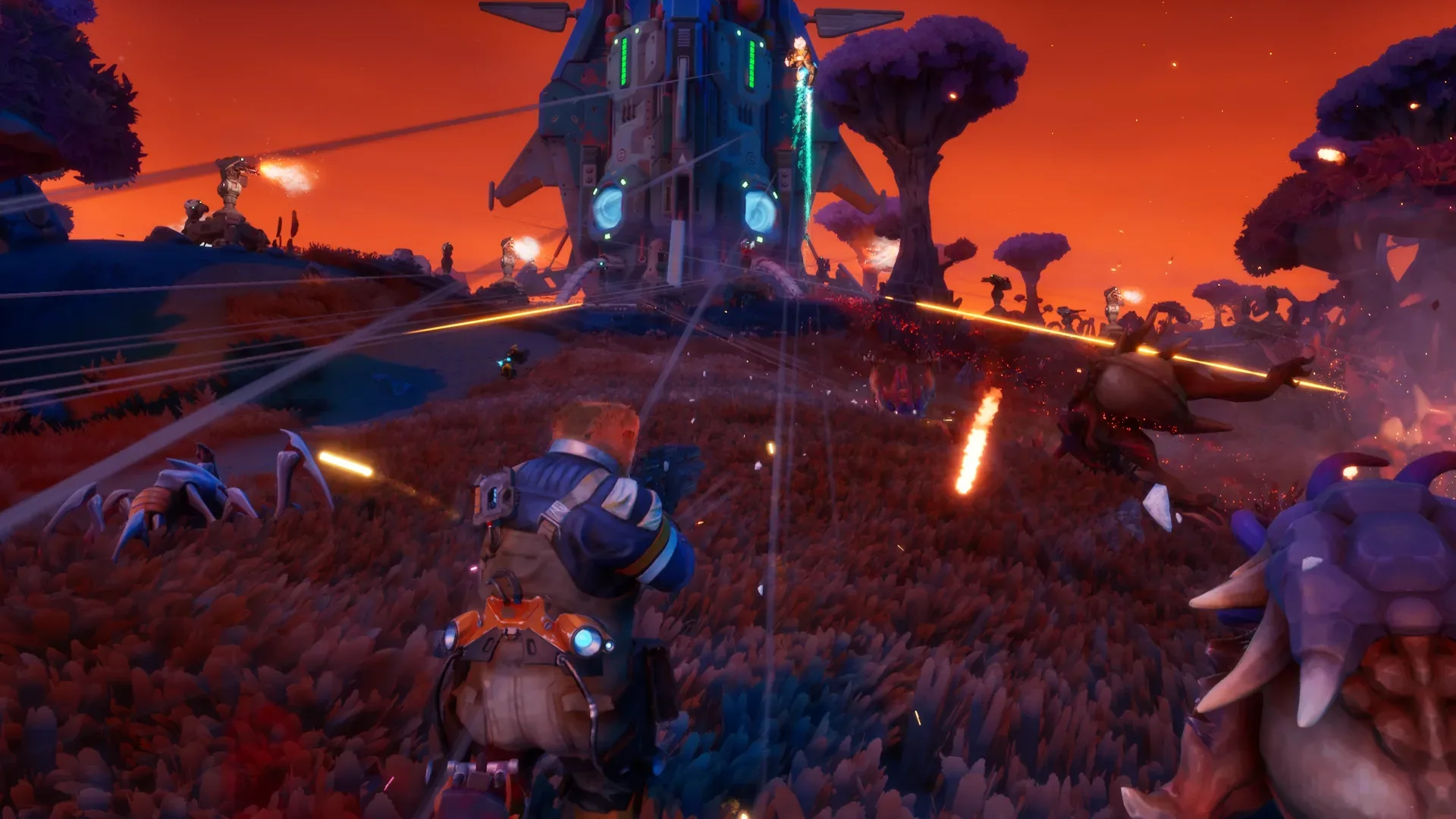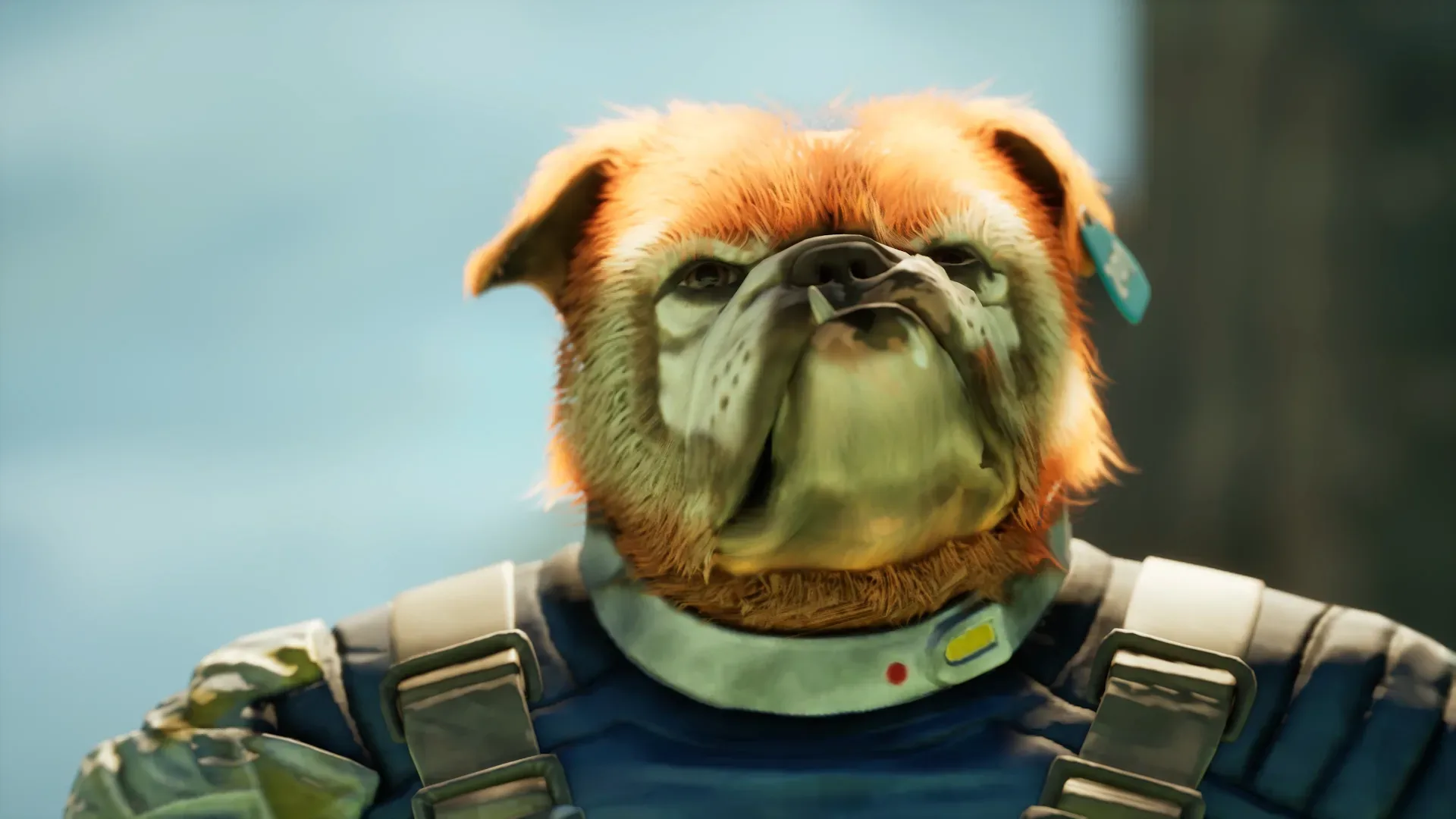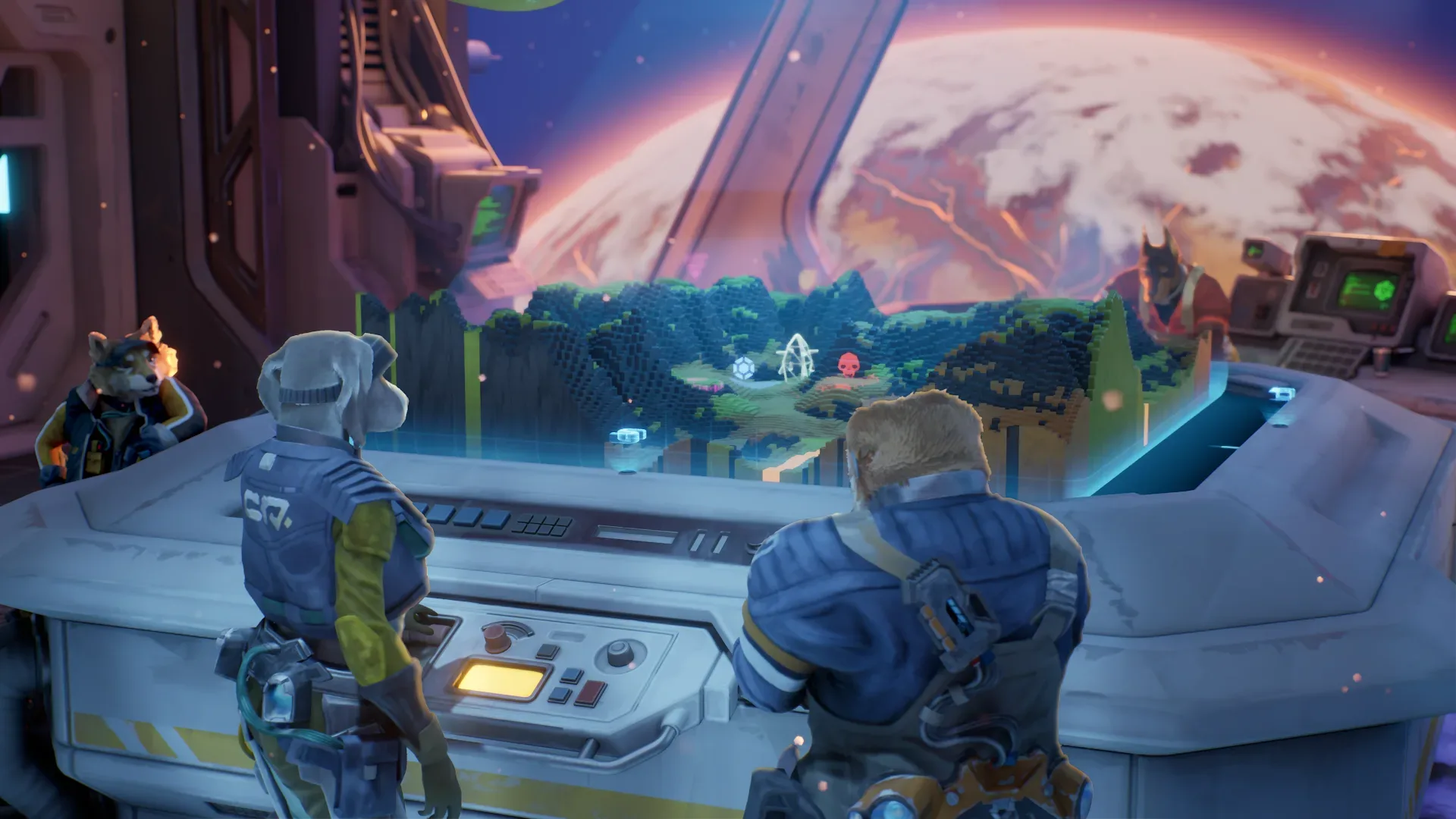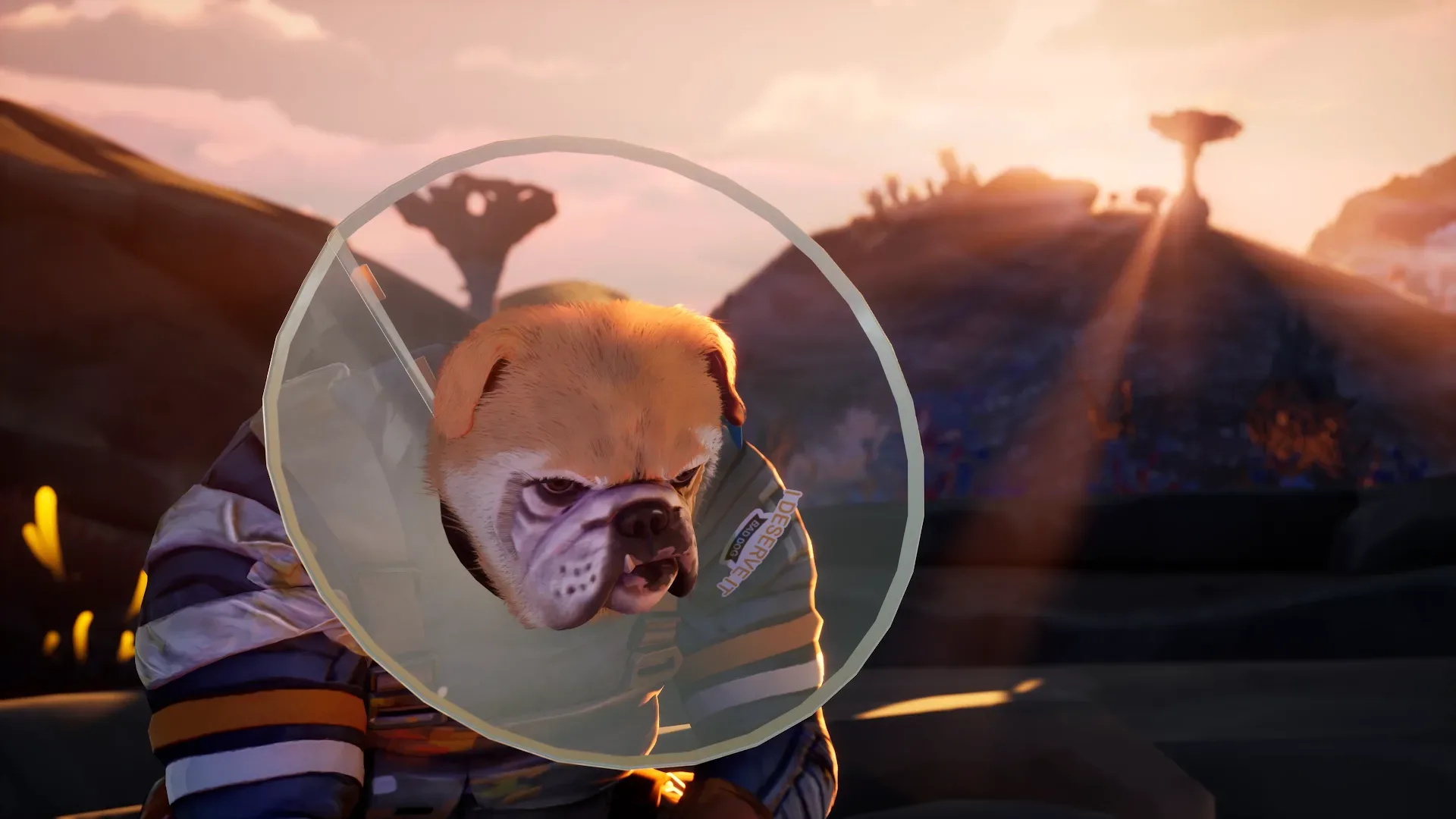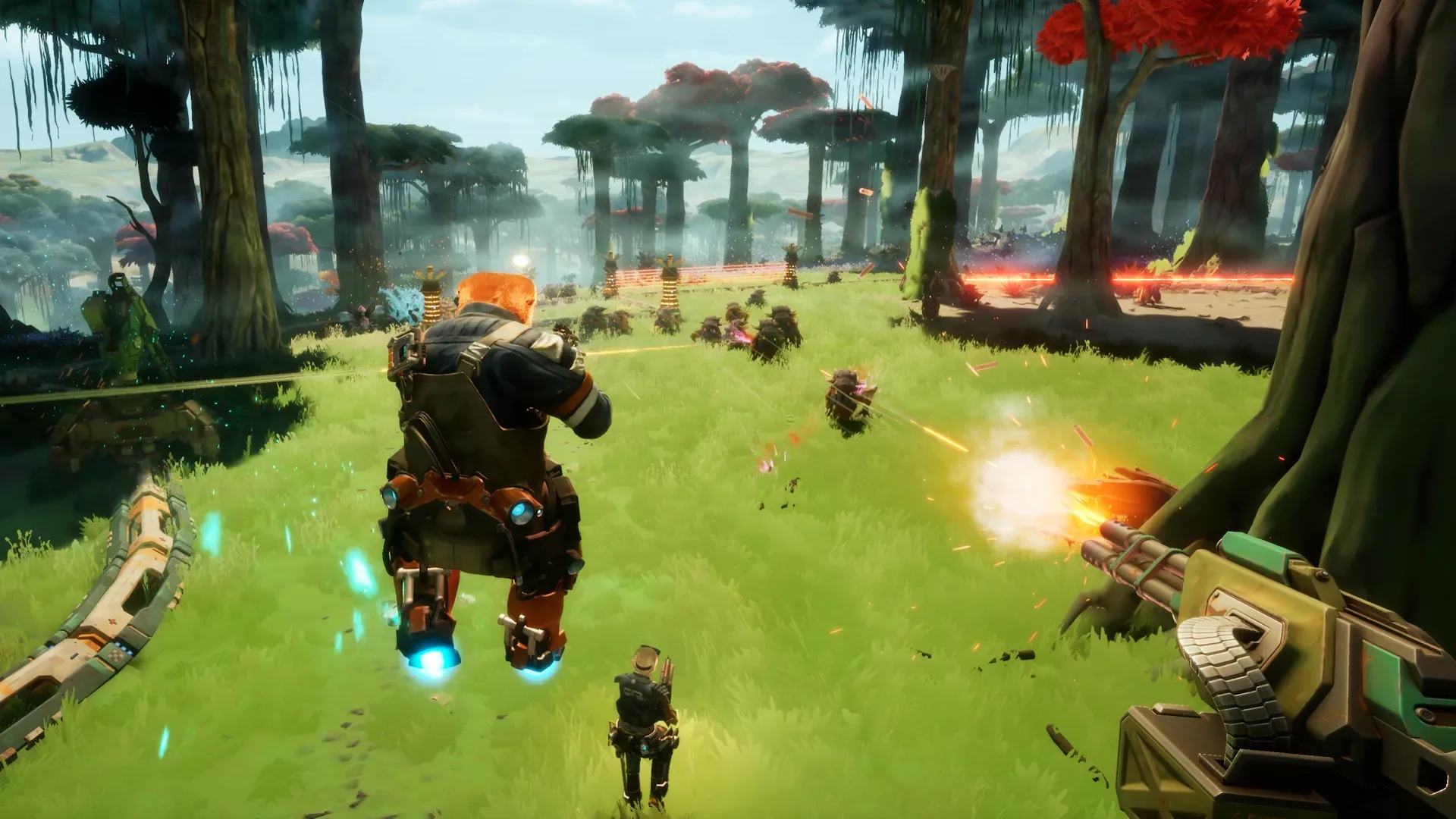
GRAVHOUNDS, the one-to-four-player co-op action-builder from developer and publisher Octopus Panic, will enter Early Access on November 2, 2026 for PC and Xbox Series X|S. It will also be available through Xbox Game Pass on launch day. A newly released gameplay trailer, built from footage captured during the game’s September playtest, puts the focus on the combination at the heart of the project: fast movement, improvised gravity manipulation, base construction and an escalating extraction risk.
The September playtest drew more than 20,000 players, giving the new trailer a useful distinction from a purely cinematic reveal. The footage is presented as in-game action rather than a promise of a far-off concept, with new environments and mission structures taking center stage. Free demos are currently available on Steam and Xbox for players who want a more direct sense of the game before Early Access arrives.
New biomes and missions shape the trailer
The trailer introduces snow and desert biomes, two terrain themes that broaden the visual setting for GRAVHOUNDS’ hostile-planet operations. The supplied details do not specify how each biome changes enemy behavior, construction options or resource availability, so it would be premature to treat them as confirmed mechanical variants. What is clear is that the game is framing extraction as something that happens across difficult terrain rather than within a single fixed arena.
Two mission examples provide a clearer picture of the immediate objectives players may face. The first is Coffee Cat, an escort assignment in which the team must move a hub-based ally through dangerous territory. Escort missions are generally pressure-heavy because the group must protect something that cannot simply retreat or dodge at the same pace as every player. In GRAVHOUNDS, that premise could make route selection, defensive construction and quick repositioning especially important, though the exact rules of the mission have not been detailed.
The second is Refinery. Here, players are asked to defend a hardpoint while gathering resources using their Collector. A hardpoint is a fixed position that must be held against attacks; it creates a natural conflict between staying close to protect the objective and moving outward to collect materials. That tension is particularly fitting for a game that also allows players to build turrets, generators, fabricators and pipelines. The mission appears designed to make the team decide how much labor belongs in defense and how much can safely be devoted to expanding its supply line.
A co-op action-builder rather than a straight shooter
Octopus Panic describes GRAVHOUNDS as an action-builder, and its listed systems explain why that label matters. Players are not only fighting a growing swarm. They are also establishing an operation: deploying useful structures, powering them and moving resources across hostile ground.
Turrets are automated defenses, while generators suggest a power layer that needs to be established or maintained. Fabricators are associated with producing equipment or infrastructure, although the precise recipes and restrictions have not been specified. The game also includes pipelines that can be extended through dangerous terrain to power the base and transport key materials. Together, those elements point to a battlefield where building placement is part of survival rather than an optional post-combat activity.
That structure gives GRAVHOUNDS a potentially distinct rhythm. A group may begin by finding resources and laying the first pieces of infrastructure, then shift into defensive work as the swarm becomes more dangerous. Players may have to return to construction after a setback, or push their system farther from the initial safe area in pursuit of better materials. The game’s stated extraction loop makes that expansion a calculated gamble rather than an automatic reward.
Related coverage includes GRAVHOUNDS Co-Op Trailer Sets November 2 Early Access Date.
What the Grav Beam adds
The game’s signature tool is the Grav Beam, which can throw objects around the battlefield or send enemies flying. In simple terms, it is a gravity-manipulation device: instead of interacting with an object only by shooting it or carrying it normally, a player can apply force at range and change its position.
That creates several possible tactical uses from the systems already confirmed. Moving items quickly could help with resource handling. Launching opponents could provide short-term crowd control, meaning a way to disrupt enemies and create breathing room rather than necessarily eliminate them outright. The same tool may also introduce danger when handling volatile materials, as the game itself warns that transporting unstable cargo can lead to unfortunate losses for the Gravhounds.
The important implication is that gravity control is not presented as a separate novelty mechanic. It sits alongside gathering, construction, movement and defense. A team trying to hold a Refinery hardpoint, for example, may need to juggle pressure from the swarm with the problem of getting materials back to the operation. How reliably the Grav Beam can solve that problem—and how often it creates a new one—will likely be central to the game’s moment-to-moment identity.
Mobility is designed for recovery and teamwork
GRAVHOUNDS also emphasizes high-speed mobility. Players can boost in any direction, hover and rapidly reposition to help allies or retrieve materials. These options matter in a co-op survival setup because the valuable events are unlikely to remain neatly grouped in one place. A resource run may need assistance, a damaged defensive line may need immediate attention, or an escort target may need protection from a different angle.
Directional boosts suggest that movement is not limited to simply running from one waypoint to another. Hovering further implies that vertical or uneven terrain may be relevant, though no specific level layouts are confirmed beyond the snow and desert settings. The stated goal is clear enough: players should have the tools to move quickly when a situation starts collapsing.
For solo players, mobility may be especially valuable. GRAVHOUNDS supports one to four players and explicitly allows a player to go alone. In a full group, jobs can be divided between building, hauling, defending and reacting. A lone player does not have that luxury, so rapid travel could be the practical bridge between tasks. The game is described as intense alone and chaotic with a crew, which makes sense for a design where multiple urgent systems can demand attention at once.
Each shift is meant to evolve
A GRAVHOUNDS session is called a shift, and the game says that no two shifts will play the same. During a run, players can unlock abilities and upgrades, stack bonuses and reshape their loadout as the swarm grows more dangerous.
A loadout is the set of tools, upgrades or capabilities a player brings into an encounter. Being able to change it mid-shift suggests that adaptation is more important than committing to a single plan before play begins. The available information does not identify individual abilities, upgrade trees or the exact form of stacking bonuses. Still, the intended loop is straightforward: a shift develops over time, player power changes, and enemy pressure rises alongside the rewards.
This is also where the building systems, gravity tool and movement options may meet. A run in which the team has bonuses suited to defense could favor holding a strong position and investing in infrastructure. Another may reward swift collection and extraction. The game has not detailed its upgrade economy, so these are interpretations of the stated design rather than fixed strategies. What is confirmed is that players will be adjusting their tools as conditions worsen rather than following an identical script every time.
The extraction decision is the central risk
GRAVHOUNDS sends players to dangerous planets in search of valuable materials. The more time spent on a planet, the greater the potential reward—but the swarm intensifies as well. This establishes the game’s core decision: leave with what the crew has secured, or remain longer in pursuit of a more valuable haul.
That is what makes the extraction system more than a simple end-of-level button. Extraction is the act of getting out with collected resources; here, it is a decision made under rising threat. The longer a team stays, the more its defenses, movement, coordination and resource pipeline are tested. A well-built operation may let a crew profit from staying longer. It may also become a liability if the group invests too much in a position it can no longer hold.
For players considering the Early Access version, this stated risk structure is one of the most useful indicators of what the game is trying to deliver. GRAVHOUNDS is not only asking whether a squad can defeat enemies. It is asking whether the squad can assess when its plan has stopped being sustainable. The trailer’s missions reinforce that idea: Coffee Cat adds the vulnerability of an ally in transit, while Refinery asks players to protect a point while still feeding the resource machine.
Platforms, demos and what is confirmed
GRAVHOUNDS launches in Early Access on PC and Xbox Series X|S on November 2, 2026, with day-one Xbox Game Pass availability. Free demos are available now via Steam and Xbox. Early Access means the game is arriving before its full development is complete; the information provided does not outline a roadmap, planned duration or list of systems that may change during that period.
Players looking at other newly announced games across PC and console platforms can also see Don Bradman Cricket Jr’s PC-and-console reveal. In GRAVHOUNDS’ case, the immediate attraction is a different kind of multiplayer proposition: a team-based operation where movement, building, hauling and knowing when to retreat all appear inseparable.
The new trailer gives a more concrete look at that proposition through its playtest footage, new biomes and named mission types. It does not answer every question about balance, progression or how the individual Gravhounds differ, but it does establish the basic promise ahead of November: make an operation work under pressure, use gravity as both a weapon and a logistics tool, and decide whether the next batch of materials is worth facing a deadlier swarm.