Casualties: Unknown is making an immediate impression on Steam: following its November 9 launch, the cave-exploration survival game has received more than 5,600 user reviews, with 98% marked positive. That is an eye-catching response for a game that openly frames itself as punishing, built around unavoidable injury, procedural danger, and a protagonist whose body is as much a survival problem as the alien world around them.
The strong early reception should not be mistaken for a broad recommendation to every survival-game player. Casualties: Unknown pairs severe difficulty with potentially distressing material, including drug use, depression, self-harm, and severe mental illness. Its premise and mechanics appear purpose-built to make players feel vulnerable rather than powerful. Anyone considering it should factor those themes in alongside its favorable user-review score.
A descent through 11 increasingly dangerous layers
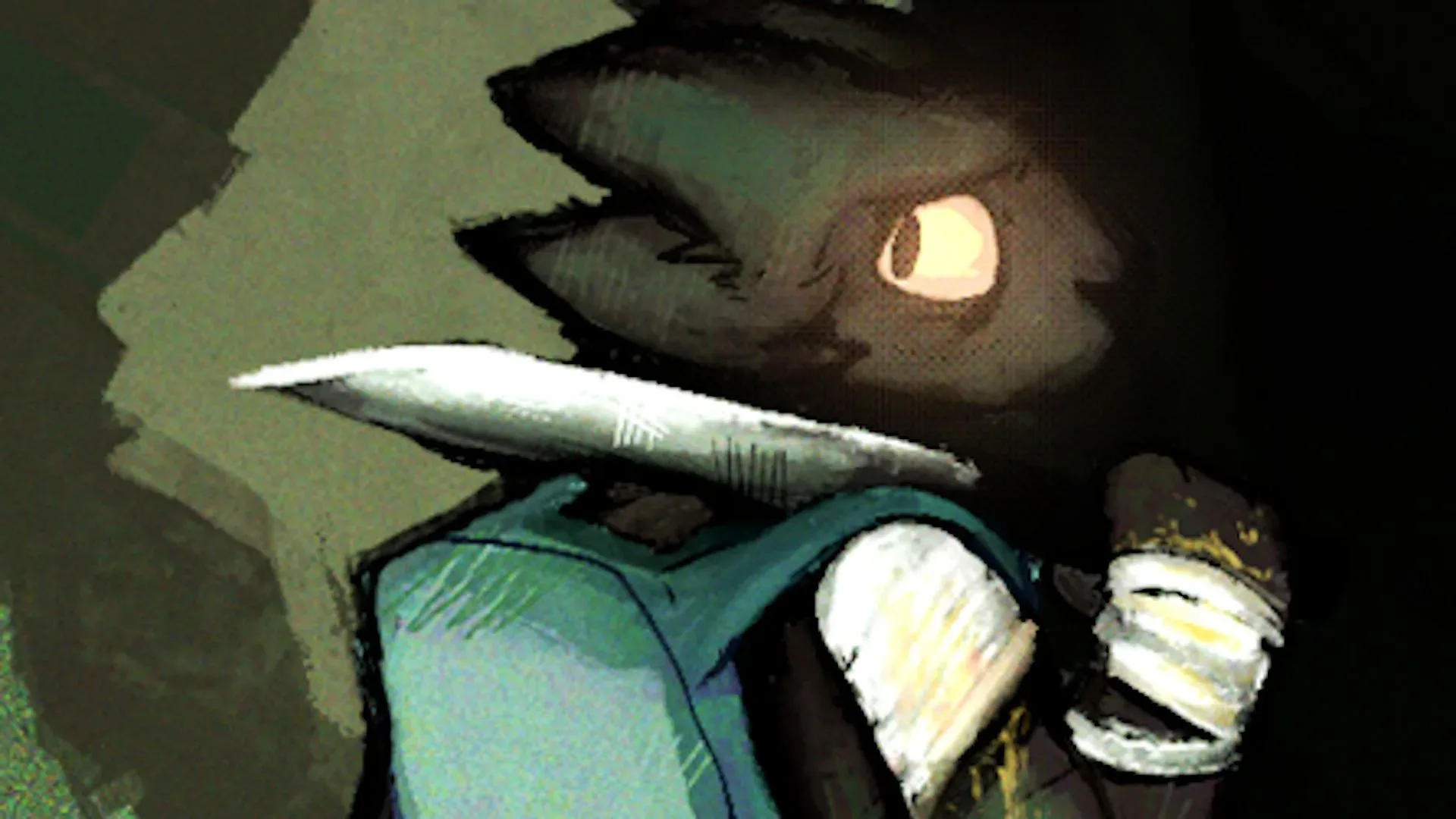
The game casts players as a bioengineered, animal-like humanoid used for corporate experimentation. Their assignment is to recover lost cargo from a cave network on a hostile alien world. It is a setup with little room for heroic fantasy: the character is not presented as a well-equipped explorer choosing adventure, but as someone sent underground by a corporation that has little apparent concern for their welfare.
That framing feeds directly into the structure of the game. Players platform downward through 11 cave layers, each becoming more dangerous as the descent continues. The central objective is not simply reaching a lower floor. It is staying conscious long enough to keep moving while dealing with the accumulating consequences of hazards, injuries, illness, and mental strain.
The developer, Orsoniks, describes Casualties: Unknown as an unforgiving cave-exploration survival simulator and a hardcore survival simulation. The important word here is simulation. In many survival games, food, water, and health work as broad status meters. This game appears to seek a more granular model, where specific physical failures matter and where treatment must address the particular problem rather than refill a universal health bar.
The body is the game’s most demanding system
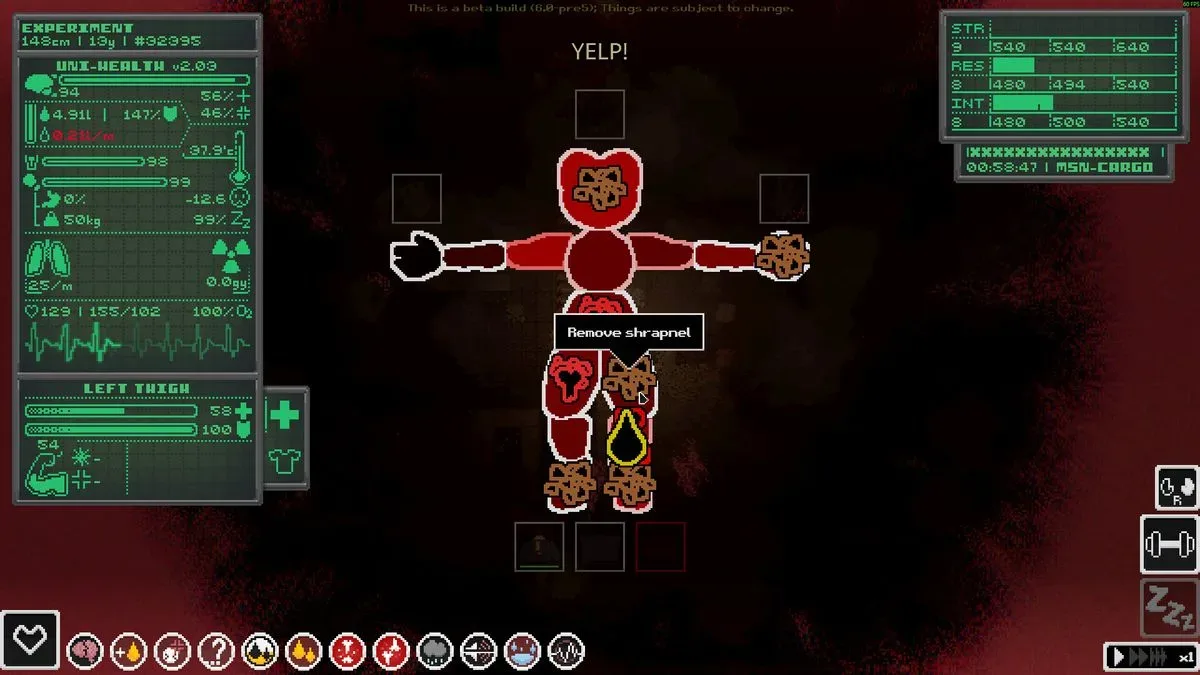
Casualties: Unknown centers on what is described as a simulated limb and cardiovascular system. In practical terms, that means survival involves monitoring matters such as blood flow and oxygenation, then using targeted medical interventions. A wound is not merely damage; it can create a cascade of consequences that must be recognized and managed.
Orsoniks points to several examples: players may need to bandage themselves, deal with infected wounds, and stabilize blood loss before they lose consciousness. Those systems suggest a different rhythm from action-forward survival games. A bad landing, trap, confrontation, or environmental accident may not end a run instantly, but it can leave behind an escalating medical crisis that consumes attention and resources.
- Blood loss is presented as a threat that requires stabilization rather than a simple reduction in a generic health total.
- Infection means injuries can remain dangerous after the initial incident.
- Blood flow and oxygenation indicate that the game tracks bodily function beyond surface-level damage.
- Limb-focused simulation suggests where an injury occurs can be consequential, not just how much damage it inflicts.
This approach is likely a major reason the game has been described as visceral. It makes the player’s avatar feel fragile in a concrete way. A cave is dangerous in many games because it contains monsters, falls, and traps; here, the aftermath of surviving any one of those encounters may be just as threatening.
Related coverage includes Casualties: Unknown Wins Over Steam Players With a Brutal Cave Survival Challenge.
The threat list described by users is correspondingly extensive. Reported causes of death include sepsis, pulmonary embolism, fractures, mines, spike traps, falls, poisoning, radiation sickness, drowning, temperature extremes, exhaustion, blood loss, starvation, thirst, and hostile creatures, among others. These player accounts communicate the breadth of the simulation, though they should not be read as a complete technical catalog of every rule or interaction in the game.
Mental state is part of survival, too
Physical maintenance is only one side of the system. Orsoniks says mood can affect a player’s survival chances, with excessive doom and gloom making life harder. That is a significant design choice: emotional condition is not just part of the story’s atmosphere but an active factor in the survival loop.
It also makes the game’s content warning more important. References to depression, self-harm, drug use, and severe mental illness are not incidental dressing around a cave crawler. The supplied details indicate that psychological distress is woven into the premise and the mechanics. Players looking for a tense simulation may find that integration compelling; others may reasonably decide that the subject matter is not for them.
There is a useful distinction to make here. Difficulty by itself is a question of challenge, while this game’s themes are a question of comfort and wellbeing. A player may enjoy losing a demanding run to a difficult platforming section yet still wish to avoid a game that engages with mental-health crises and self-harm. A 98% positive review share cannot answer that personal question.
Why the Rain World and Noita comparisons fit—up to a point
Casualties: Unknown has drawn comparisons to Rain World, the 2017 survival game about navigating a hostile wasteland as a slugcat. The connection is understandable at the broadest level: both place a vulnerable creature in an ecosystem or environment that feels deeply indifferent to its survival. Progress is less about dominating the world than learning how not to be destroyed by it.
But Casualties: Unknown appears to make its own identity through bodily simulation and medical management. The game is not merely asking players to evade predators and terrain. It asks them to respond to biological damage in detail while descending into increasingly hazardous caves.
One Steam reviewer has compared its challenge level to Noita, the 2020 roguelike known for unforgiving consequences. That comparison should likewise be treated as an individual player’s assessment, not an objective difficulty measurement. Still, it signals the kind of audience reacting positively: players who regard experimentation, abrupt failure, and difficult learning as part of the appeal rather than signs a game is being unfair.
For more on why failure can be central to a game’s design appeal, see this look at the idea that losing feels terrible in co-op games. Casualties: Unknown approaches that emotional space from a far more solitary and medically gruesome angle, but it similarly appears to rely on the intensity of setbacks to make survival meaningful.
Permadeath changes what every decision means
The game also incorporates recognizable roguelike elements: procedurally generated environments, permadeath, and run resets. Procedural generation means environments are generated through systems rather than remaining entirely fixed from attempt to attempt. Permadeath means death ends that particular run, requiring a fresh start rather than a conventional reload at the point of failure.
Together, those features make knowledge especially valuable. A player cannot safely depend on memorizing one static cave layout, and they cannot assume a disastrous injury will be erased by a quick retry from a nearby checkpoint. Instead, the challenge seems to be developing better judgment around hazards, medical triage, resource use, and risk.
That design can be rewarding for players who want a survival game to generate tense stories from failure. A run might unravel because a small wound becomes infected, because a fall creates a debilitating injury, or because a player pushes deeper while already compromised. The procedural component can keep the situation from becoming routine, while permadeath gives each choice more weight.
It also clarifies why the term “hardcore” matters here. It does not only indicate quick enemies or tricky platforming. It describes a structure in which mistakes can stack, recovery may be limited, and a single run can be erased. Players who prefer steady progression, generous checkpoints, or low-stress exploration should take the label literally.
What the early Steam response actually tells us
More than 5,600 user reviews at a 98% positive rate is a powerful early indicator that Casualties: Unknown is connecting with its Steam audience. It suggests the game’s harshness is not accidental friction for the people buying it; for many of them, the body-management systems, cavernous setting, and steep punishment appear to be the point.
At the same time, review sentiment is not a substitute for a content assessment. High approval can tell prospective players that a game is delivering effectively on its intended experience. It cannot guarantee that its graphic injuries, themes of mental illness, or relentless failure loop will suit an individual player.
The clearest takeaway is that Casualties: Unknown seems designed for a specific kind of survival-game fan: someone interested in an alien cave descent where every scrape can become a medical emergency, every lower layer increases the pressure, and death is an expected part of learning. Its unusually high Steam rating indicates that audience has arrived in force. Everyone else should read the warnings first, because this is not a game trying to make the underground feel safe.