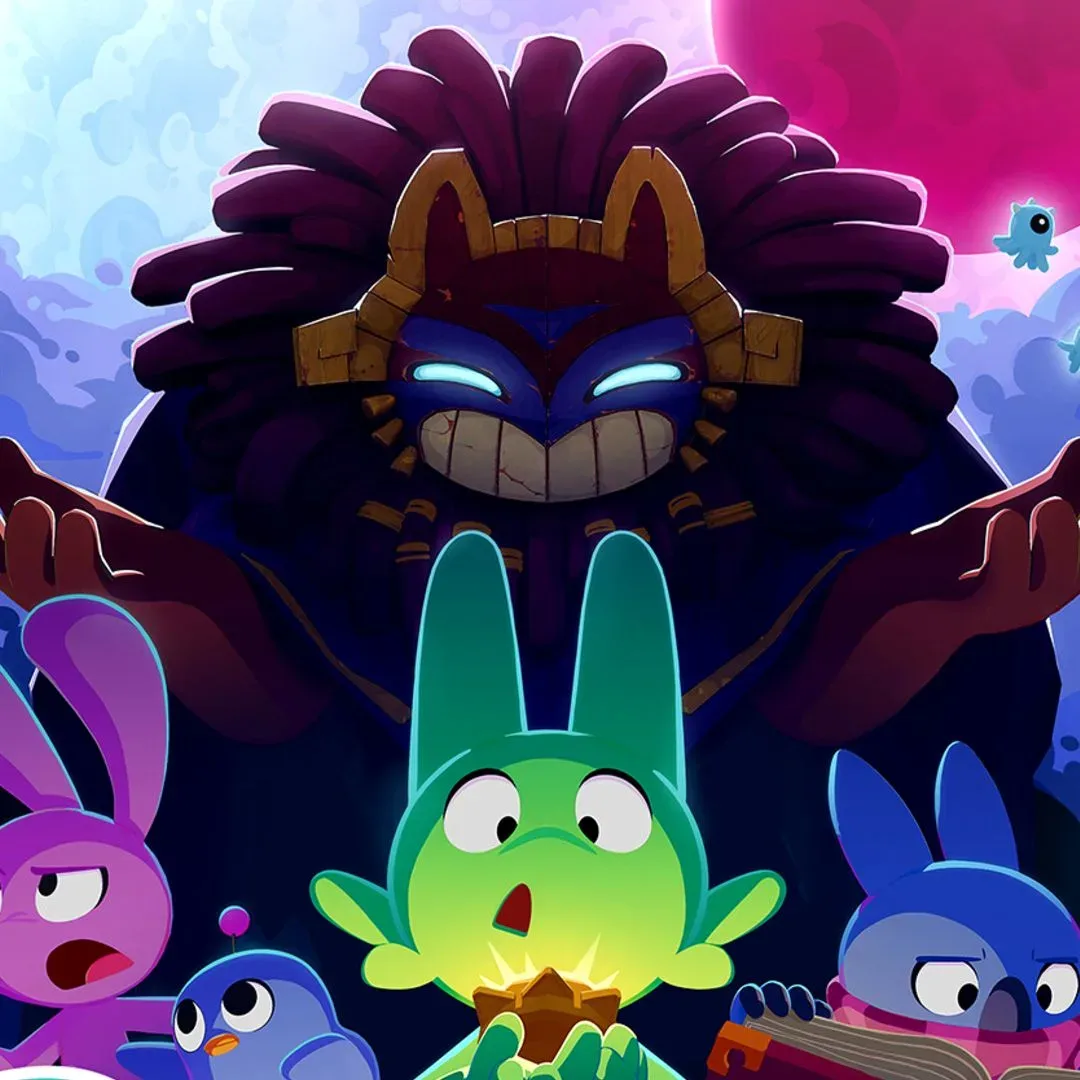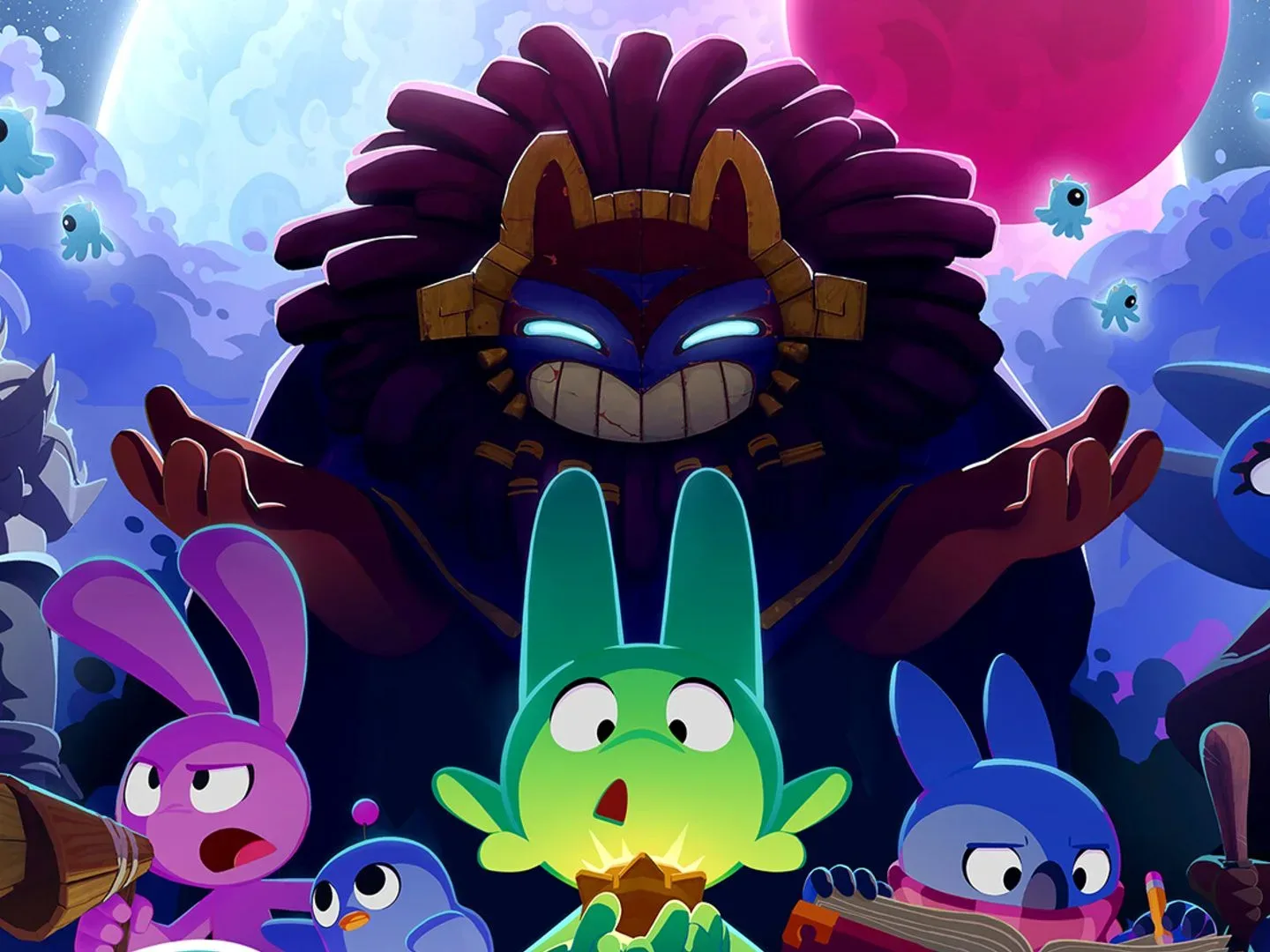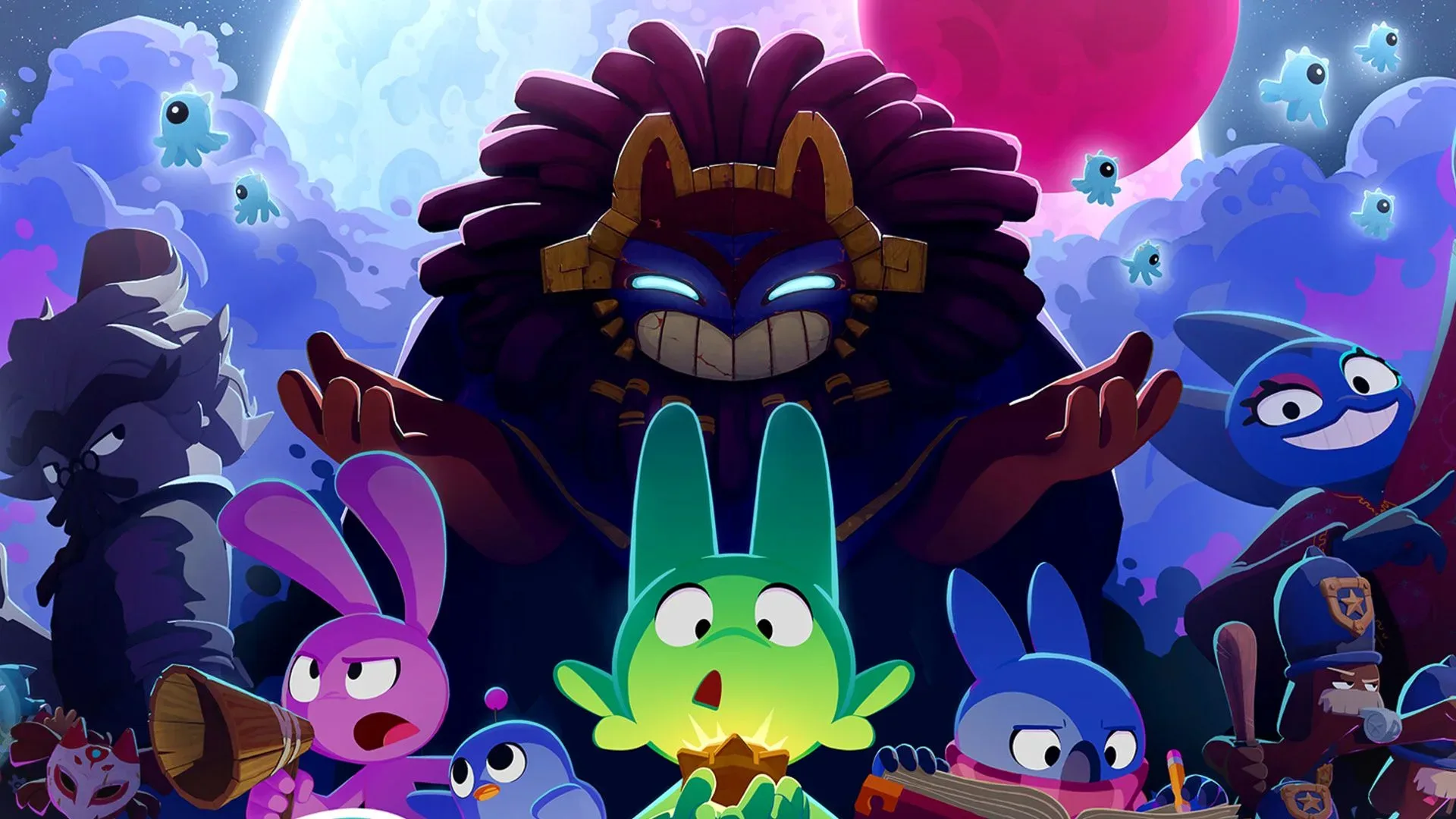
Time limits in games have a special talent for making players either sit forward in their chairs or immediately begin looking for an off switch. Bunderkin: The Ocular Eclipse, an upcoming stealth RPG from Studio Zubio, is firmly betting on the former response. Its central idea is a three-day time loop: protagonist Beedee the Bunderdragon is caught reliving the lead-up to the Ocular Eclipse festival, with a villain plotting to freeze the event.
It is an intentionally pressurized premise, and one that arrives while timed progression is attracting renewed debate among RPG players. Bunderkin does not appear to be backing away from that tension. Instead, it places repetition, planning and the consequences of a ticking clock at the center of Beedee’s attempt to avert the threat.
A festival, a villain and three days to work with
Beedee is described as an unpopular Bunderdragon who wants to attend the Ocular Eclipse, a once-in-a-lifetime festival. That relatively personal goal gains far bigger stakes when an antagonist tries to freeze the eclipse. A mysterious device sends Beedee back through time, giving him repeated opportunities to understand what is happening and intervene.
The important distinction is that this is not merely a game with a deadline. A time loop is a structure in which the player revisits an established span of time. The appeal is not simply speed; it is knowledge. A first attempt can reveal an obstacle, a schedule, a secret or a route. A later attempt can turn that discovery into a better plan. The supplied details do not specify exactly what carries between loops, how resets are triggered or whether the three-day period runs in real time. Those implementation details will matter enormously, but they have not been confirmed.
What has been established is the broad mix: stealth, puzzles and secrets alongside the three-day structure. That gives the loop a potentially useful role beyond narrative flavor. Rather than treating a reset only as failure, the design can make it part of learning the world’s patterns.
Why Majora’s Mask is the obvious comparison
Studio Zubio cites Majora’s Mask as an inspiration, and the comparison begins with the shared three-day framework. The reference point matters because it represents a particular kind of game pressure: a fixed cycle where players must decide what to chase now, what to postpone and what knowledge is worth carrying into the next run.
That structure can create memorable urgency because the world is no longer a static checklist. An event can feel scarce. A door may be useful at one point in the cycle but not another. A lead that appears unimportant on one visit might become the basis for a more efficient route on the next. In the best case, the player is not merely repeating content; they are steadily becoming more informed and deliberate.
It can also be stressful, particularly for people who prefer to search every corner before advancing. This is the fundamental bargain of time-loop design. The game gains momentum and replay-driven discovery, but it asks players to accept that they cannot necessarily do everything at once. Whether Bunderkin makes that bargain satisfying will depend on the clarity of its goals, the cost of a reset and the degree to which each attempt teaches something meaningful.
Related coverage includes Bunderkin: The Ocular Eclipse Embraces a Majora's Mask-Style Three-Day Time Loop.
Stealth could make the loop more than a calendar gimmick
The project also names Metal Gear Solid and Tom Clancy’s Splinter Cell among its stealth inspirations. Those are significant touchstones, though they should be read as creative influences rather than confirmation that Bunderkin will reproduce any particular system from either series.
In a stealth game, information is often as valuable as physical progress. Learning where a guard patrols, locating a safer entrance or identifying an overlooked route can change a difficult objective into a manageable one. Put that logic inside a time loop and the player’s accumulated understanding may become the key resource. One cycle may be about reconnaissance; a later cycle may be about executing a route cleanly enough to reach a different objective before time runs out.
Puzzles and secrets potentially fit the same rhythm. A puzzle does not need to be solved instantly if the player can return equipped with a better understanding of the setting. Similarly, secrets give players a reason to deviate from the most direct route, while the deadline forces a genuine choice between exploration and immediate progress.
There is a risk, too. A loop becomes tedious when it demands players replay long, unchanged stretches before they can test a new idea. It becomes opaque when crucial timing information is hard to read. And it can feel punitive if experimentation leads mainly to lost progress rather than useful discovery. None of those outcomes is inevitable, but they illustrate why the concept needs thoughtful pacing and clear feedback.
The wider argument over RPG time pressure
Bunderkin’s premise lands amid a visible argument about time restrictions in RPGs. The Blood of Dawnwalker has prompted controversy over its own time-limited design, to the point that a prominent mod changes that feature. The debate has also drawn a public defense from Michael “Cromwelp” Douse, publishing director for Baldur’s Gate 3.
The disagreement is bigger than a simple question of whether clocks are good or bad. A time restriction changes how an RPG is read. Without one, players may reasonably assume they can delay a main task indefinitely while pursuing every optional distraction. With one, choices become more legible as trade-offs: taking on one activity may mean missing another opportunity in that particular run.
For supporters, that creates role-playing texture and makes decisions matter. For critics, it can produce fear of missing out, or FOMO: the anxiety that advancing the story will permanently shut off worthwhile material. Neither reaction is irrational. Players bring very different expectations to RPGs, especially around completion, experimentation and the freedom to move at their own pace.
Bunderkin’s loop premise may offer a different angle on that conflict. A reset-based game can make missed opportunities feel less final than a one-way narrative cutoff, because the structure explicitly invites another pass through the same period. But that only works if returning is convenient and rewarding. A loop does not automatically eliminate FOMO; it can instead magnify it when players feel they must optimize every minute.
Kickstarter momentum, but no release date
Bunderkin: The Ocular Eclipse is currently on Kickstarter. It has raised nearly $175,000 against an initial goal of $44,444, placing its funding at close to four times the original target at the time of the reported figure.
That demonstrates early interest in the pitch, but it is not a release timetable. Studio Zubio has not set a release date. The game has a live Steam page where interested players can wishlist it, but no additional platforms or launch window have been confirmed in the available information.
For now, the most concrete draw is the combination rather than any fully detailed feature list: a three-day loop, a festival threatened by a villain, and stealth-RPG ambitions tied to puzzles and hidden discoveries. Players who want another example of stealth built around observation and repetition will have reason to keep an eye on it. Those who recoil at in-game clocks may want to wait for more detail on how forgiving—or demanding—the reset system proves to be.
Time-loop games live or die on whether their repetition creates understanding instead of chores. Bunderkin has chosen a premise that is inherently demanding, but it also has the potential to turn every failed plan into a clue for the next one. For a stealth RPG, that is a fitting promise: the best escape route is often the one found after learning exactly why the first route failed.
For another look at how stealth action has been framed in a major cancelled project, see our coverage of the cancelled Perfect Dark reboot footage.