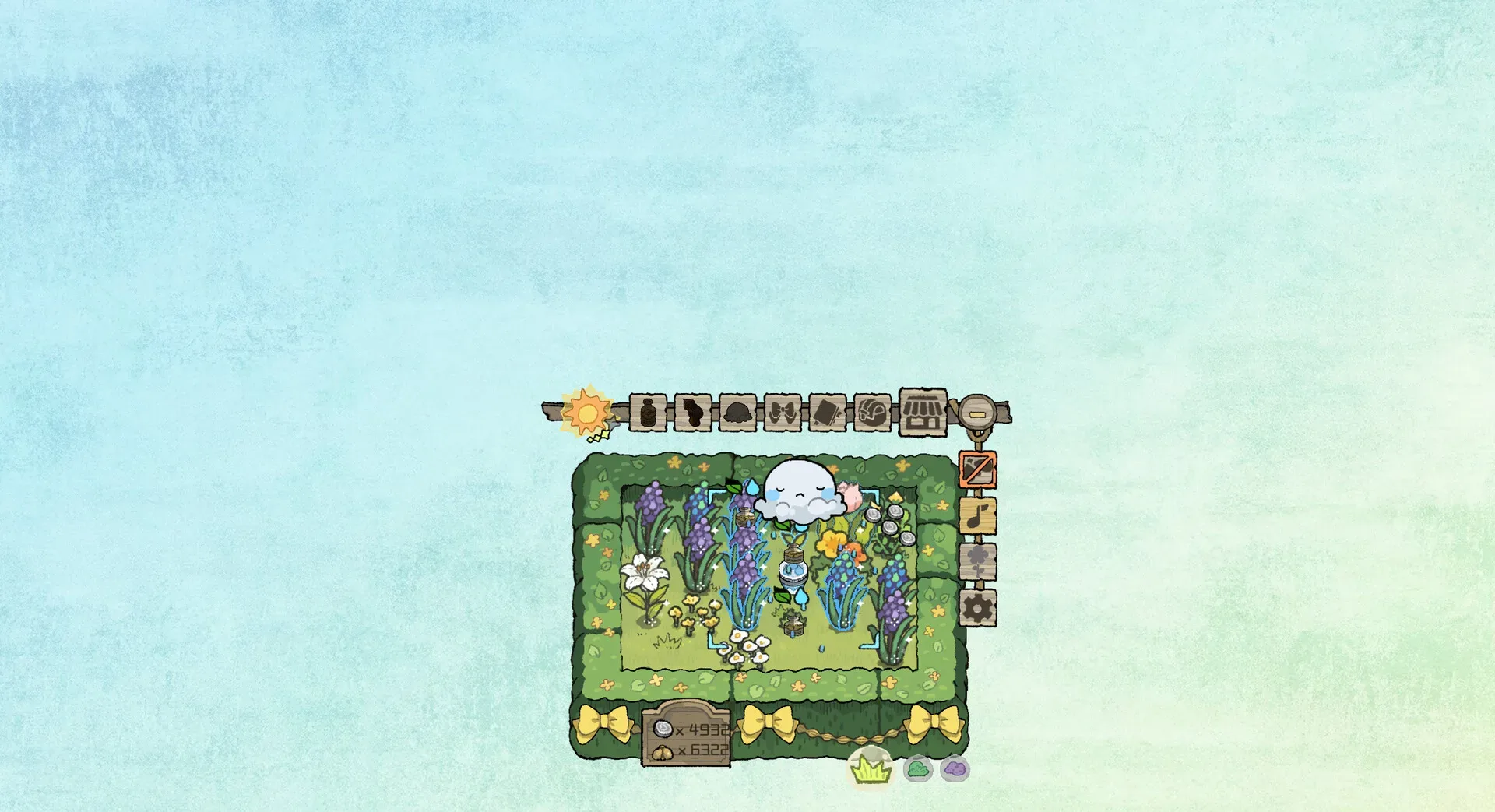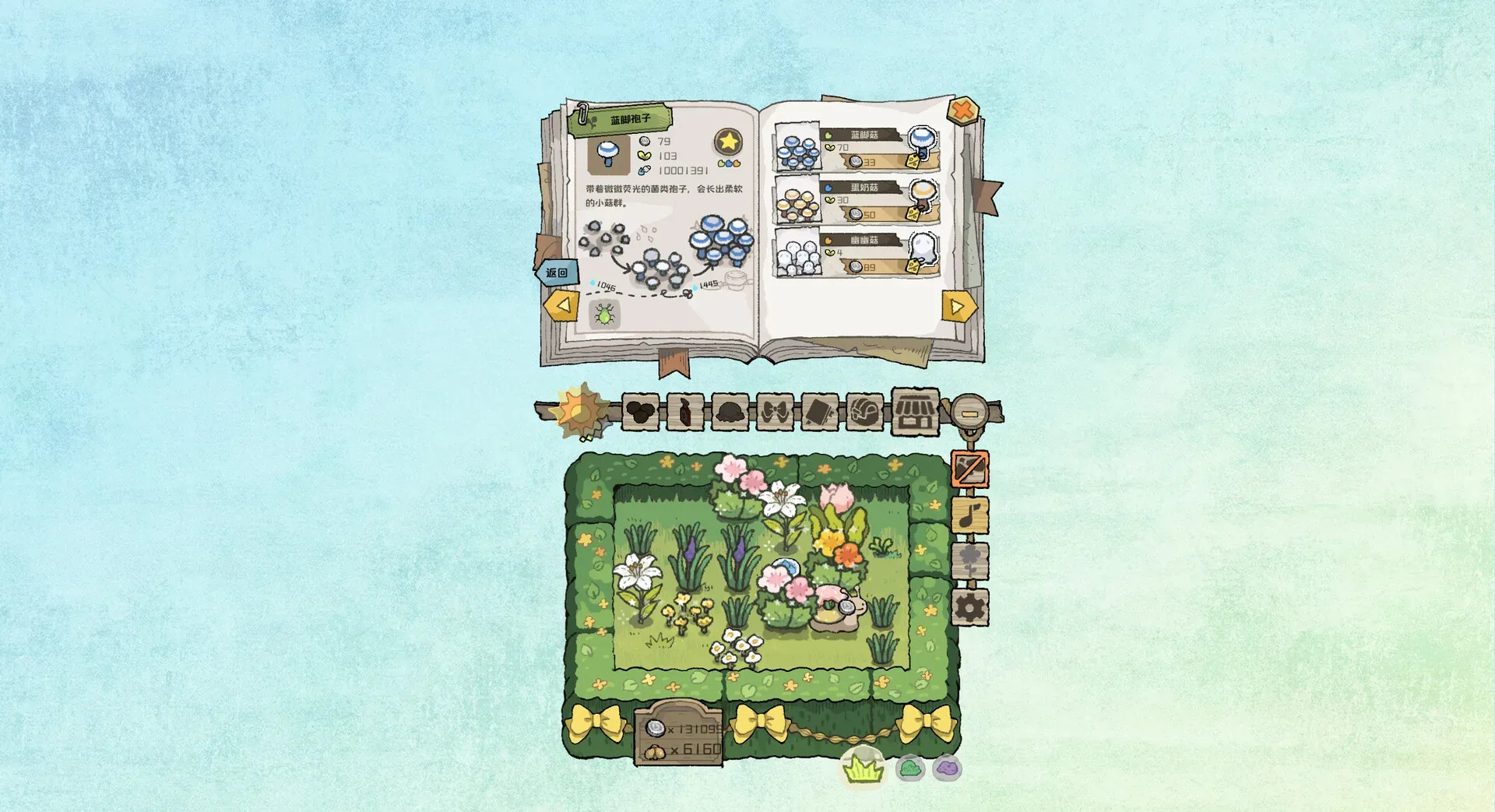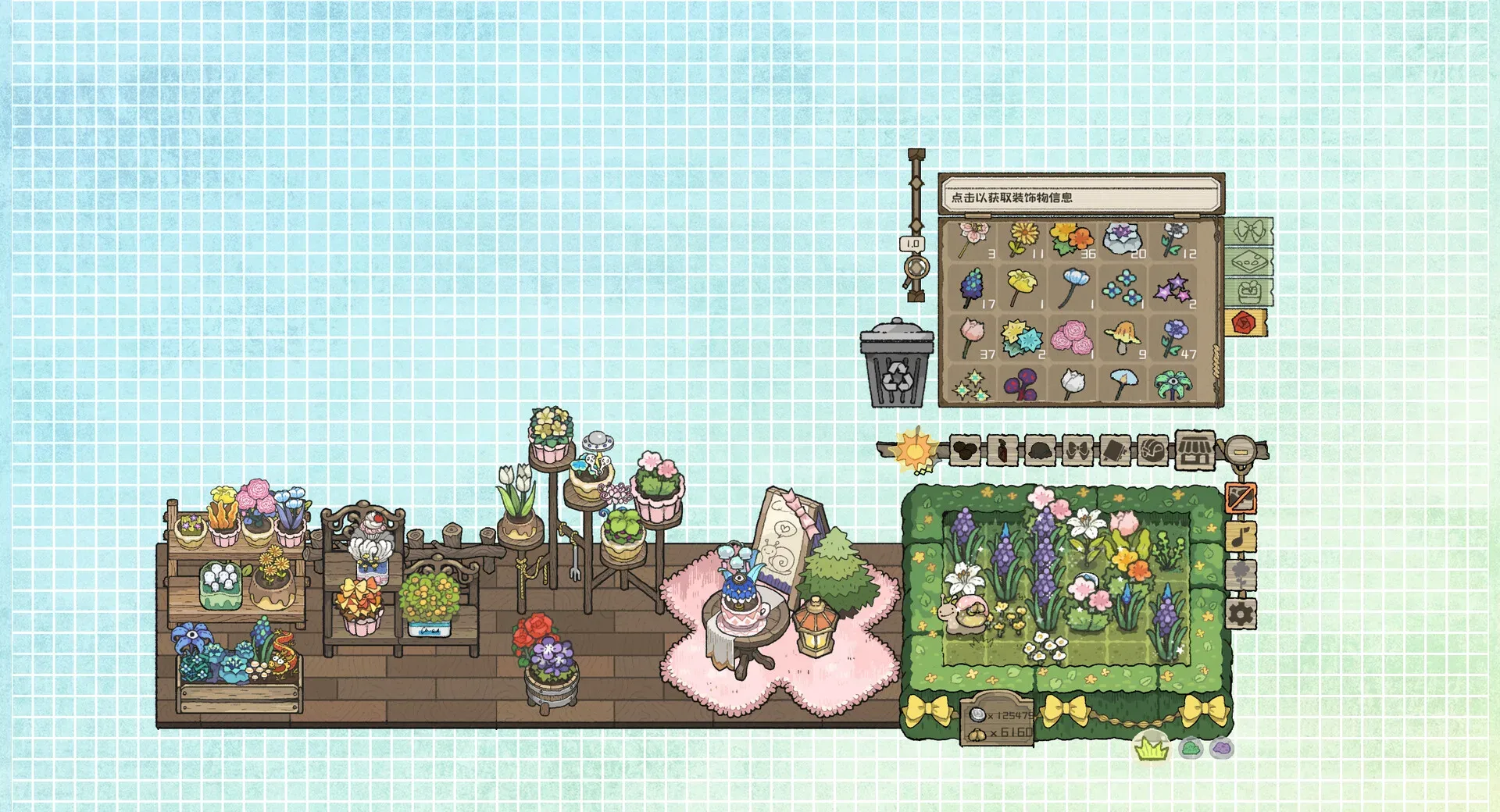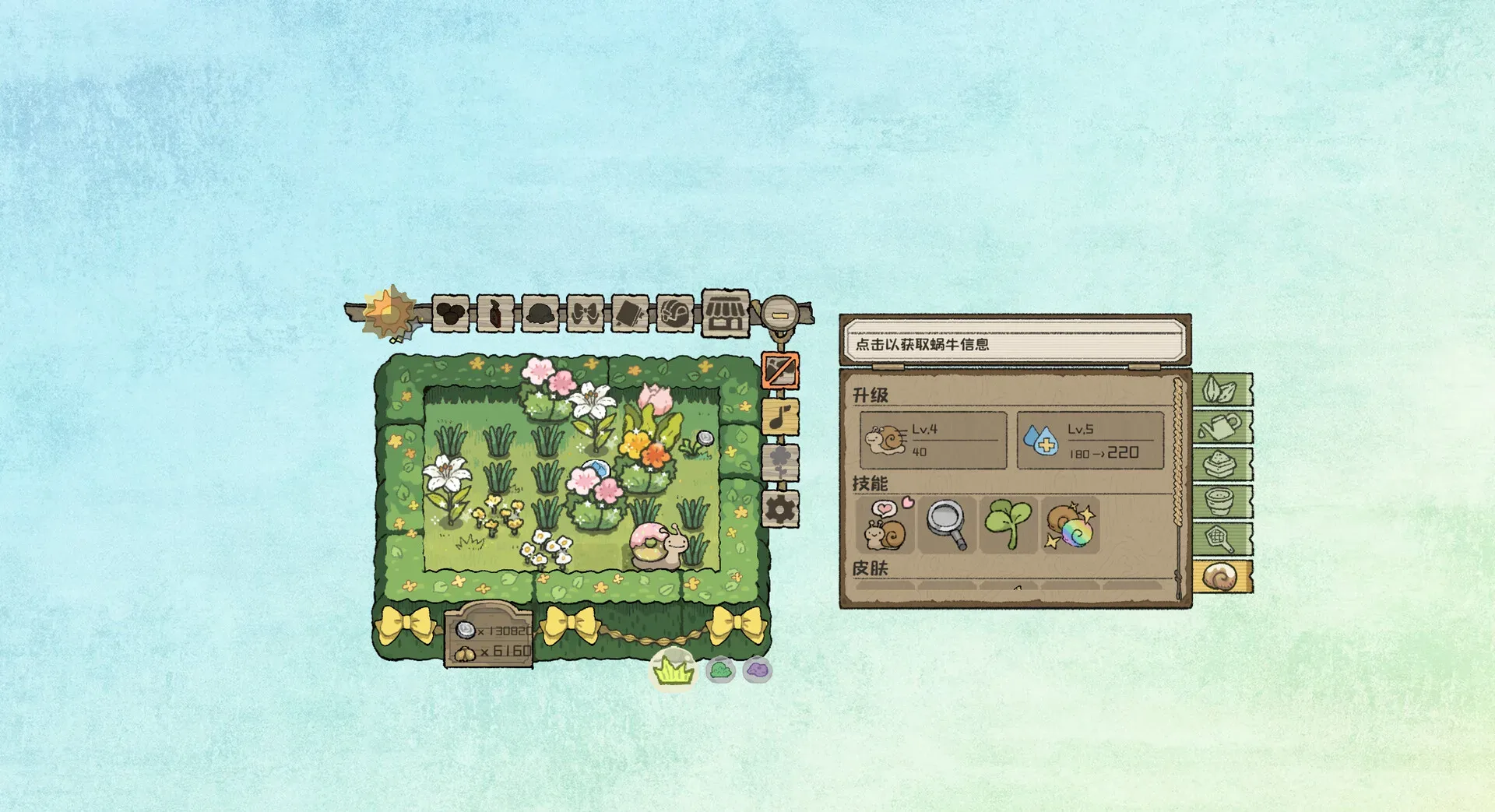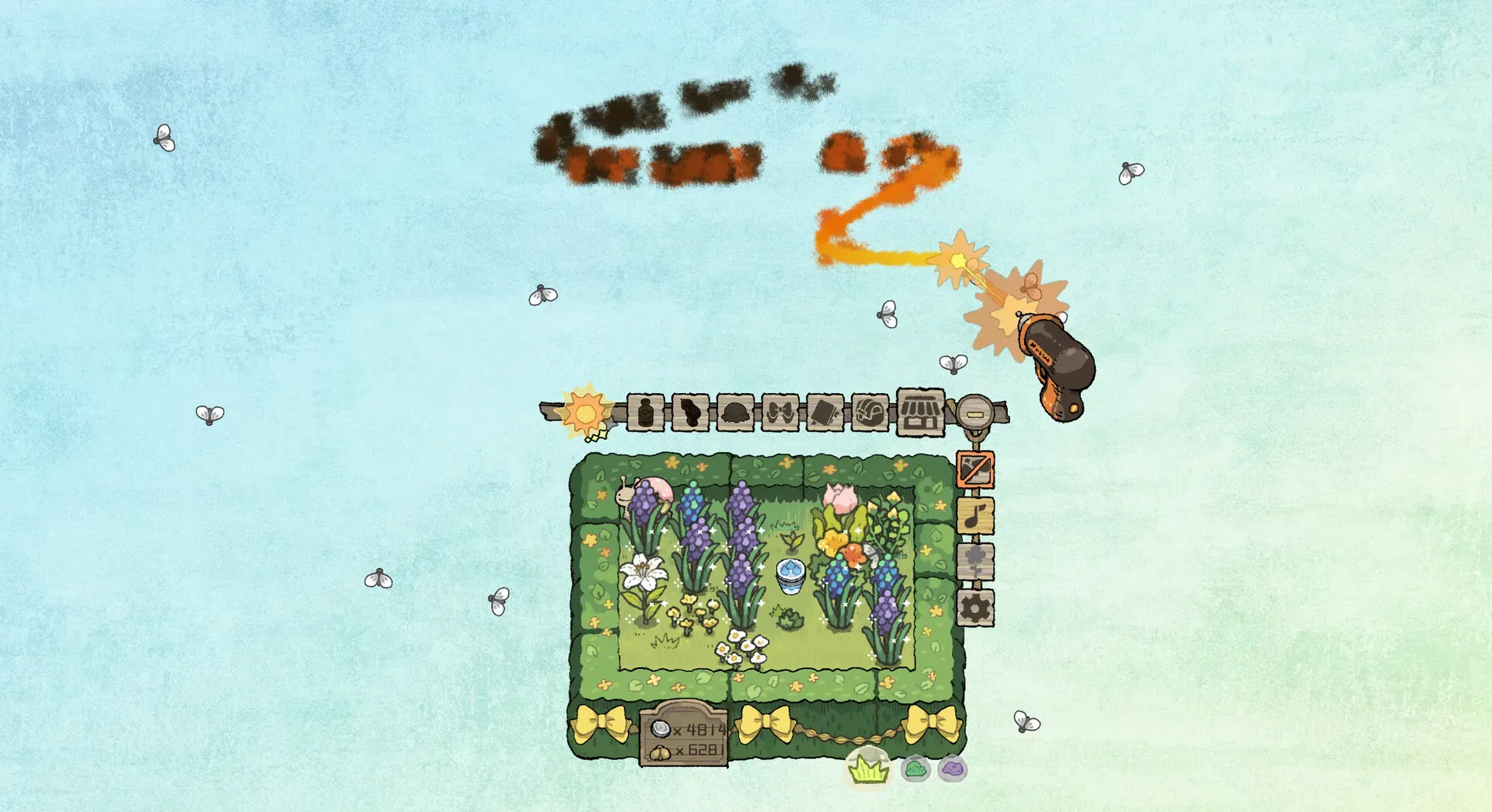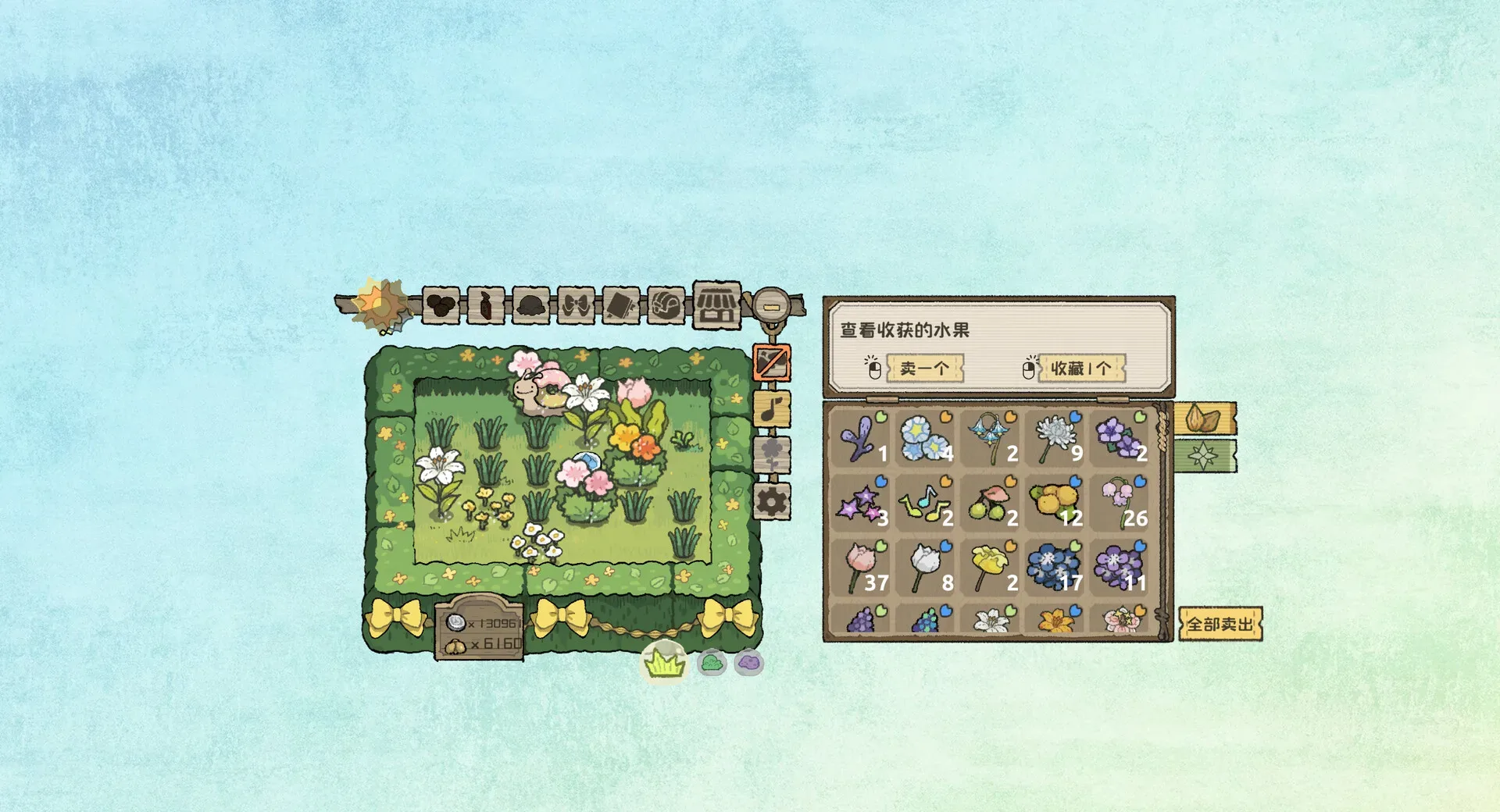
BuGarden is now available on Steam, offering a deliberately small-scale idle experience designed to sit in the corner of a player’s desktop while they work, study, or play something else. Developed by Plum Tree Studio, the game lets players plant seeds and watch flowers and fruit grow over time, with further tools, seeds, and decorations unlocked as the garden expands.
The game is listed at $4.99 USD and has a 20% launch-week discount. Its release falls among the titles listed in our September 22, 2026 games release roundup.
A game intended to share desktop space
BuGarden’s central idea is not a full-screen simulation demanding constant attention. It is a desktop companion: a game meant to remain visible in a portion of the screen rather than displace the player’s existing task. The garden becomes a persistent-looking visual presence while seeds develop into plants and produce.
That framing matters because an idle game’s appeal is often built around intermittent interaction. Players perform a simple action, such as planting a seed, then return later to see what has changed. BuGarden applies that loop to gardening rather than to a more conventional economy, combat system, or resource-production chain. The stated focus is on the pleasant act of cultivating and decorating a tiny space while other activity continues on the computer.
Idle, in this context, means the game is designed to continue providing a sense of progress without requiring uninterrupted input. It does not necessarily mean there is nothing to do. BuGarden’s progression includes additional seeds, tools, plants, and decorations, giving players new options as the garden develops. But its structure is positioned around check-ins and gentle growth instead of a high-pressure sequence of objectives.
No timers, no fail states
Plum Tree Studio presents BuGarden as a low-stress experience with no timers or fail states. A timer normally imposes a deadline: complete an action by a certain moment or lose an opportunity. A fail state is the condition where the player can lose, be penalized, or otherwise be forced to restart or recover from a mistake. By excluding both, BuGarden is signaling that its gardening loop is not built around punishing absence, reaction speed, or perfect efficiency.
That is especially relevant for a companion game intended to run alongside work or study. If a player’s attention needs to move elsewhere, the design does not frame that interruption as an error. Instead, the garden’s snail companion is there to care for seeds while the player is away.
The snail is more than background decoration in the game’s description. It has a care-taking role tied to the garden’s passive nature, and players can customize its shell. This makes the companion part of both the idle loop and the garden’s visual personalization. The available details do not specify exactly how the snail’s care changes growth or which shell options are included, so players should not assume a deeper management system beyond the described seed care and customization.
Related coverage includes BuGarden Brings a Tiny Idle Garden to Steam Desktops.
Growth and decoration drive progression
BuGarden unlocks new tools, seeds, and decorations as the garden grows. These three categories point to different forms of advancement:
- Seeds expand the range of plants a player can cultivate, including the flowers and fruits described for the game.
- Tools suggest additional gardening interactions, though the specific tool set and their functions have not been detailed.
- Decorations give players ways to change the desktop garden’s appearance and make its small patch of screen space their own.
The unlock structure gives the experience a long-term direction without changing its relaxed premise. Rather than presenting progression as a race to clear a level or defeat an opponent, the rewards are new ingredients for the garden itself. More plants, equipment, and desktop decorations mean a player can gradually build a fuller scene.
It is also worth separating these in-game unlocks from physical collecting. BuGarden’s seeds, tools, and decorations are gameplay progression items within a digital desktop garden, not real-world collectibles. Their purpose is to broaden the player’s choices and the garden’s presentation as play continues.
Distraction-free mode and Flower DJ
BuGarden includes two modes that reflect its use alongside other computer activity. Distraction-free mode is positioned as an option for keeping the experience out of the way when concentration is the priority. The provided details do not define its interface behavior, so it would be premature to describe exactly how it reduces interruptions. Its inclusion nevertheless recognizes a basic tension in desktop-companion software: a game can be charming without needing to compete with the task that prompted a player to leave it running.
The more expressive feature is Flower DJ, a mode in which flowers sway to music playing on the player’s computer. This is a reactive visual function rather than a claim that BuGarden includes a music library, rhythm challenge, or performance tools. The key point is that the garden can respond visually to audio already being played on the machine.
Music-reactive visuals are a natural fit for a desktop companion because they allow the game to change along with the user’s existing listening session. A flowerbed moving with the music can make the garden feel less static during a playlist, stream, or other audio playback, while still preserving the game’s small-screen, ambient role.
What BuGarden is—and what it is not presenting itself as
Based on the announced features, BuGarden is best understood as a cozy, passive gardening companion with light progression and personalization. Its loop is plant, wait, return, unlock, and decorate. The design emphasizes a calming screen presence rather than difficulty, optimization, or competition.
That does not establish that the game has every feature often associated with farming or life-simulation games. No detailed information has been given on crop varieties, crafting, currencies, seasonal systems, social characters, achievements, or the precise pace of unlocks. Likewise, the absence of timers and fail states should not be read as a promise about every possible interface setting or progression requirement. What has been confirmed is narrower and more useful: the game is built around a stress-free garden that can keep growing alongside a player’s normal desktop routine.
For players who want a game to be an occasional visual ritual rather than the main event on their monitor, that distinction is the pitch. BuGarden is not asking for a dedicated evening of high-stakes play. It is offering a tiny plot of digital greenery, a snail helper with a customizable shell, and a set of gradual unlocks that can accumulate between other activities.
A launch trailer is also available, previewing the game’s desktop-garden concept and its visual presentation.