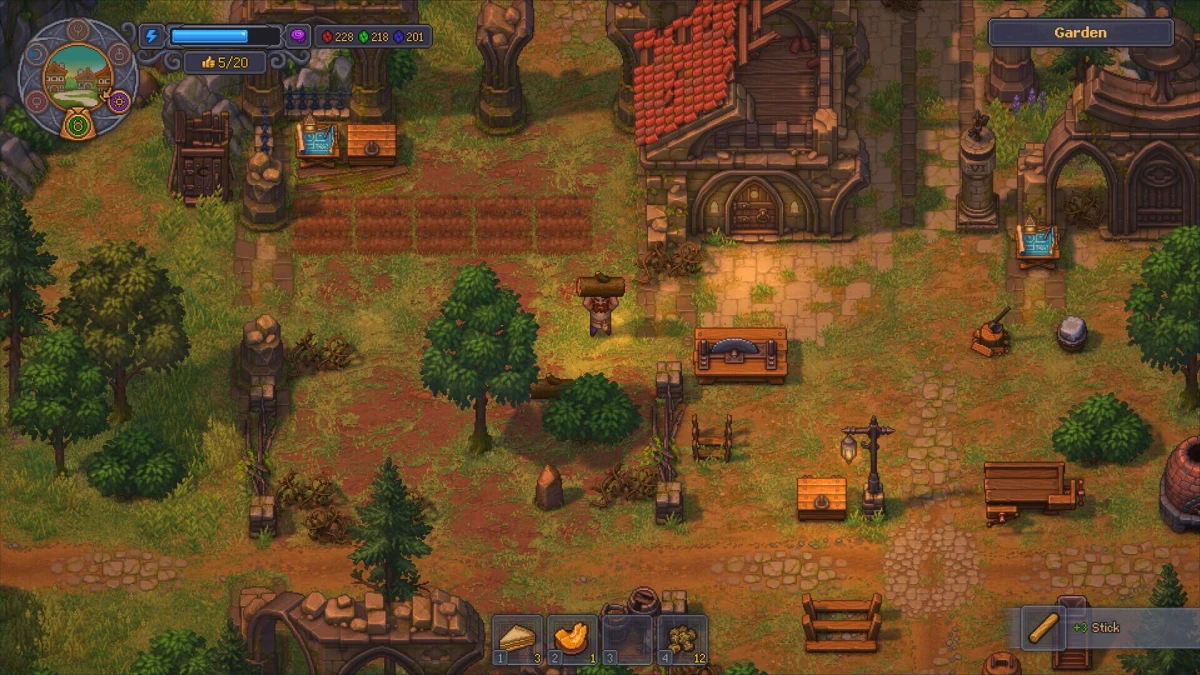
September 22 brings three sharply different single-player games to their listed platforms. Graveyard Keeper II expands an irreverent cemetery-management premise into town restoration, automation and undead battles, while Rivage focuses on investigation and intricate puzzles aboard an isolated space station.
Well Dweller takes a more traditional action-adventure route, combining platforming and role-playing elements with a dark fairy-tale setting. Together, these releases offer distinct reasons to play: building an unusual enterprise, solving a science-fiction mystery, or exploring a grim kingdom as a very small hero.
Graveyard Keeper II turns cemetery management into a larger enterprise
Graveyard Keeper II is a single-player role-playing adventure and management simulation from Lazy Bear Games, published by tinyBuild. It is listed for September 22 on Xbox Series X|S, Nintendo Switch 2, PC, PlayStation 5 and Nintendo Switch. Its central idea is deliberately irreverent: running a medieval cemetery becomes the foundation for a much broader and stranger business operation.
Players manage burial grounds while also restoring the town around them and developing systems for producing goods. That combination gives the game a strategic and administrative focus, with the cemetery serving as one part of an expanding operation rather than an isolated responsibility. The production side can be automated as the enterprise grows, making automation an important tool for reducing some recurring tasks and allowing attention to shift toward larger goals.
The sequel also moves beyond management into conflict. Players can lead an undead army into battle, connecting the resources and systems of the business with a more direct form of warfare. The result is a notably broad mixture of genres: simulation and strategy for planning the operation, role-playing for its adventure framing, and battle through the undead forces. It should appeal to players who enjoy layered systems, unusual premises and the idea of turning a questionable medieval occupation into a thriving, if grotesque, enterprise.
Its main distinction in this lineup is its combination of scale and systems. Whereas the other two games center on one character’s exploration and discovery, Graveyard Keeper II asks players to think about a whole operation: the cemetery, the town, production and an army. The comic tone also sets it apart, presenting its morbid subject matter as a source of business opportunity rather than a solemn setting.
Graveyard Keeper II: platforms, trailer and release details
Rivage makes a trapped space station the center of a puzzle mystery
Rivage is a single-player science-fiction puzzle adventure from Exnilo Studio and publisher Raw Fury. It is listed for September 22 on Xbox Series X|S, PC and PlayStation 5. The game begins aboard the A.R.E.S. space station, which has become trapped in a space phenomenon. Miranda wakes into this unexplained situation and must explore the station while trying to understand what happened to her missing crew.
Progress is driven by intricate puzzles and environmental investigation. The station’s spaces provide the setting for examining clues, understanding obstacles and piecing together the circumstances surrounding the crew’s disappearance. Exploration is therefore the method through which Miranda gradually connects the station’s physical environment to its larger mystery.
The enclosed science-fiction setting gives Rivage a focused identity. Its appeal lies in interpreting what has happened, working out how different problems fit together and using discoveries to investigate the fate of the missing crew. Players looking for an atmospheric, investigation-led adventure may find its premise more immediately relevant than the management systems of Graveyard Keeper II or the platforming of Well Dweller.
Rivage is the most concentrated mystery in the group. It does not present a town to rebuild or a kingdom to traverse; instead, it places Miranda in a contained location filled with unanswered questions. Its puzzle-focused structure makes it a clear choice for players who prefer careful observation, environmental problem-solving and a science-fiction narrative built around a missing crew.
Rivage: platforms, trailer and release details
Well Dweller follows a tiny bird through a dark fairy tale
Well Dweller is a single-player dark-fairy-tale metroidvania developed by Kyle Thompson and published by Top Hat Studios. It is listed for September 22 on Xbox Series X|S, Nintendo Switch 2, PC, PlayStation 5 and Nintendo Switch. The player controls Glimmer, a tiny bird armed with a matchstick, in a quest to burn the wicked queen and save his family.
The game combines platforming, role-playing and adventure within a wretched kingdom inhabited by charming characters. That contrast between appealing storybook personalities and a grim central conflict is a key part of its identity. Glimmer’s small size and improvised weapon reinforce the underdog quality of the journey, making the central objective feel like a personal act of resistance against a powerful ruler.
As a metroidvania, Well Dweller is built around exploration and progression through a connected world. Platforming forms the foundation of movement, while the adventure and role-playing elements support a journey shaped by discovery, characters and the push toward the queen. The supplied premise emphasizes the world and quest rather than specific abilities, so its clearest promise is a characterful exploration adventure with a distinctive protagonist.
Well Dweller offers the most action-oriented choice among these three games. Its connected kingdom and platforming focus contrast with Rivage’s station-based puzzle investigation, while its fairy-tale conflict is more direct than Graveyard Keeper II’s management-and-war structure. Players drawn to dark fantasy, metroidvania exploration and unusual heroes will find the lineup’s smallest protagonist at the center of its most storybook-inspired adventure.