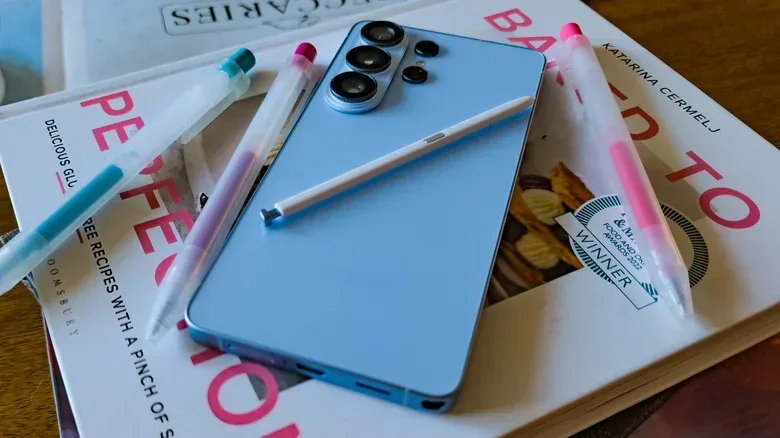
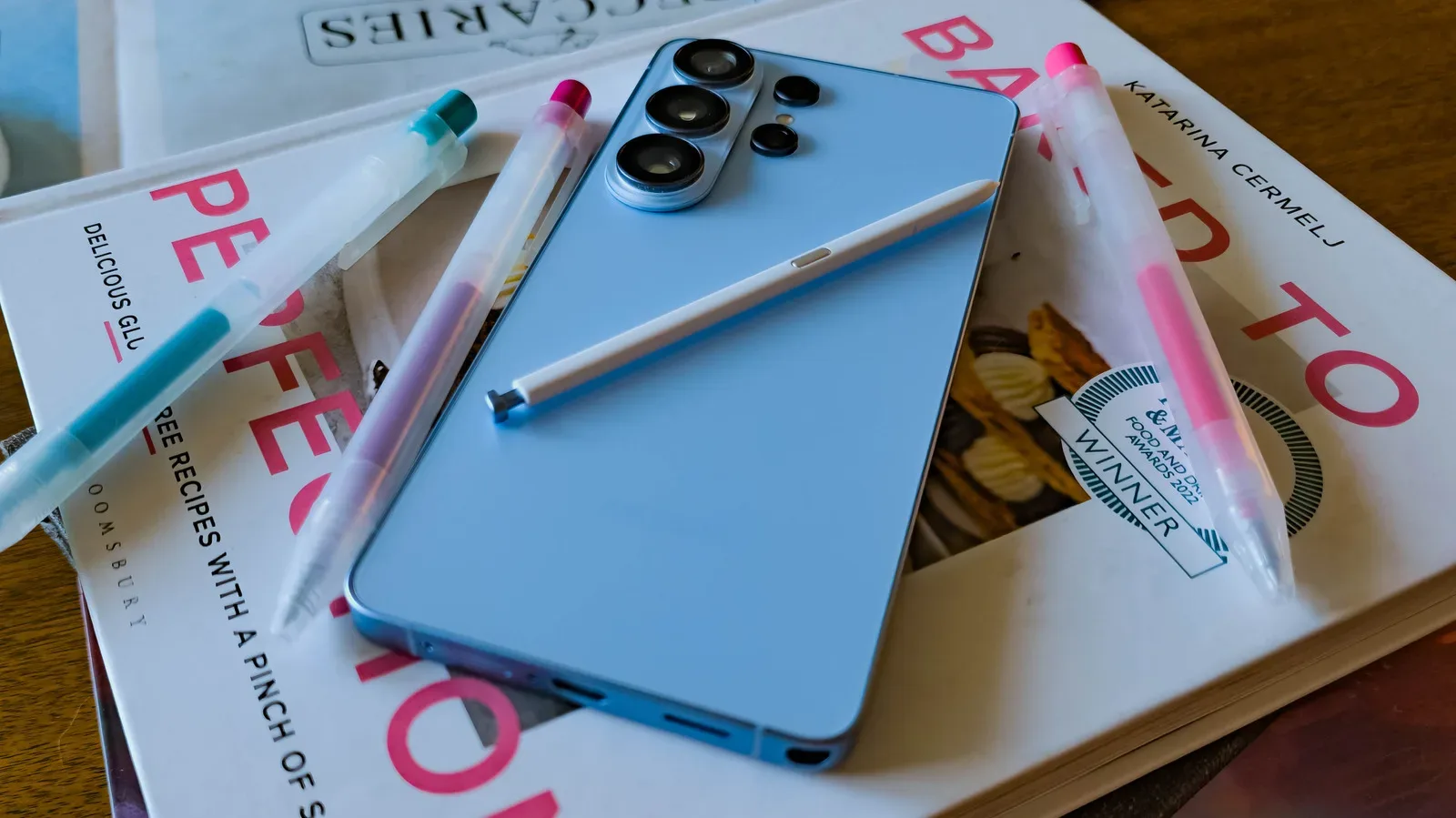
There is a small catch behind one of the Galaxy S26 family’s most meaningful practical upgrades: it only matters if owners supply the missing piece themselves. Samsung does not include a charging brick with the phones, so an older adapter may leave the Galaxy S26 Ultra operating far below its new 60-watt wired-charging ceiling.
That makes a charger less of an afterthought than it initially sounds. The Galaxy S26 Ultra is Samsung’s first Galaxy handset capable of charging at up to 60W, an advance over the 45W limit that had persisted on prior top-end Galaxy phones. At its maximum “Super Fast Charging 3.0” rate, the Ultra can go from empty to about 75% in 30 minutes. For anyone using a phone heavily between work, travel, social apps and a late gaming session, that is a useful recovery window rather than a spec-sheet decoration.
The broader S26 lineup has different charging stories. The standard Galaxy S26 remains at 25W wired charging, but its battery capacity has increased from 4,000mAh on the S25 to 4,300mAh. The Galaxy S26+ gains 20W wireless charging, while the Ultra reaches 25W wireless charging, the stated top speed for current Qi2.2 charging. In short: choosing the right accessory depends on which S26 is in your pocket.
The missing brick is the main practical issue
Samsung has not bundled a charging brick with new Galaxy phones for several years. An S26 Ultra buyer gets a USB 2.0 cable, but not the wall adapter that supplies power. The absence is tied in part to the waste created by duplicate chargers, which is a reasonable consideration when a household already has compatible equipment. But the calculation changes when the handset itself adds a higher charging tier than most existing adapters can provide.
The last charger Samsung included with a phone was a 25W brick packaged with the Galaxy S20 Ultra in 2020. That adapter was already below the S20 Ultra’s 45W charging capability. It is even further from the S26 Ultra’s 60W maximum. Keeping an older brick is not dangerous merely because it has a lower wattage rating; it simply means the owner should not expect the phone’s headline charging speed.
Watts measure electrical power. In this context, a higher supported wattage allows a phone to accept energy more quickly when the charger, cable and phone can work together at that level. The stated 60W capability is a maximum, not a promise that every random adapter will turn an Ultra into a half-hour charging machine. The important buying point is straightforward: an S26 Ultra owner who wants the new wired performance needs a charger capable of supplying it.
A phone can have an upgraded charging limit, but it cannot use power that its connected adapter does not provide.
This is particularly relevant for buyers upgrading from an older Galaxy. A reliable 25W charger can remain a perfectly useful spare, bedside adapter or companion for the base S26. It just does not unlock the Ultra’s central charging improvement. The base S26, by contrast, has no wired-speed upgrade to chase. Its change is battery capacity, expressed in milliamp-hours (mAh), a measure describing how much charge a battery can hold. Moving from 4,000mAh to 4,300mAh increases the stated capacity, whereas moving from 45W to 60W concerns how quickly power can be delivered.
What to look for in a wired charger
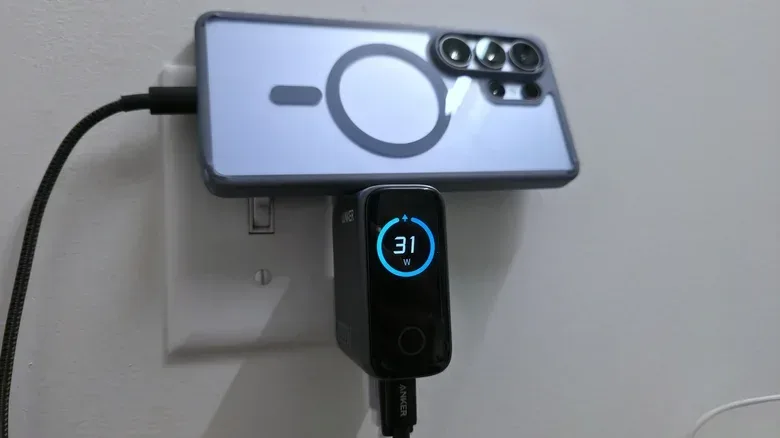
For the Galaxy S26 Ultra, the simplest target is a reputable 60W charger. That aligns with the phone’s maximum wired rate. Chargers with 100W or more are also available and can charge multiple devices, but higher maximum capacity does not turn the Ultra into a phone that charges beyond its 60W limit. It can instead make sense for people who want one compact adapter to serve several gadgets.
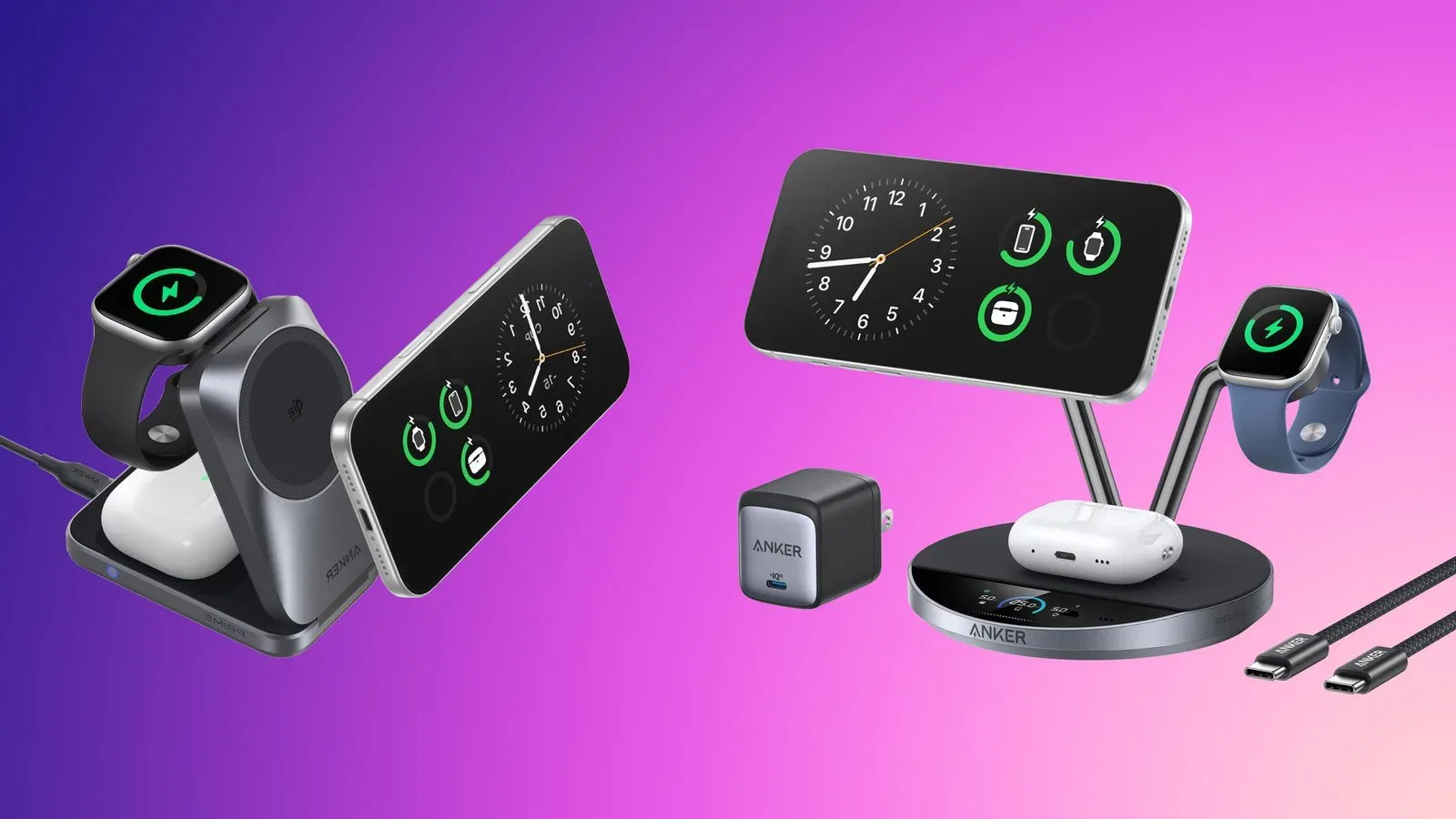
Gallium nitride, usually shortened to GaN, is worth recognizing on charger packaging. It is a material used in modern charging hardware that enables more efficient power delivery in a smaller form factor. That is why pocket-friendly multi-device chargers can now carry much higher wattage ratings than old, bulky charging blocks. Anker, Belkin and Ugreen are among the brands making GaN chargers, and 60W models are available for around $40, with higher-output options also positioned as affordable.
There is no need to treat the number on the charger as a score in a hardware arms race. A 60W option is the focused purchase for the Ultra’s maximum wired charging. A more powerful model is a convenience decision, especially if its multiple ports fit an existing device setup. Conversely, paying for a high-output brick is unlikely to be a priority for someone with the standard S26, whose wired rate remains 25W.
The cable deserves a quick check as well. The cable in the box is described as USB 2.0, while the phone has no included power brick. Before assuming a cable-and-adapter combination will deliver a desired result, confirm the charger’s capabilities and review its documentation. In practical terms, this is a case where the least glamorous item in the bag determines whether the phone’s most noticeable day-to-day upgrade is accessible.
A sensible wired-charging checklist
- Galaxy S26 Ultra: Choose a reputable charger capable of 60W if the goal is to access the phone’s maximum wired rate.
- Galaxy S26: Do not buy a charger expecting a wired-speed increase; the phone remains at 25W, while its improvement is the larger 4,300mAh battery.
- Multi-device households: A 100W-or-higher charger with multiple ports may be useful as a shared accessory, rather than necessary for the Ultra alone.
- Existing hardware: A previous 25W Samsung brick can still charge an S26, but it will not make the Ultra charge at 60W.
- Before purchasing: Check the charger’s stated output rather than assuming every old adapter supports the newer peak rate.
Wireless charging needs a two-accessory plan
The S26+ and S26 Ultra also offer faster wireless charging, though wireless remains slower than a wired connection. The Plus reaches 20W, while the Ultra reaches 25W. That 25W figure matches the top speed cited for current-generation Qi2.2 wireless charging.
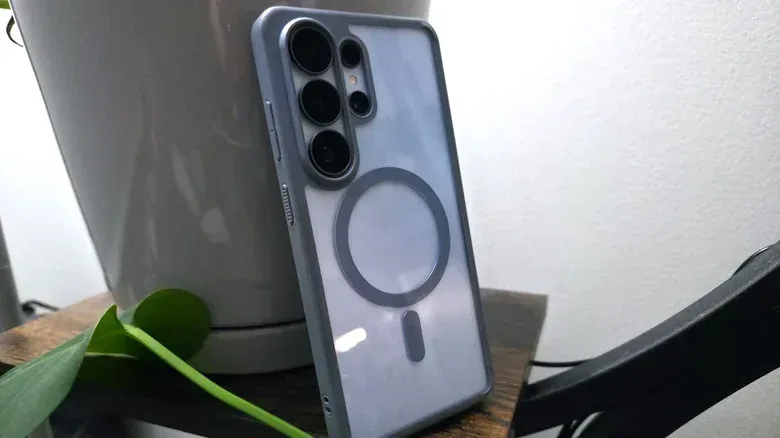
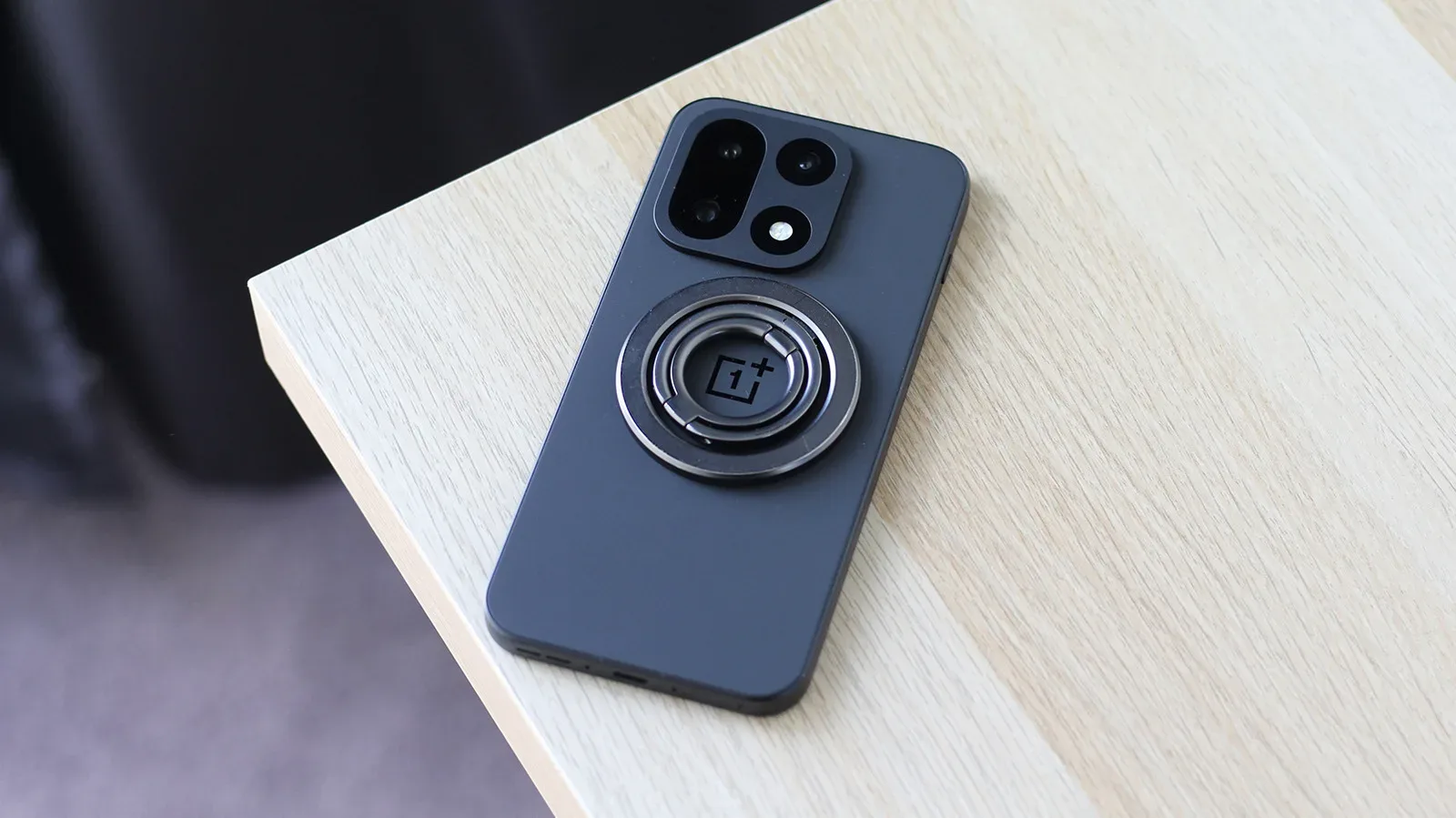
Achieving those wireless figures involves more than putting the phone on any charging stand. The high-speed setup requires MagSafe-style Qi2 magnetic alignment. Samsung has not integrated those magnets into the phones themselves, so owners need both a 25W magnetic wireless charging pad and a magnetic case. The case is not cosmetic in this scenario: it provides the magnetic alignment the handset lacks.
Magnetic alignment matters because a charging pad and phone need to line up correctly to transfer power efficiently. It eliminates much of the guesswork of placing a phone precisely on a pad, while also supporting the higher-speed setup described for these models. The accessory stack is therefore more involved than wired charging: a suitable pad is only half the purchase.
Case choice can make or break the convenience. A case is necessarily another layer between a phone and a charging surface, and greater thickness reduces charging efficiency. Buyers should look specifically at thickness in the area inside the magnetic ring rather than judging only the overall feel of the case. The material matters, too. Cases with metal components can interfere with charging and should be avoided for this use.
Because individual case designs can introduce fit and charging complications, professional and user reviews are useful evidence before buying. Look for reports that directly address wireless charging rather than relying solely on a case’s magnetic-ring branding. This is one of the rare phone-accessory purchases where slim construction and an absence of metal in a particular area are functional requirements, not merely style preferences.
Who should choose wired and who should choose wireless?
Wired charging is the clear option for the shortest possible top-up, especially on the S26 Ultra. Its 60W ceiling and approximately 75% charge in half an hour provide the strongest argument for buying a new adapter. It is the more direct route for someone arriving home with a depleted battery and limited time before heading out again.
Wireless charging is about the repeatable placement routine: set the phone on a properly matched magnetic pad and let it charge without plugging in a cable. The S26+ and Ultra improvements make that routine more compelling, but it is not an automatic feature unlocked by the phone alone. The buyer must account for the pad and magnetic case together, and should prioritize a case that does not compromise efficiency.
For people who treat a smartphone as part of a wider desk or gaming setup, the same principle applies as it does with PC accessories: identify the actual bottleneck before spending money. A quick look at ways to cut down on repetitive Windows setup and file tasks is another example of an unglamorous change that can improve daily tech use. Here, the bottleneck is even simpler: a flagship phone cannot reach its new charging potential with a brick that was built for an older, lower-power generation.
The practical accessory priorities by model
The Galaxy S26 Ultra has the strongest case for a new wired charger. Its 60W capability is a genuine generational change for Samsung’s flagship line, and the lack of an included brick means many owners will otherwise miss it. A 60W GaN adapter from a reputable maker is the most direct fit; a higher-output, multi-port charger is an optional expansion for those who want shared charging capacity.
For S26+ and Ultra owners who prefer a cable-free desk or nightstand, the priority shifts to a 25W magnetic wireless pad plus a compatible magnetic case. The pad’s rating alone is not enough, because the required magnetic alignment is not built into the phone. Verify the case’s charging-ring area is not excessively thick and contains no metal that may create problems.
For standard S26 owners, the larger battery is the central change. A charger can still be useful if one is needed, but the handset remains limited to 25W wired charging. There is no equivalent 60W upgrade waiting behind a new adapter. That distinction should prevent an unnecessary purchase made on the assumption that every S26 model received the same charging boost.
None of this is the thrilling side of buying a new phone. There is no flashy camera mode or dramatic design flourish involved. Yet for the S26 Ultra especially, the right charger determines whether its most practical upgrade is simply listed on a spec sheet or actually becomes part of an owner’s everyday routine.