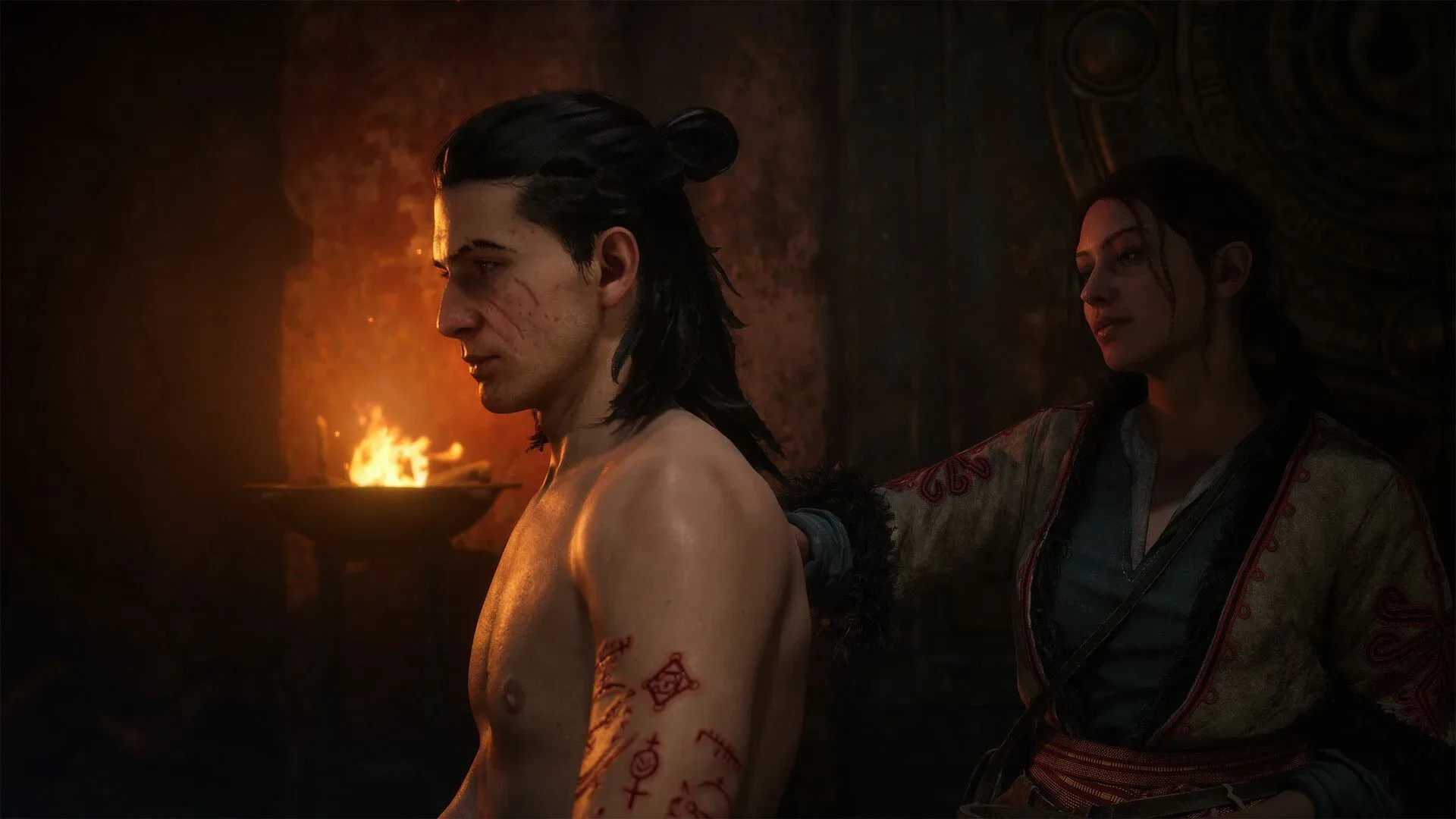
The Blood of Dawnwalker’s most divisive idea may have a future—but not necessarily an automatic one. Rebel Wolves director Konrad Tomaszkiewicz has indicated that potential sequels could use a time-based structure similar to the vampire RPG’s 30 days and 30 nights, but the team has not committed to repeating that format from game to game.
That distinction matters. In The Blood of Dawnwalker, time is not merely atmosphere supplied by a changing sky. Players have 30 days and 30 nights to save protagonist Coen’s family and finish the main story, while activities throughout the world can consume portions of that limited schedule. The result is a role-playing structure built around prioritization: deciding what deserves attention, what can wait, and what may be left behind altogether.
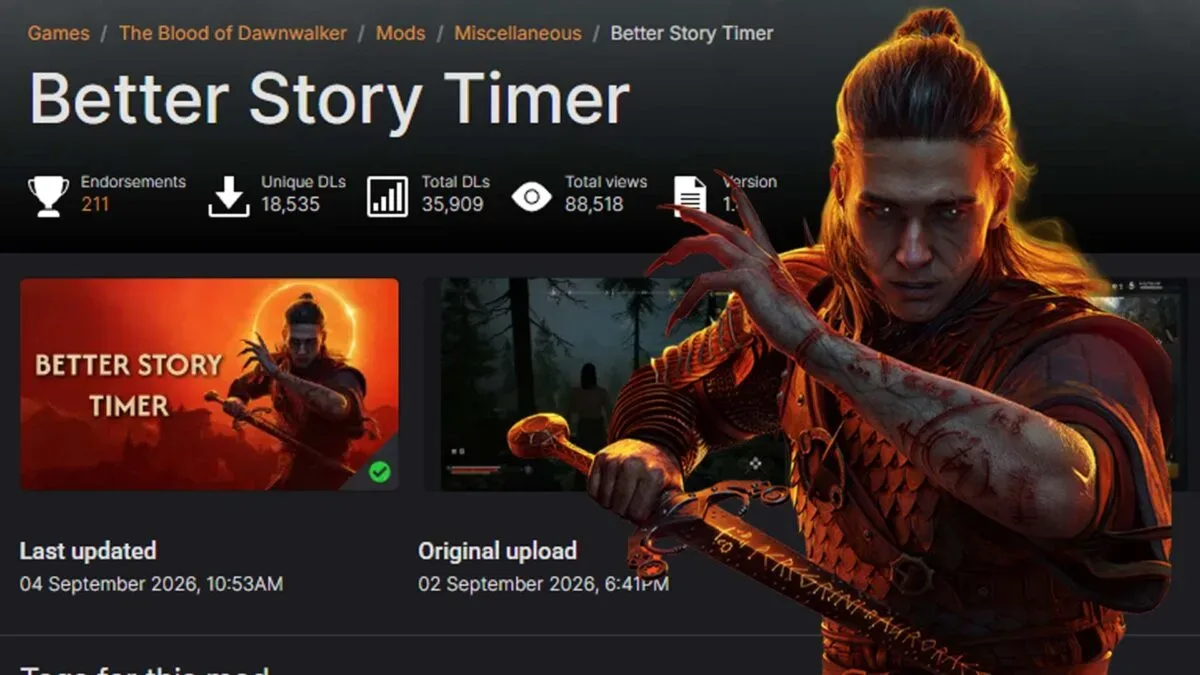
For some players, that pressure is central to the appeal. It gives the central rescue mission an urgency that can be difficult for large RPGs to sustain once their worlds fill up with optional tasks. For others, the same limit creates anxiety, especially the concern that experimentation or side content could come at the expense of seeing important story material. The debate has been substantial enough that the game’s largest mod reportedly changes the time cycle itself.
A mechanic, not a franchise rule
Tomaszkiewicz said Rebel Wolves has not settled on how future entries will handle the system. The studio intends to experiment with it, using time pressure where it serves an individual story or a particular stretch of that story, rather than treating the 30-day loop as a mandatory series trademark.
“If we will have parts of the story, or the whole story, to which it fits, then we will use it. If we will have stories where it does not fit, we will not force it,” Tomaszkiewicz said.
He also described the intended purpose clearly: the system can intensify the urgency of events. But he cautioned against interpreting that as a promise that every future game will repeat the exact same scheme or loop.
That leaves a broad range of possibilities open. A future Blood of Dawnwalker story could again make a fixed deadline the backbone of its campaign. It could instead use timed pressure for a single narrative section while allowing the rest of the game to breathe. Or it could move away from that approach entirely if the next story does not support it. No sequel’s setting, release timing, platforms, or precise mechanics were detailed.
Why a time limit changes an RPG
A time limit is a rule that caps the opportunities available before a story reaches a decisive point. In this case, the important detail is that time is a resource. Spending it on one pursuit means fewer slots remain for something else. That is different from a day-and-night cycle that changes lighting, enemy behavior, or the presentation of a world while allowing the player to wait indefinitely.
Related coverage includes The Blood of Dawnwalker New Game Plus Confirmed, but Rebel Wolves Won't Say When.
Rebel Wolves’ approach connects the passage of time to player choice. Rather than presenting every objective as equally available forever, it asks the player to manage competing demands under a deadline. The practical consequence is that completionism—trying to do every available activity in one run—can become less compatible with simply following every lead that looks interesting.
That is also why “fear of missing out” has become part of the conversation around the game. In an RPG with no meaningful deadline, players can generally postpone a main quest to explore at their own pace. In a time-limited RPG, postponement itself has a cost. Even when the player retains agency over how to use each time slot, the ticking schedule can make every detour feel consequential.
Neither response is inherently wrong. The same design can make a rescue narrative feel more credible to one player and make another feel hurried out of the kind of exploration they value. A mod that reworks the cycle is useful evidence of that split: it suggests there is demand for an altered rhythm, not that the original intention is unclear. The original structure is specifically designed to make time matter.
Flexibility could be the important sequel lesson
The notable part of Tomaszkiewicz’s comments is not simply that the studio might bring the mechanic back. It is that Rebel Wolves appears to see time pressure as a storytelling tool rather than an obligation. That approach could preserve what makes the idea distinctive without requiring every new narrative to fit a countdown it does not need.
For a story about an immediate family crisis, a hard deadline can reinforce the fiction: Coen has a concrete reason not to wander without consequence. A different kind of conflict might call for a different structure. If a sequel’s stakes emerge gradually, involve competing factions, or unfold over a less fixed period, imposing the same 30-day shape could undercut the scenario instead of strengthening it.
Players hoping that every sequel will retain the first game’s defining tension should therefore treat the comments as a possibility, not a confirmation. Conversely, players who found the deadline stressful should not read them as a guarantee that the next game will use it either. The studio’s stated position is conditional: fit comes first.
That conditional approach could also help Rebel Wolves respond to the current split in player preferences without turning a sequel into a retreat from identity. A time system can remain part of the studio’s design vocabulary while taking a new form, appearing in only selected portions of a game, or being left aside for a story where a countdown would feel artificial.
Rebel Wolves is also looking beyond the clock
Tomaszkiewicz added that the team is considering and researching other “crazy ideas” intended to make the RPG genre feel different and surprise players in the future. He did not identify those ideas, so there is no basis yet for reading a particular system or feature into that tease.
Still, it frames the time mechanic as one part of a larger design ambition. The 30 days and 30 nights structure has already given The Blood of Dawnwalker a point of difference, whether players welcome its urgency or would rather adjust it. Future projects may continue that search for unusual role-playing structures rather than simply standardizing the first game’s loop.
Rebel Wolves includes developers with credits on The Witcher 3, and there is at least some overlap between the audiences: about 58% of The Blood of Dawnwalker’s Steam player base also played The Witcher 3. That overlap may explain why a fresh RPG approach is drawing attention from players familiar with expansive fantasy adventures, but it does not settle the question of what a sequel should be. The time limit is precisely the sort of mechanic that makes expectations—and reactions—more varied.
For now, the clearest takeaway is simple. Time-based urgency remains available to Rebel Wolves for future Blood of Dawnwalker stories, but the developer does not intend to use it by reflex. Any return of the clock will depend on whether it gives a particular story more force. For another look at how developers are signaling distinct directions for upcoming projects, see the latest discussion around Physint’s emerging spy-thriller identity.