The Blood of Dawnwalker was built around a question that makes some RPG players sit up straight and others immediately reach for the settings menu: what if time genuinely mattered? Rebel Wolves’ open-world vampire RPG asks its protagonist to navigate both day and night while the world’s calendar continues to move. That structure does more than provide atmosphere. It places a persistent limit around combat, quests, exploration, progression, and the player’s general instinct to open every door before moving on.
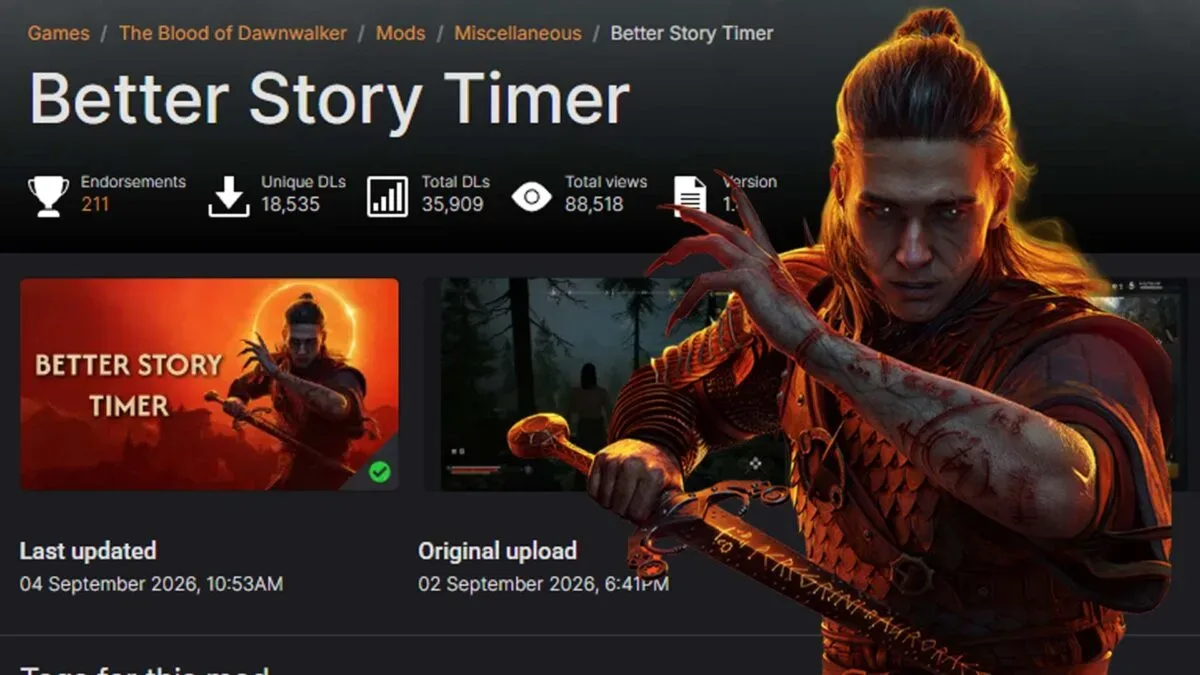
On PC, a notable portion of the audience has already decided that the clock needs a little less authority. The game’s leading mod on Nexus Mods, Better Story Timer, gives players more room to act and can remove certain time restrictions altogether. It had surpassed 36,000 downloads after being uploaded on a Wednesday, with more than 5,000 of those downloads arriving earlier on the day those figures were noted.
That is a substantial early response for a modification aimed at one very specific piece of an RPG’s design. It does not prove that most players dislike Dawnwalker’s time system, nor does it mean that every download represents a separate active player. Still, it makes one point hard to miss: thousands of PC players consider a gentler clock—or no clock at all—a meaningful improvement to their version of the game.
The timer is not just background decoration
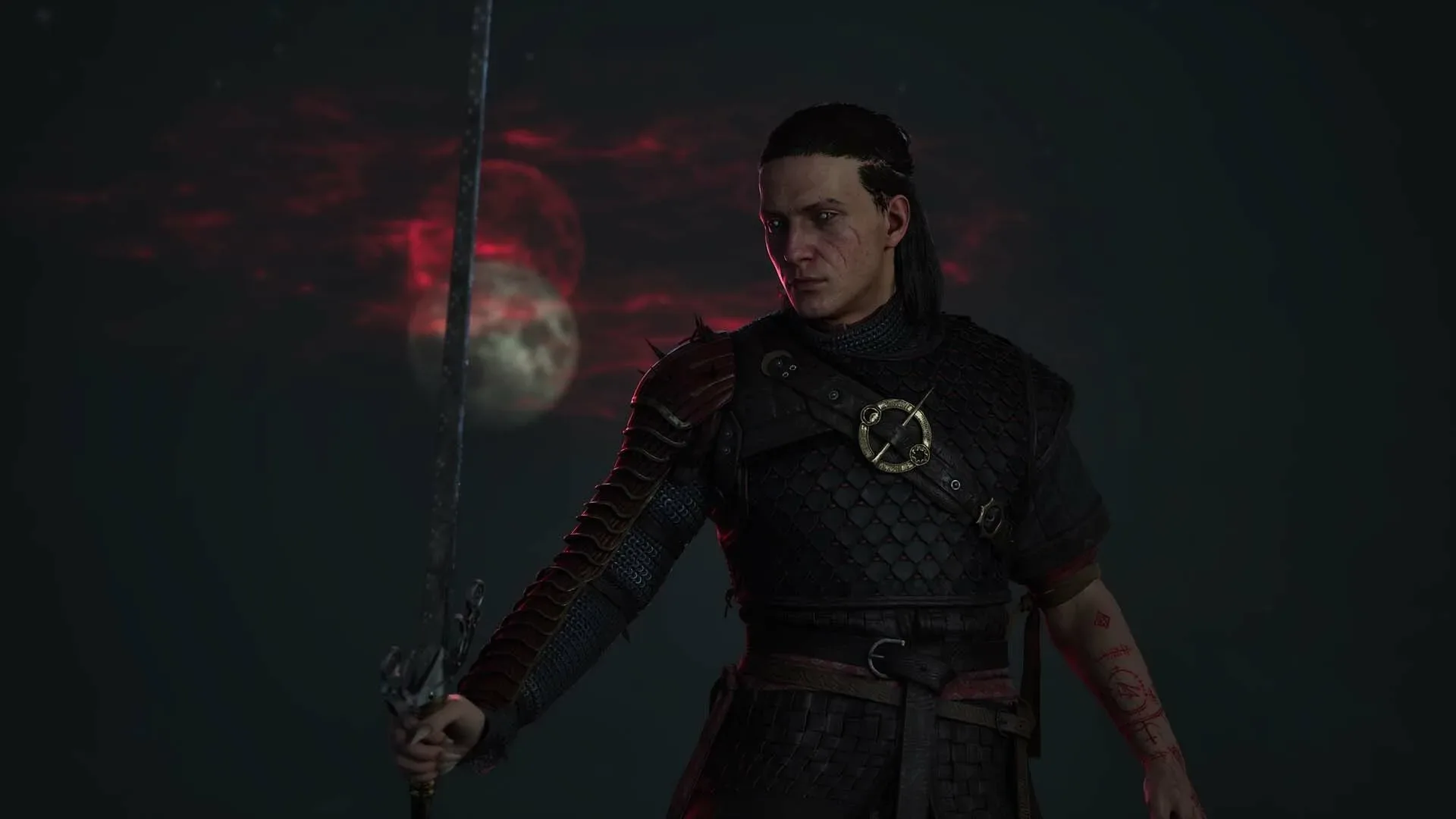
Dawnwalker is Rebel Wolves’ debut open-world RPG, made by a studio formed by veteran developers whose past work includes The Witcher 3. Its vampire-warrior premise is tied directly to the day-and-night cycle, with that cycle advancing the in-game calendar. The result is an RPG where the passage of time is part of the central machinery rather than a visual flourish that merely changes the lighting.
For players who enjoy this kind of structure, the pressure is the point. A calendar can turn a routine task into a decision: pursue one lead now, prepare for another later, or accept that not every possible detour belongs in the same run. It can make the world feel less like an amusement park frozen in place until the hero arrives. The player is not simply collecting tasks from a bottomless to-do list; they are managing a situation with consequences and limited opportunities.
But even a well-integrated system can produce an uncomfortable sensation in a genre famous for excess. Open-world RPGs train people to scan the horizon for distractions, search buildings for secrets, gather loot, adjust builds, and exhaust every dialogue route. A timer turns those comfortable habits into potential costs. The player who wants to linger may instead feel as if every inventory screen is stealing time from a quest, every fight is an expense, and every wrong turn has become a strategic mistake.
In a game designed around urgency, the clock can be a source of drama. For another player, the exact same clock can feel like a hand tapping impatiently on the desk.
Neither response is especially strange. Timed systems ask players to make peace with imperfection. They invite the possibility of missed content, delayed plans, and choices that cannot all be optimized at once. That can be compelling when someone wants a role-playing experience shaped by trade-offs. It can also run directly against the completionist urge that many RPGs have spent decades encouraging.
Better Story Timer is the clearest signal
The popularity of Better Story Timer stands out because it focuses on the most fundamental form of friction in Dawnwalker: the story timer itself. Rather than changing a cosmetic preference or adding a minor convenience, it alters the pacing framework that helps distinguish the game’s structure. Players using it can create more breathing room for their chosen activities, and in some cases do away with the applicable restrictions.
At the time the download total was recorded, SteamDB showed more than 50,000 people playing the game concurrently on Steam. That figure is useful context, but it should not be converted into a neat popularity verdict. Concurrent Steam players are not the same thing as total PC owners, total mod users, or the game’s entire audience across PC and consoles. A download count also does not indicate why each person installed the mod, how long they used it, or whether they retained its settings.
What the numbers do show is demand. Installing a mod requires more effort than moving a slider in an official menu. Players who take that extra step are expressing a preference strongly enough to modify the experience themselves. In a single-player game, that preference does not impose a new ruleset on other people. One person can play the intended pressure-cooker version; another can turn the timer into a much quieter presence.
PC gaming has long made that split possible. Mods can preserve an original system for those who enjoy it while offering alternatives for people whose patience runs out somewhere between “interesting constraint” and “I have spent 10 minutes deciding which boots to keep.” The game remains the same game in broad outline, but the individual playthrough becomes more personal.
The other popular mods point in the same direction
The story-timer mod is not the only sign that some players want Dawnwalker to be less demanding. Other well-used Nexus Mods offerings increase carrying capacity, provide additional loot, speed up leveling, and grant more talent points. They are less popular than Better Story Timer, but they form a recognizable cluster of adjustments.
- More carrying capacity reduces the need to choose what stays and what gets left behind.
- Extra loot increases the flow of rewards and resources.
- Faster leveling shortens the path to character growth.
- Additional talent points gives players more build flexibility sooner.
Each change removes a different kind of resistance. Inventory limits create decisions about possessions. Loot scarcity can make preparation and exploration matter more. Measured leveling regulates power growth. Talent-point limits force specialization. Taken together, those mechanics help a game define its rhythm and its sense of advancement. Taken together, they can also feel like a series of gates between the player and the parts of an RPG they came to enjoy.
That does not necessarily mean the modifications make Dawnwalker better in any universal sense. A player who values survival pressure, careful builds, and meaningful scarcity might find that the unmodified systems give the game more character. Someone else may want the story, world, combat, or vampire fantasy without treating backpack space and calendar management as the main event. The same design friction can be either flavor or sand in the controller depending on who is playing.
A useful reminder about “intended” ways to play
There is a tendency in game discussion to treat the original rule set as morally superior simply because it came first. Original design deserves attention, especially when a game’s major systems were clearly designed to work together. Dawnwalker’s clock is not an accidental inconvenience; its day-and-night structure is central to the premise. Removing its pressure may alter the tension and pacing that Rebel Wolves sought to create.
Yet a single-player RPG is also a private space once it reaches a player’s machine. Mods are a practical answer to the fact that people approach the same game with wildly different tolerances for limitation. For some, a ticking timer creates meaningful stakes. For others, it causes anxiety, interrupts exploration, or turns leisure time into another schedule to manage. Giving the latter group a tool to reshape the experience does not erase the former group’s preferred version.
The distinction is especially relevant because PC users can access these community-made options while console users are considerably more restricted. A console player interested in softer time limits, a larger inventory, or faster growth has fewer ways to tailor the experience unless an official feature eventually provides them. On PC, the modding community can respond quickly to a perceived pain point—even when that pain point is one of the game’s defining ideas.
For more on what is happening across the platform, browse our latest PC gaming coverage.
The clock remains a choice, at least for PC players
Better Story Timer’s download count is not a referendum with a single answer. It is evidence of an audience negotiating with a game’s rules. Some Dawnwalker players evidently want the urgency, the compromises, and the feeling that time cannot be reclaimed. Others want to inspect every corner of the world without a largely invisible deadline hovering over the next decision.
That disagreement is not a failure of either camp. It is a sign that the game has a system forceful enough to provoke a reaction—and that PC modding still gives players room to react in their own way. In the end, one vampire warrior can race a calendar while another strolls through the mud with an impossibly large bag, extra talent points, and absolutely no interest in being told that sunset is an appointment.