The latest cluster of indie releases and previews has one thing in common: very few of these games are content to stay inside a single genre lane. One sends a DVD-store operator into gunfights after dark. Another turns customizable mech combat into a run-based roguelike. A prospective medieval strategy game equips a time traveler with modern vehicles, while a top-down action RPG wants dungeon runs, town restoration, farming and character progression to coexist.
That ambition makes this an interesting moment for players browsing Steam’s new releases and wishlists. It also calls for a little caution. A distinctive premise can get a game noticed, but the practical questions are different: Is the action responsive? Does the structure support the fantasy? Is there enough room for the systems to work together? For several of these projects, the answer will only become clearer as development continues.
Blackwood’s great premise meets some launch-day friction
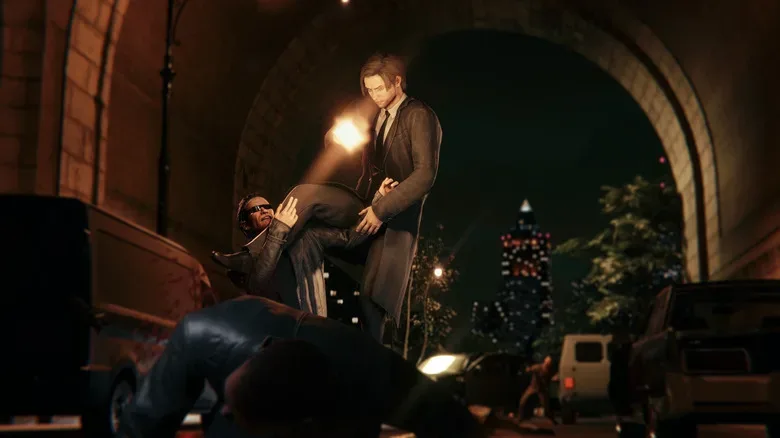
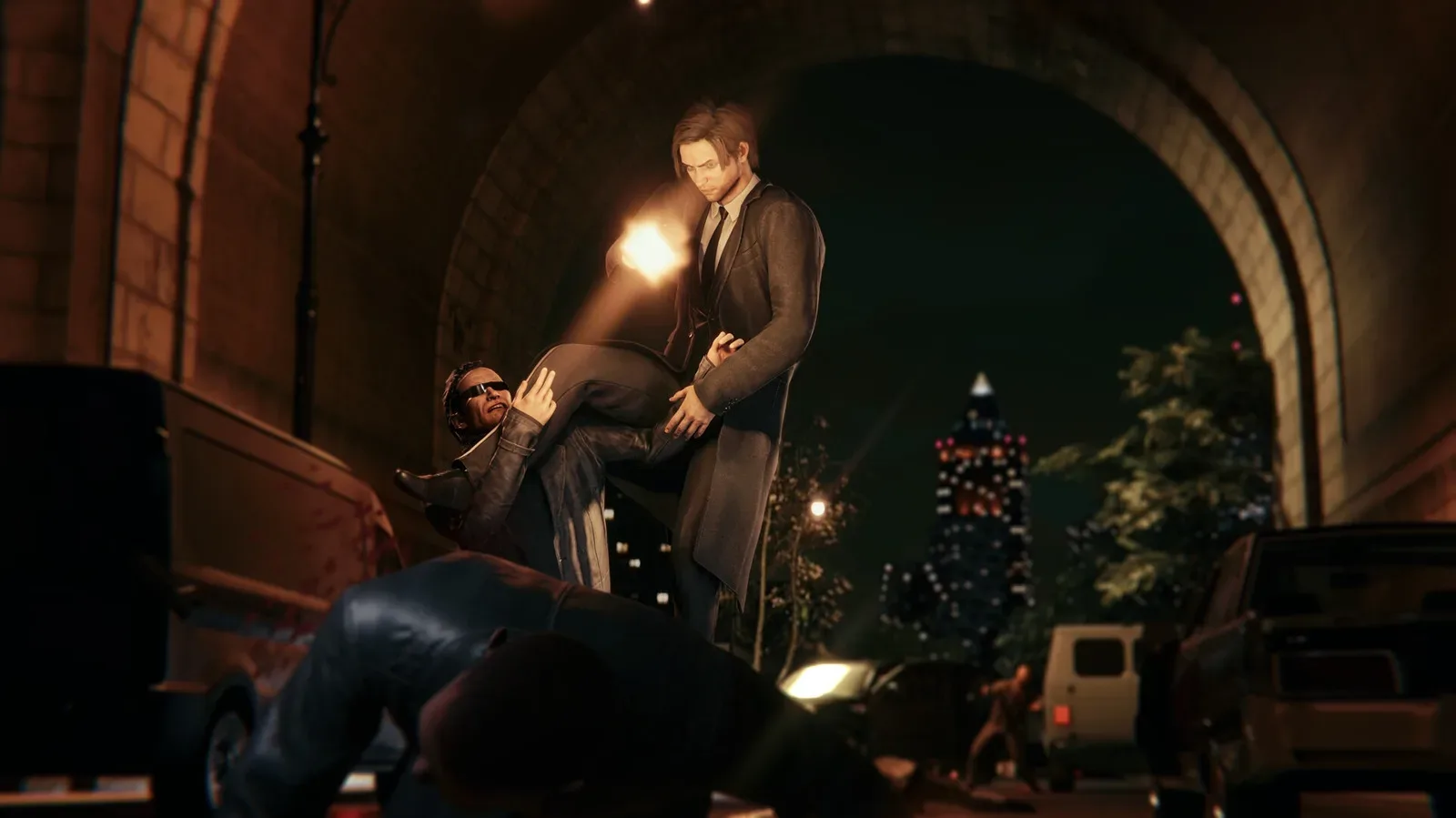
Blackwood: Act One, from AttritoM7 Productions and publishers IZilla Games and AttritoM7 Productions, has perhaps the most immediately legible pitch of the group. Set in 2012, it casts its protagonist as a DVD-store operator during the day and a lethal action hero at night. The first act is available now on Steam for Windows, is described as roughly six hours long, and is intended to be followed by Acts Two and Three in 2027. PlayStation 5 and Xbox Series X/S versions are planned, though no timing has been set.
The appeal is not hard to parse. Video stores are a naturally tactile setting: cases, shelves, customers and a physical-media culture that games can turn into routine and atmosphere. Pairing that with a double life creates a clean contrast between slow-paced management and high-pressure combat. Blackwood also wears its action-game influences openly. Players can dive to the ground and trigger a brief slow-motion effect in the tradition of Bullet Time, the term commonly used for an action mechanic that reduces perceived speed so players can aim, reposition and make split-second choices with more control.
That is a useful tool for a game built around gunplay, especially when its combat opens with an action sequence designed to introduce the controls. Weapon customization, takedowns and the challenge of maintaining the protagonist’s two identities give Blackwood more to work with than a simple run-and-gun structure.
But the early version reportedly has substantial rough edges. Hand-to-hand fighting feels awkward, the audio mix can be inconsistent, and vehicle handling is a weak point. Crucially, the broader action flow can feel insufficiently fluid; even picking up a weapon can take too long when ammunition has run out. In this sort of game, friction around basic interaction matters more than it might in a slower adventure. Gun-fu—the stylized blend of firearms and close-quarters choreography associated with action cinema—depends on momentum. A delay that interrupts an improvised scramble for a dropped weapon can turn dramatic vulnerability into simple irritation.
The DVD-store side also reportedly does not yet stand as strongly as its violent counterpart. That does not erase the potential in Blackwood’s unusual pairing, but it makes its episodic plan more consequential. An episodic release is a model in which a game arrives in separate story installments rather than as one complete launch. It can give a team time to improve later chapters, yet it also means the first act must convince players that the foundation is worth returning to.
There are signs the team is addressing immediate concerns. A day-one patch resolved some problems, and AttritoM7 has said it plans further changes before Act Two, including autosave functionality and more side missions. Autosave is an especially practical improvement if progress previously depended on reaching sleep. Players interested in the premise may want to treat Act One as a work in progress rather than assume its current roughness represents the final shape of the project.
Related coverage includes Indie Games to Watch: Blackwood, Rig Riot, Kingmakers and More.
Rig Riot brings roguelike structure to customizable mechs
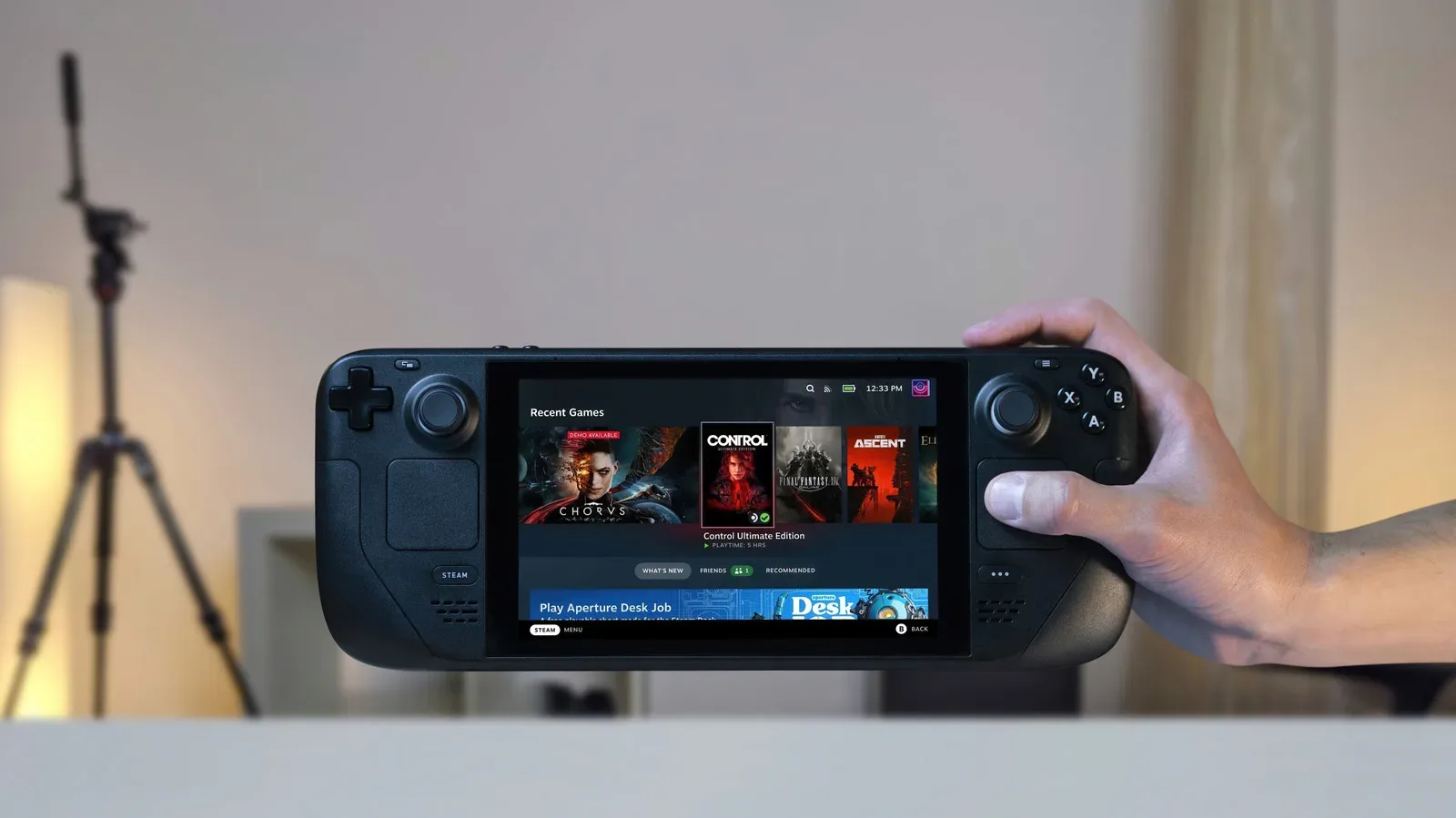
Rig Riot comes from solo developer and publisher Sage Boatman, and it approaches mech action from a different direction. It is a third-person shooter and roguelike built in response to a desire for more of the kind of machinery-driven combat associated with Armored Core 6: Fires of Rubicon. A demo is available on Steam and Itch, while the full game is on Steam for Windows and is playable on Steam Deck.
The defining promise is scale of customization: thousands of parts can be equipped on a mech. In a game inspired by a series where building the machine is central to the experience, that number matters less as a marketing statistic than as a potential route to player expression. Parts can alter the way a mech looks, but the important question for this genre is whether they produce meaningful loadout decisions—trade-offs around weapons, mobility and a player’s preferred way of approaching fights. The supplied information does not detail the stat systems or individual part behaviors, so it is too soon to judge that depth. Still, the stated emphasis puts construction at the center rather than treating it as cosmetic dressing.
The roguelike designation is equally important. A roguelike, in modern broad usage, is a game structured around repeatable runs in which failure commonly returns the player to a starting point while future attempts benefit from new options, knowledge or progression. The approach can give a combat game replayability, because a build is not merely selected once: it becomes something adapted over successive runs. It can also create tension if a player must make do with imperfect parts or react to circumstances instead of relying on a single perfected configuration.
Rig Riot’s developer has said that feedback from Armored Core 6 players helped shape the project. Boatman also said an impending layoff from their day job could affect the game’s path. Co-op, console versions and a GOG release are possibilities if sales make full-time work on the game viable. Those are possibilities rather than promises, and players should read them that way. The most tangible current option is the demo, which gives mech-action fans a chance to see whether the core handling and run structure suit them before investing in the full release.
For Steam Deck owners, portable compatibility is a welcome point, though it is sensible to keep routine maintenance in mind for any handheld library. Our guide to factory resetting a Steam Deck safely covers recovery-mode and rollback options should broader device troubleshooting ever be needed.
Desktop horror and browser-scale strategy offer sharper alternatives
Lily’s World XD, developed by SonderingEmily and published by Kwalee, narrows its focus considerably. It is a psychological horror game for Steam on Windows that has players explore a teenage girl’s laptop in the 2000s. The desktop is not just a menu screen here; it is the setting through which players piece together Lily’s life and discover that she may be in serious danger.
That format is often called desktop exploration. Rather than moving an avatar through a conventional 3D environment, players inspect files, programs, messages and other digital traces. It is a useful fit for mystery and horror because the act of navigating a computer can turn ordinary interfaces into storytelling tools. The game also breaks the fourth wall at certain points. SonderingEmily used real teenage photographs of herself and friends in constructing Lily’s story, an approach that may lend its period details a more personal texture.
OpenFront, by OpenFront Inc and Evan Pellegrini, goes in the opposite direction: a fast, multiplayer real-time strategy game where hundreds of players compete for territory on one map. It arrives in Steam early access for Windows, Mac and SteamOS/Linux after attracting more than 2.5 million monthly players through its browser version. The same account, progression and purchases work on Steam, browser and mobile access, and the versions run on shared servers.
Real-time strategy, or RTS, means decisions unfold continuously rather than in turns. In OpenFront’s case, players can form alliances, betray rivals, contest seas and use nuclear weapons that can reshape a match. The social dimension appears just as important as direct tactical command, with hundreds of clans and a competitive scene that includes cash-prize tournaments. Steam’s version adds achievements, exclusive cosmetics and claimed performance improvements through asset preloading—preparing game resources ahead of time to reduce disruption as they are needed. The developers are also aiming for stronger offline support against computer-controlled opponents in the full version.
Kingmakers is still waiting on a date, but its scale is the story
Kingmakers, from Redemption Road and TinyBuild, remains one of the more audacious upcoming Steam projects despite having no current release date. It had been expected to enter early access last October before being delayed. Its basic setup is delightfully blunt: a person goes back to the Middle Ages carrying modern weapons, equipment and vehicles, then tries to alter history by aiding a Welsh rebellion against Henry V and helping establish an empire.
The game’s action-strategy label indicates that it is not just about firing a modern weapon into a medieval battlefield. Players will command armies amid battles said to include tens of thousands of enemies, destructible structures and trees. Tanks and air strikes sit beside that medieval setting. The campaign is designed for co-op with up to four players, each controlling their own army.
“Fully destructible” is the key phrase to watch, because destruction is only meaningful when it changes how players plan. Buildings and trees that can be demolished suggest the battlefield may not remain a fixed arena; cover, routes and defenses could become temporary. The scope described is enormous, and without a date it is appropriate to keep expectations measured. Still, the game’s identity is unusually clear: organized medieval warfare interrupted by a ridiculous technological advantage.
Three more projects built around loops, loss and escalation
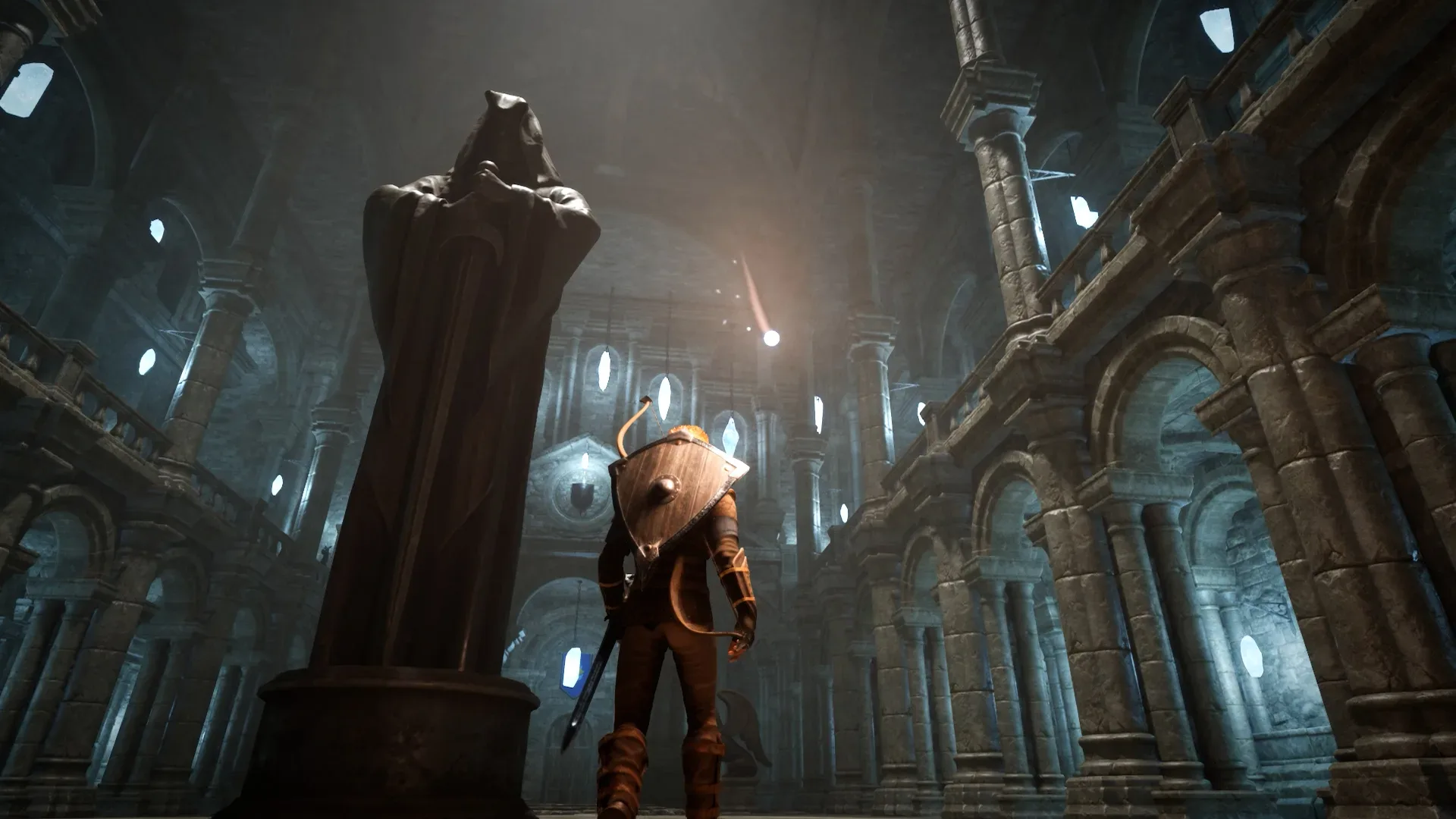
Emberville from Cygnus Cross is due to enter Steam early access on October 27. It combines top-down action RPG combat and loot with life-sim elements, placing a memoryless protagonist in a vast underground prison with the goal of escaping. Along the way, players will assist non-player characters and rebuild a ruined town.
Its list of systems is extensive: swappable classes, weapon and armor mastery, crafting, cooking, mining, farming and base-building. That breadth could be overwhelming for players who prefer a narrow action-RPG progression path, but it may be exactly the draw for people who want combat linked to a longer-term home and community project. The game’s combat includes sword, bow and fist options, with the fists able to stun, plus a combo system. Its dash has a short cooldown rather than a stamina-management requirement. That distinction may sound small, but cooldowns impose a timed limit on one ability, whereas stamina systems often govern a broader range of movement and attacks.
The game also has an experienced voice cast that includes Amelia Tyler, Jennifer English, Abubakar Salim, Matt Mercer and Ben Starr. Visually, it uses dense pixel-art environments and animated characters. The early-access label remains important: it means the October release is an in-development version whose systems may change as Cygnus Cross adds to and adjusts the game.
Star Conflict: Burrownauts is an action roguelite set in Targem Games’ Star Conflict universe. Players mine planetoids for materials, spend those resources upgrading a rig and combat ship, then race back to defend their primary vessel against attacks. The fighting is described as bullet-heaven combat, a term for games where enemies and projectiles can become densely packed and survival depends on movement, positioning and building enough offensive power to manage the swarm. An open Steam playtest is currently available.
Nothing Lost, from Team Trifold, is another action roguelike, but its central idea is inheritance. Each death makes the player stronger by passing the abilities of fallen heroes onward. The title is being made by a new studio operating under the same umbrella as Black Salt Games, developer of Dredge, and Disc 2 Games, the team behind Canvas City. Its stated creative focus is incremental human progress: failure is framed not as discarded time, but as a contribution to the next attempt. That is a compelling use of the roguelike loop, provided the inherited abilities create choices rather than merely accumulating power.
Together, these games make a strong case for looking beyond the biggest releases. Not every concept will arrive fully formed, and Blackwood in particular shows why the gap between a great elevator pitch and reliable controls is still a serious one. Yet the range is notable: personal desktop horror, massive multiplayer strategy, flexible mechs, RPG town-building, space mining and time-travel warfare all have distinctly different hooks. For players who enjoy following games as they take shape, this is a watchlist with more character than conformity.